Artwork
The Sand Cart
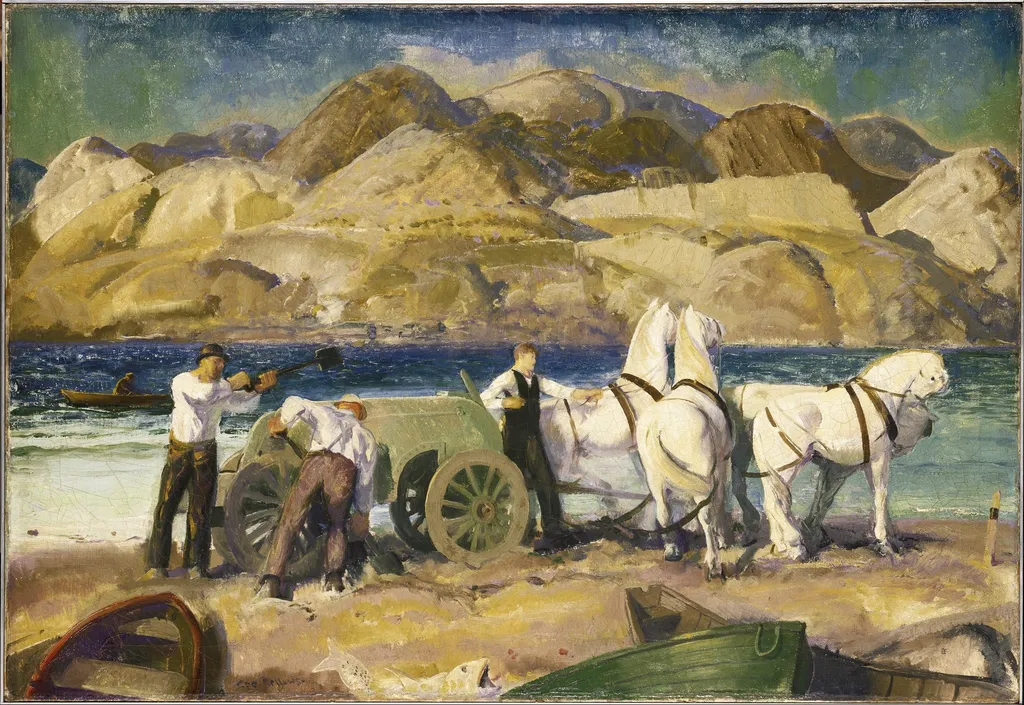
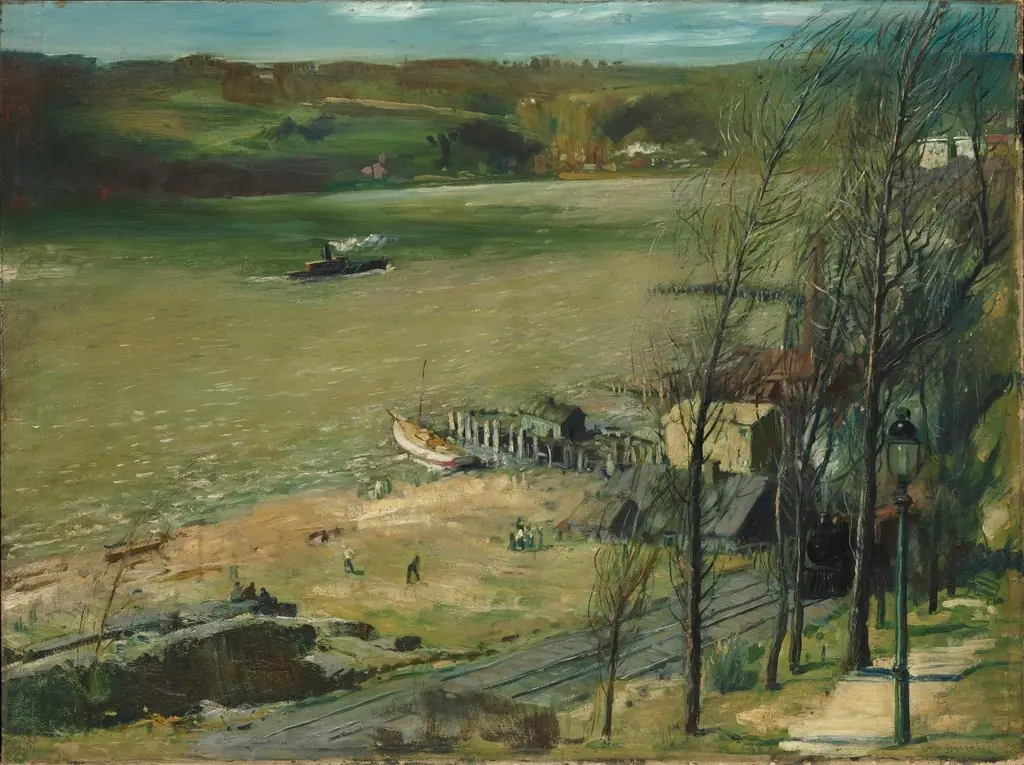
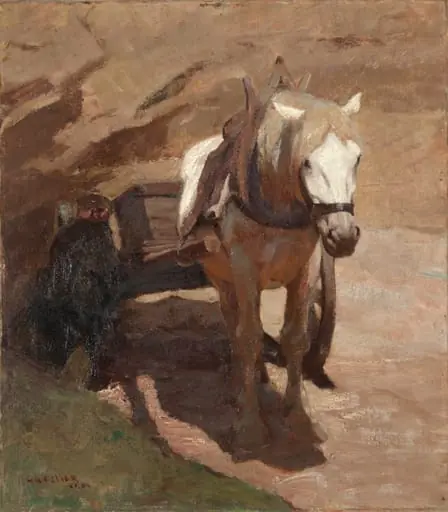
The Sand Cart is an oil painting by the Ashcan School artist George Bellows. It dates from 1917 and is held in the collection of the Brooklyn Museum.
About this work
Overview
It captures a moment of labor on a coastal edge, far from the dense cityscapes often associated with his oeuvre.
Painted in 1917, The Sand Cart is an oil on canvas work by American artist George Bellows. It captures a moment of labor on a coastal edge, far from the dense cityscapes often associated with his oeuvre. Though linked to the Ash Can School through its unidealized subject matter, the painting diverges in setting, shifting focus from urban grit to the rugged rhythms of seaside work. It resides today in the Brooklyn Museum’s permanent collection.
Subject & Meaning
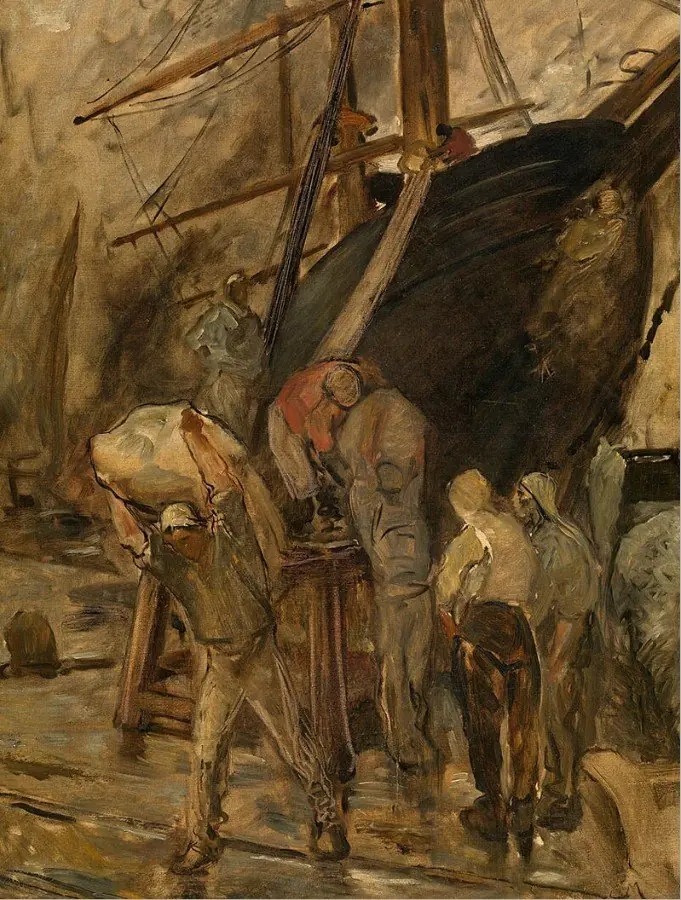
The scene depicts a group of laborers attending to a heavy wooden cart on a beach, its two white horses standing patiently. Men are bent over the wheels, repairing or adjusting them, while others stand nearby, observing or assisting. The composition emphasizes collective effort and physical toil, with no overt narrative beyond the immediate task.
The presence of a small boat and distant hills suggests a quiet, working coastline, where utility outweighs spectacle.
Technique & Style
Bellows employed thick, expressive brushwork and a restrained palette of earth tones to convey texture and atmosphere. Light falls unevenly across the scene, modeling forms with subtle chiaroscuro without dramatic contrast. The horses’ musculature and the cart’s weathered wood are rendered with careful observation, while the background dissolves into loose, atmospheric strokes. The technique balances realism with a sense of immediacy, avoiding polish in favor of kinetic energy.
History & Provenance
Created during a period when Bellows was expanding beyond New York street scenes, The Sand Cart was likely painted during a summer trip to the New Jersey shore. It entered the Brooklyn Museum’s collection in the early 20th century, possibly through direct acquisition or donation. Its provenance remains largely unaltered since its completion, with no major public exhibitions noted outside institutional holdings.
Context
While Bellows is best known for boxing matches and tenement life, The Sand Cart reflects a broader interest in American labor beyond the metropolis. In 1917, as the U.S. approached involvement in World War I, depictions of manual work carried cultural weight. This painting, like others of the era, quietly honored the dignity of physical labor, aligning with broader realist currents in American art without overt political messaging.
Legacy
The Sand Cart remains a lesser-known but significant example of Bellows’s versatility. It demonstrates his ability to translate everyday labor into compelling visual narratives outside the urban core. Though not as widely reproduced as his city scenes, it contributes to a fuller understanding of his thematic range and his commitment to portraying the American working class in varied environments.
Own this work as a print
Artist & collection

Artist
George Wesley Bellows (August 12 or August 19, 1882 – January 8, 1925) was an American realist painter, known for his bold depictions of urban life in New York City.