Artwork
Joseph Stallings
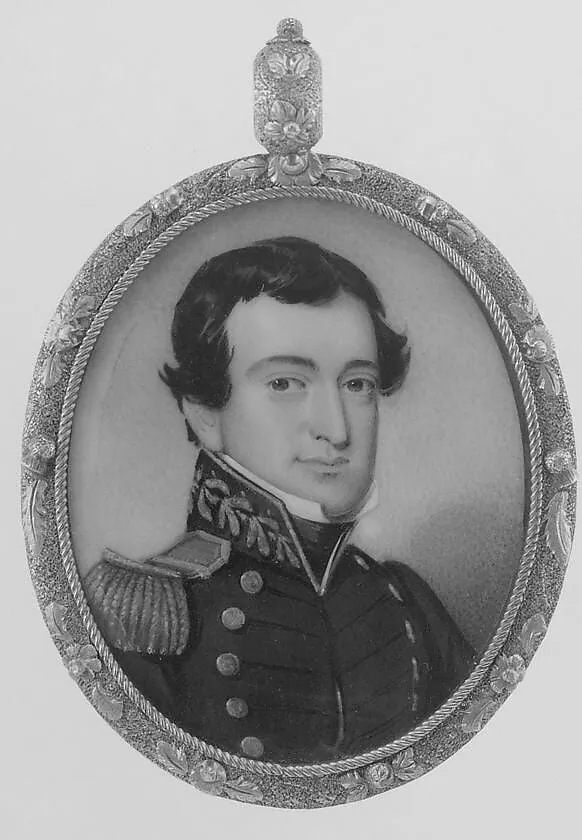
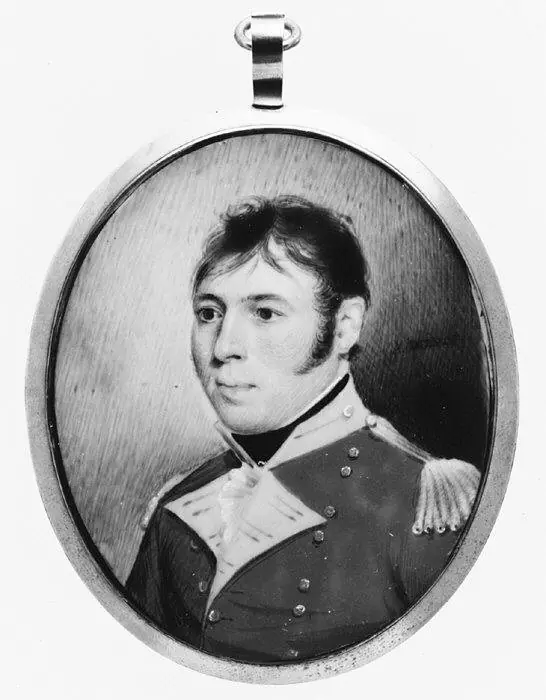
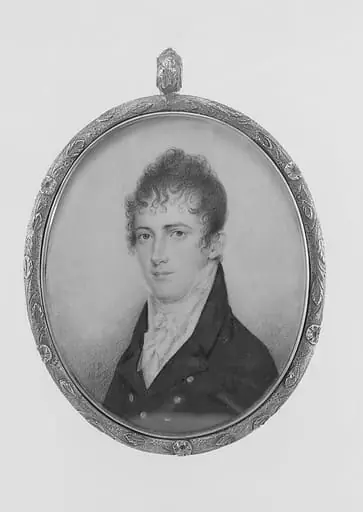
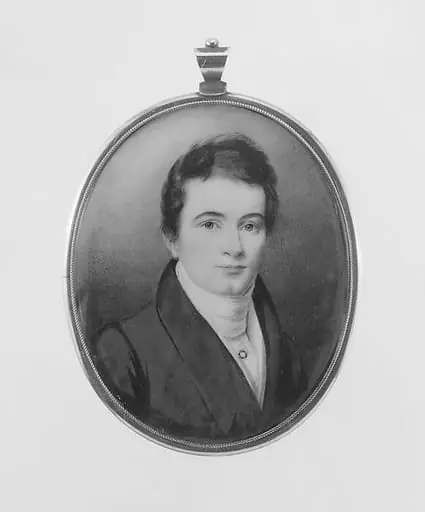
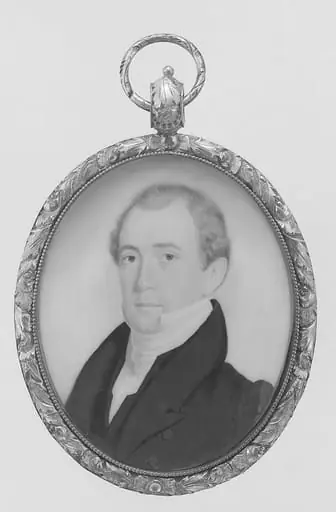
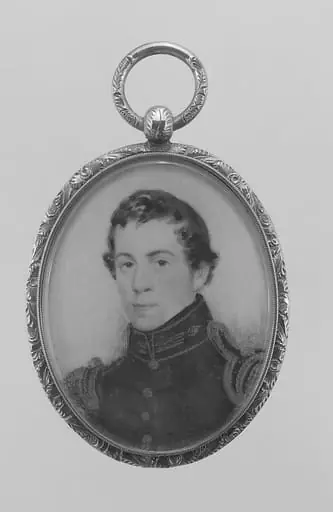
Joseph Stallings is a watercolor painting by the Romanticist artist George Catlin. It dates from 1829 and is held in the collection of the Metropolitan Museum of Art.
- Accession no.
- 2006.235.27
- Credit line
- Gift of Gloria Manney, 2006
About this work
Subject & Meaning
5 cm, typifies the intimate format of early nineteenth-century American miniature portraiture, which was often carried or worn as a personal keepsake.
Joseph Stallings is a portrait miniature depicting a man, executed in watercolor on ivory. As a work in the portrait genre, it focuses on the likeness and presence of its male subject rather than narrative or allegorical content. The small scale of the piece, 5.6 by 4.5 cm, typifies the intimate format of early nineteenth-century American miniature portraiture, which was often carried or worn as a personal keepsake.
Beyond the identification of the sitter and the conventional aims of portraiture, the sources do not indicate additional iconographic programs or symbolic elements within the composition.
Technique & Style
Joseph Stallings is a portrait executed in watercolor on ivory by George Catlin in 1829. The work functions as a miniature, measuring 5.6 cm in height and 4.5 cm in width. As a watercolor on ivory, the medium relies on the translucent quality of the pigment applied to the smooth, pale surface of the ivory support, a technique characteristic of early 19th-century portraiture.
The piece is classified within the genre of portraiture, depicting a man and currently held in the collection of the American Wing at the Metropolitan Museum of Art.
History & Provenance
Joseph Stallings is a watercolor portrait on ivory executed by George Catlin in 1829. The work measures 5.6 cm by 4.5 cm and falls within the portrait genre, depicting a male sitter. It is classified under The American Wing and is part of the Metropolitan Museum of Art’s collection, where it remains on display.
The painting’s creation history is tied to Catlin’s early portrait practice, producing this piece as a study of a named individual. No earlier owners or commissioning details are recorded in the available documentation; the only documented provenance points to its acquisition by the Metropolitan Museum of Art.
Overview
George Catlin, an American artist, created this watercolor portrait of Joseph Stallings around 1829. Executed on ivory, the small-scale work captures a young man in formal attire, presented against a muted background. This piece represents an early phase in Catlin's career, preceding his extensive travels and renowned documentation of Native American cultures in the American West.
Context
Before embarking on his celebrated journeys to the American West in the 1830s, George Catlin developed his artistic skills in New York. During this earlier period, he produced engravings depicting landscapes along the Erie Canal and contributed illustrations to significant early lithographic publications. Joseph Stallings exemplifies Catlin's work from this formative time, showcasing a more conventional portraiture style distinct from the ethnographic focus that would later define his career.
Artist & collection

Artist
George Catlin ( KAT-lin; July 26, 1796 – December 23, 1872) was an American lawyer, painter, author, and traveler, who specialized in portraits of Native Americans in the American frontier.

 Bulls Fighting
 Expedition Encamped on a Texas Prairie. April 1686
 An Alligator's Nest
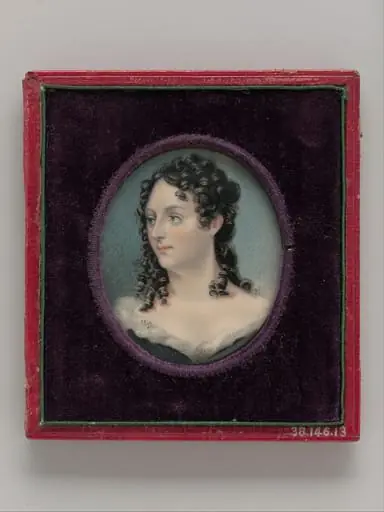 Mrs. George Catlin (Clara Bartlet Gregory)
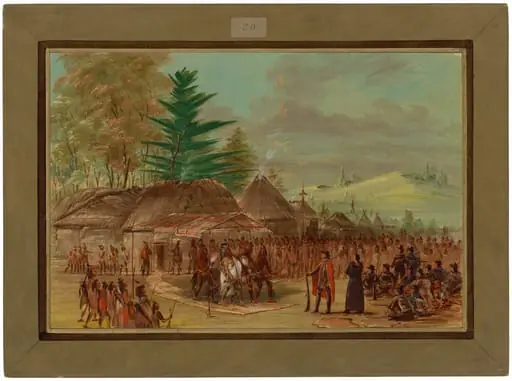 Chief of the Taensa Indians Receiving La Salle. March 20, 1682
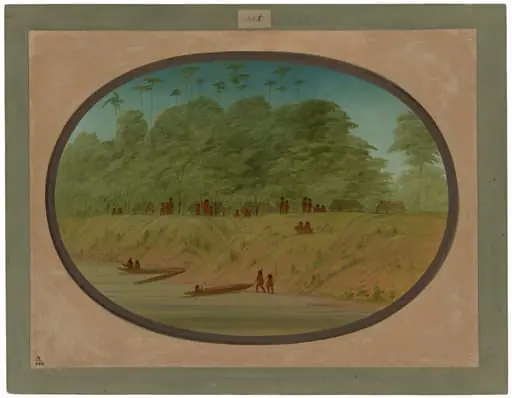 A Small Village - Payaguas Indians
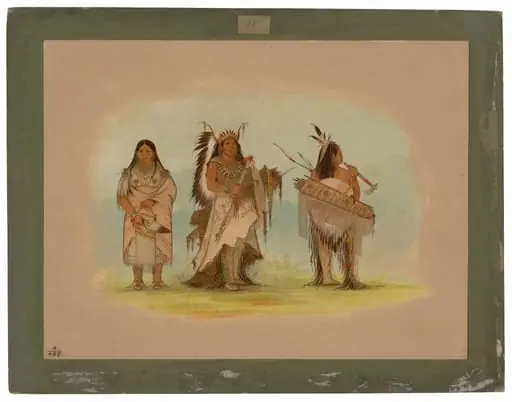 Omaha Chief, His Wife, and a Warrior
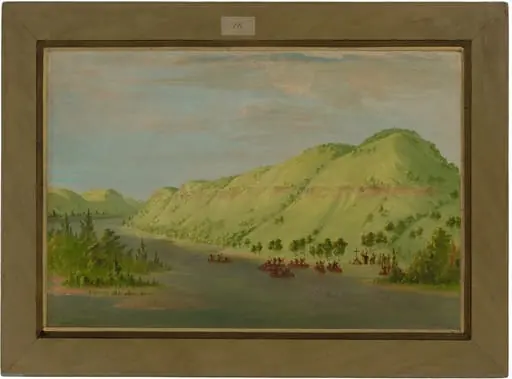 Father Hennepin Leaving the Mississippi to Join La Salle. May 8, 1680