Artwork
Charles Leland
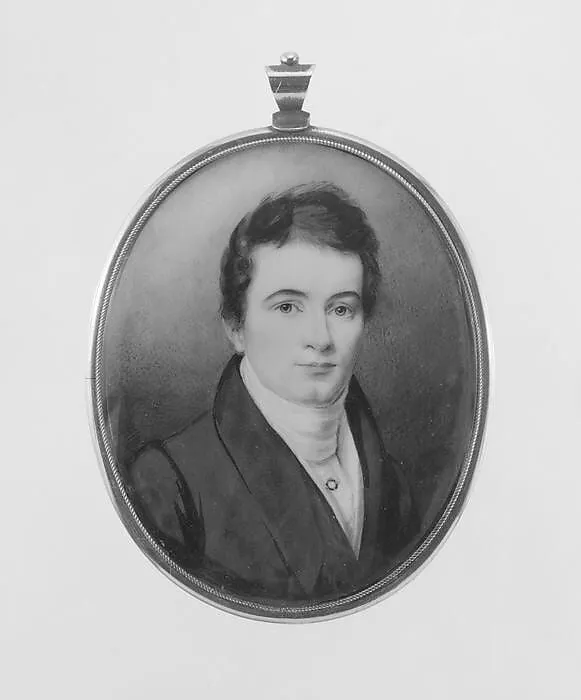
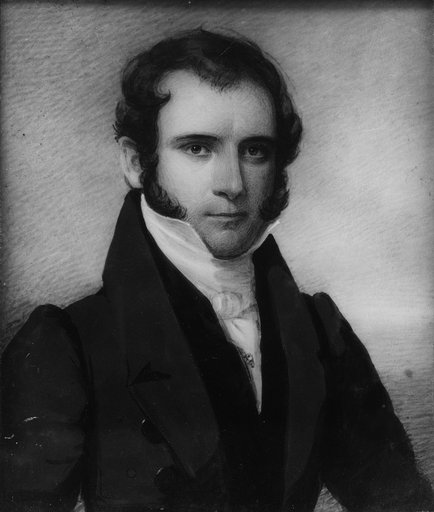
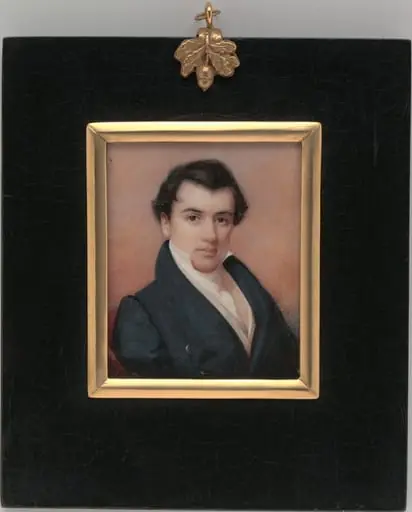
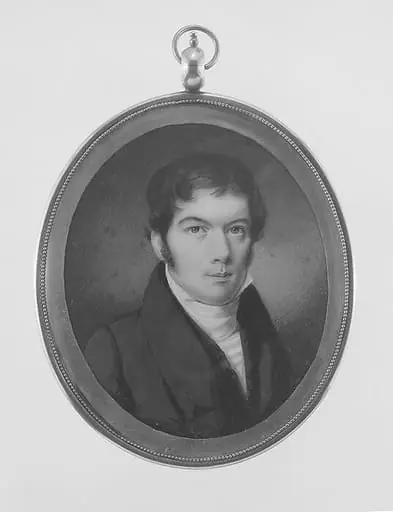
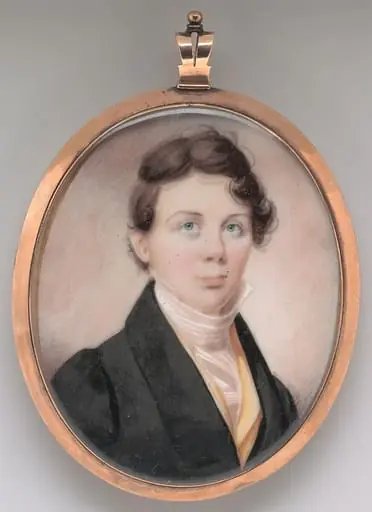
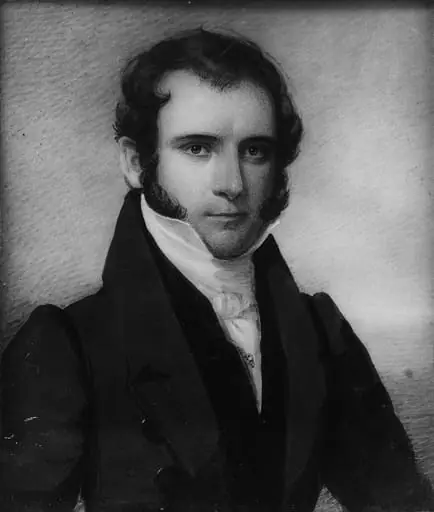
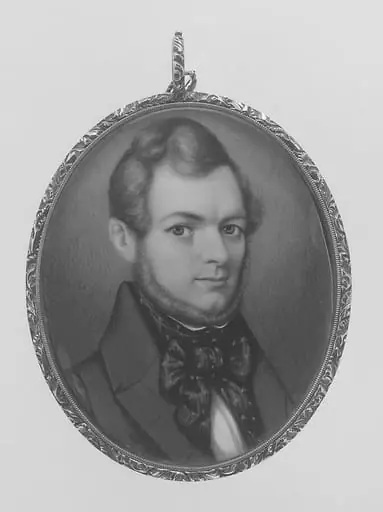
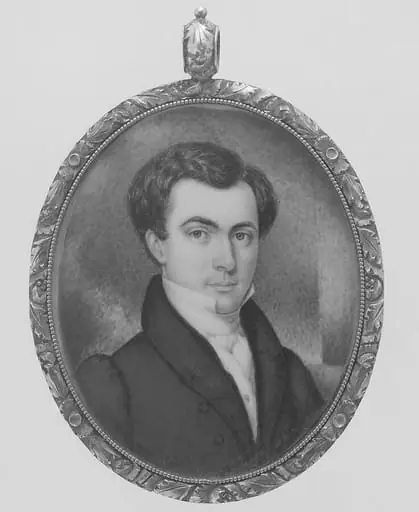
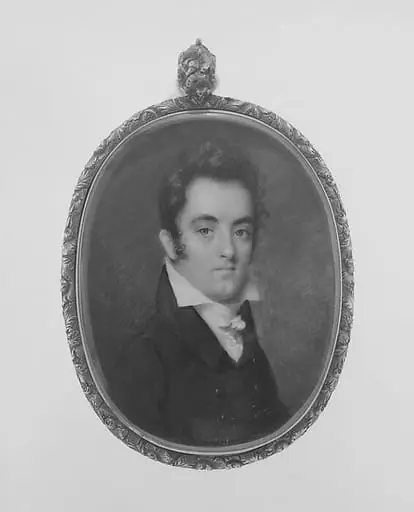
Charles Leland is a watercolor painting by the American Folk Art artist Daniel Dickinson. It dates from 1822 and is held in the collection of the Metropolitan Museum of Art.
- Accession no.
- 2006.235.42
- Credit line
- Gift of Gloria Manney, 2006
About this work
Technique & Style
As a miniature, the handling of the medium requires precise brushwork suitable for the small scale and smooth surface of the ivory.
Executed in 1822 by Daniel Dickinson, this portrait of Charles Leland utilizes watercolor applied to an ivory support. The work is housed within a gilded copper locket, a format typical for miniature portraiture of the period. A distinctive technical feature is the inclusion of a hair reserve on the verso (back) of the piece.
Physically, the object measures approximately 6.5 by 5.2 units. As a miniature, the handling of the medium requires precise brushwork suitable for the small scale and smooth surface of the ivory. The piece is classified as a portrait genre work within The American Wing collection.
History & Provenance
Daniel Dickinson created the portrait titled "Charles Leland" in 1822, executing it as a watercolor on ivory set within a gilded copper locket with a hair reserve on the verso. The work is classified as a portrait and depicts a man. According to the Metropolitan Museum of Art’s records, the piece entered the museum’s collection as part of The American Wing and has remained in that institution since its inception.
Its physical dimensions are 6.5 × 5.2 cm, and it is documented under the inception date 1822‑01‑01. No further ownership transfers are recorded, indicating a direct provenance from the artist to the museum’s holdings.
Context
The portrait of Charles Leland, executed by Daniel Dickinson in 1822, exemplifies early American portraiture through its delicate watercolor on ivory set within a gilded copper locket, a technique documented in museum records []. Its inclusion in The American Wing at the Metropolitan Museum of Art underscores scholarly recognition of Dickinson’s contribution to 19th‑century portraiture and reflects broader interest in material culture studies of American artists []. Critical assessments highlight the work’s role in illustrating the intersection of personal commemoration and emerging national identity, positioning it within the canon of early United States portraiture.
Overview
Daniel Dickinson's watercolor portrait, "Charles Leland," created in 1822, captures a young man's likeness. This miniature, painted on ivory and housed within a gilded copper locket, exemplifies a common form of personal memento from the early 19th century. Its small scale and intimate presentation were characteristic of pre-photographic portraiture, often intended for private display or as a cherished keepsake within the American Wing's collection.
Subject & Meaning
The portrait presents a young man, Charles Leland, gazing directly forward, his features gently illuminated against a light background. He wears a dark coat, typical attire of the period. Beyond a simple likeness, the inclusion of a lock of hair on the reverse transforms this artwork into a deeply personal memento, a tangible connection to the sitter often exchanged among loved ones or kept as a private remembrance.
Artist & collection