Artwork
Naval Officer
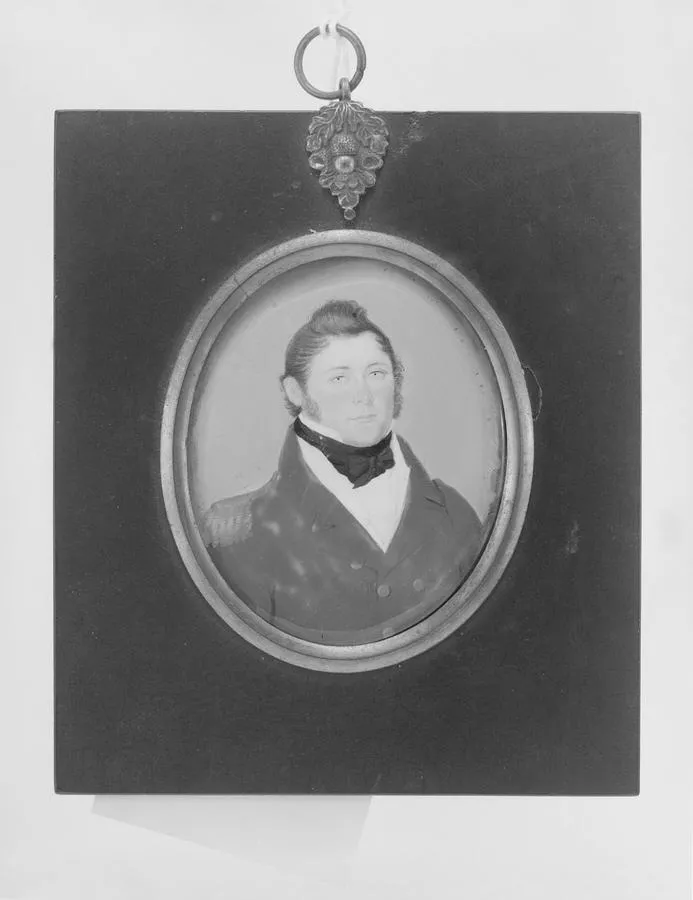
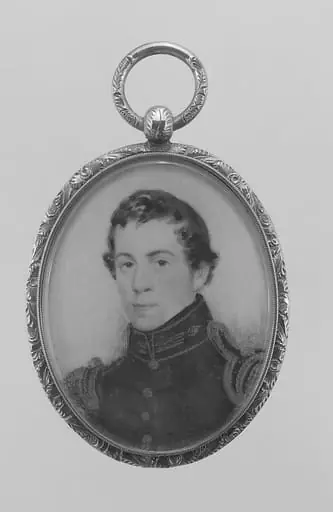
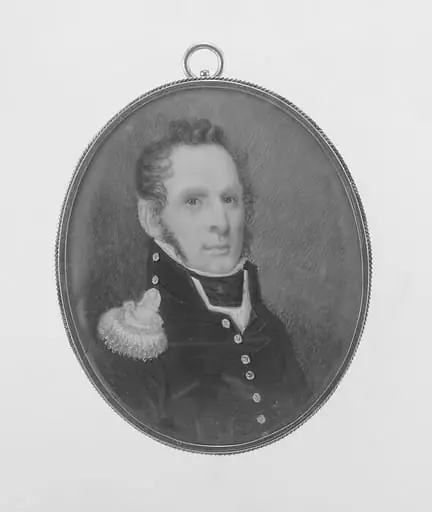
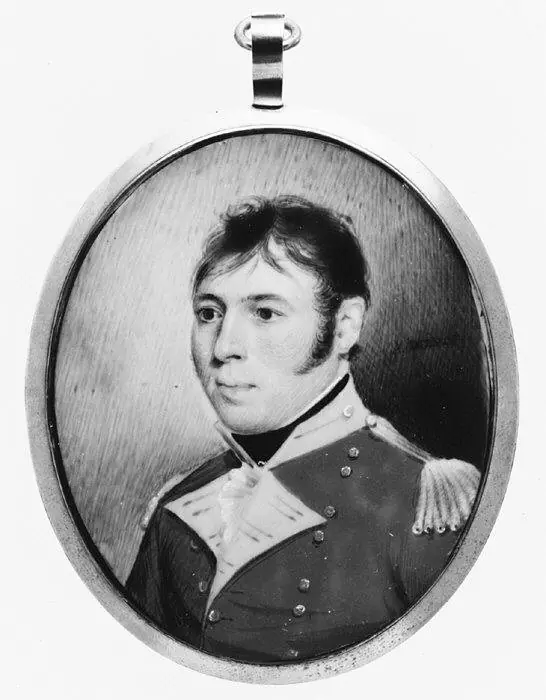
Naval Officer is a watercolor painting by the Neoclassicist artist Medeschini. It dates from 1825 and is held in the collection of the Metropolitan Museum of Art.
About this work
Subject & Meaning
Executed as a miniature painting on ivory, the work focuses entirely on this individual figure without additional narrative context or allegorical figures.
The artwork depicts a single human subject identified specifically as a naval officer, presented as a male portrait. Executed as a miniature painting on ivory, the work focuses entirely on this individual figure without additional narrative context or allegorical figures. The subject's identity is defined by his professional role within the navy, serving as the primary iconographic element of the piece.
As a portrait, the work functions to represent the likeness and status of this specific officer, capturing his appearance in the year 1825. The composition centers the human subject, utilizing the medium of watercolor on ivory to render the figure's features and attire associated with his naval rank.
Technique & Style
Created in 1825, the work Naval Officer by Medeschini is a miniature portrait executed on an ivory support. The artist employed watercolor paint as the primary medium to render the depiction of a naval officer. The physical dimensions of the piece measure 7.2 centimeters in height and 6 centimeters in width.
Stylistically, the work adheres to the conventions of the miniature genre, focusing on a detailed human subject. The classification identifies it as a painting, distinguishing it through its specific use of watercolor applied to the ivory surface. The small scale and choice of materials are characteristic of the period's approach to intimate, high-detail portraiture.
History & Provenance
Naval Officer was created in 1825 by the Italian painter Medeschini in watercolor on ivory, classified as a miniature portrait and depicting a naval officer in white attire. It measures 7.2 × 6 cm. The work is held by the Metropolitan Museum of Art in New York, having entered the collection through the bequest of Edward Sheppard. A specific inventory number is not provided in the documentation, and exhibition records within the supplied sources do not mention any prior displays, indicating that no documented exhibition history is associated with this work in the available references.
Context
The 1825 miniature by Medeschini, classified as a painting and executed in watercolor on ivory, reflects the early-19th-century interest in portrait miniatures of naval and military figures. Held in the Metropolitan Museum of Art as part of the Edward Sheppard bequest, its depiction of a male naval officer aligns with contemporary representations of rank and authority, positioning the piece within the broader tradition of miniature portraiture during the period.
Overview
This small, oval portrait, titled Naval Officer, was created by Medeschini in 1825. Executed on ivory, it presents a formal depiction of a man in military attire. The artwork is a representative example of portraiture from the early 19th century, offering a glimpse into the visual culture of the period. It is currently part of the collection at The Metropolitan Museum of Art.
Artist & collection
Artist
Medeschini painted portraits small enough to sit on a coin, faces that feel alive in candlelight. Naval Officer (1825) is a pocket-sized monument: brass buttons, steady eyes, and a coat that looks ready to snap in the wind.