Artwork
Portrait of Nikolai Sipyagin (1785-1828)
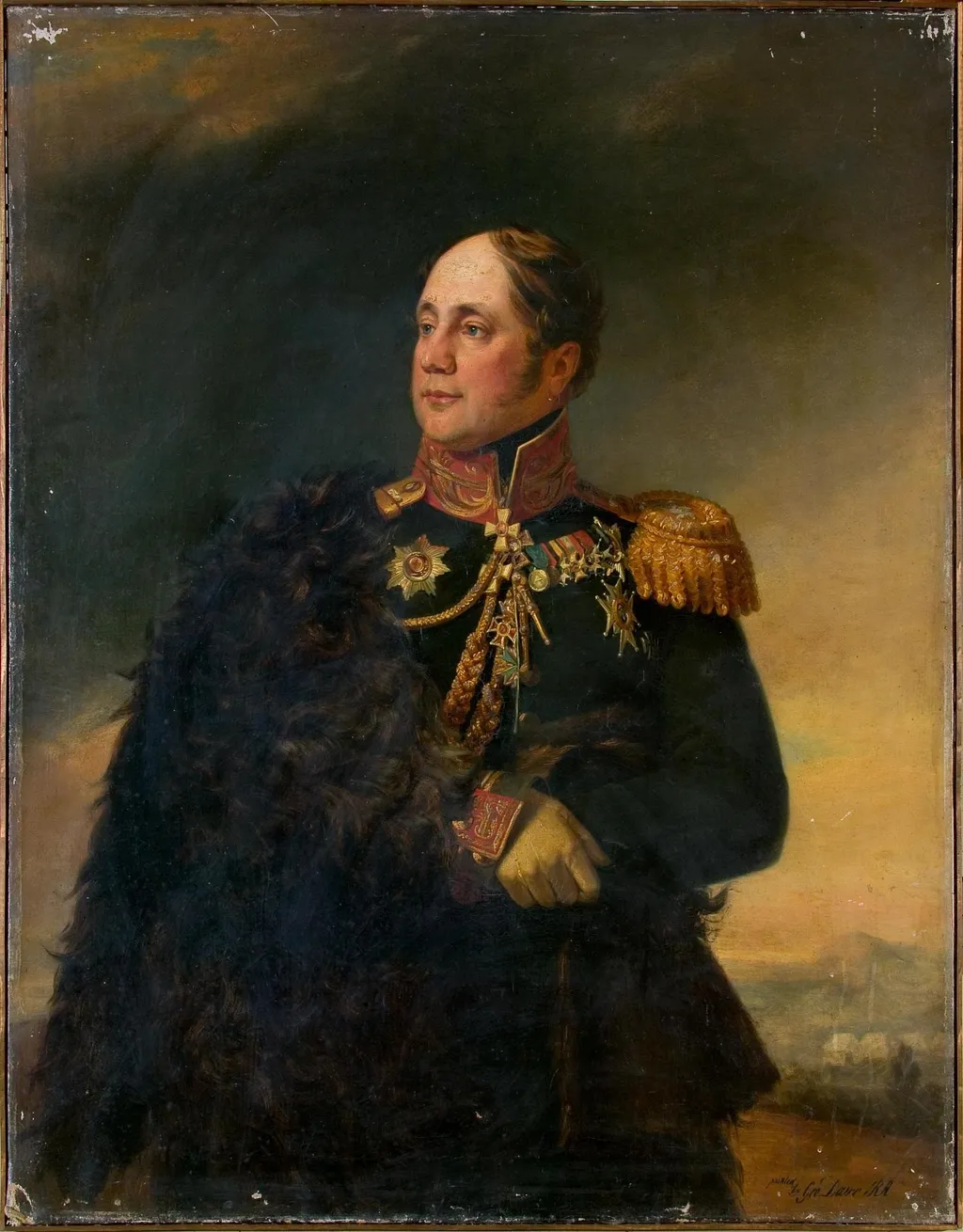
Portrait of Nikolai Sipyagin (1785-1828) is an oil painting by the British Romanticist artist George Dawe. It dates from 1827 and is held in the collection of the Hermitage Museum.
About this work
Overview
The Portrait of Nikolai Sipyagin (1785-1828) is an oil-on-canvas painting by the English portraitist George Dawe, dated 1827.
The Portrait of Nikolai Sipyagin (1785-1828) is an oil-on-canvas painting by the English portraitist George Dawe, dated 1827. Measuring 126 by 98.5 cm, it depicts the Russian general in three-quarter length, wearing military dress with a fur cloak draped over his shoulder against an atmospheric landscape background. The work is held in the collection of the Hermitage Museum in Saint Petersburg. It represents one of two known versions of Sipyagin's portrait by Dawe, distinct from the earlier 1824 gallery portrait commissioned for the Military Gallery of the Winter Palace. This later variant is notable for its expanded display of decorations and its more informal, knee-length composition, reflecting Sipyagin's elevated status in the final years of his life.
Subject & Meaning
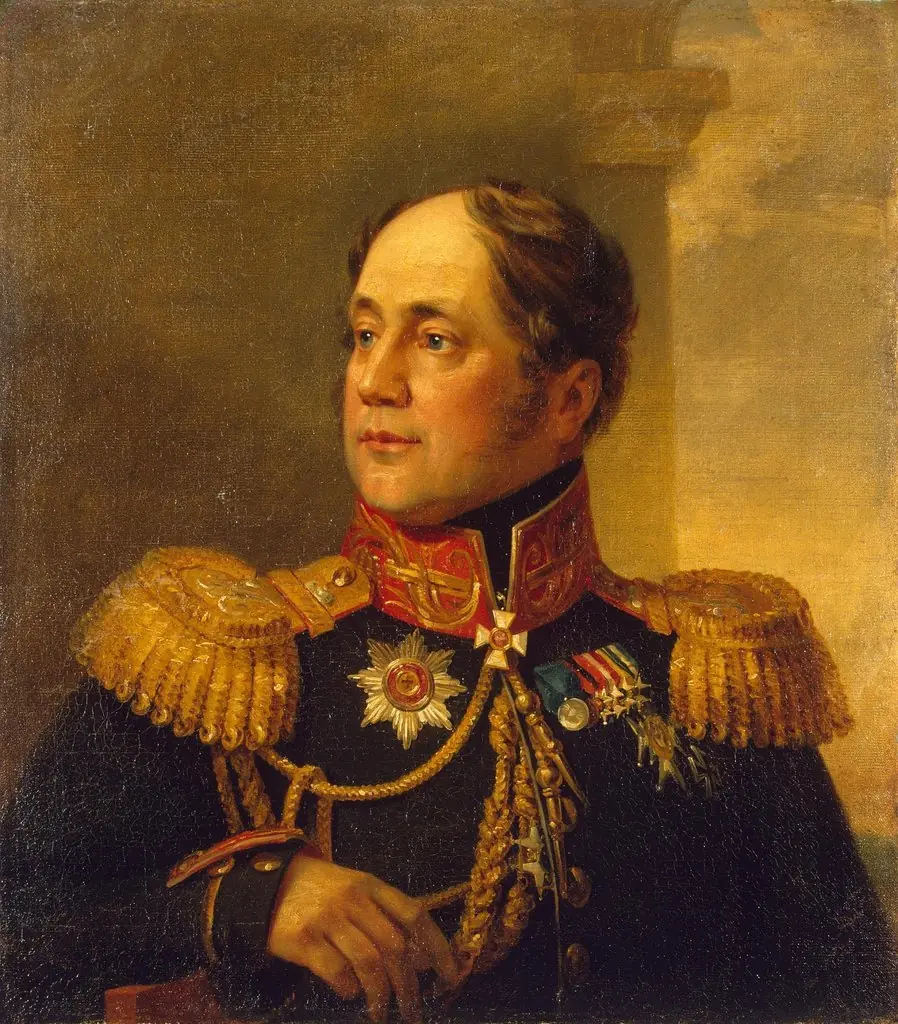
The subject, Nikolai Martemyanovich Sipyagin, was a distinguished Russian general who rose from captain during the Patriotic War of 1812 to general-major and general-aide-de-camp, earning numerous decorations for service at battles including Krasny, Dresden, and Kulm. In this portrait, Sipyagin is shown in the general-aide-de-camp uniform introduced in 1815, with the imperial cipher of Alexander I on his epaulettes. The iconography emphasizes his military prestige through the prominent display of orders and medals added since the 1824 portrait: the star and neck cross of the Order of St. Vladimir 2nd class, neck crosses of the Prussian orders of the Red Eagle 2nd class and Pour le Merite, the Austrian Order of Leopold 2nd class, and the breast cross of the British Order of the Bath in his buttonhole. The fur cloak (burka) and relaxed posture with gloved hand resting at his waist, holding a hat, convey a sense of confident authority rather than rigid formality. The atmospheric background with distant buildings and masts suggests a life of travel and responsibility, while the soft, indirect gaze creates an impression of approachable dignity. The overall effect balances the representation of hierarchical status with a hint of the subject's personal character.
Technique & Style
Dawe executed the portrait in oil on canvas, employing a technique characteristic of his refined academic style. The brushwork is smooth and highly finished on the face and uniform details, demonstrating particular skill in rendering the texture of gold braid, the sheen of medals, and the weight of the fur cloak. Light enters from the left, illuminating the facial features, gold accents, and fur texture while creating subtle modeling. The palette is dominated by deep greens, blacks, and browns, with warm gold accents and cool flesh tones. The background is handled with looser, more atmospheric brushwork, transitioning from dark clouds to a hazy, lighter landscape with suggestions of water and distant structures. This contrast between precise figural rendering and evocative, indistinct surroundings is typical of Dawe's approach to military portraiture, focusing attention on the subject while providing contextual depth. The paint surface shows age cracks and minor losses at the edges, consistent with its nearly two-century history. The signature 'painted by Geo Dawe RA' appears in the lower right corner.
History & Provenance
The circumstances of this portrait's commission remain uncertain, though scholarly consensus dates it to late 1827, when Sipyagin visited Saint Petersburg as military governor of Tiflis (Tbilisi) for his investiture with the Order of St. Vladimir 2nd class. Unlike the 1824 gallery portrait, which was officially commissioned by Alexander I on 19 May 1822 and delivered to the Hermitage on 7 September 1825, this variant appears to have originated in a private context. It likely remained in a private collection in Saint Petersburg before being nationalized after the October Revolution. The painting entered the State Museum Fund, and in 1923 was transferred to the Hermitage through the Department of Artistic Valuables. In the late 1920s it was marked for potential foreign sale, listed in Gostorg from 1929 and consigned to the Antikvariat organization as 'Portrait of a Military Man' by 'Dau,' with an estimated value of 300 rubles. The sale did not materialize, and the work was returned to the Hermitage, formally accepted by act on 16 October 1931. It is now inventoried as GE 9475. A mezzotint engraving after this knee-length version was produced in London in the late 1820s; surviving impressions are held at the museum-estate Ostafyevo and the British Museum.
Context
George Dawe (1781-1829) was the preeminent portraitist of the Russian military elite during the 1820s, having relocated to Saint Petersburg in 1819 at the invitation of Alexander I. Between 1822 and 1828, he produced over 300 portraits for the Military Gallery of the Winter Palace, creating a visual record of the generation that had defeated Napoleon. His assistants included Alexander Polyakov and Wilhelm August Golicke. Dawe's position as First Portrait Painter of the Imperial Court, conferred in 1828, underscores the cultural prestige of this commission. The two Sipyagin portraits illustrate the evolving conventions of Russian military portraiture: the 1824 version adhered to the standardized format of the Winter Palace gallery, while the 1827 variant permitted greater individual characterization and a more elaborate display of honors. The discrepancy in dimensions between sources, 126 by 98.5 cm in the Hermitage records and the erroneous 70 by 62.5 cm cited in some references, reflects occasional confusion with the gallery portrait. Critical attention has focused on Dawe's meticulous documentation of decorations, though scholars note occasional inaccuracies, such as the omission of Sipyagin's St. Vladimir 3rd class cross in the 1824 version and possible confusion in the identification of certain foreign orders.
Legacy
The 1827 portrait of Sipyagin occupies a significant place within Dawe's Russian oeuvre as an example of the more personalized portraiture that emerged alongside the formal gallery commissions. Its reproduction as a mezzotint in London in the late 1820s indicates international interest in the Russian military elite and Dawe's role in mediating that image abroad. The lithographic afterlife of the 1824 portrait, produced in the 1840s by I. P. Pesotsky's workshop after drawings by I. A. Klyukvin, and its reproduction in the publication 'Emperor Alexander I and His Companions,' ensured wider dissemination of Sipyagin's image within Russia. The 1827 variant's near-export in the late 1920s, during a period of Soviet sales of cultural property, and its subsequent retention in the Hermitage, exemplify the precarious preservation of imperial-era collections. Today, the portrait remains in the Hermitage as part of the most comprehensive holding of Dawe's work worldwide, contributing to the museum's status as the primary locus for study of this Anglo-Russian artistic enterprise. Dawe's reputation, diminished in England after his death, has persisted in Russia where his military portraits constitute an unparalleled documentary and artistic record of the Napoleonic generation.
Own this work as a print
Artist & collection
Artist
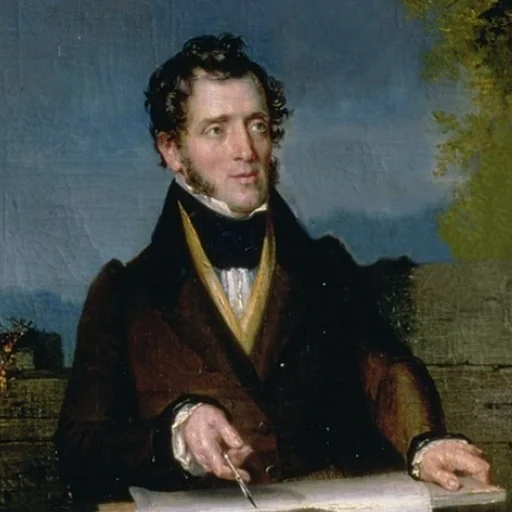
George Dawe (6 February 1781 – 15 October 1829) was an English portraitist who painted 329 portraits of Russian generals active during Napoleon's invasion of Russia for the Military Gallery of the Winter Palace.

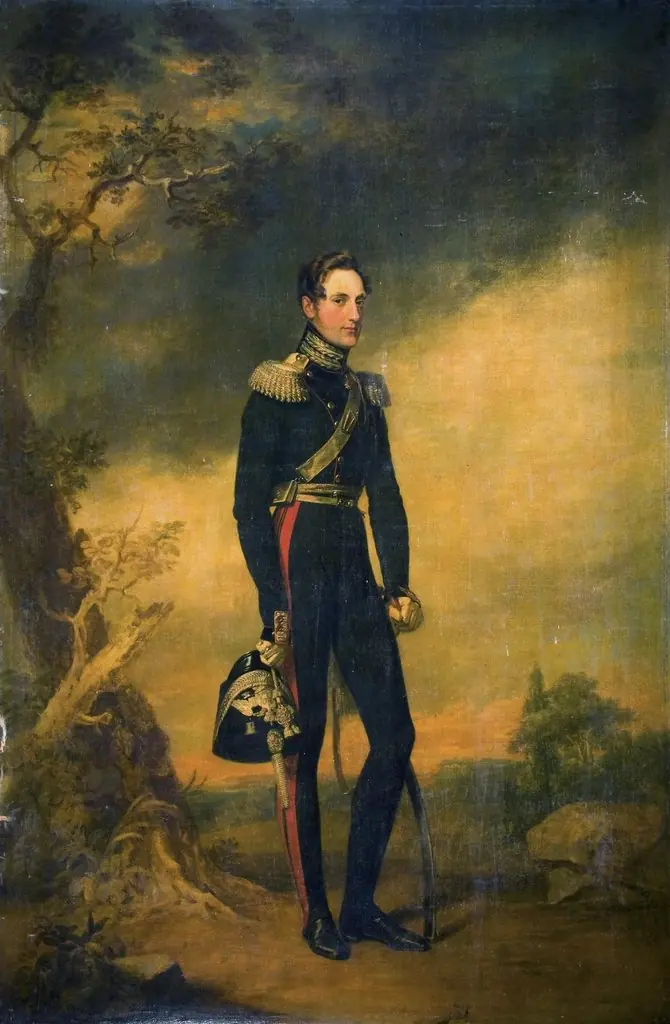 Portrait of Grand Duke Nikolai Pavlovich
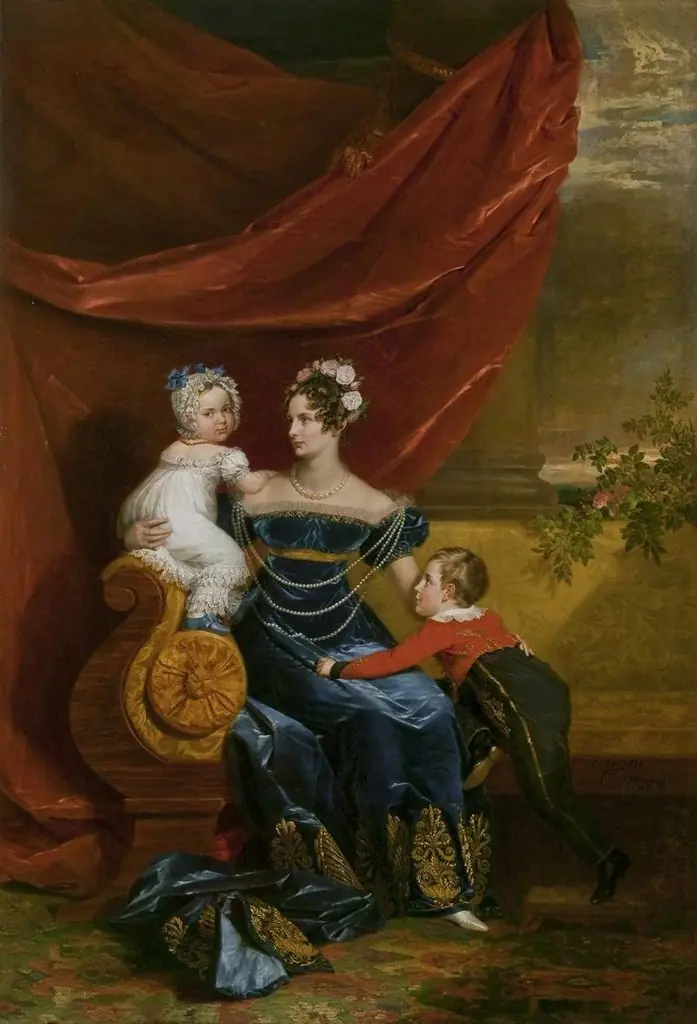 Portrait of Grand Duchess Alexandra Fiodorovna with Children
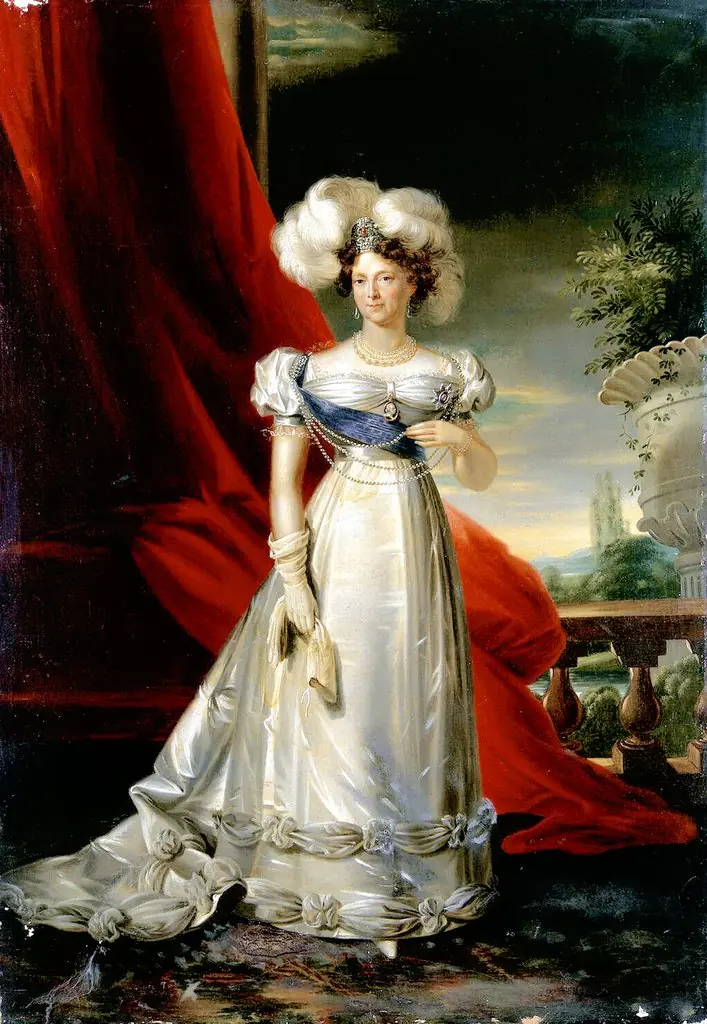 Portrait of the Empress Dowager Maria Feodorovna
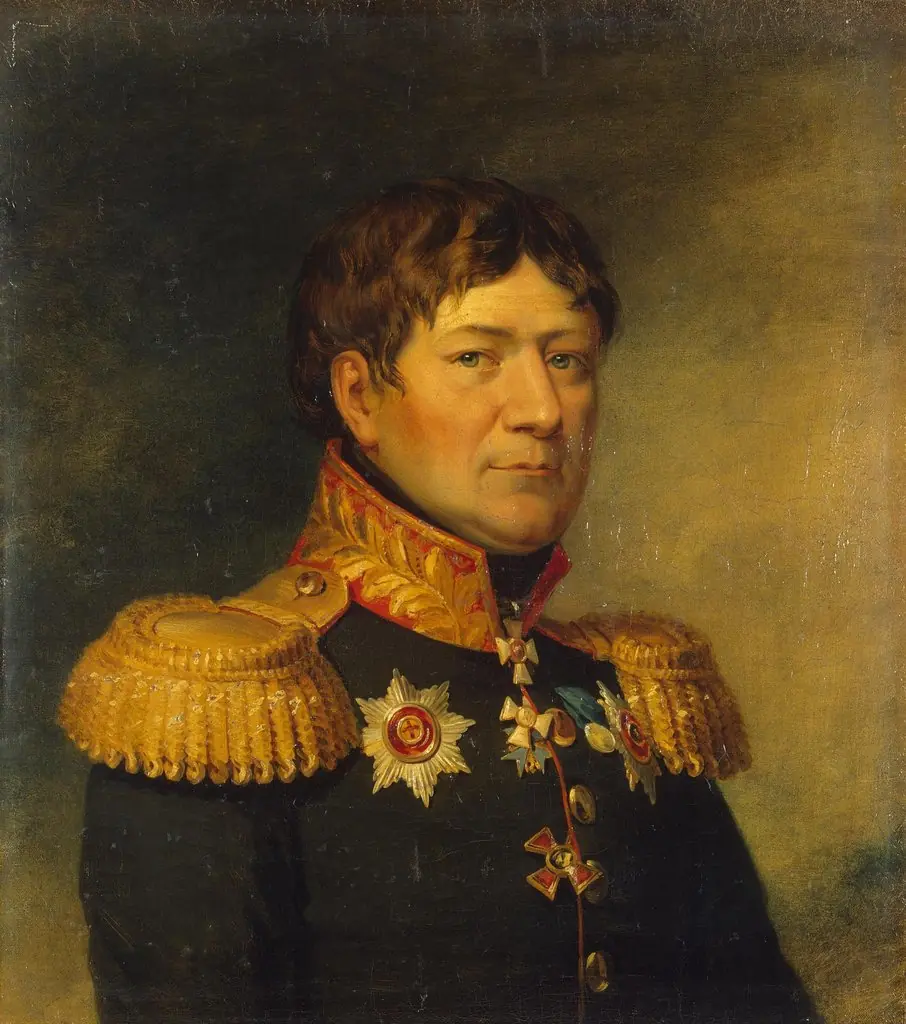 Portrait of Yegor M. Pillar (1767-1830)
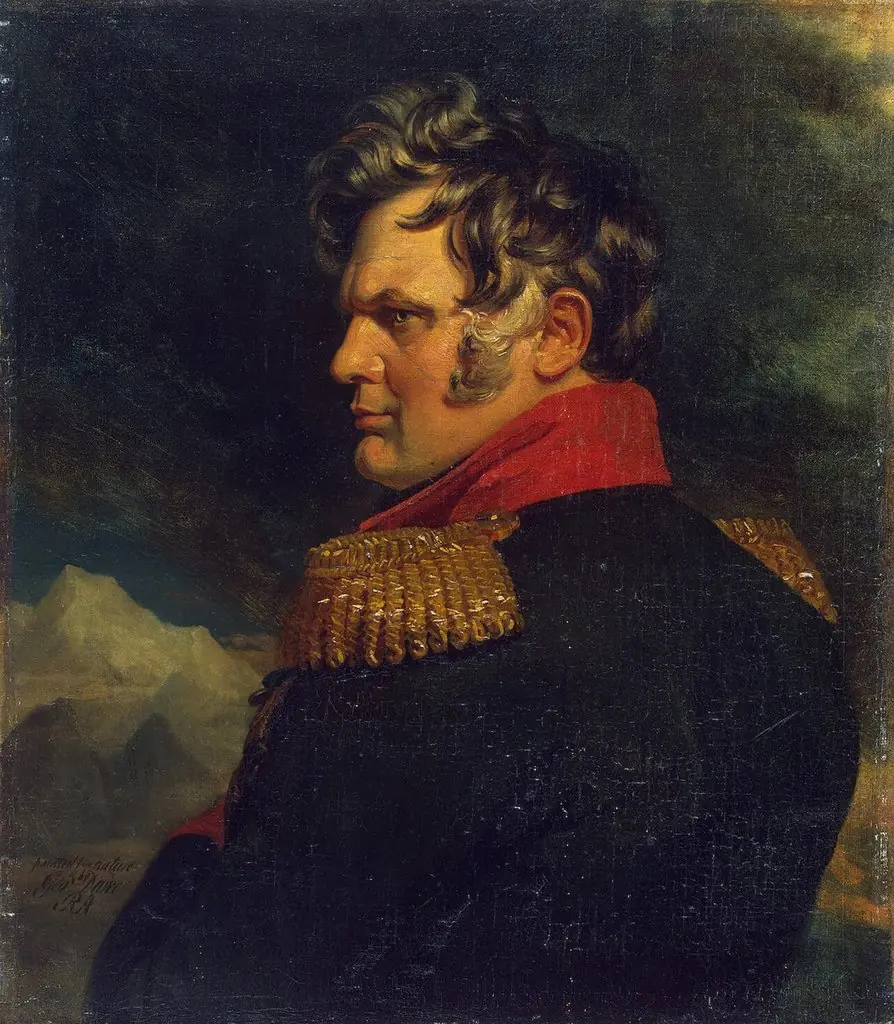 Portrait of Alexei P. Yermolov (1772/77-1861)
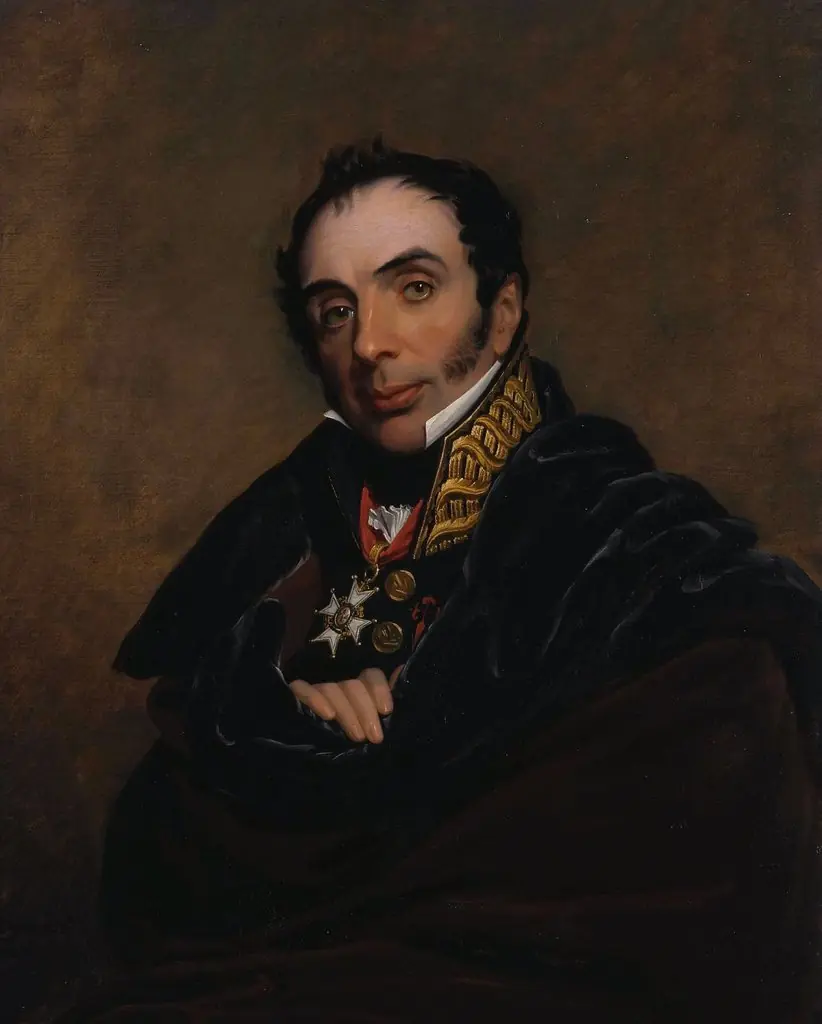 Portrait of Miguel Ricardo de Alava
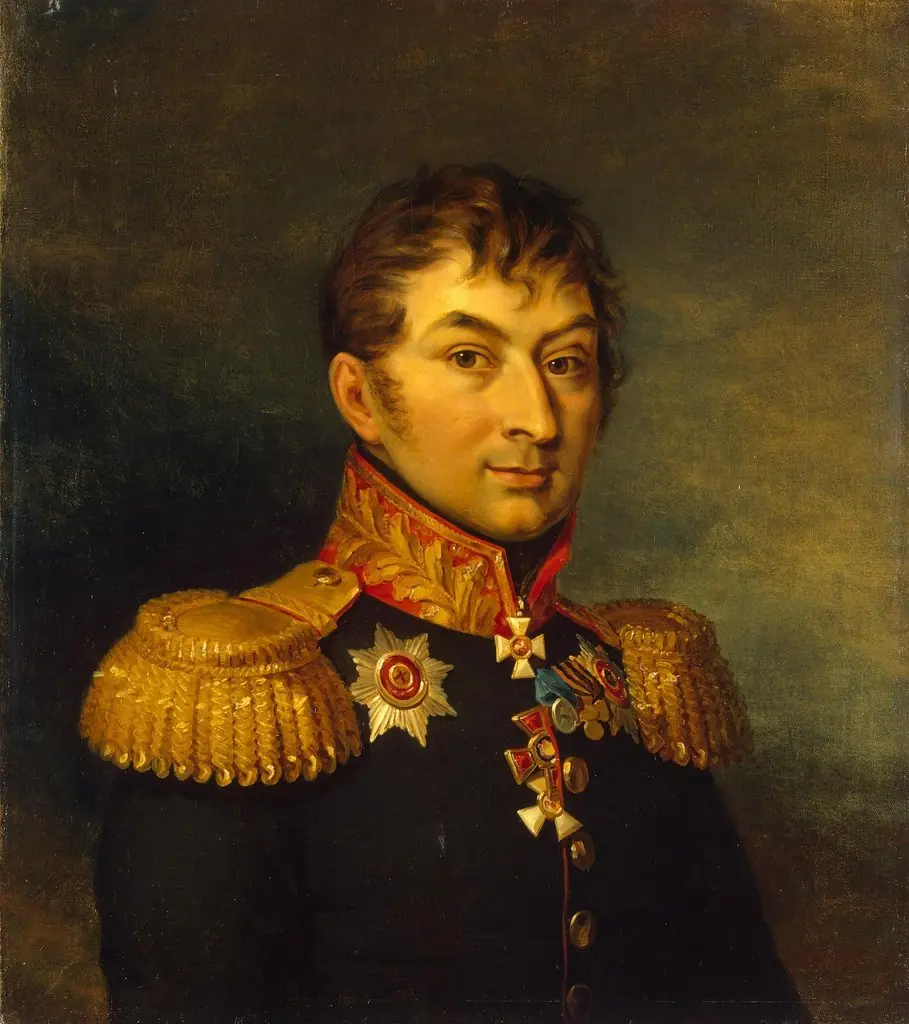 Portrait of Ivan D. Panchulidzev (1759-1815) (1st)
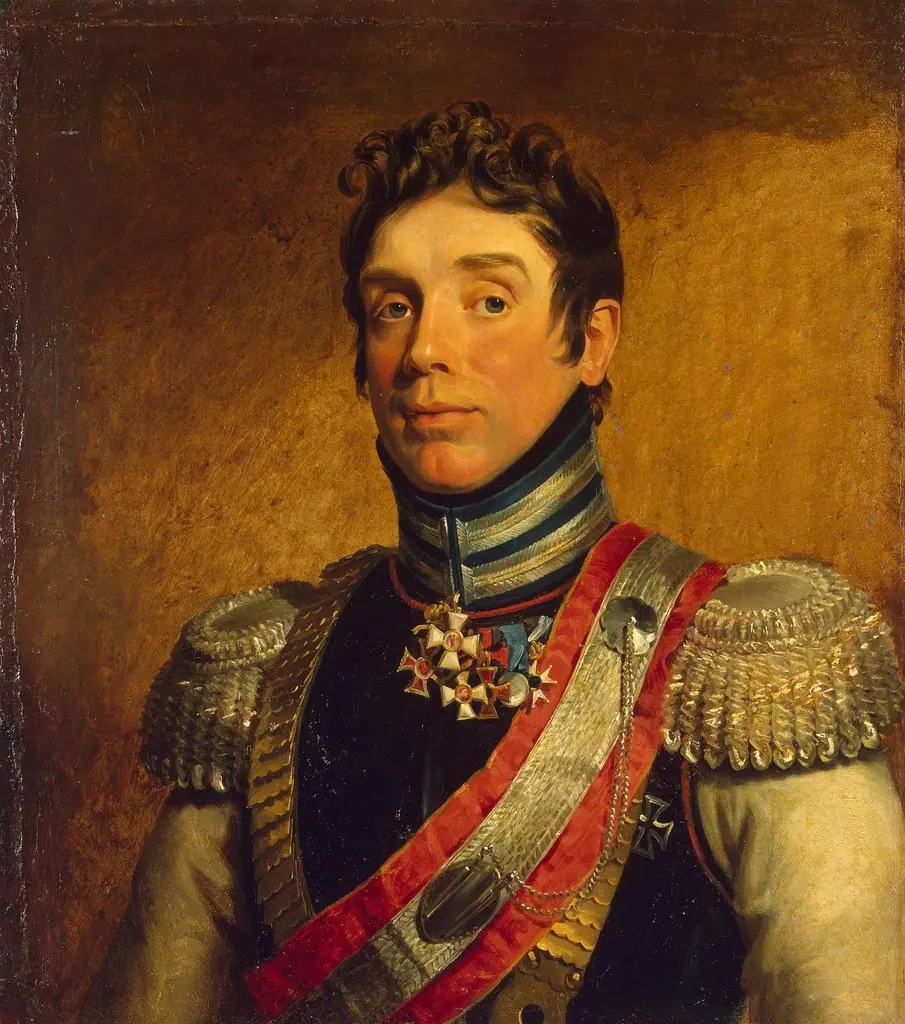 Portrait of Karl V. Budberg (1774-1829)
- Portrait of Nikolai M. Sipyagin (1785-1828)
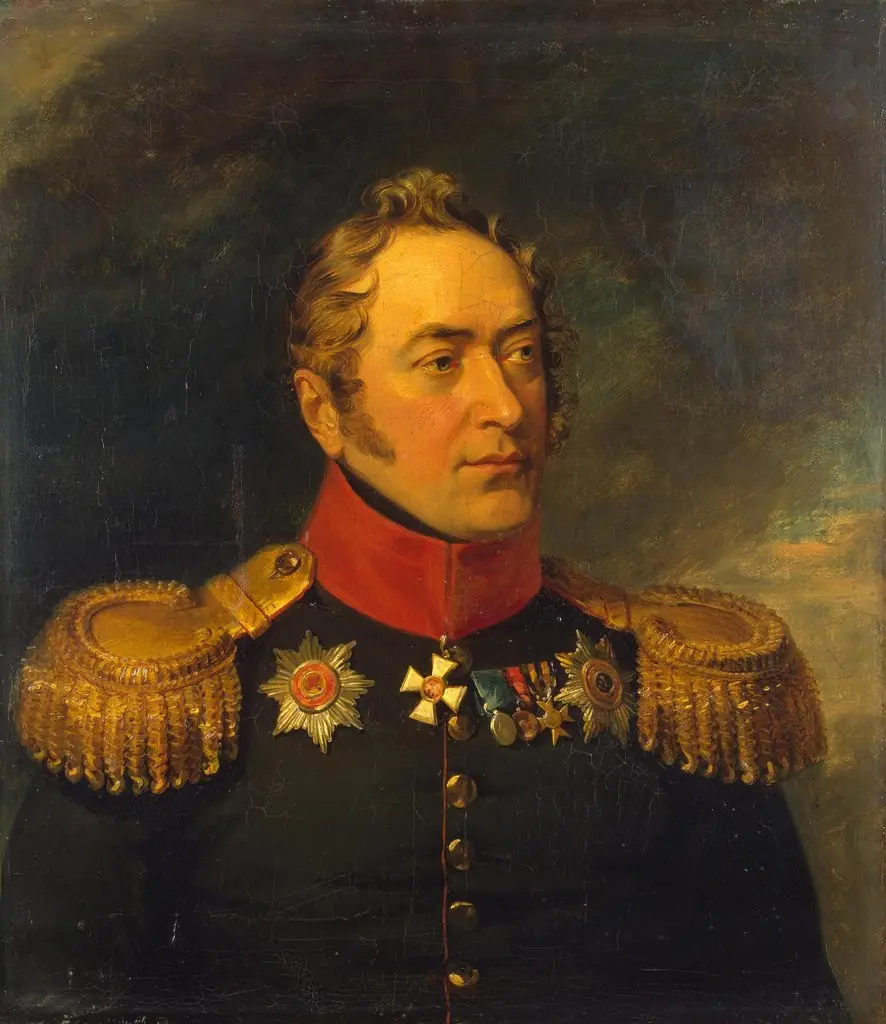 Portrait of Nikolai N. Khovansky (1777-1837)
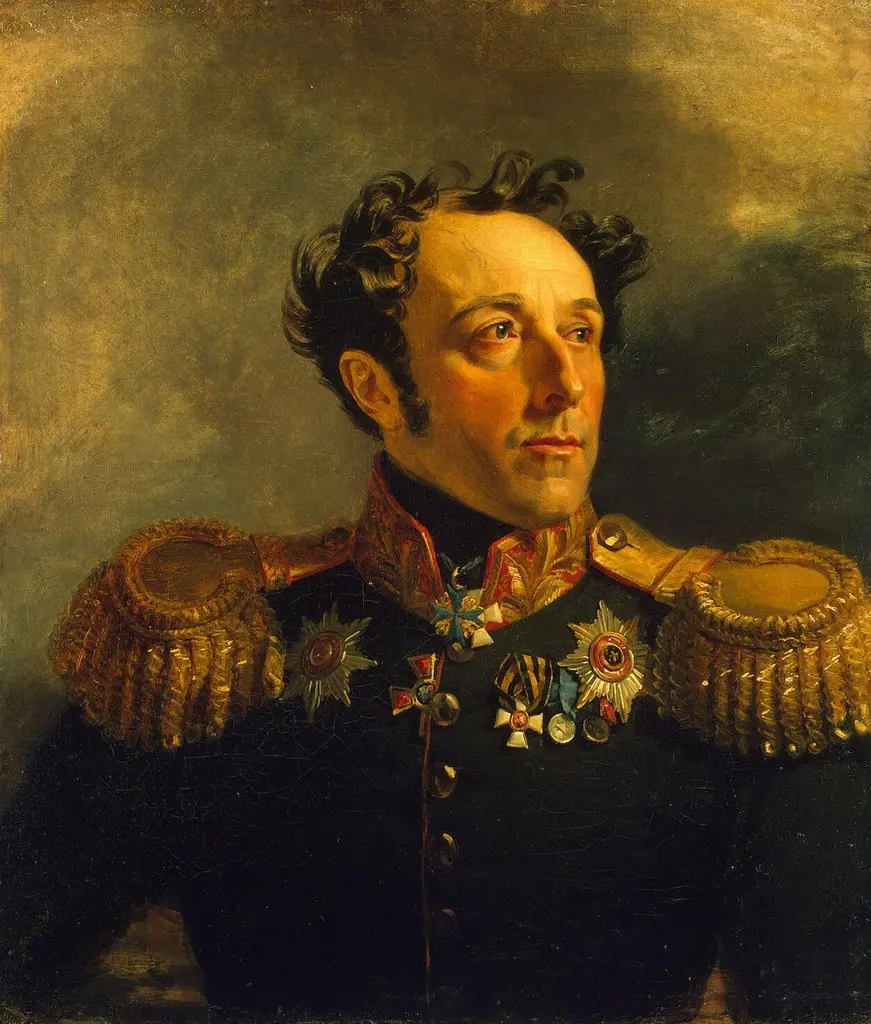 Portrait of Boris Ya. Knyazhnin (1777-1854) (2nd)
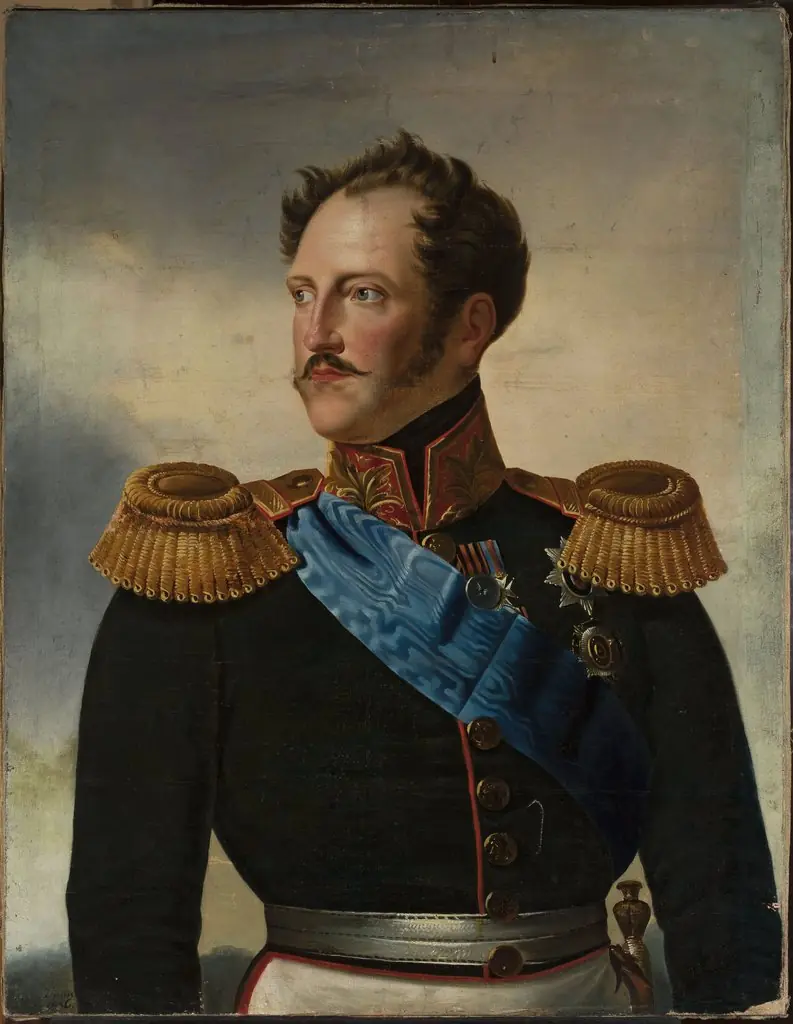 Portrait of Tsar Nicholas I
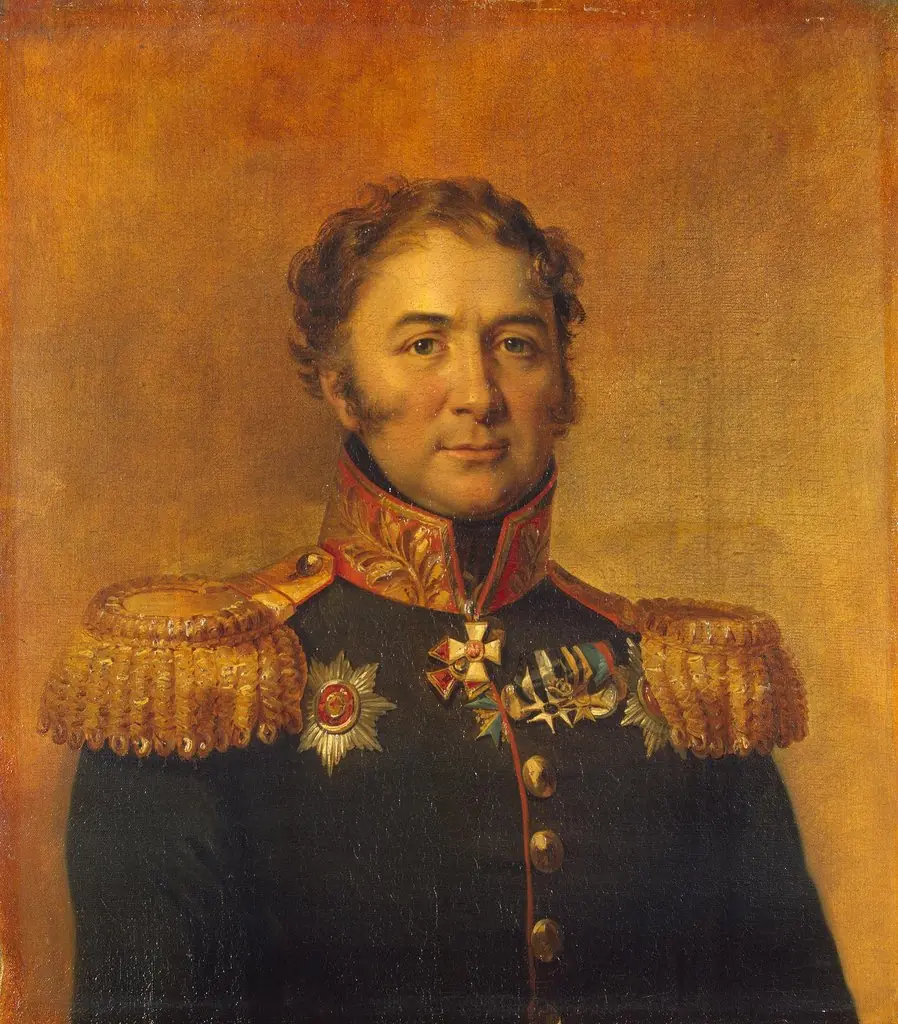 Portrait of Nikolai V. Dekhteryov (1775-1831)
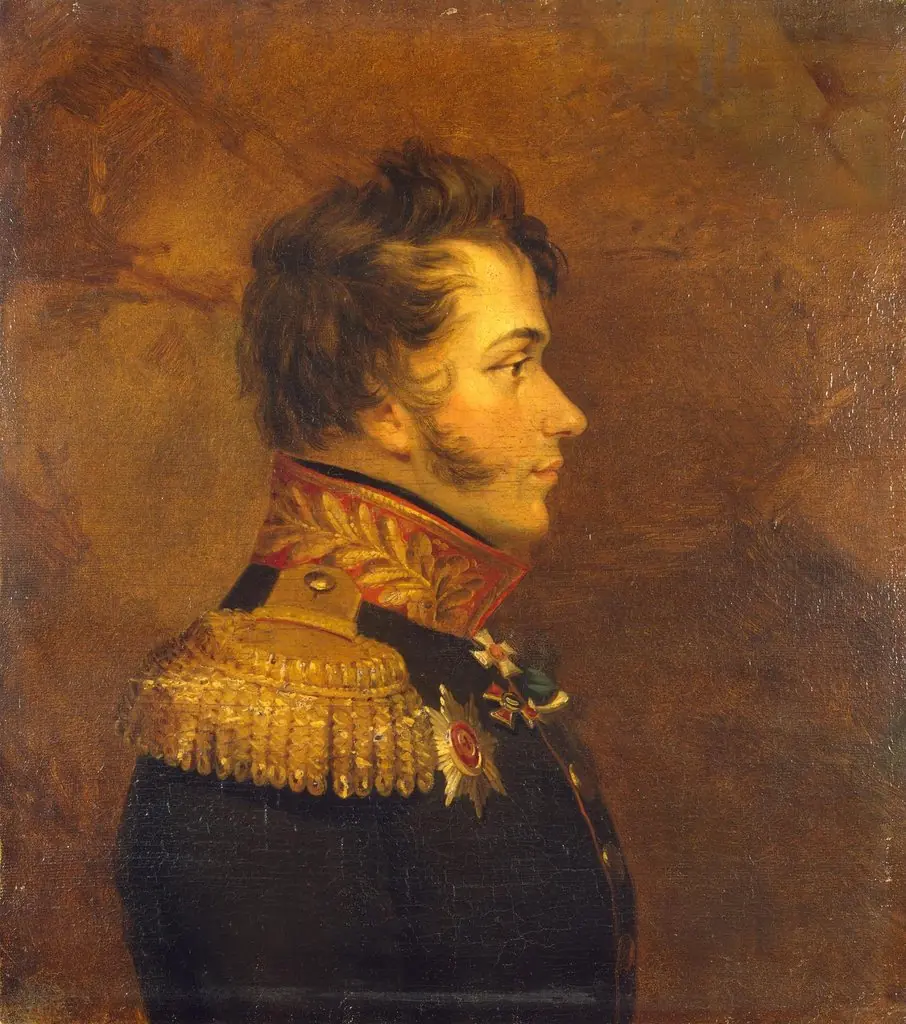 Portrait of Nikolai D. Kudashev (1784-1813)
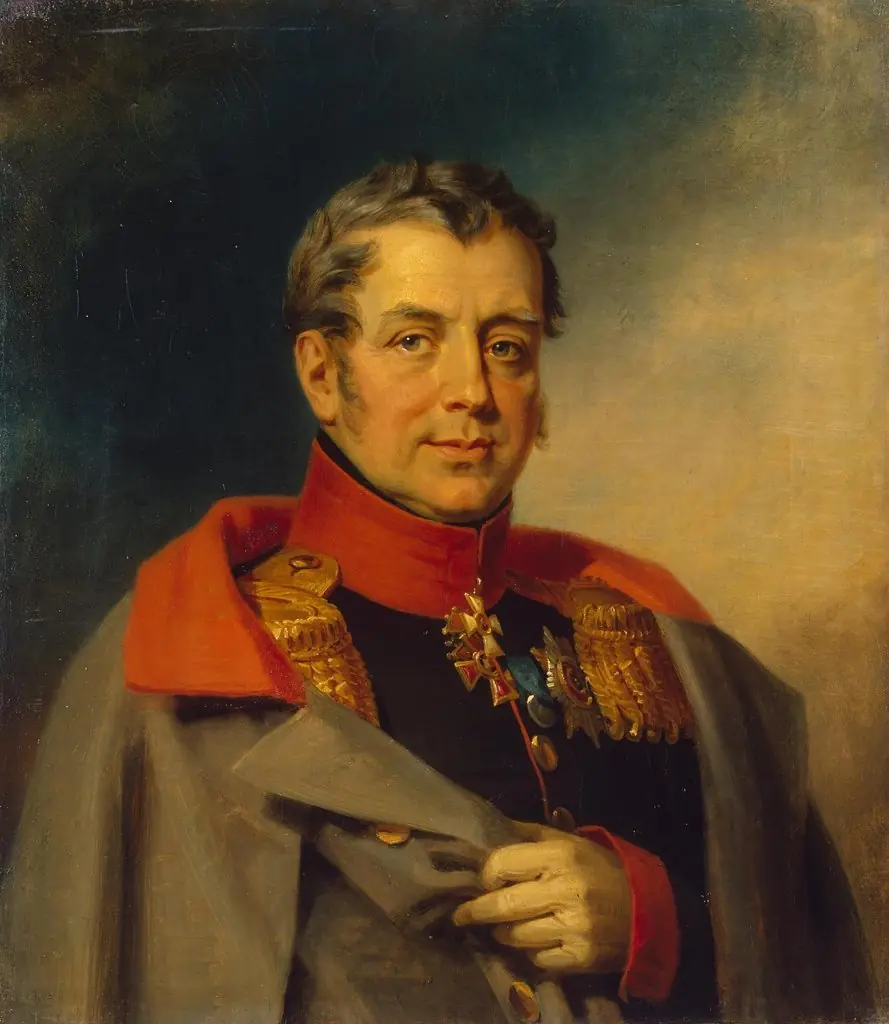 Portrait of Mikhail D. Balk (1764-1818)
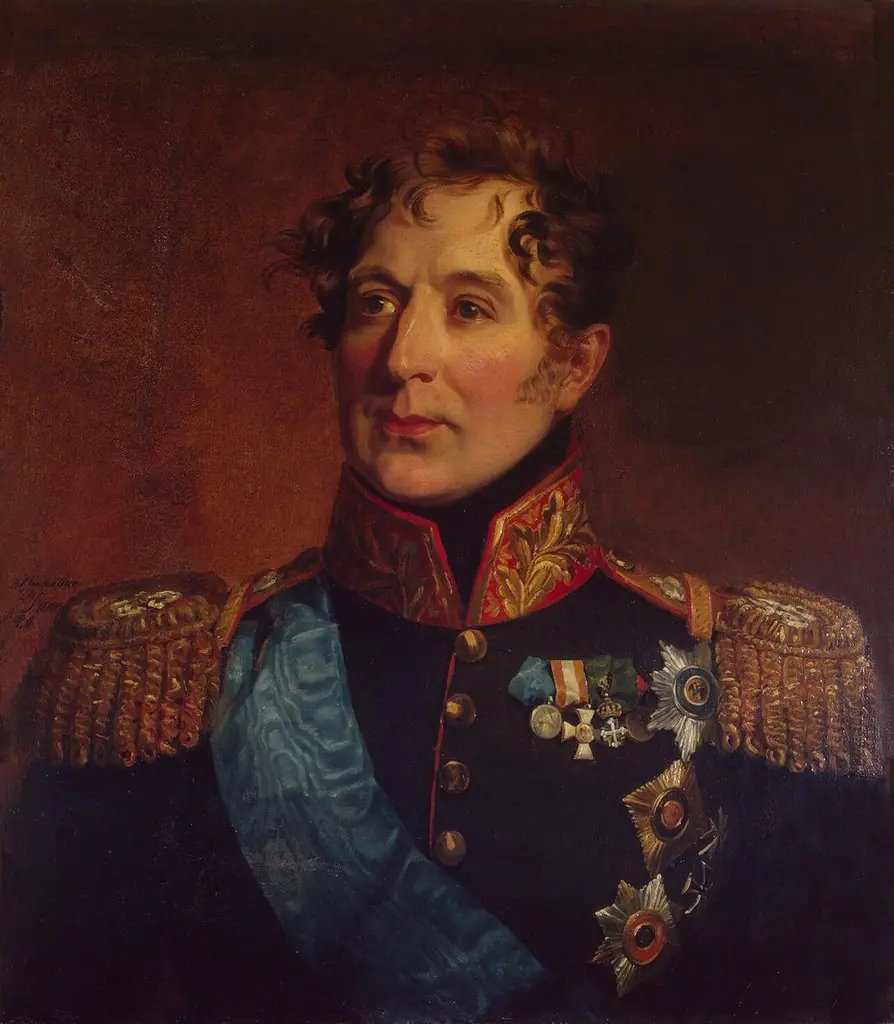 Portrait of Mikhail A. Miloradovich (1771-1825)
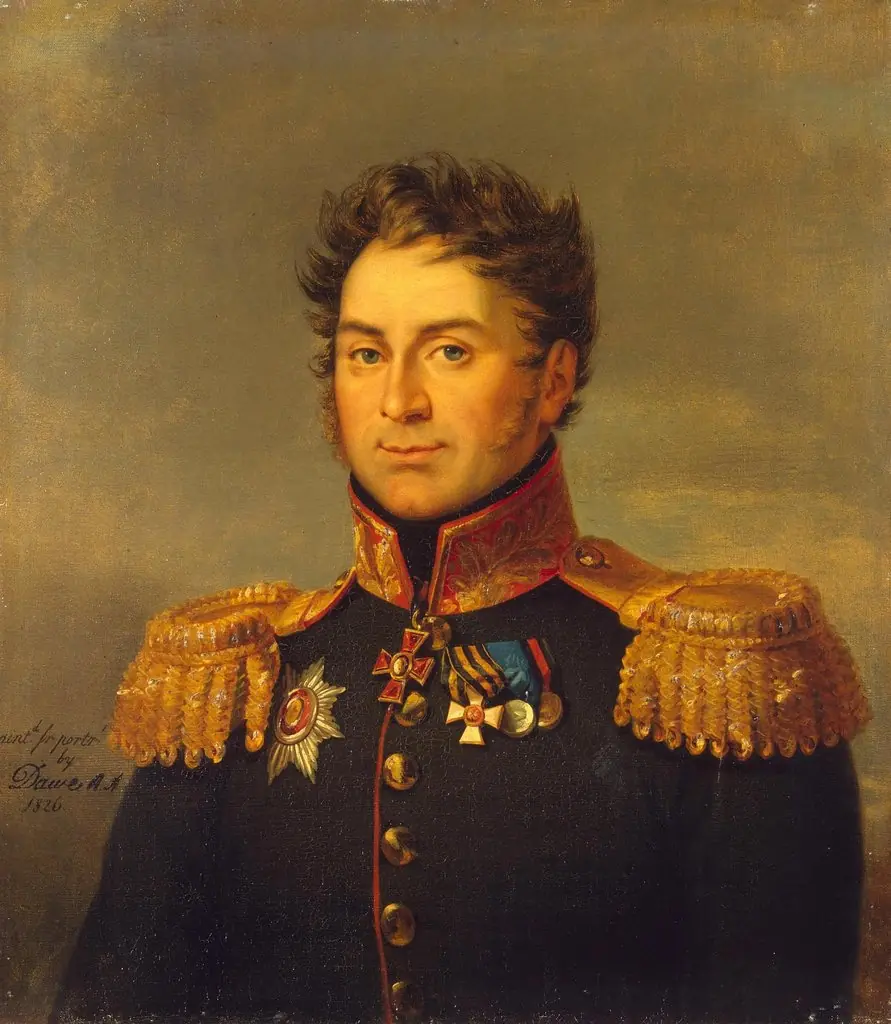 Portrait of Nikolai D. Olsufyev (1779-1817) (3rd)