Artwork
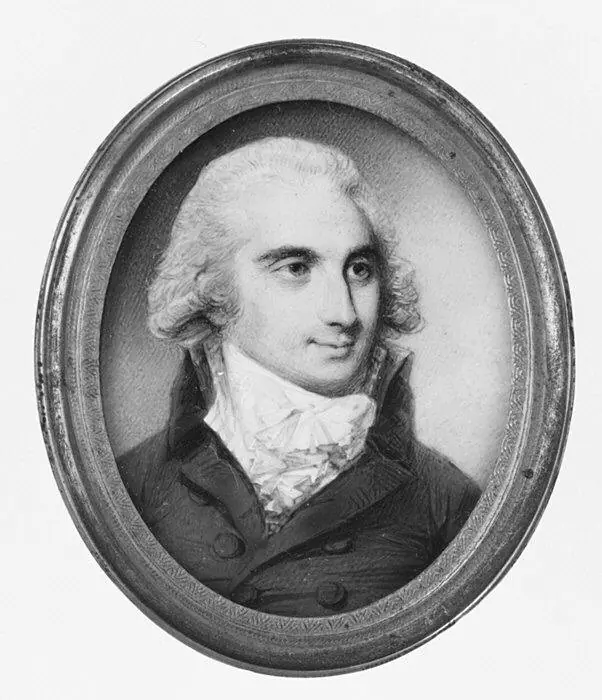
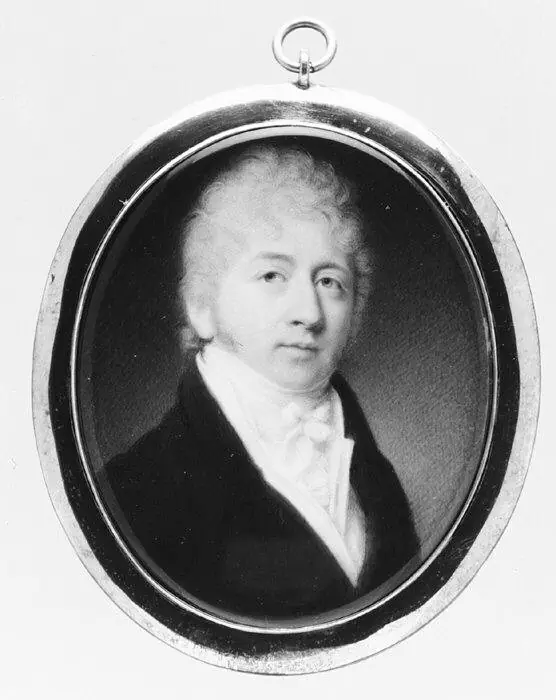
Portrait of a Man, Said to Be Mr. De Wolf
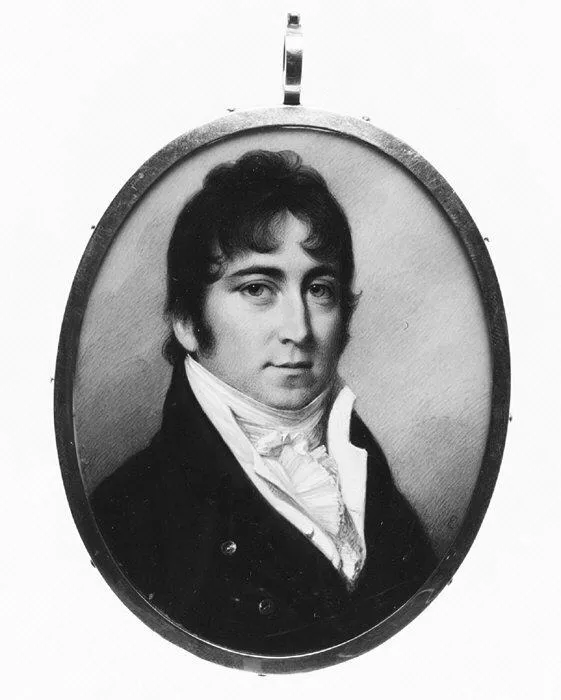
Portrait of a Man, Said to Be Mr. De Wolf is an unspecified painting by the British Romanticist artist George Engleheart. It dates from 1805 and is held in the collection of the Metropolitan Museum of Art.
About this work
If you're interested in learning more about this style of portrait painting, you might want to look into the work of George Engleheart.
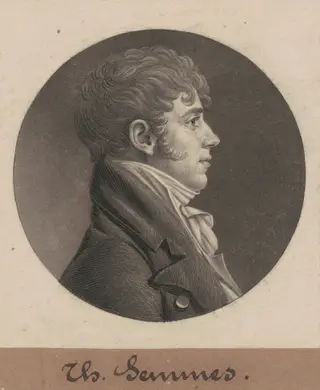
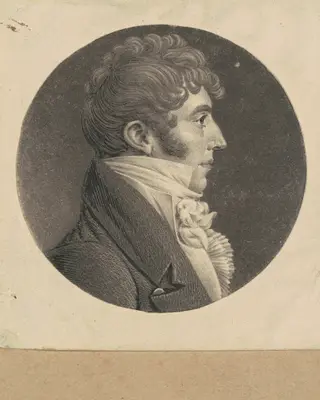
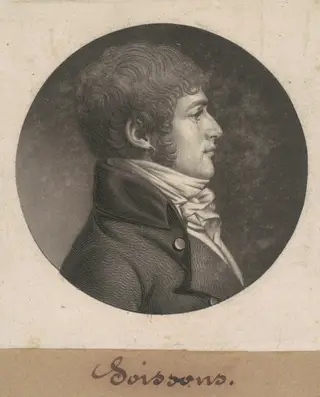
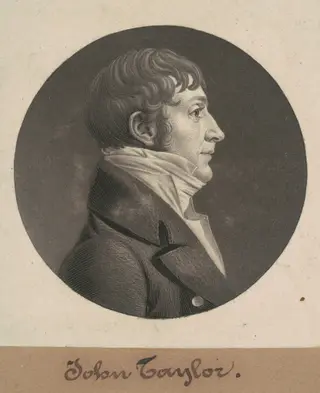
This painting is a portrait of a man. He's wearing a dark jacket with buttons and a white cravat. The background is light-colored.
The man's face is the main focus of the painting. His hair is dark and styled in a way that was popular during the early 19th century. His expression is serious, but not stern.
If you're interested in learning more about this style of portrait painting, you might want to look into the work of George Engleheart.
History & Provenance
Created in 1805, this portrait is attributed to the artist George Engleheart. The work, titled Portrait of a Man, Said to Be Mr. De Wolf, is classified as a painting within the portrait genre. While specific details regarding its original commission or intermediate ownership history are not provided in the available records, the piece is currently held in the collection of the Metropolitan Museum of Art.
The physical dimensions of the canvas are recorded as 81 units in height and 62 units in width. The inception date is firmly established as 1805, marking the period of its creation.
Portrait of a Man, Said to Be Mr. De Wolf, painted by George Engleheart in 1805, is part of the Metropolitan Museum of Art’s collection and is displayed in its European paintings galleries. The museum’s catalog records the work as belonging to the Engleheart collection but does not publish an explicit accession or inventory number. No documented exhibition history appears in the cited sources, indicating that the painting has not been listed in major retrospective or thematic shows referenced in the available documentation.
Overview
George Engleheart's Portrait of a Man, Said to Be Mr. De Wolf, painted in 1805, captures a male sitter in a formal presentation characteristic of early 19th-century British portraiture. This work exemplifies the artist's skill in miniature painting, a genre for which he was widely recognized. The piece is currently part of the collection at The Metropolitan Museum of Art, representing a period of significant artistic development in England.
Subject & Meaning
The painting presents a man identified as Mr. De Wolf, depicted with a composed and thoughtful expression. He wears a dark jacket adorned with buttons and a crisp white cravat, attire typical of formal male fashion during the early 1800s. His dark hair is styled according to the period's trends.
The light background ensures the sitter's face remains the central focus, emphasizing his individual presence within the portrait.
Technique & Style
Created in 1805, this work reflects the detailed approach characteristic of George Engleheart, a prominent miniature portrait painter of his era. Engleheart, active during the British Romanticism movement, was known for the precision and fine execution of his portraits. His style aligns with contemporaries like Richard Cosway and John Smart, who also specialized in capturing individual likenesses with meticulous detail, often on a small scale.
Context
George Engleheart was a notable figure in English art from the late 18th to early 19th centuries, working within the flourishing tradition of British Romanticism. His career, spanning from 1750 to 1829, saw him become a sought-after artist for miniature portraits. This particular painting from 1805 places him firmly within a period when artists like Cosway and Smart were also defining the aesthetic of small-scale, intimate portraiture for a discerning clientele.
Artist & collection
Artist
George Engleheart (1750–1829) was an English painter of portrait miniatures, and a contemporary of Richard Cosway, John Smart, William Wood, and Richard Crosse.