Artwork
A Girl Holding a Mirror and a Rose
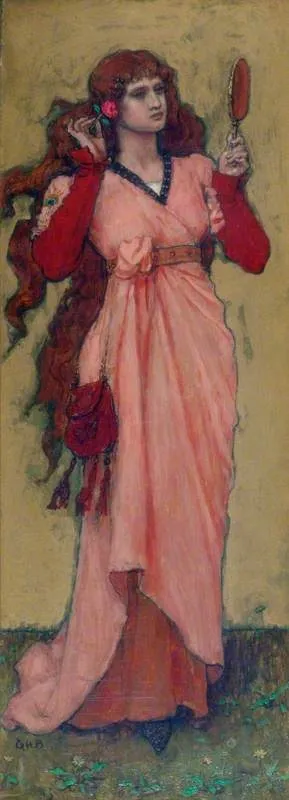
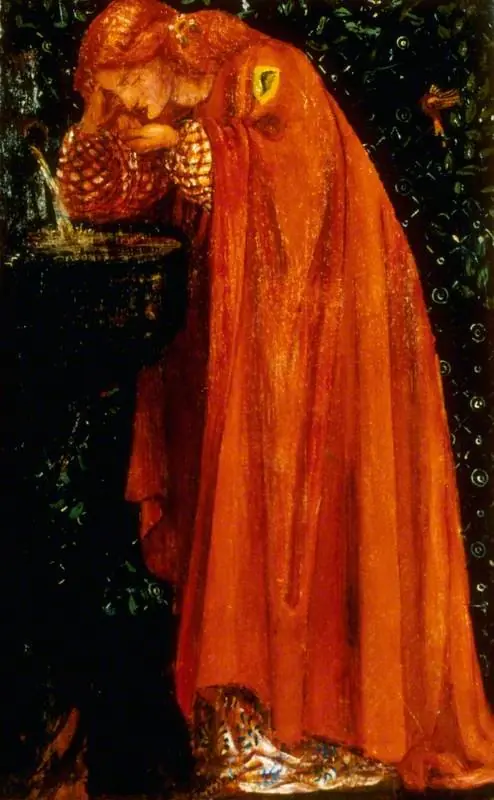
A Girl Holding a Mirror and a Rose is an unspecified painting by the Pre-Raphaelite artist George Henry Boughton. It dates from 1879 and is held in the collection of the Victoria and Albert Museum.
About this work
Overview
The composition centers on her interaction with a mirror and a rose, elements that invite reflection on self-perception and transience.
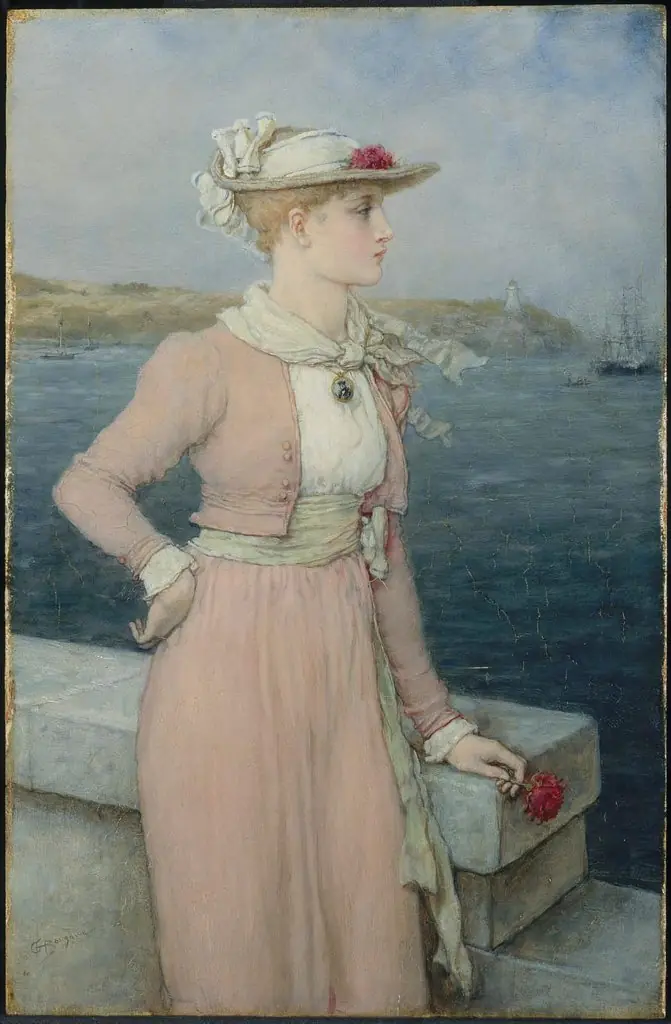
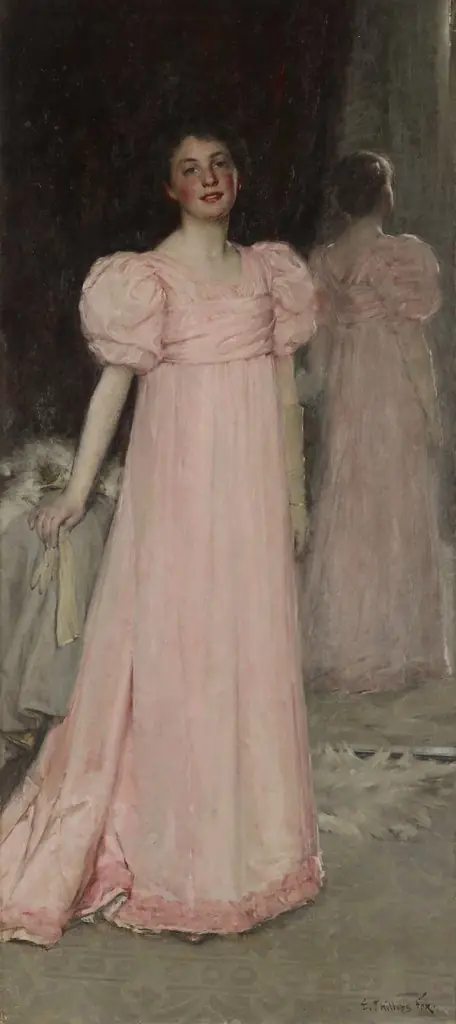
Painted around 1879 by George Henry Boughton, an Anglo-American artist known for quiet domestic and symbolic scenes, this work presents a solitary young woman in a contemplative pose. The composition centers on her interaction with a mirror and a rose, elements that invite reflection on self-perception and transience. Executed with restrained palette and soft focus, the painting avoids dramatic flair, favoring a subdued, introspective mood consistent with Boughton’s broader genre work.
Subject & Meaning
The girl’s dual hold of mirror and rose suggests a meditation on beauty and its impermanence. The mirror, reflecting her own face, implies self-awareness, while the rose, delicate and fleeting, hints at the fragility of youth. Her calm, distant gaze reinforces an internal rather than performative engagement with these symbols.
The absence of narrative action invites viewers to consider personal, quiet moments of introspection rather than moral judgment.
Technique & Style
Boughton employed a gentle chiaroscuro to model the girl’s form, using soft transitions between light and shadow rather than stark contrasts. The flowing lines of her dress and hair echo the organic curves of the rose, unifying the composition. Colors are muted, pink, beige, and pale yellow, creating harmony without vibrancy.
Brushwork is precise yet unobtrusive, prioritizing texture and atmosphere over detail, aligning with late 19th-century tendencies toward lyrical realism.
History & Provenance
The painting entered the collection of the Victoria and Albert Museum in London, where it remains today. Boughton, active in both England and the United States, often exhibited in London during the 1870s and 1880s, gaining recognition for his emotionally nuanced genre scenes. While not widely publicized upon completion, the work’s quiet symbolism and technical restraint likely contributed to its acquisition by a museum focused on decorative and fine arts of the period.
Context
Created during the waning years of the Pre-Raphaelite influence, the painting reflects a shift toward more subdued, psychological themes. While earlier Pre-Raphaelite works emphasized vivid color and literary allegory, Boughton’s approach favored restraint and introspection. His focus on solitary female figures in domestic settings aligned with broader Victorian interests in private emotion, though without overt moralizing or narrative clarity.
Legacy
Though not among Boughton’s most frequently reproduced works, the painting exemplifies his contribution to late 19th-century genre painting: a quiet, poetic mode that prioritized mood over spectacle. Its presence in the V&A underscores its value as a representative example of British-American artistic exchange and the era’s evolving treatment of femininity, symbolism, and inner life in visual art.
Artist & collection
Artist
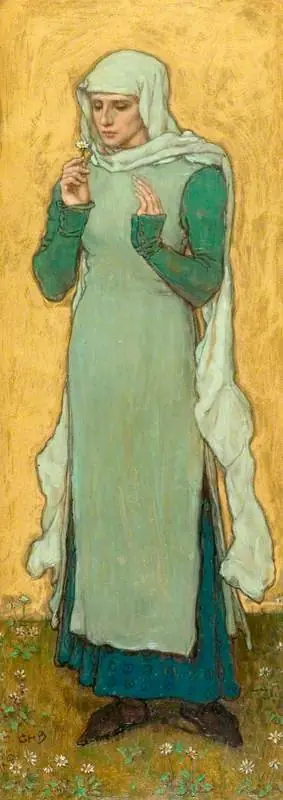
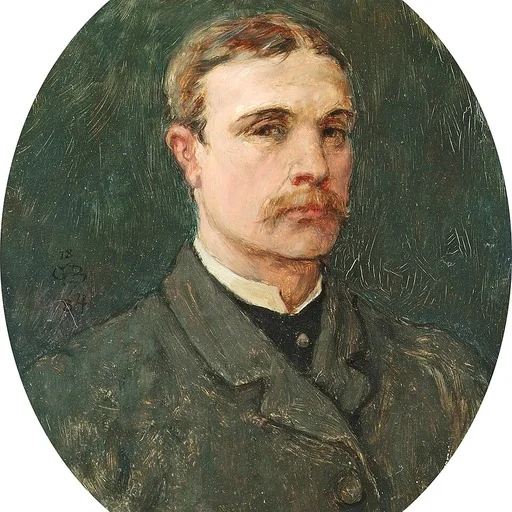
George Henry Boughton (4 December 1833 – 19 January 1905) was an Anglo-American landscape and genre painter, illustrator and writer.