Artwork
The Waning Honeymoon
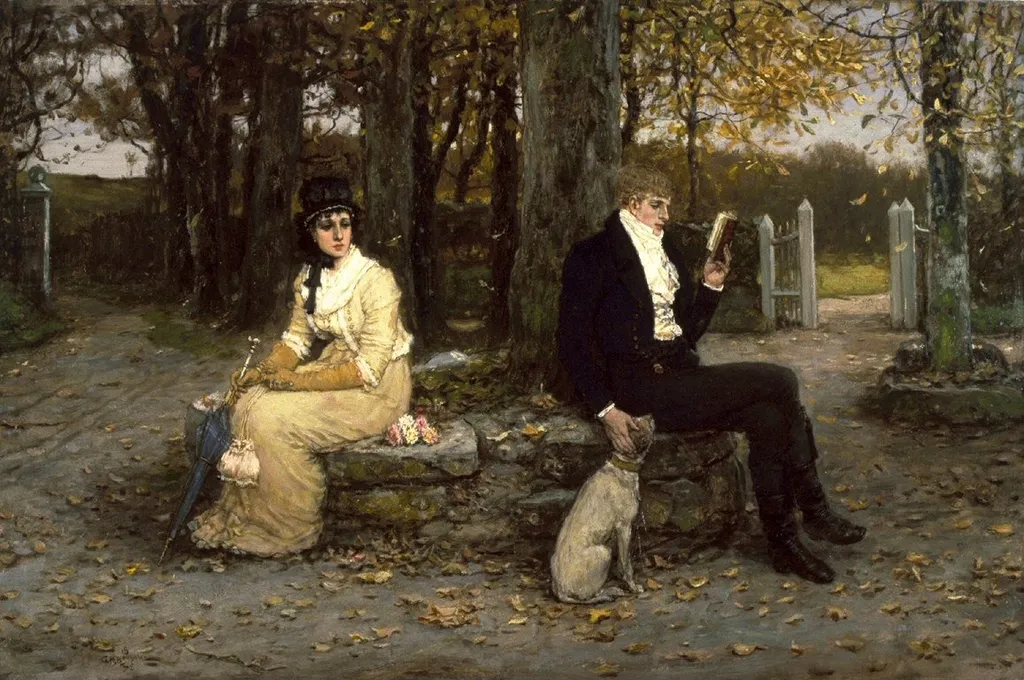
The Waning Honeymoon is an oil painting by the American Impressionist artist George Henry Boughton. It dates from 1890 and is held in the collection of the Walters Art Museum.
About this work
Subject & Meaning
Set in a rural autumn landscape featuring broad-leaved trees and a three-way path junction, the composition includes a man and woman accompanied by a dog.
Painted in 1878, this genre scene depicts a couple during what the title identifies as a waning honeymoon. Set in a rural autumn landscape featuring broad-leaved trees and a three-way path junction, the composition includes a man and woman accompanied by a dog. Iconographic elements such as a book, parasol, trunk, handbag, and glove suggest travel or a pause in a journey.
While the figures are dressed in Regency-era fashion dating between 1795 and 1820, the work explicitly conveys themes of boredom within the context of a honeymoon. The presence of a gate, wall, and bouquet further enriches the domestic and romantic symbolism, though the overarching narrative focuses on the dissolution of initial marital excitement.
Technique & Style
Created in 1878, The Waning Honeymoon is executed in oil paint on canvas, a traditional medium for 19th-century genre painting. The work measures 51 by 76.5 centimeters and depicts a rural scene set within the Regency era (1795–1820). Stylistically, the composition captures a narrative of boredom during a honeymoon, featuring a couple strolling along a path at a three-way road junction.
The formal arrangement includes specific period details such as a broad-leaved tree, a gate, and a trunk, alongside figures dressed in contemporary fashion including jackets, vests, and parasols. The inclusion of a dog, a book, and a bouquet further enriches the genre scene, which is currently held in the collection of the Walters Art Museum.
History & Provenance
George Henry Boughton executed the oil painting The Waning Honeymoon in 1878. Created during the late nineteenth century, the work depicts a couple in a rural setting, capturing a moment of ennui associated with the end of a honeymoon. The painting entered the collection of the Walters Art Museum, where it remains housed.
While specific details regarding the original commissioner or the intermediate ownership chain between the artist's studio and the museum are not provided in the available records, the work's inception is firmly established as 1878. The piece is classified as a genre scene and is rendered on canvas, measuring approximately 51 by 76.5 units.
Overview
George Henry Boughton’s 1890 oil painting, The Waning Honeymoon, captures a quiet moment characteristic of American Impressionism. The Anglo-American artist depicted a scene from the Regency era, featuring three figures at a tranquil road junction amidst an autumnal landscape. This work is part of the Walters Art Museum collection, showcasing Boughton's skill in both genre and landscape painting.
Artist & collection
Artist
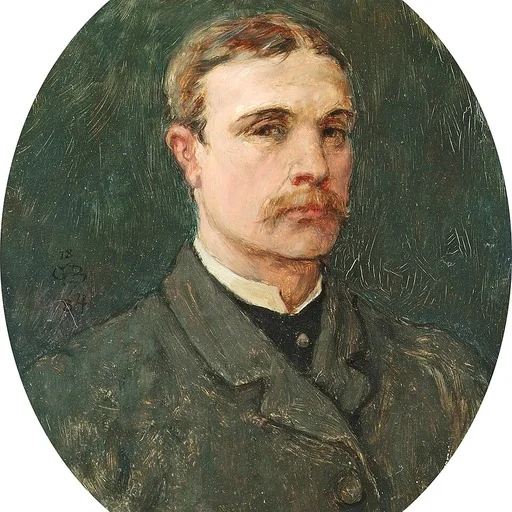
George Henry Boughton (4 December 1833 – 19 January 1905) was an Anglo-American landscape and genre painter, illustrator and writer.

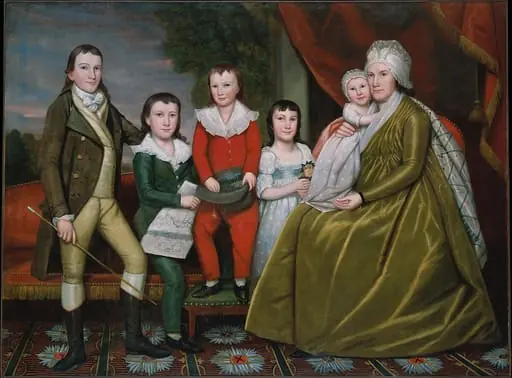 Mrs. Noah Smith and Her Children
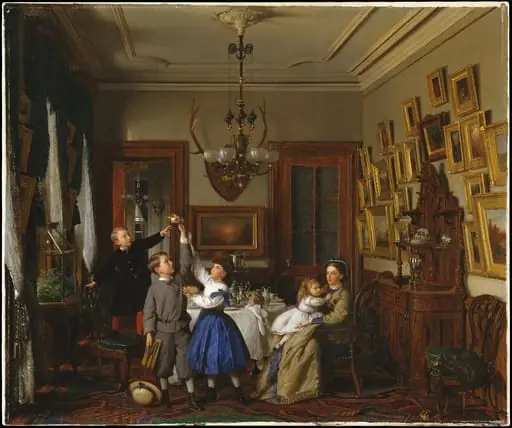 The Contest for the Bouquet: The Family of Robert Gordon in Their New York Dining-Room
 Portrait of Marianne Dorothy Harland (1759–1785), Later Mrs. William Dalrymple
 View on the Catskill—Early Autumn
 The Daughters of Catulle Mendès
 The Interior of an Atelier of a Woman Painter
 Annunciation
 Flowers in a Basket and a Vase