Artwork
The Delaware Valley
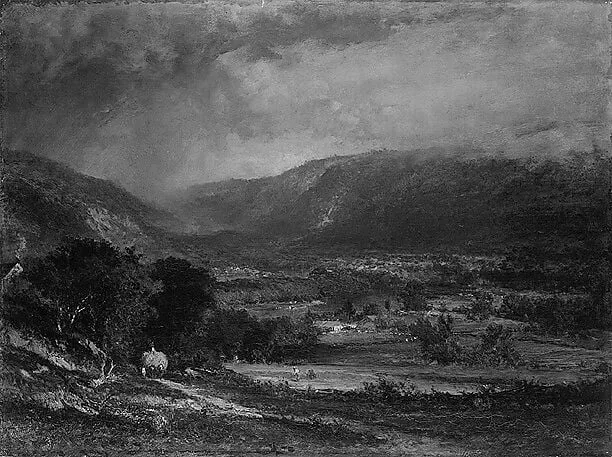
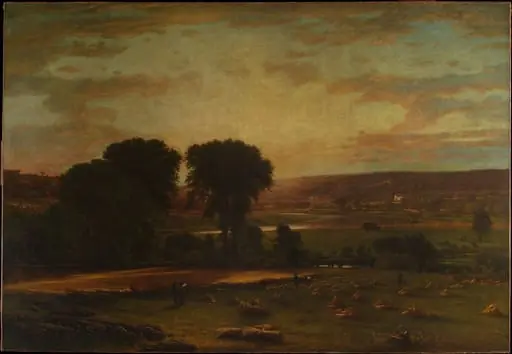
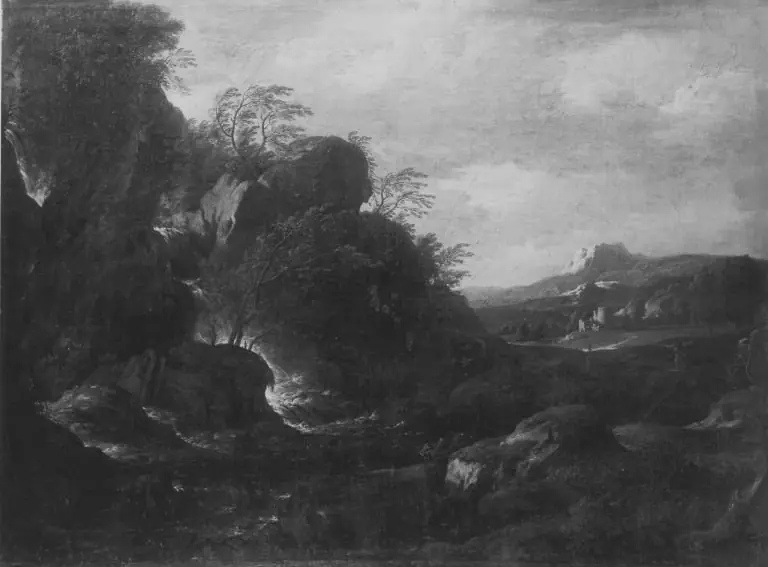
The Delaware Valley is an oil painting by the Hudson River School artist George Inness. It dates from 1863 and is held in the collection of the Metropolitan Museum of Art.
About this work
Subject & Meaning
Its composition aligns with contemporary ideals of harmony between humanity and nature, as documented in the museum’s catalog and the painting’s provenance.
The painting titled "The Delaware Valley" (1863) by George Inness presents a tranquil hill within the Delaware Valley, rendered as a landscape that reflects 19th‑century American interest in natural scenery. Executed in oil on canvas, the work measures 56.5 × 77.2 cm and is housed in the Metropolitan Museum of Art’s American Wing. Its subject, a modest hill set in a pastoral setting, symbolizes the era’s appreciation for the untouched countryside and the visual language of American landscape painting.
Its composition aligns with contemporary ideals of harmony between humanity and nature, as documented in the museum’s catalog and the painting’s provenance.
Technique & Style
The Delaware Valley is an oil painting on canvas created in 1863, as documented in the work’s catalog entry. The canvas measures 56.5 cm in height by 77.2 cm in width, a dimension recorded in the museum’s collection data. Executed by George Inness, the piece is housed in the Metropolitan Museum of Art’s American Wing and is classified under the landscape genre, depicting a hill within a broader landscape scene.
Its formal qualities align with a traditional landscape approach, employing the oil medium to render topography and atmospheric space on a canvas support.
Legacy
The Delaware Valley (1863) by George Inness, an oil on canvas landscape held in the Metropolitan Museum of Art and displayed in The American Wing, has come to symbolize the mature phase of American Hudson River School aesthetics. Its nuanced handling of light and atmospheric space influenced subsequent generations of painters who sought to convey the spiritual resonance of the natural environment. The work's inclusion in a premier institutional collection has reinforced its standing as a reference point for scholarship on 19th‑century American landscape, ensuring continued exhibition and academic discussion.
Overview
George Inness's The Delaware Valley, an oil on canvas from around 1863, represents a pivotal moment in the artist's career. This landscape painting showcases his evolving approach to depicting American nature, moving beyond the strict tenets of the Hudson River School. It offers a serene, atmospheric interpretation of the scene, reflecting a shift towards a more personal and contemplative style during the mid-nineteenth century.
Context
Initially drawing inspiration from the detailed naturalism of the Hudson River School, Inness later developed a more individualized style. His artistic journey was profoundly shaped by studies of European art and the theological writings of Emanuel Swedenborg. The Delaware Valley exemplifies this transition, demonstrating his move away from purely topographical representation towards a landscape vision infused with subjective emotion and spiritual resonance.
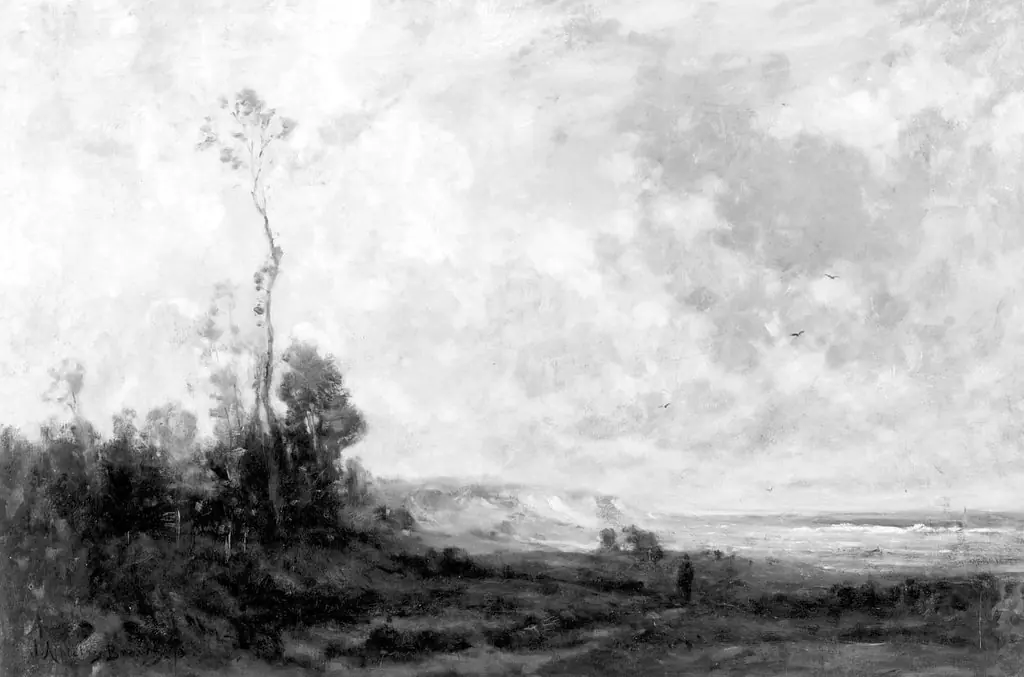
Artist & collection

Artist
George Inness (May 1, 1825 – August 3, 1894) was an American landscape painter. Now recognized as one of the most influential American artists of the nineteenth century, Inness was influenced by the Hudson River School…

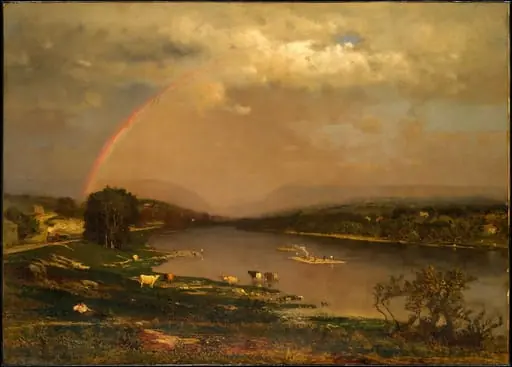
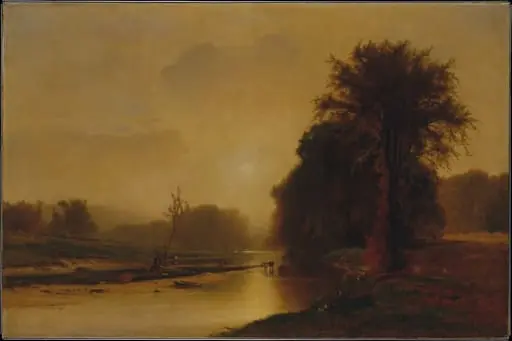
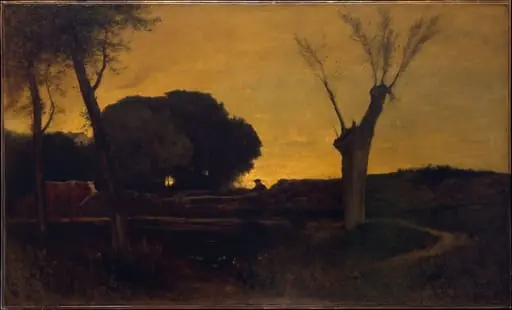
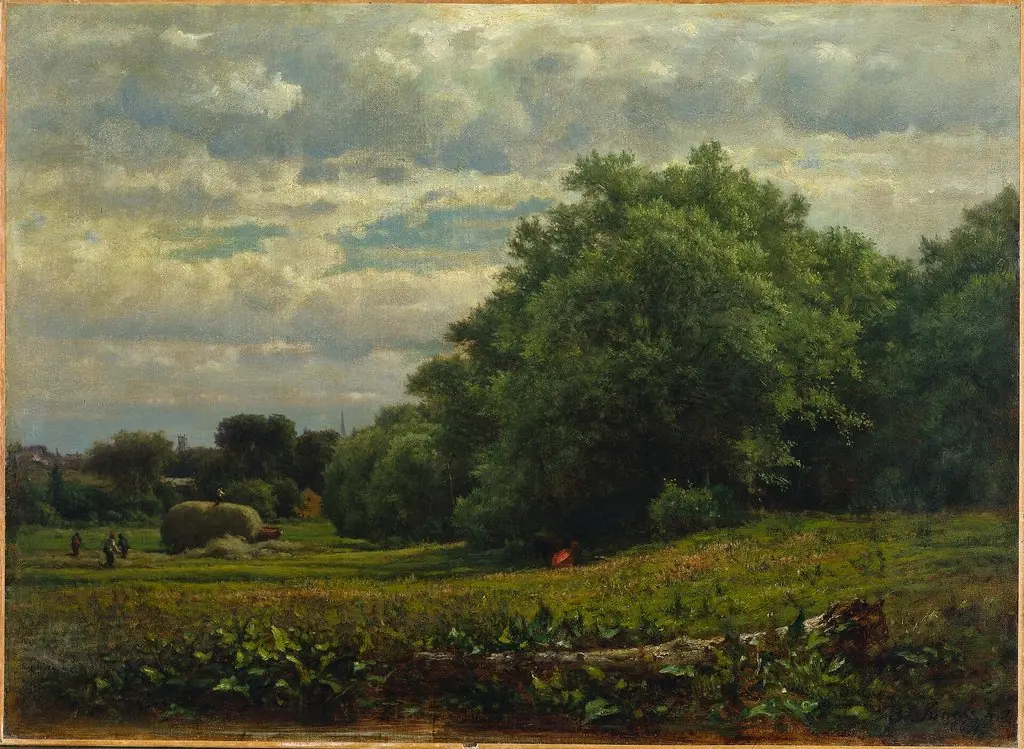
- On the Coast of France
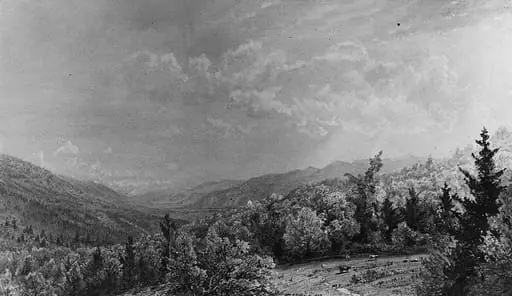 From the Flume House, Franconia, New Hampshire
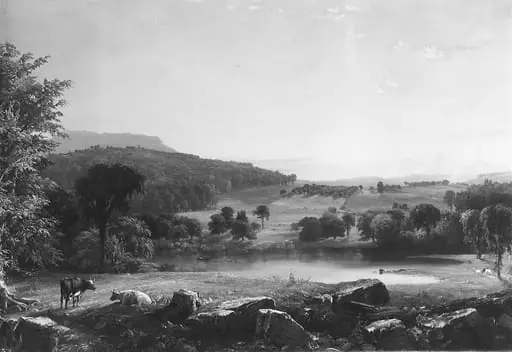 View near Sherburne, Chenango County, New York
 Road in Ireland
 Tågen letter over skovene ved Himmelbjerget. Tidlig efterårsmorgen
 Mountain Scenery with a River
 Wooded Landscape
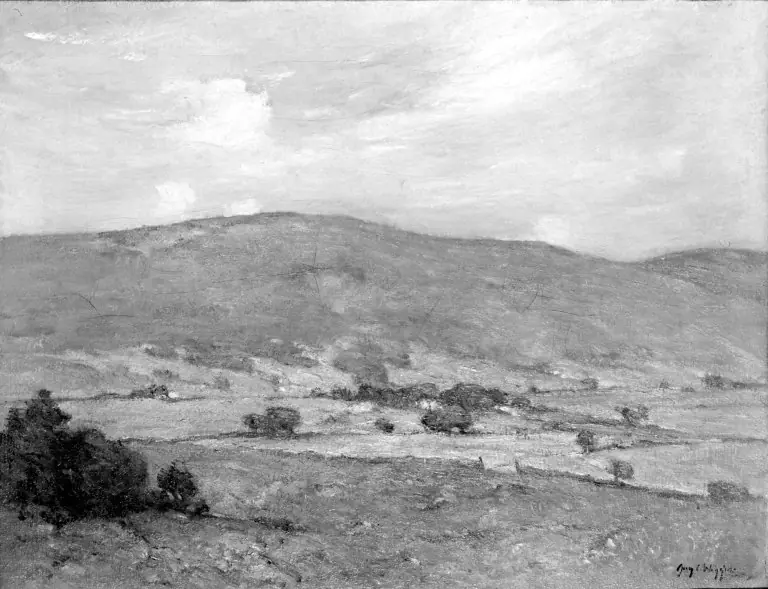 June, Berkshire Hills
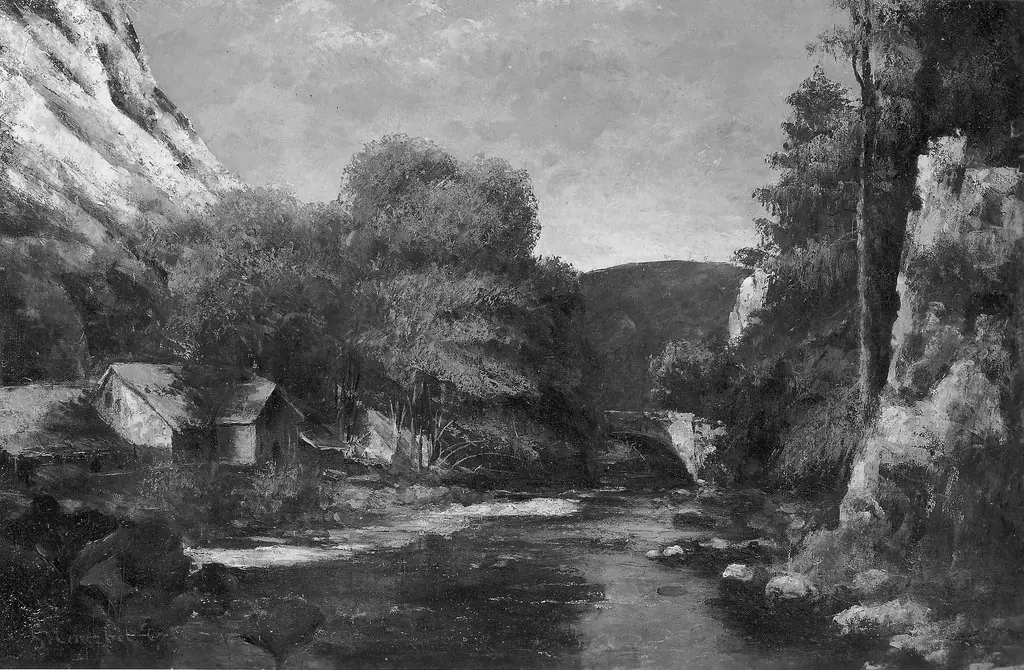 Landscape
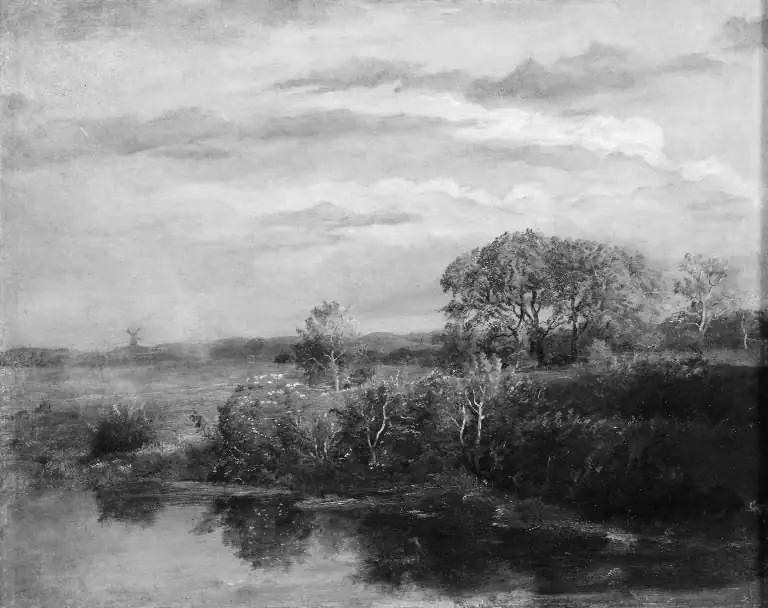 Landscape with a Rainbow
 Landscape with a Rainbow
 Gebirgslandschaft