Artwork
Otago landscape
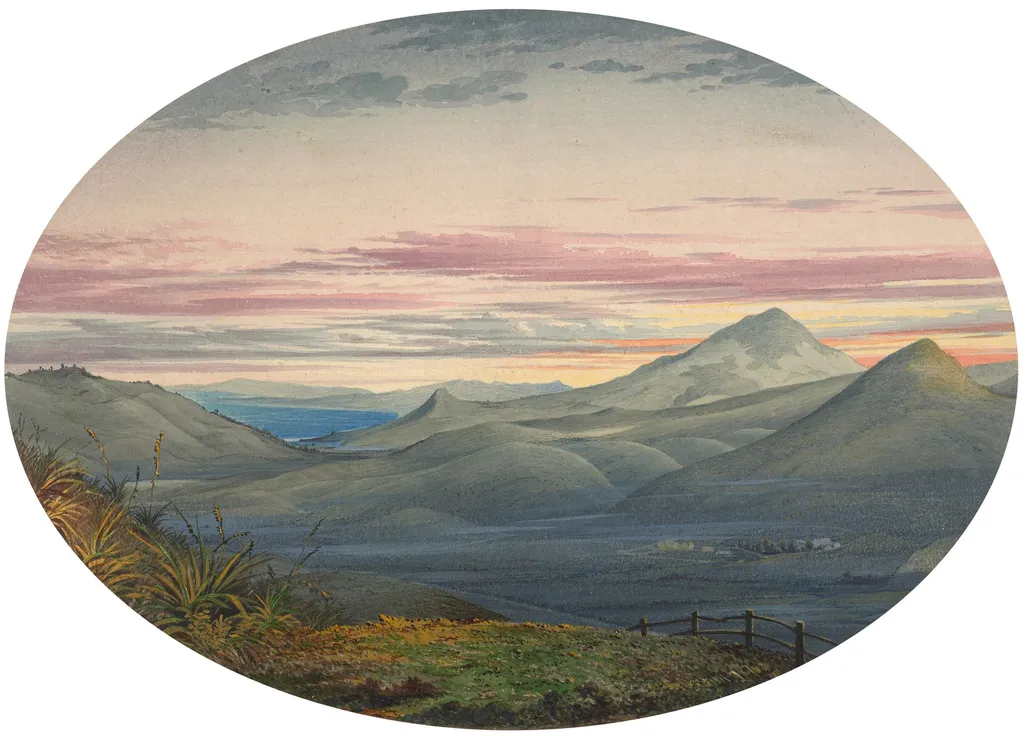
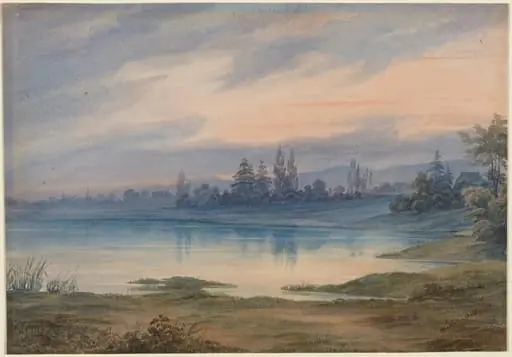
Otago landscape is a watercolor painting by George O'Brien. It dates from 1870 and is held in the collection of the Museum of New Zealand Te Papa Tongarewa.
About this work
Overview
Created in 1870, Otago Landscape is a watercolor painting by George O’Brien, a former engineer who turned to art later in life. The work captures a quiet expanse of New Zealand’s Otago region, rendered with restrained tones and delicate brushwork. It resides in the collection of Te Papa Tongarewa, reflecting its significance as a record of colonial-era landscape observation in Australasia.
Subject & Meaning
The painting presents a tranquil rural scene: undulating hills, distant mountains, and a low wooden fence dividing foreground grasses. There are no human figures or signs of industry, suggesting an emphasis on natural stillness. The composition conveys a sense of quiet contemplation, perhaps reflecting the artist’s personal engagement with the land rather than its economic or colonial potential.
Technique & Style
Brushstrokes are gentle and deliberate, avoiding sharp definition, which contributes to the painting’s calm, almost meditative quality.
O’Brien employed watercolor with a light, layered approach, using soft washes to suggest atmospheric depth. The palette is subdued, greens, browns, and grays dominate, enhancing the muted light of a cloudy day. Brushstrokes are gentle and deliberate, avoiding sharp definition, which contributes to the painting’s calm, almost meditative quality. Glazing techniques likely helped achieve the subtle transitions between tones.
History & Provenance
George O’Brien, born into a privileged background, shifted from engineering to painting in his middle years. Despite his late start, he produced a substantial body of landscape work. Otago Landscape was acquired by the Museum of New Zealand Te Papa Tongarewa, where it remains today. O’Brien died in financial hardship, yet his works endured as important documents of 19th-century New Zealand scenery.
Context
In the 1870s, New Zealand was undergoing rapid colonial settlement, and landscape art often served to document unfamiliar terrain. O’Brien’s work stands apart by avoiding grandeur or romanticism; instead, it offers an intimate, unembellished view of the land. His paintings reflect a personal, observational mode rather than a promotional or imperial one, aligning with quieter artistic currents of the period.
Legacy
Though not widely celebrated in his lifetime, O’Brien’s watercolors are now recognized for their quiet integrity and technical restraint. Otago Landscape exemplifies a mode of landscape representation that prioritizes observation over spectacle. His oeuvre contributes to a broader understanding of how colonial artists engaged with the New Zealand environment beyond official narratives.
Own this work as a print
Artist & collection
Artist
George O'Brien (1821–1888) was an engineer of aristocratic background who turned to art in 19th century Australasia, dying in poverty but leaving a body of remarkable work.

Museum
Museum of New Zealand Te Papa Tongarewa
Continue through works from the same source collection.
- Landscape near Innsbruck
 Ararat
 Memories of the Giant Mountains
 The Campagna, with the Lucrine Lake, from Cumae
 Valley with winding streams, a range of mountains in the background, and a village on the left
 A Gleamy Effect—Hollidaysburg, Pennsylvania
 South Downs
 Kazbek in the Caucasus
 View of Naters from Brieg Switzerland
 New Moon or Solar Eclipse above the Riesengebirge Mountains
 Panorama of the Western Ghats from Mahabaleshwar
 Landscape near Strasbourg Looking toward St. Gall