Artwork
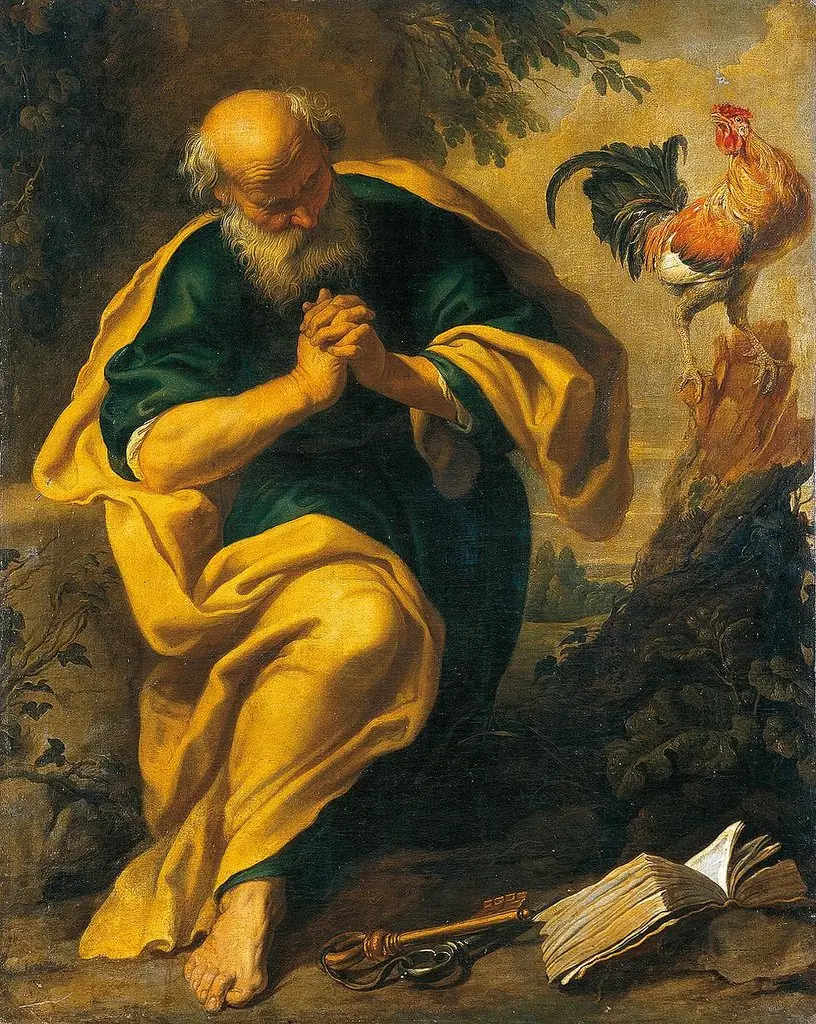
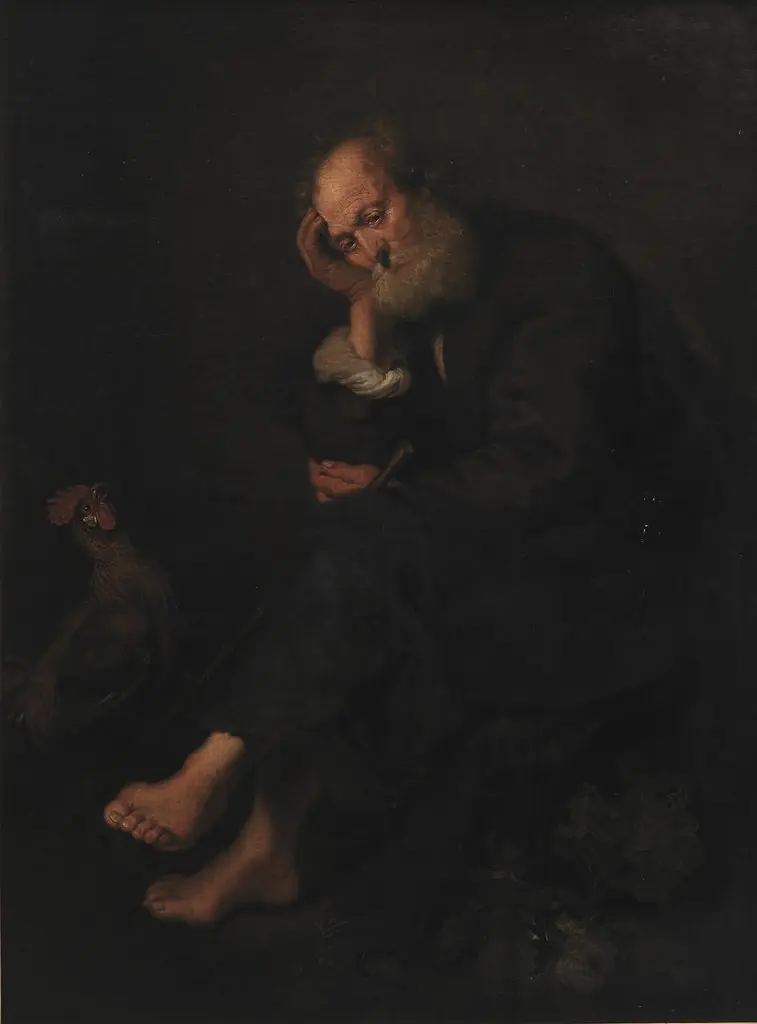
Saint Peter Repentant
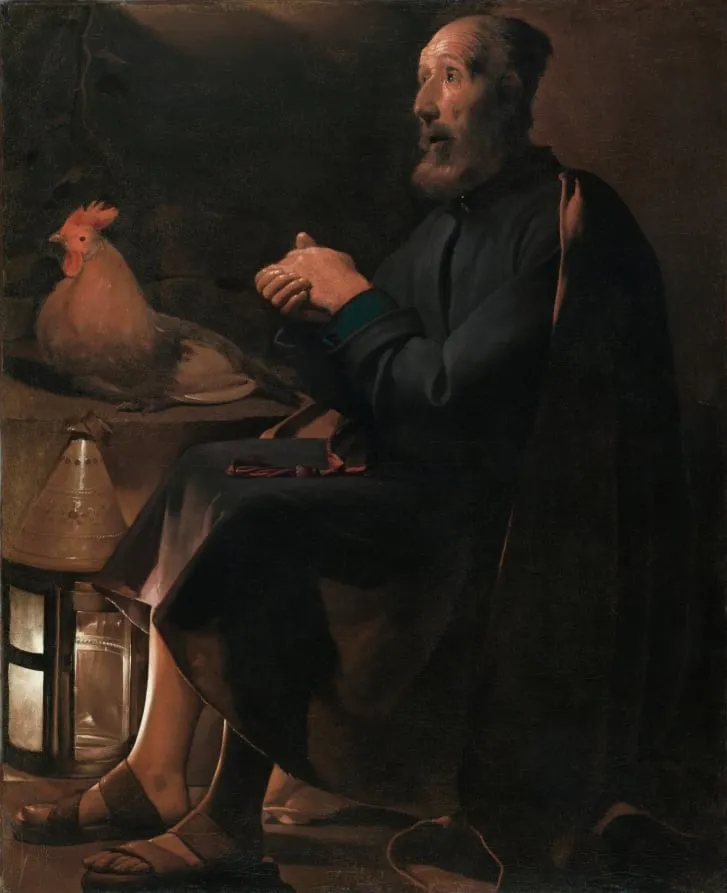
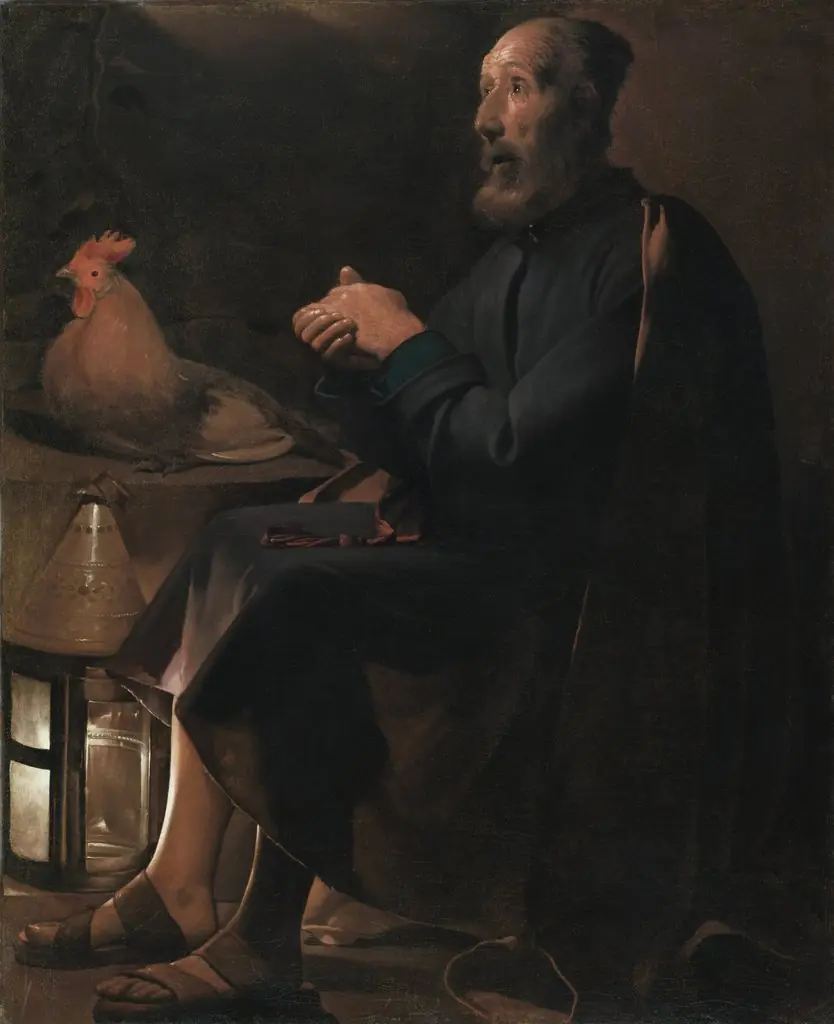
Saint Peter Repentant is an unspecified painting by the Baroque artist Georges de La Tour. It dates from 1645 and is held in the collection of the Cleveland Museum of Art.
- Accession no.
- 1951.454
- Credit line
- Gift of the Hanna Fund
About this work
Overview
Georges de La Tour’s painting portrays the apostle Peter in a dimly lit interior, clutching a skull and a solitary candle. The flickering flame illuminates his aged face, emphasizing the weight of his remorse. Muted tones and sparse surroundings focus attention on the figure’s introspection, creating a quiet, contemplative atmosphere.
Subject & Meaning
The work references the biblical episode in which Peter, after denying Jesus during the night of the Last Supper, is seized by guilt. La Tour presents Peter as an elderly man haunted by his betrayal, his reddened eyes and the skull symbolizing mortality and the spiritual burden of repentance.
Technique & Style
La Tour employs a restrained palette of dark browns and grays, allowing the candle’s glow to define the composition. The chiaroscuro effect, achieved through a single light source, casts deep shadows that heighten the sense of isolation. The figures are rendered with simple, unadorned forms, reinforcing the painting’s somber tone.
History & Provenance
Created in the early 17th century, the canvas reflects La Tour’s career in the Lorraine region of northeastern France, where he worked largely apart from the artistic currents of Italy. The painting entered the Cleveland Museum of Art’s collection in the late 20th century, where it remains on display.
Context
Although La Tour’s handling of light recalls the dramatic illumination favored by Caravaggio, his geographic isolation meant he developed a personal visual language. The work illustrates how French Baroque artists could engage with Caravaggesque ideas without direct contact, producing a distinct, introspective interpretation of religious remorse.
Artist & collection
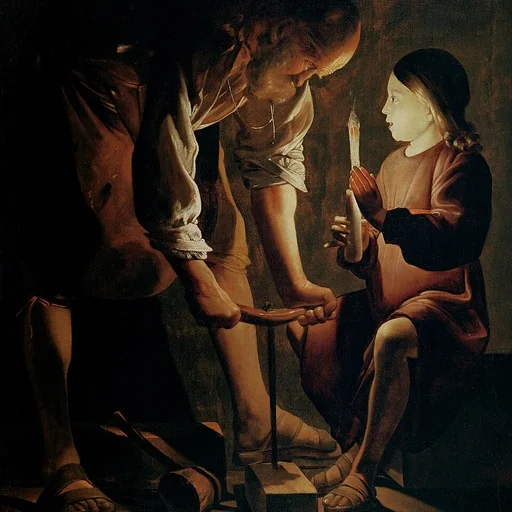
Artist
Georges de La Tour (French pronunciation:; 13 March 1593 – 30 January 1652) was a French Baroque painter, who spent most of his working life in the Duchy of Lorraine, which was temporarily absorbed into France between 1641 and 1648.