Artwork
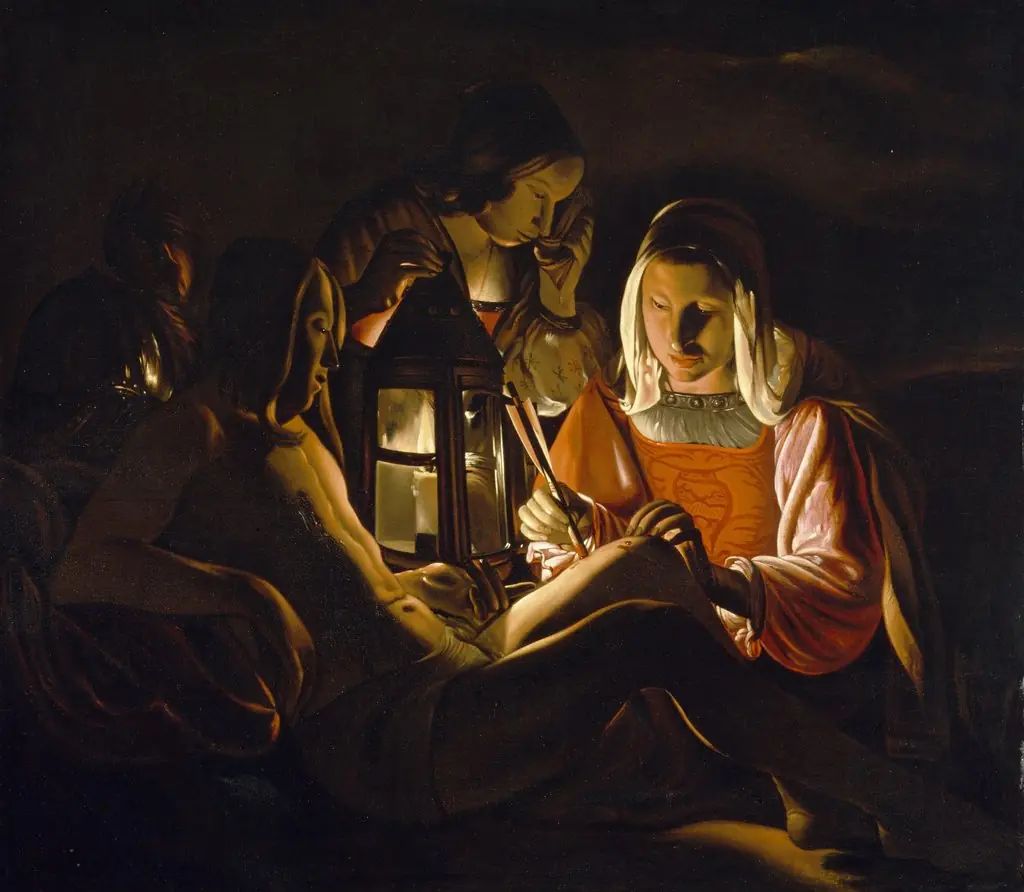
Saint Sebastian tended by Saint Irene
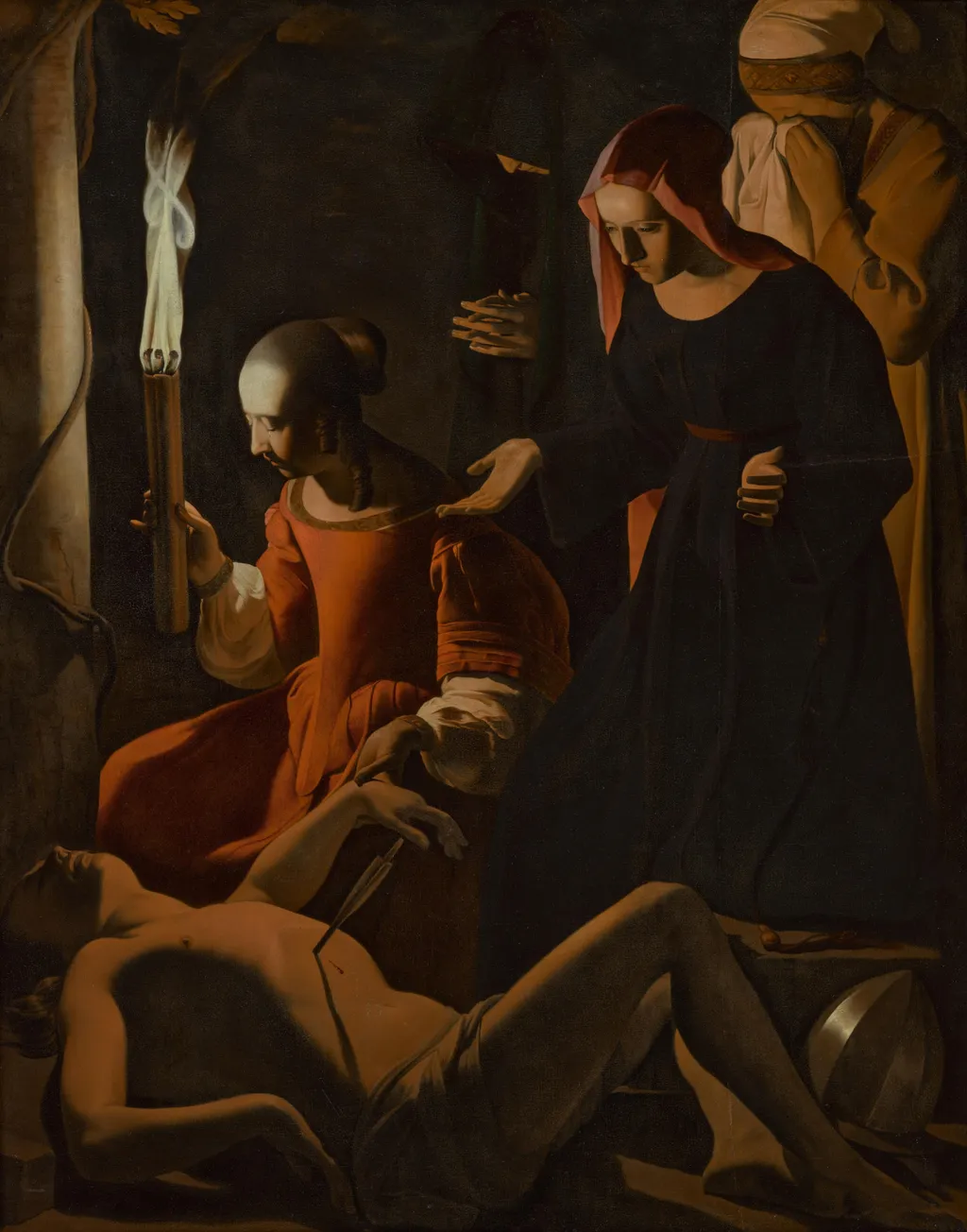
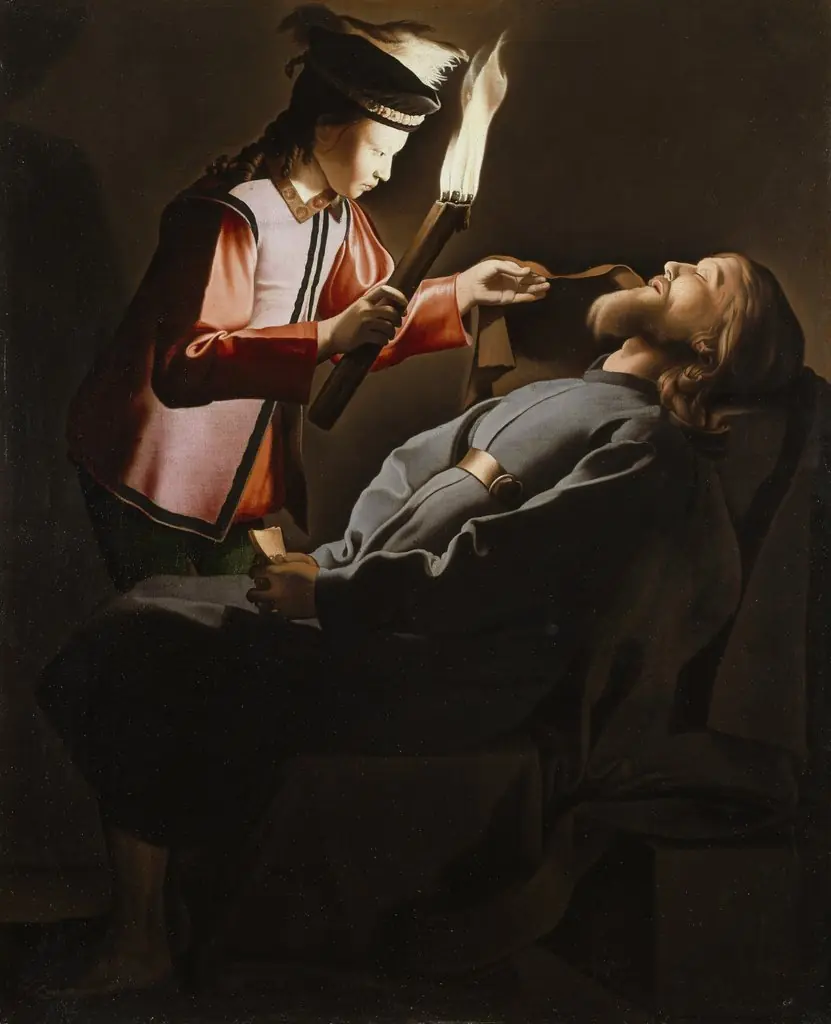
Saint Sebastian tended by Saint Irene is an oil painting by the Caravaggisti artist Georges de La Tour. It dates from 1634 and is held in the collection of the Gemäldegalerie Berlin. Created between roughly 1634 and 1643, this oil on canvas portrays the martyr Saint Sebastian receiving care from Saint Irene.
About this work
This painting is called Saint Sebastian tended by Saint Irene. It's a work of art made with paint.
The subject of the painting is Saint Sebastian having his wounds tended by Saint Irene, a theme that gained popularity in the 1620s. This particular painting was created around 1634.
To learn more about the style and techniques used in this painting, look up the technique of chiaroscuro.
Subject & Meaning
This nocturnal, candlelit treatment transforms a scene of suffering into one of quiet devotion, emphasizing spiritual care over physical violence.
The painting depicts the martyrdom and aftermath of Saint Sebastian, who is shown having his arrow wounds tended by Saint Irene, a pious widow from the medieval legend of the saint. According to the sources, the subject suddenly became popular in the 1620s and remained so through the seventeenth century, partly because Sebastian was widely invoked as a protector against plague, which was ravaging La Tour's Lorraine at the time.
The composition is set at night, with the only illumination coming from the torch held by Saint Irene, casting light across the wounded saint and the women caring for him. This nocturnal, candlelit treatment transforms a scene of suffering into one of quiet devotion, emphasizing spiritual care over physical violence.
The Berlin canvas is one of several versions of the theme La Tour painted, with others produced for the Duke of Lorraine, King Louis XIII, and the governor of Nancy.
Technique & Style
Executed in oil on canvas, this work measures 160 cm in height and 129 cm in width. The painting employs a nocturnal aesthetic characteristic of the artist, where the sole illumination emanates from a torch held by Saint Irene, casting dramatic light upon the martyr's body and the attending figures. While historically attributed to Georges de La Tour, current scholarship identifies this specific version as a copy produced by his son, Etienne, featuring subsequent retouching by the father. This distinguishes it from the primary composition held in the Louvre, though both works utilize the same medium and religious subject matter derived from medieval legend.
History & Provenance
Georges de La Tour created the painting *Saint Sebastian Tended by Saint Irene* between 1634 and 1643, with some sources specifying 1634 as the inception date. While the artist produced multiple versions of this popular nocturnal subject, the work currently held in the Gemäldegalerie, Berlin, is no longer considered the original composition. Scholarly consensus now attributes the Berlin version to a copy by La Tour's son, Etienne, featuring possible retouching by the master himself, whereas the version in the Louvre is regarded as the primary original. The subject matter reflects the saint's status as a protector against epidemics in seventeenth-century Lorraine. Provenance records indicate the painting was previously owned by John Edwin Stillwell and the Matthiesen Gallery before entering the Berlin collection.
Context
Critical reception of Saint Sebastian tended by Saint Irene has evolved alongside scholarly reassessments of the painting's authorship and place within Georges de La Tour's oeuvre. Early attributions considered it an original composition by La Tour, but current research views the Berlin version as a copy executed by his son Etienne with possible retouching by the father, while the Louvre holds the presumed original
Scholarship situates the work within La Tour's exploration of religious themes and his signature use of chiaroscuro to dramatize intimate moments of martyrdom. The painting reflects the broader 17th-century interest in Saint Sebastian as a protective figure against epidemics, particularly during outbreaks in regions like Lorraine
The work's significance is underscored by its presence in major institutional collections, including the Gemäldegalerie, Berlin, and its inclusion in comprehensive studies of La Tour's output. It exemplifies the artist's influence on Baroque religious painting and his engagement with contemporary devotional practices
Own this work as a print
Artist & collection
Artist
Georges de La Tour (French pronunciation:; 13 March 1593 – 30 January 1652) was a French Baroque painter, who spent most of his working life in the Duchy of Lorraine, which was temporarily absorbed into France between 1641 and 1648.