Artwork
Magdalen with the Smoking Flame
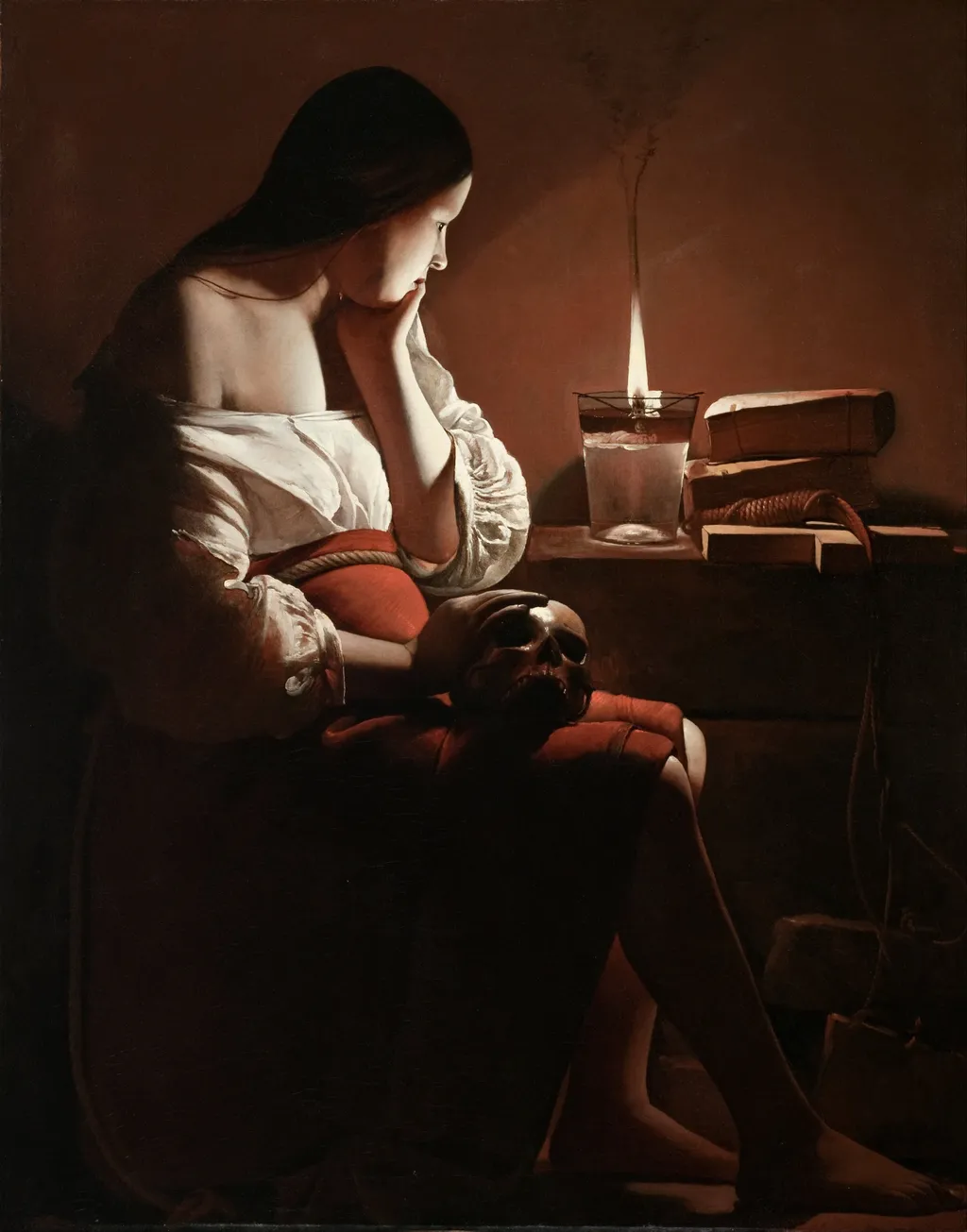
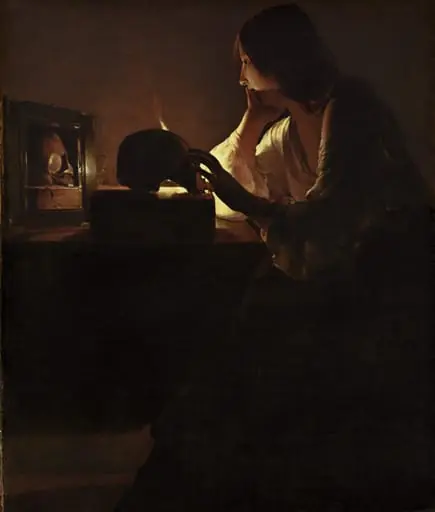
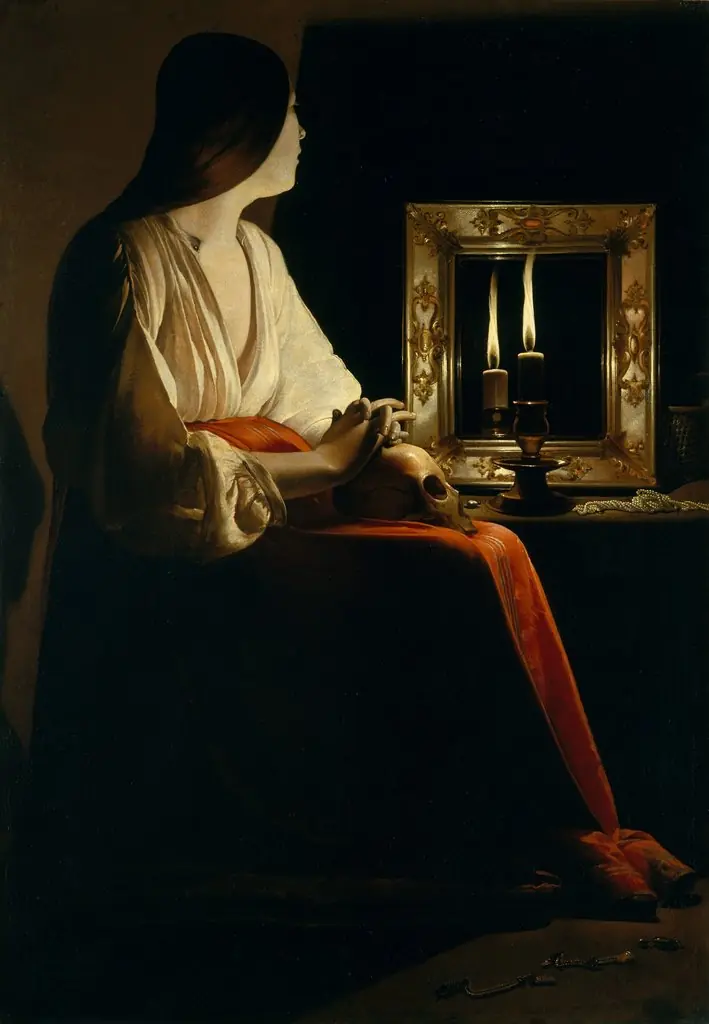
Magdalen with the Smoking Flame is an oil painting by the Caravaggisti artist Georges de La Tour. It dates from 1640 and is held in the collection of the Los Angeles County Museum of Art.
About this work
Subject & Meaning
The subject of Magdalen with the Smoking Flame is Mary Magdalene in a moment of spiritual reflection, depicted as a penitent hermit absorbed in contemplation.
The subject of Magdalen with the Smoking Flame is Mary Magdalene in a moment of spiritual reflection, depicted as a penitent hermit absorbed in contemplation. She sits in a darkened space, illuminated by the faint glow of an oil lamp whose thin flame and ascending smoke symbolize both the fragility of earthly life and the aspiration toward divine illumination. In her hands, she holds a polished skull, a memento mori that underscores the vanity of worldly existence and the inevitability of death.
A crucifix and a coiled discipline rope rest nearby, reinforcing themes of repentance and mortification of the flesh. The sparse composition, rendered in Georges de La Tour's signature tenebrism, isolates Magdalene in a state of quiet introspection, evoking a meditative silence and the anticipation of spiritual revelation. The work reflects Counter-Reformation ideals, emphasizing inner devotion over overt narrative, while the flickering flame functions as both a literal and symbolic beacon of transcendent light.
Technique & Style
Executed circa 1638–1640, this work is an oil painting on canvas measuring approximately 117 by 92 centimeters. The composition exemplifies Georges de La Tour's mature nocturnal style, utilizing a stark contre-jour effect where a single internal light source, a simple glass oil lamp filled mostly with water and topped with oil, illuminates the scene against a deep, shadowed background. The artist employs a simplified yet accurate draftsmanship, masking devotional themes through understatement rather than tragic narration.
The figure of Mary Magdalene emerges from the darkness in a moment of silent meditation, her form defined by the attenuating circle of light. Stylistically, the painting avoids eroticism, focusing instead on solitude and spiritual introspection. The handling of light creates a profound atmosphere of silence, with the saint's gaze directed beyond the immediate space, while symbolic objects like a skull and rope are rendered with precise clarity amidst the surrounding gloom.
History & Provenance
Georges de La Tour painted the work in oil on canvas around 1638–1640, a dating supported by both documentary references and stylistic analysis. It belongs to a series of penitent Magdalene images that La Tour treated repeatedly. The painting was identified by scholars in the early 1980s, having been misattributed to the Le Nain brothers in 1943; it entered the Los Angeles County Museum of Art's collection in 1977, before its attribution to La Tour was firmly established.
No documentary record of a specific commission survives, and the work remained in private hands until its acquisition by LACMA, where it is displayed as a religious painting.
Magdalen with the Smoking Flame entered LACMA's possession in 1977, having previously been identified in 1943 as a painting by the Le Nain brothers before its attribution to Georges de La Tour was established by critics in 1981. The painting has been featured in the exhibition Bodies and Shadows: Caravaggio and His European Followers. While other versions of the Penitent Magdalene by La Tour came to light earlier in the twentieth century, this canvas was among the last of the known examples to be recognized and attributed to the artist.
Context
Georges de La Tour's Magdalen with the Smoking Flame (c. 1640) exemplifies the artist's mature nocturnal chiaroscuro and his engagement with Counter-Reformation themes of penitence and mortality. The painting belongs to a small group of penitent Magdalene subjects that scholars only identified in the twentieth century, work that has prompted reassessment of earlier attributions. Its modern visibility was advanced by the exhibition Bodies and Shadows: Caravaggio and His European Followers, which contextualized La Tour alongside the Caravaggisti.
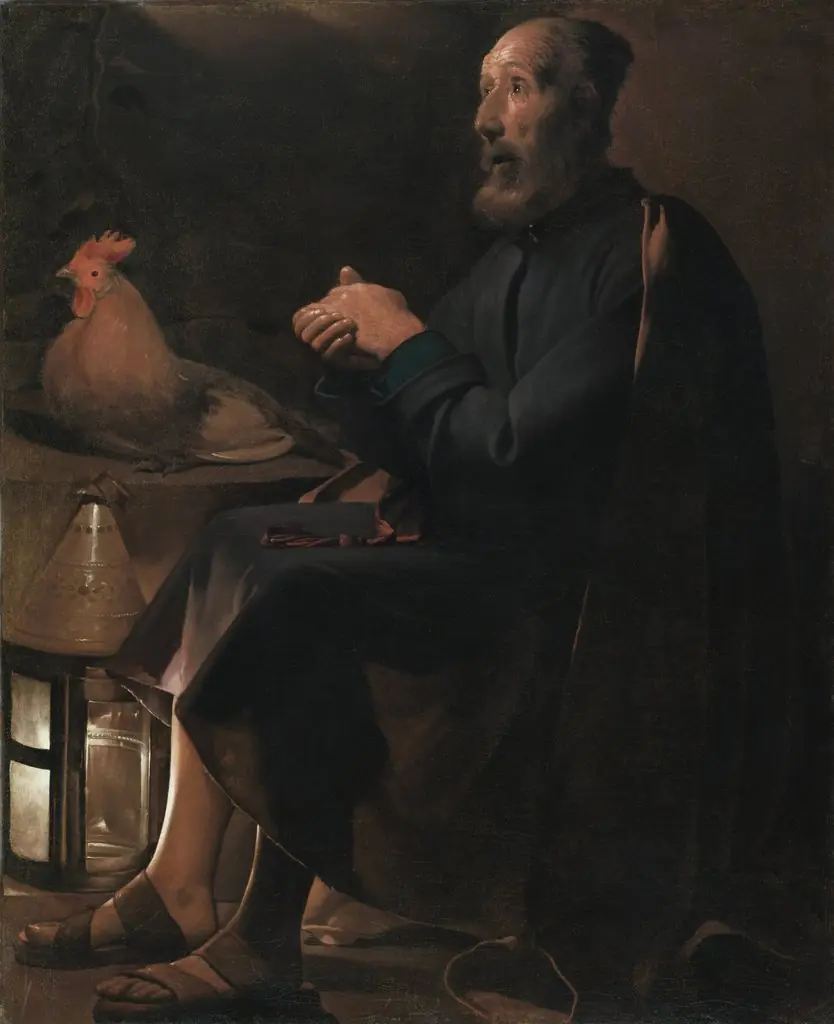
Critics have emphasized the work's blend of sensuality, death, and spiritual illumination. Together with the Metropolitan and Louvre versions, the Los Angeles canvas illustrates the evolution of La Tour's devotional imagery from stark realism toward contemplative silence.
Legacy
The legacy of Georges de La Tour's Magdalen with the Smoking Flame is shaped by its twentieth-century rediscovery. The work, now held by the Los Angeles County Museum of Art, was not firmly attributed to La Tour until 1981, having previously been misattributed to the Le Nain brothers, and it entered the museum's collection in 1977. This re-evaluation formed part of a broader reassessment of La Tour's oeuvre, which had been largely obscured until its revival in the early twentieth century.
The painting is also noted for appearing in Ariel's grotto in Disney's animated film The Little Mermaid. Its reputation rests on its distinctive use of light and contemplative silence, distinguishing it from more dramatic or sensual contemporary depictions of the Magdalene.
Overview
Georges de La Tour's Magdalen with the Smoking Flame, created around 1640, is an oil painting characteristic of the French Baroque period. This work exemplifies the artist's signature approach to religious subjects, often featuring solitary figures illuminated by a single light source. It depicts Mary Magdalene in a moment of profound contemplation, a theme frequently explored by La Tour. The painting is currently held in the collection of the Los Angeles County Museum of Art.
Own this work as a print
Artist & collection
Artist
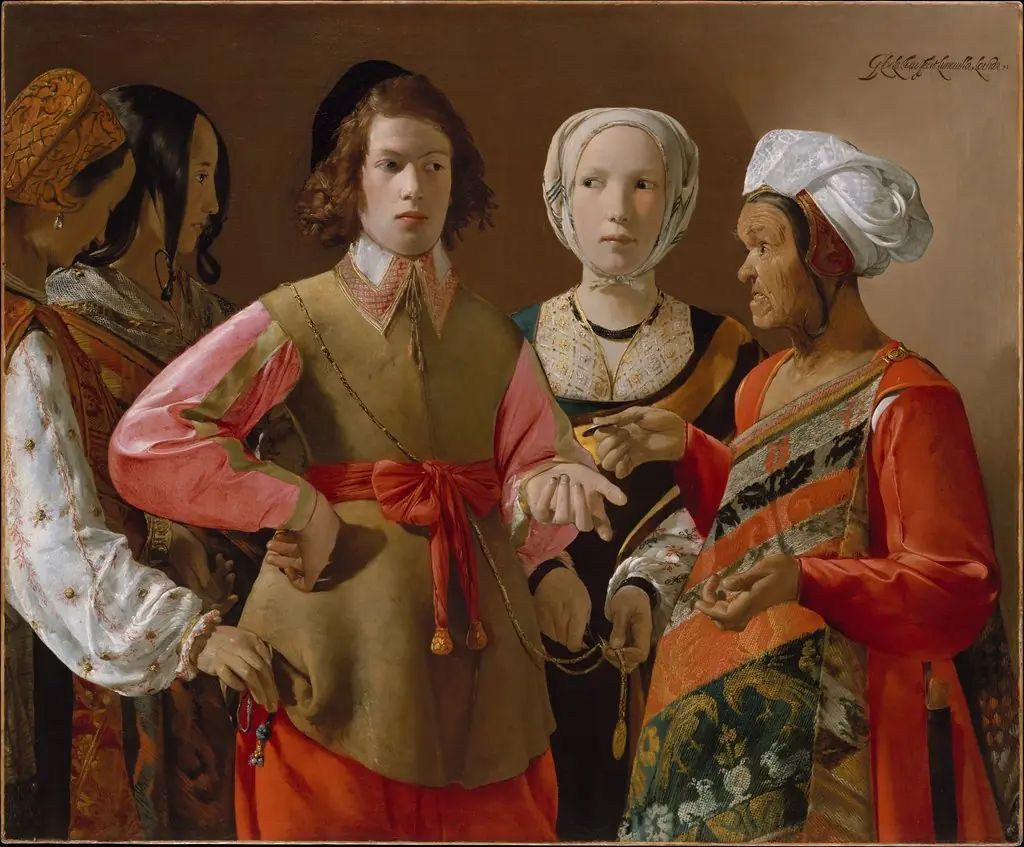
Georges de La Tour (French pronunciation:; 13 March 1593 – 30 January 1652) was a French Baroque painter, who spent most of his working life in the Duchy of Lorraine, which was temporarily absorbed into France between 1641 and 1648.