Artwork
The Fortune Teller
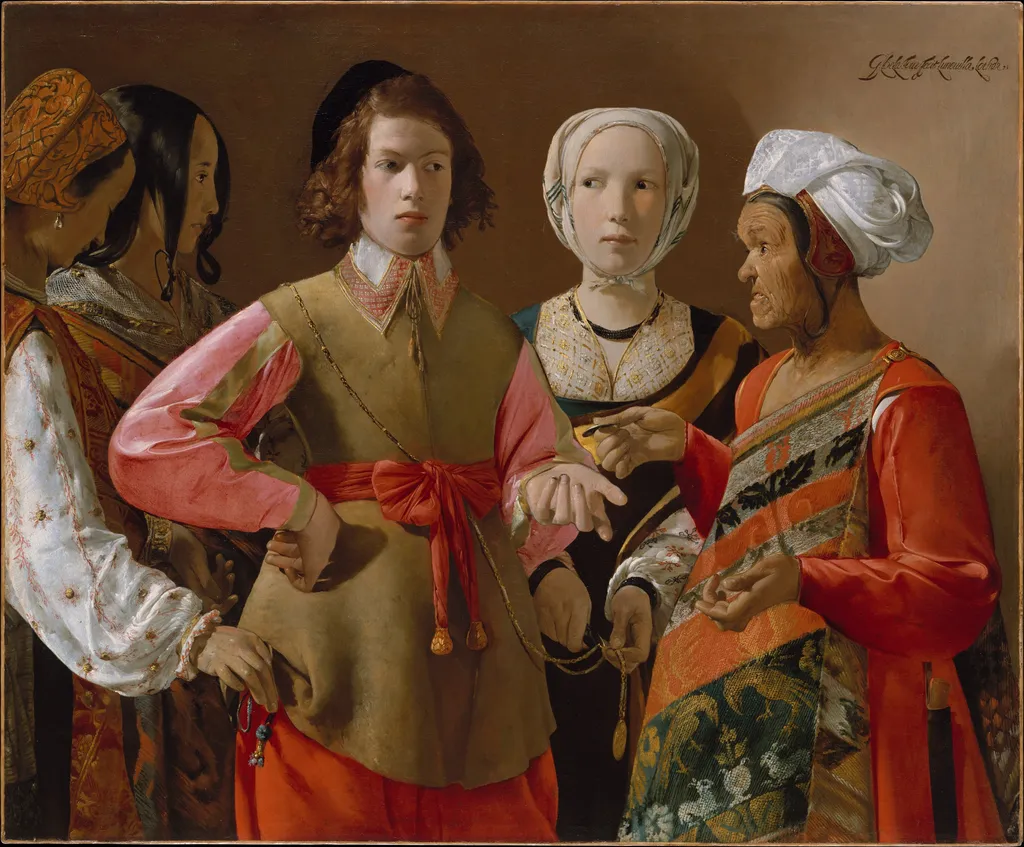
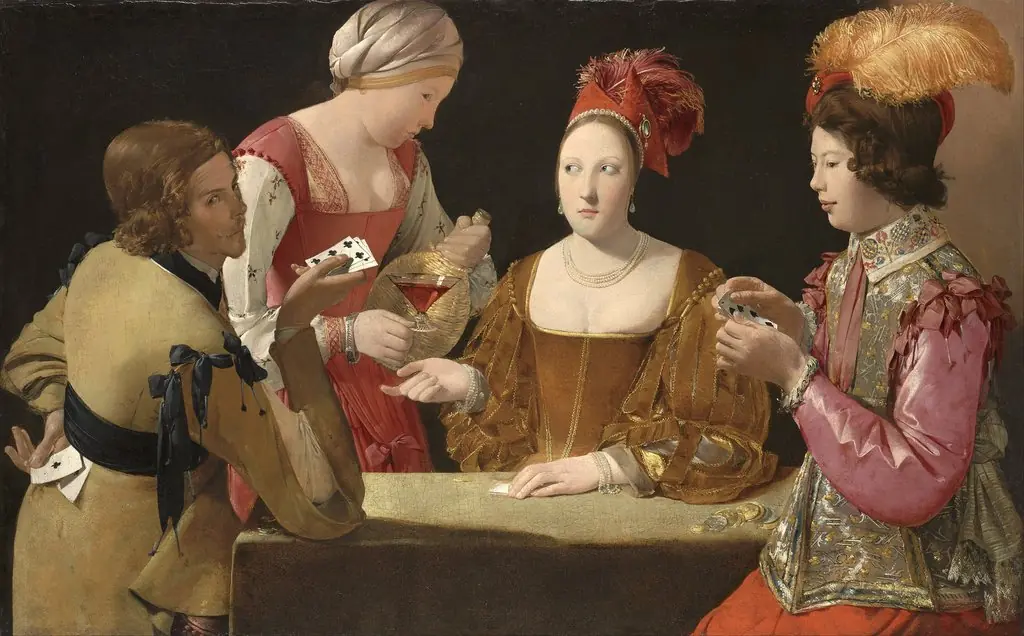
The Fortune Teller is an oil painting by the Caravaggisti artist Georges de La Tour. It dates from 1630 and is held in the collection of the Metropolitan Museum of Art.
About this work
Georges de La Tour painted The Fortune Teller around 1630, an early work that already shows his command of light and shadow. It stayed out of sight for centuries until it surfaced around 1960, the same year a major New York museum bought it, adding a rare example of his early style to the collection.
Subject & Meaning
The work functions as a moralizing genre scene illustrating the stereotype of Romani people as thieves and the folly of the upper classes.
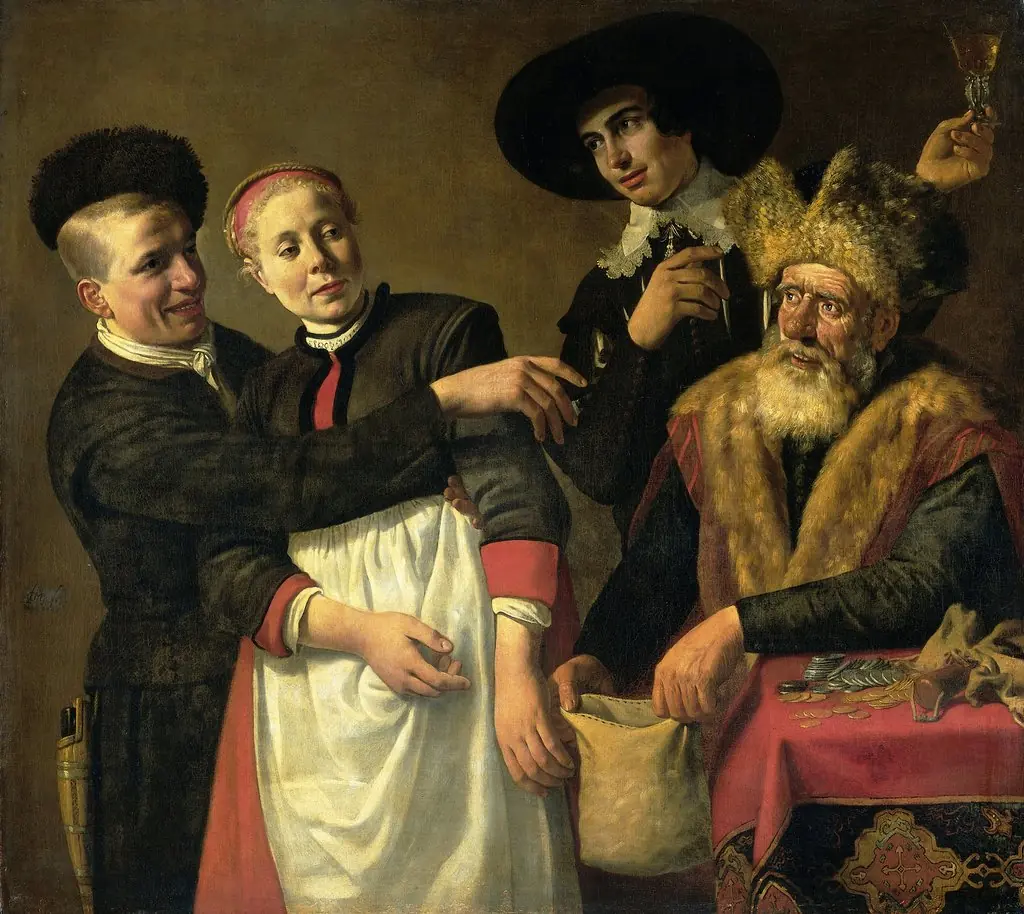
Georges de La Tour's painting depicts a wealthy young man having his fortune told by an elderly Romani woman, who distracts him by preparing to cross his palm with a coin. While the youth is engrossed in this ritual, three accompanying women systematically rob him: one steals his coin purse from his pocket, another uses pincers to cut a gold medal from his chain, and a third stands ready to receive the loot. The work functions as a moralizing genre scene illustrating the stereotype of Romani people as thieves and the folly of the upper classes.
The composition relies on a complex exchange of glances; the young man's arrogant focus on the fortune teller renders him oblivious to the theft, while the conspirators share knowing looks. Ultimately, the painting represents the consequences of gullibility and the deceptive nature of appearances.
Technique & Style
The Fortune Teller is an oil-on-canvas work, painted around 1630 by Georges de La Tour. The picture is executed in the oil medium on a canvas support, a typical support for the artist's domestic genre scenes. La Tour models the figures with strong chiaroscuro, using a single light source from the upper right to create stark contrast and a theatrical, stage-like grouping of the five participants.
The composition is tightly cropped, with the subjects packed closely together, reflecting a dramatic, almost tableau vivant arrangement. The canvas has undergone later alterations, including a recasting of the top edge and a left-hand cut, and a 1982 restoration removed a post-factum inscription that had been added to the work.
History & Provenance
The Fortune Teller is an oil on canvas painted by Georges de La Tour in Lunéville in the Duchy of Lorraine, dated circa 1630 (with some French scholars narrowing the execution to 1632–1635 or 1635–1638). The canvas bears a calligraphic signature at upper right reading "G. de La Tour Fecit Luneuilla Lothar," identifying both maker and place. The painting reappeared in 1945 and entered the art market in 1949, when dealer Georges Wildenstein outbid the Louvre, purchasing it for 7.5 million francs.
It remained with Wildenstein for roughly a decade before the Metropolitan Museum of Art acquired it in 1960. The export from France, signed off by Louvre old-master paintings chief Germain Bazin, provoked controversy in the French press and prompted Culture Minister André Malraux to address the National Assembly. The work was formally published by François Georges Pariset in a 1961 Metropolitan Museum of Art Bulletin, though Christopher Wright later questioned its authenticity.
The Fortune Teller is currently held in the collection of the Metropolitan Museum of Art in New York, where it has been since 1960. According to a known anecdote, the painting was recognized around the time of its rediscovery by a French prisoner of war who noted its likeness to a work in a relative's castle, leading to its identification as a Georges de La Tour. Following its acquisition, the work has attracted significant scholarly attention, including the 1961 bulletin feature by Pariset and discussion in a 1996 exhibition catalogue on La Tour's life and art.
Context
Uncovered around 1960, The Fortune Teller was quickly attributed to Georges de La Tour by François Georges Pariset based on its calligraphic signature, though its authenticity faced scrutiny from scholars like Christopher Wright and later debates in the 1970s and 1980s. Despite these doubts, the work is widely accepted as a masterpiece of La Tour's daylight scenes. Art historians note its Caravaggesque composition and thematic parallels to La Tour's card-sharping paintings, particularly in the intricate exchange of glances that drives the narrative of deception.
The painting's discovery sparked significant controversy in France regarding its export to the Metropolitan Museum of Art, involving high-profile figures such as Minister André Malraux and Louvre administrator Germain Bazin. Scholars like Jacques Thuillier and Pierre Rosenberg have offered varying date ranges for its creation, while others, such as Dalia Judovitz, have analyzed its enigmatic visual strategies within La Tour's broader oeuvre.
Legacy
The Fortune Teller holds a complex legacy defined by its dramatic rediscovery and enduring status as a masterpiece of Georges de La Tour's secular output. Uncovered in the mid-twentieth century after centuries of obscurity, the painting sparked significant controversy in France when it was acquired by the Metropolitan Museum of Art in 1960, leading to public debate and political intervention by Minister André Malraux regarding its export. Despite persistent scholarly skepticism concerning its authenticity, notably from Christopher Wright, the work is generally accepted as an autograph piece, bolstered by its signature and stylistic parallels to La Tour's card-playing scenes.
Today, it remains a celebrated example of the artist's diurnal genre scenes, frequently cited for its intricate composition and narrative tension.
Overview
Georges de La Tour's The Fortune Teller, an oil painting from approximately 1630, exemplifies the French artist's early period. This work showcases his characteristic command of chiaroscuro, employing dramatic contrasts of light and shadow. After centuries out of public view, the canvas was acquired by the Metropolitan Museum of Art in New York, where it now represents a significant example of La Tour's distinctive style from the early 17th century.
Own this work as a print
Artist & collection
Artist
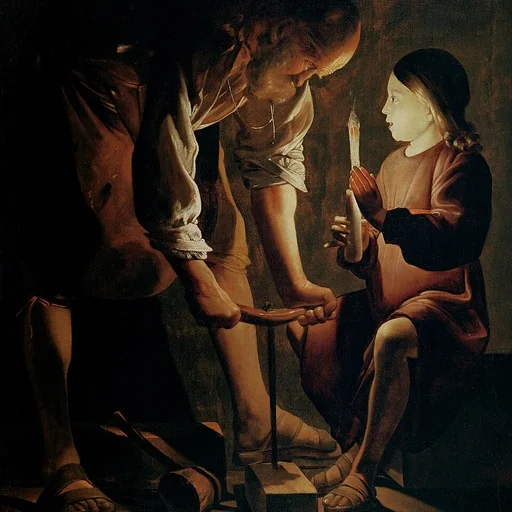
Georges de La Tour (French pronunciation:; 13 March 1593 – 30 January 1652) was a French Baroque painter, who spent most of his working life in the Duchy of Lorraine, which was temporarily absorbed into France between 1641 and 1648.