Artwork
Madonna at the Fountain
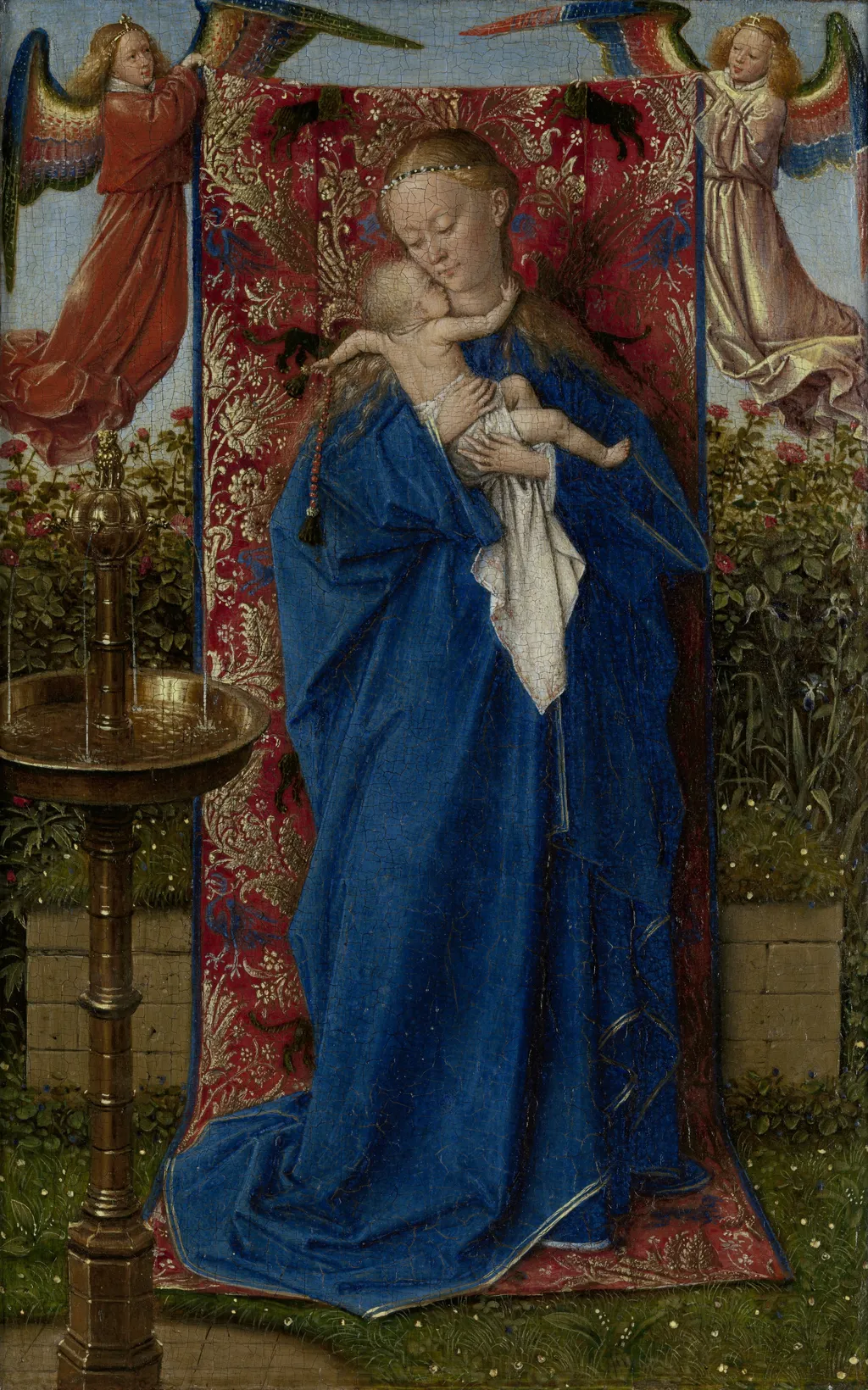
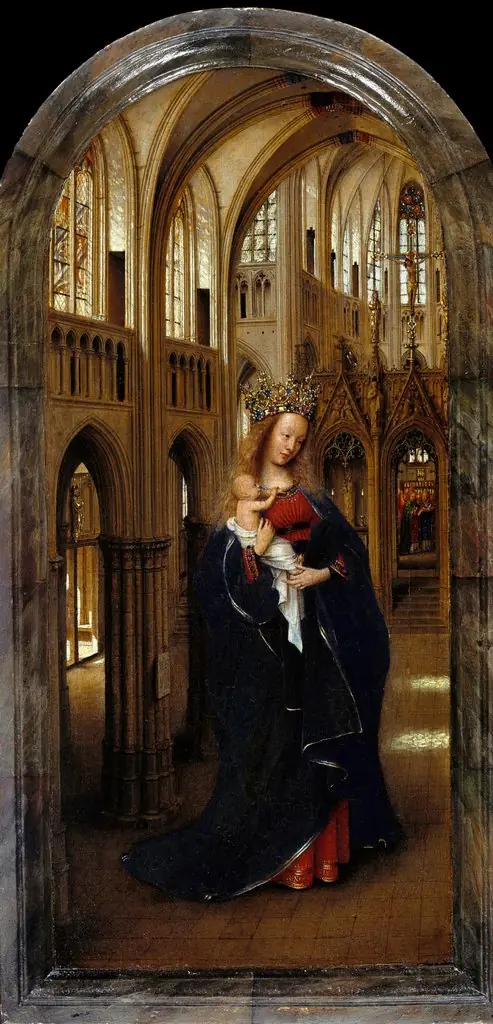
Madonna at the Fountain is an oil painting by the Northern Renaissance artist Jan van Eyck. It dates from 1439 and is held in the collection of the Royal Museum of Fine Arts Antwerp.
About this work
This is a quiet, focused painting of a mother and child by Jan van Eyck. Painted in oil around 1439, it’s one of his last signed works. The original frame has a short Latin inscription from the artist.
The phrase on the frame reads like a note to the future. It shows pride in the work and marks the year it was finished.
Look up Jan van Eyck next.
Subject & Meaning
The Christ Child holds prayer beads, and the surrounding rose bush alludes to the rosary, a devotion gaining prominence in 15th-century Northern Europe.
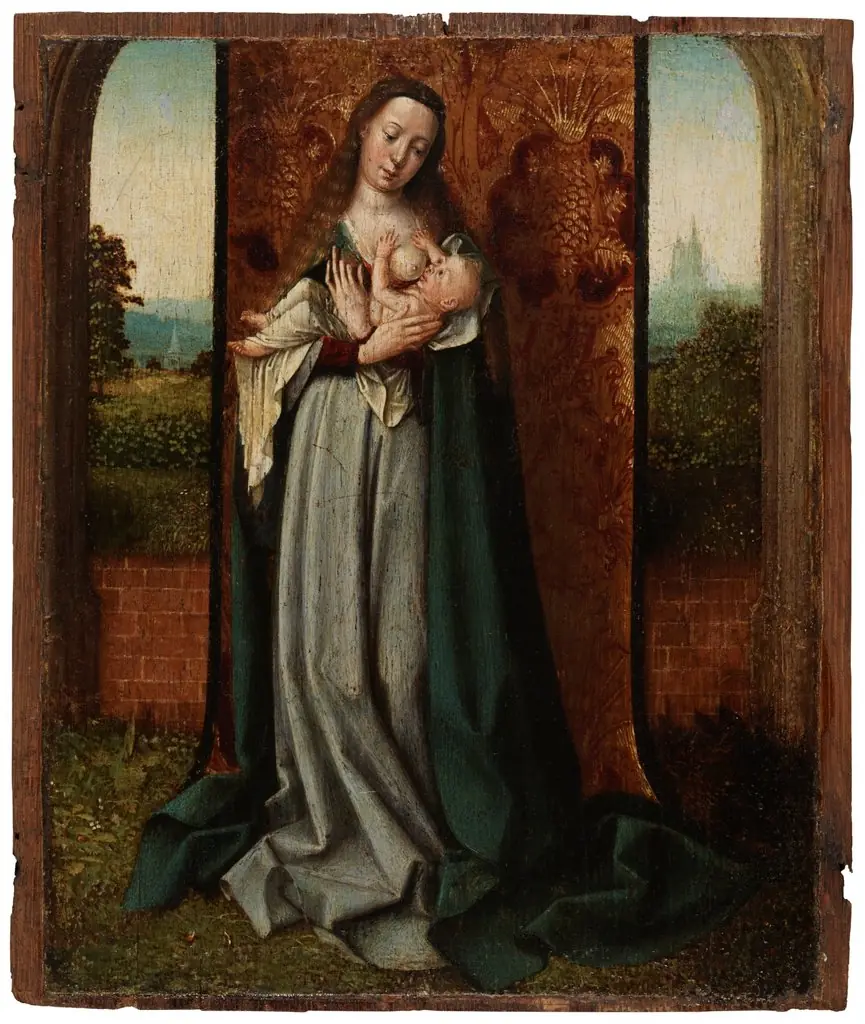
Jan van Eyck's Madonna at the Fountain depicts the Virgin Mary and the Christ Child within a hortus conclusus, or enclosed garden, symbolizing Mary's perpetual virginity. The central fountain represents the fons hortorum (fountain of gardens) and the fons vitae (fountain of life), drawing on Old Testament imagery. The Christ Child holds prayer beads, and the surrounding rose bush alludes to the rosary, a devotion gaining prominence in 15th-century Northern Europe.
The composition features the standing Virgin in a blue robe, a modification of the Byzantine Eleousa type where the figures touch cheeks to express tender maternal love. Two angels support a cloth of honor behind her, while a blooming rose hedge and specific flowers like irises reinforce symbols of purity. This intimate scene was designed for private devotion.
Technique & Style
The Madonna at the Fountain is an oil on panel painting measuring 19 x 12 cm, created by Jan van Eyck in 1439 and still housed in its original frame at the Royal Museum of Fine Arts Antwerp. The work depicts the Virgin Mary standing within a hortus conclusus, framed by a richly embroidered cloth of honor held by two angels, with a fountain symbolizing the fountain of life and a rosary held by the Christ Child. The Virgin is rendered in a blue robe, differing from van Eyck's earlier depictions in red, a choice often interpreted as reflecting Italian artistic influence given the expense and symbolic use of ultramarine in Italy.
The painting's small scale and intimate composition suggest private devotional use, emphasizing Marian symbolism through the enclosed garden, roses, and fountain as representations of purity and divine grace.
History & Provenance
Madonna at the Fountain bears the signature and date 1439 on its original frame, inscribed "ALS IXH CAN" and "JOHES DE EYCK ME FECIT + [COM]PLEVIT ANNO 1439", making it the last signed and dated painting by Jan van Eyck before his death around 1441. Made for private devotion, it depicts the Virgin in a blue robe within a hortus conclusus, holding the Christ Child who carries prayer beads, beside a fountain representing the fountain of life.
The panel was acquired by Ridder Florent van Ertborn, who obtained it around 1830 from the parish of Dikkelvenne. Van Ertborn bequeathed his collection to the city of Antwerp, and the work is now held by the Royal Museum of Fine Arts Antwerp (Koninklijk Museum voor Schone Kunsten Antwerpen), part of the Vlaamse Kunstcollectie, where it is inventoried as 411.
Context
Madonna at the Fountain is among the last signed and dated works by Jan van Eyck, housed in the Royal Museum of Fine Arts Antwerp. Executed in oil on panel (19 × 12 cm), it depicts the Virgin in a blue robe standing within a hortus conclusus and holding the infant Christ, who holds prayer beads. The composition draws on Byzantine Eleousa iconography, particularly the 'Virgin of Tenderness' type, and reflects van Eyck's late style and his possible engagement with Italian influence, evident in the choice of blue rather than the more usual red for the Marian robe.
The framed inscription 'JOHES DE EYCK ME FECIT + [COM]PLEVIT ANNO 1439' confirms its completion in 1439. Its iconography, blue robe, rosary, and fountain as 'fons hortorum', aligns with Northern Renaissance Marian symbolism, where the enclosed garden represents purity and the fountain signifies the 'fountain of life.' The painting was later copied, including by Gerard David.
Legacy
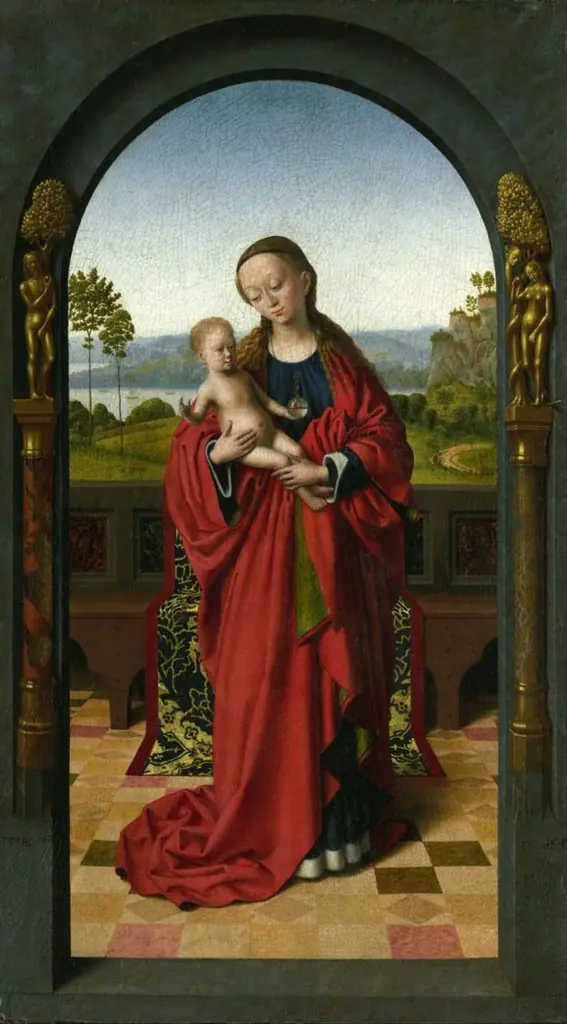
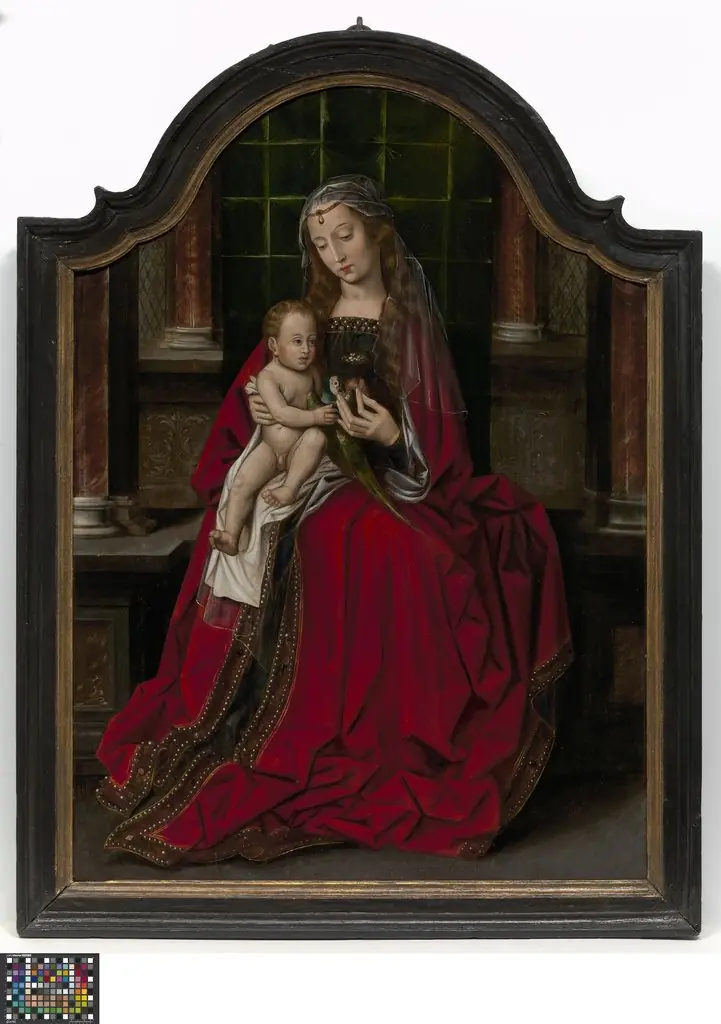
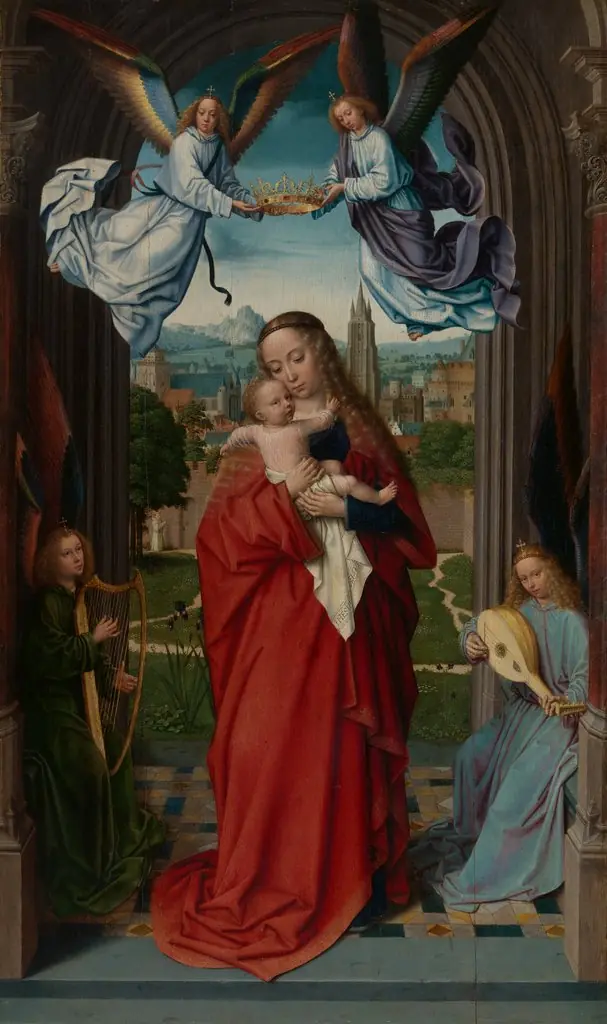
The Madonna at the Fountain achieved early recognition, evidenced by high-quality copies produced shortly after the original's completion. One such workshop copy, held in a private collection in Maastricht, was displayed in Bruges in 2002. The composition's standing Virgin type, derived from Byzantine models, influenced later artists; Gerard David made a drawing of the central figures around 1500–1510 that served as the basis for his own version featuring four angels and a panoramic Bruges landscape, now in the Metropolitan Museum of Art.
The iconography also informed the Madonnas associated with the donor Jan Vos, finished in van Eyck's workshop after his death. The painting was also recorded in the collection of Margaret of Austria in Mechelen, though it remains uncertain whether her possession was the original or a copy.
Overview
Madonna at the Fountain is an oil painting on panel executed in 1439 by the early Netherlandish painter Jan van Eyck. Measuring a modest size, the work portrays a mother and child in a restrained composition. It is notable for being the final painting that van Eyck both signed and dated, and it still retains its original wooden frame.
Own this work as a print
Artist & collection

Artist
Jan van Eyck ( van EYEK; Dutch: ; c. before 1390 – 9 July 1441) was an early Netherlandish painter active in Bruges who was one of the early innovators of what became known as Early Netherlandish painting, and one of…