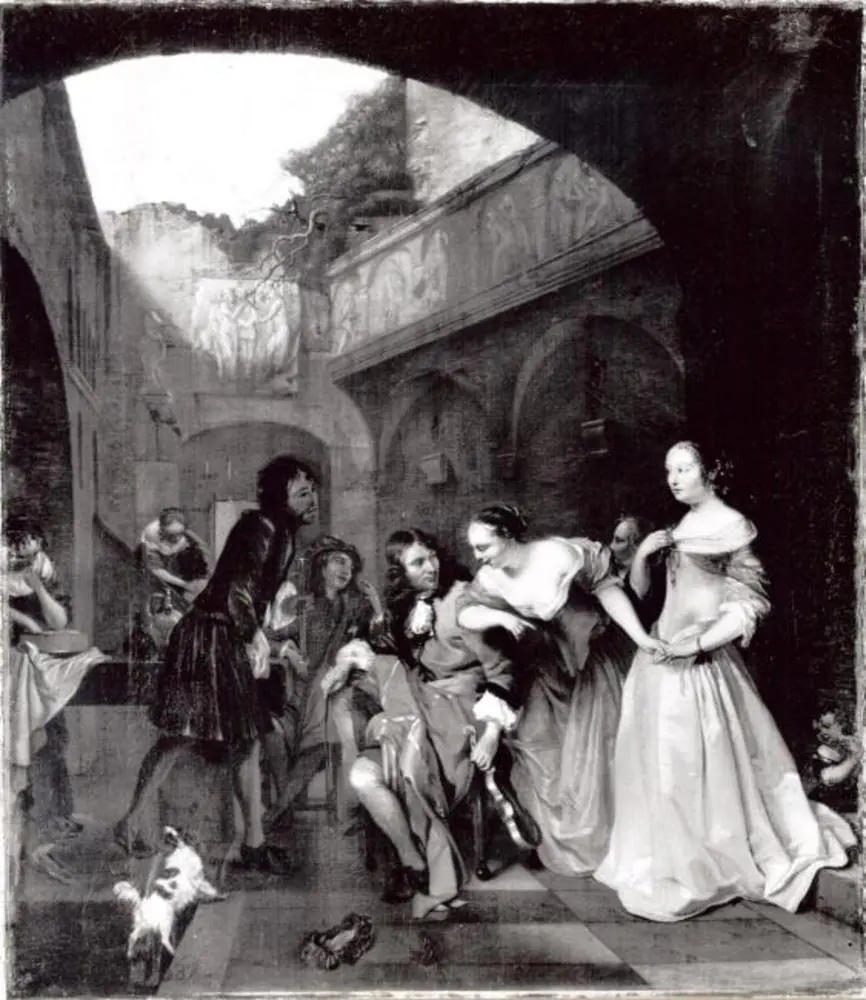
Artwork
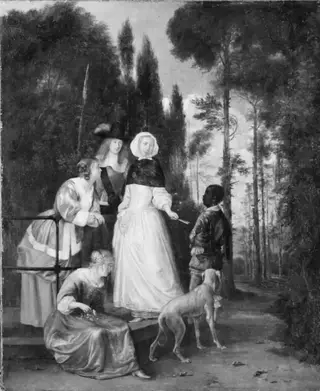
A Trumpeter delivering a Letter to a Lady
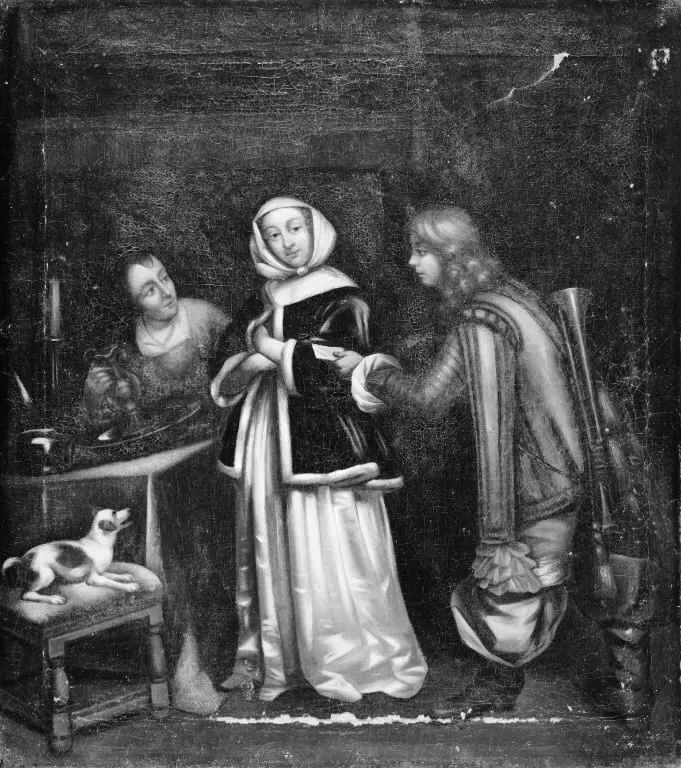
A Trumpeter delivering a Letter to a Lady is an oil painting by the Dutch Golden Age artist Gerard ter Borch. It dates from 1659 and is held in the collection of the Statens Museum for Kunst.
About this work
Subject & Meaning
The exchange centers on the letter, which likely carries a message of courtship or social engagement, a common motif in mid-17th-century Dutch genre painting.
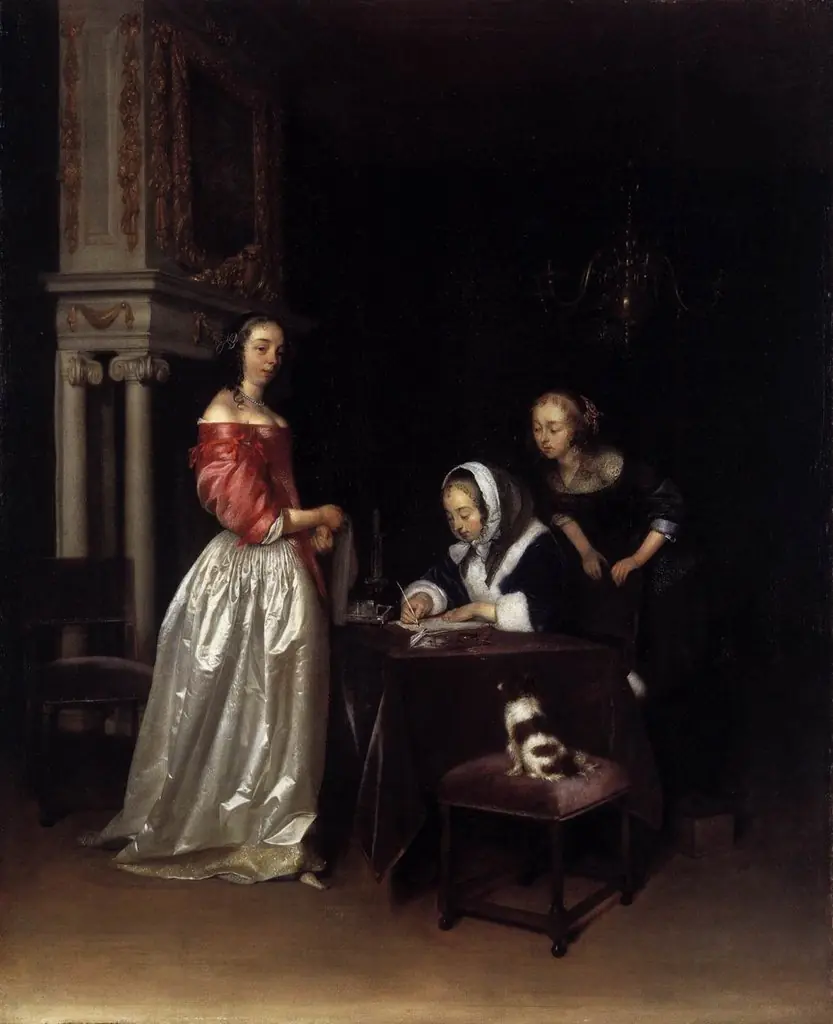
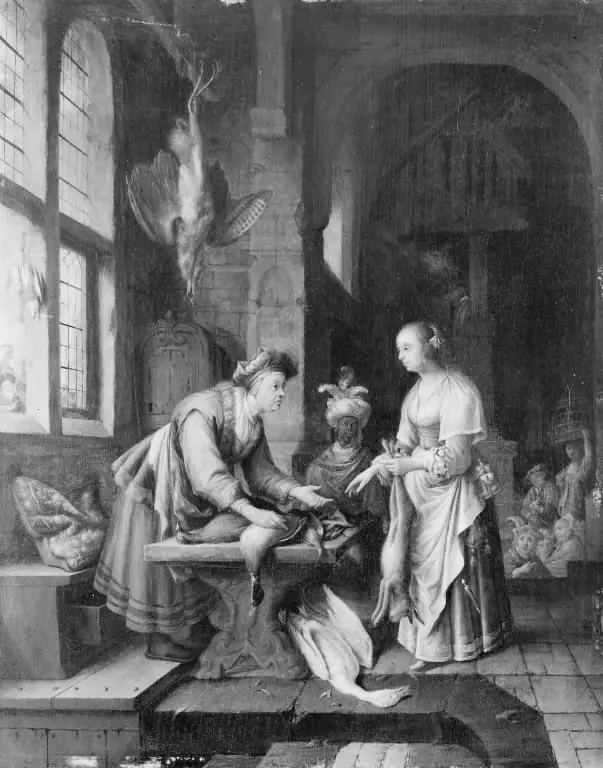
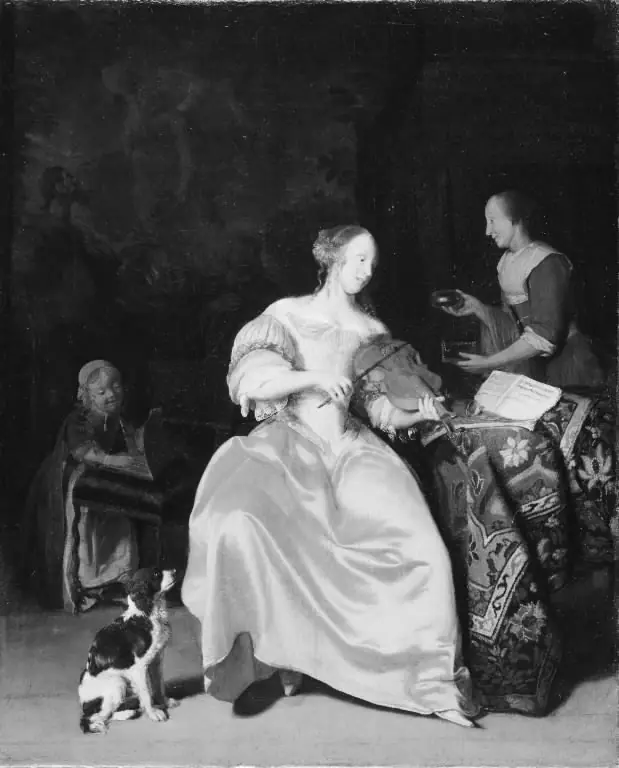
The scene depicts a finely dressed man presenting a letter to a seated woman in an interior setting, accompanied by a small dog resting beside her. The exchange centers on the letter, which likely carries a message of courtship or social engagement, a common motif in mid-17th-century Dutch genre painting.
The composition emphasizes refined social interaction and the coded communication of letters in elite circles, while the dog symbolizes fidelity or domestic virtue. The woman’s poised demeanor and the man’s deferential gesture suggest themes of courtship, social etiquette, and the negotiation of relationships through written correspondence.
History & Provenance
The painting is housed in the collection of the Statens Museum for Kunst in Copenhagen. It is catalogued under the museum's accession system, though the specific accession number is not provided in the available sources. The work has not been documented in major exhibition histories according to the supplied records.
Legacy
The painting A Trumpeter delivering a Letter to a Lady by Gerard ter Borch has been recognized as an influential example of 17th-century Dutch genre painting, cited in scholarship for its subtle narrative detail and refined brushwork. Its composition and portrayal of courtly interaction have informed studies of Baroque visual storytelling, particularly in analyses of diplomatic symbolism within Dutch art. The work remains part of the collection at the Statens Museum for Kunst, where it is displayed as a representative piece of ter Borch's mature period.
Scholars have highlighted its role in shaping later interpretations of diplomatic exchange in art, with the piece frequently referenced in discussions of genre painting's capacity to encode political nuance. Its technical mastery and narrative complexity have contributed to ter Borch's broader reputation as a painter of sophisticated, understated scenes, influencing both academic discourse and museum interpretations of Dutch Golden Age art.
Overview
Created circa 1659 by Dutch painter Gerard ter Borch, this oil on canvas captures a quiet domestic encounter. A gentleman in a light‑coloured coat and hat offers a letter to a lady dressed in a dark gown with a white head covering, while a small dog perches on a chair nearby. The composition is set against a deep, muted background that emphasizes the figures and their interaction.
Technique & Style
Ter Borch employs his characteristic fine brushwork and restrained palette, rendering textures, from the sheen of the fabrics to the fur of the dog, with meticulous detail. The chiaroscuro lighting isolates the figures, while the smooth handling of light on the trumpet and letter underscores their symbolic importance within the composition.
Context
Ter Borch’s oeuvre frequently explored intimate, everyday moments, a focus that resonated with contemporaries such as Johannes Vermeer and Gerrit Dou. This work exemplifies the period’s interest in portraying the subtleties of social exchange and the interior lives of the bourgeois class.
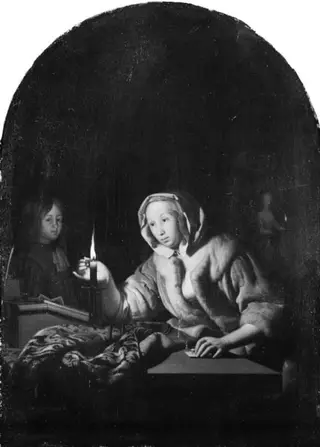
Artist & collection
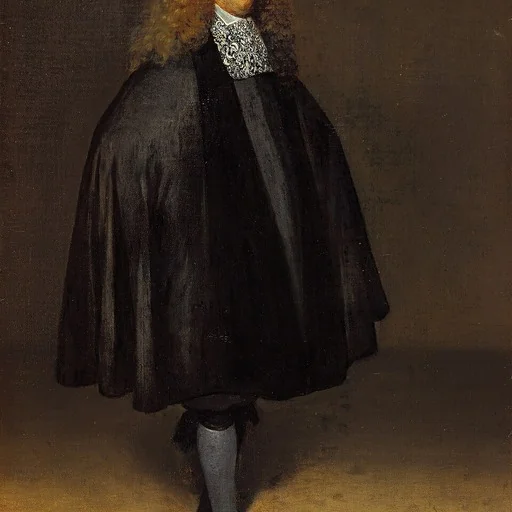
Artist
Gerard ter Borch (Dutch:; December 1617 – 8 December 1681), also known as Gerard Terburg (Dutch: ), was a Dutch Golden Age painter mainly of genre subjects.