Artwork
Portrait of Helena van der Schalcke
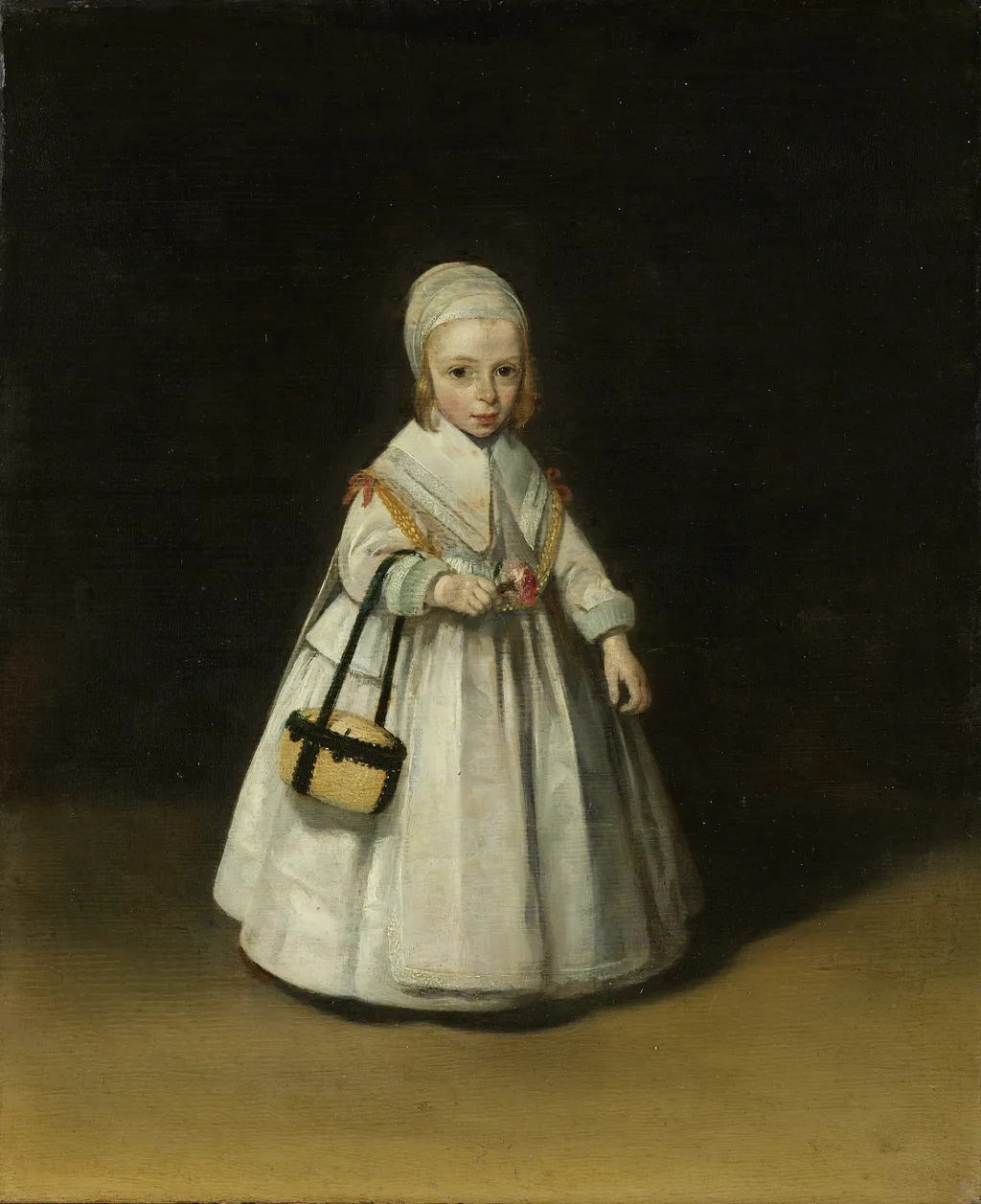
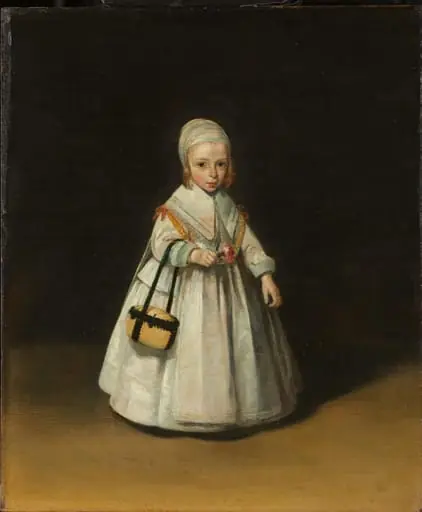
Portrait of Helena van der Schalcke is an oil painting by the Dutch Golden Age artist Gerard ter Borch. It dates from 1648 and is held in the collection of the Rijksmuseum. Created around 1648, this oil painting on panel portrays a young girl in a luminous white dress set against a deep, shadowed backdrop.
About this work
Subject & Meaning
The empty, neutral interior focuses attention solely on the sitter, while the back ribbons, used to hold the child, are visible.
The painting shows Helena van der Schalcke at about two years old, depicted as a small adult in elegant white silk dress trimmed with lace and bows, a gold necklace, and a wicker bag. She holds a red carnation, a symbol of resurrection and hope for eternal life common in 17th-century portraiture. The empty, neutral interior focuses attention solely on the sitter, while the back ribbons, used to hold the child, are visible. The work was created c. 1648 and has been in the Rijksmuseum Amsterdam since 1898.
Technique & Style
The work is an oil-on-panel portrait painted around 1648, depicting the child Helena van der Schalcke in a white silk dress trimmed with lace and ribbons, a gold necklace, and a wicker bag, rendered with meticulous attention to fabric texture that shifts from soft pink to blue‑grey. The neutral, empty interior and blurred floor‑wall boundary focus attention solely on the sitter, a hallmark of Ter Borch’s style. The painting has been part of the Rijksmuseum collection in Amsterdam since 1898.
History & Provenance
The work was created in 1648 by Gerard ter Borch as an oil-on-panel portrait of Helena van der Schalcke, a girl born in 1646. It entered the Rijksmuseum collection in Amsterdam in 1898 and has remained there since. The painting shows the subject at two years old, dressed in a white silk gown trimmed with lace and ribbons, a gold necklace, and a wicker bag, holding a red carnation that symbolised resurrection and hope of eternal life.
The empty interior and neutral background focus attention on the sitter. The work is documented in multiple sources confirming its creation date, medium, dimensions, and provenance within the Rijksmuseum.
The painting is held by the Rijksmuseum, Amsterdam, where it has been since 1898. Its inventory number is SK-A-403.
The work was exhibited in "Pride and Joy: Children's Portraits in the Netherlands, 1500–1700," which traveled to Haarlem and Antwerp during 2000–2001, and was listed as catalogue number 48.
Context
The portrait of Helena van der Schalcke, painted by Gerard ter Borch around 1648, shows the child at the age of two. She wears a white silk dress trimmed with lace and ribbons, a gold necklace, and holds a red carnation, a symbol of resurrection and hope for eternal life. The empty interior and neutral background focus attention on the sitter.
The work is part of the Rijksmuseum collection in Amsterdam and has been there since 1898. It reflects seventeenth-century customs of depicting young children in adult-like attire with leashes for support. Ter Borch’s interest in miniature portraiture developed during his stay in London (1635–1636) and influenced his later genre scenes.
Scholarship notes its significance within the broader context of Dutch Baroque portraiture and its comparison to works by Hals and Rembrandt.
The painting is discussed in multiple sources as an example of child portraiture in the Netherlands between 1500 and 1700, featured in the 2000–2001 exhibition "Pride and Joy". It remains a key piece for understanding Ter Borch’s technique in rendering fabric and symbolic use of objects, as well as his role in the evolution of Dutch portraiture.
Overview
Created around 1648, this oil painting on panel portrays a young girl in a luminous white dress set against a deep, shadowed backdrop. The work is part of the Rijksmuseum’s collection in Amsterdam and exemplifies the Dutch painter Gerard ter Borch’s focus on intimate portraiture during the mid‑seventeenth century.
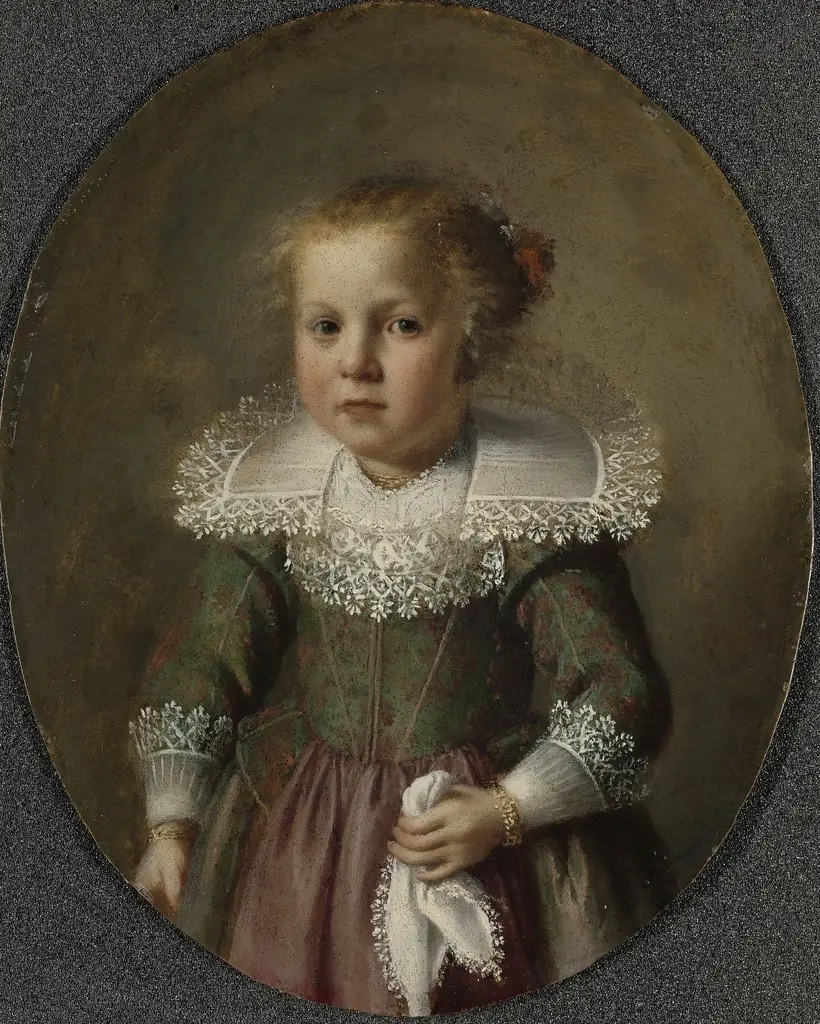
Own this work as a print
Artist & collection
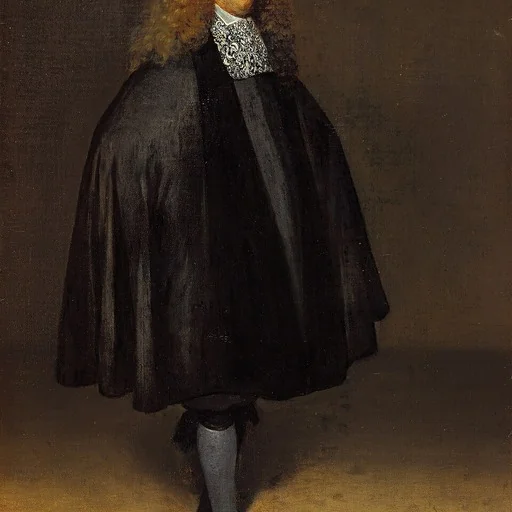
Artist
Gerard ter Borch (Dutch:; December 1617 – 8 December 1681), also known as Gerard Terburg (Dutch: ), was a Dutch Golden Age painter mainly of genre subjects.