Artwork
Christ in the Garden of Gethsemane (The Agony in the Garden)
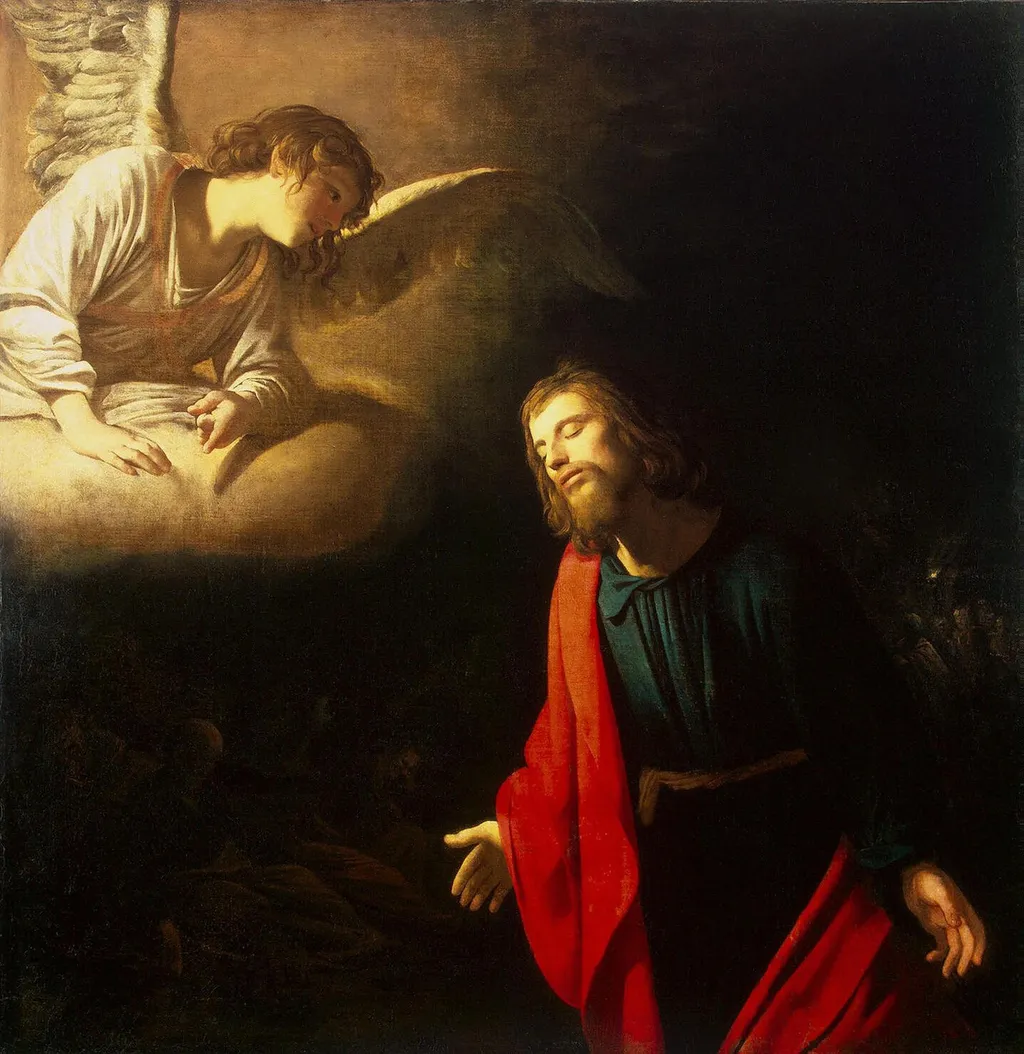
Christ in the Garden of Gethsemane (The Agony in the Garden) is an oil painting by the Dutch Golden Age artist Gerard van Honthorst. It dates from 1617 and is held in the collection of the Hermitage Museum.
About this work
Overview
Christ in the Garden of Gethsemane (The Agony in the Garden) is a religious painting created by the Dutch artist Gerard van Honthorst in 1617.
Christ in the Garden of Gethsemane (The Agony in the Garden) is a religious painting created by the Dutch artist Gerard van Honthorst in 1617. Executed in oil paint on canvas, the work measures 113 centimeters in height and 110 centimeters in width. It was made in the Netherlands and is currently held in the collection of the Hermitage Museum. The painting is a significant example of Honthorst's dramatic early style, applying intense chiaroscuro to a traditional biblical subject.
Subject & Meaning
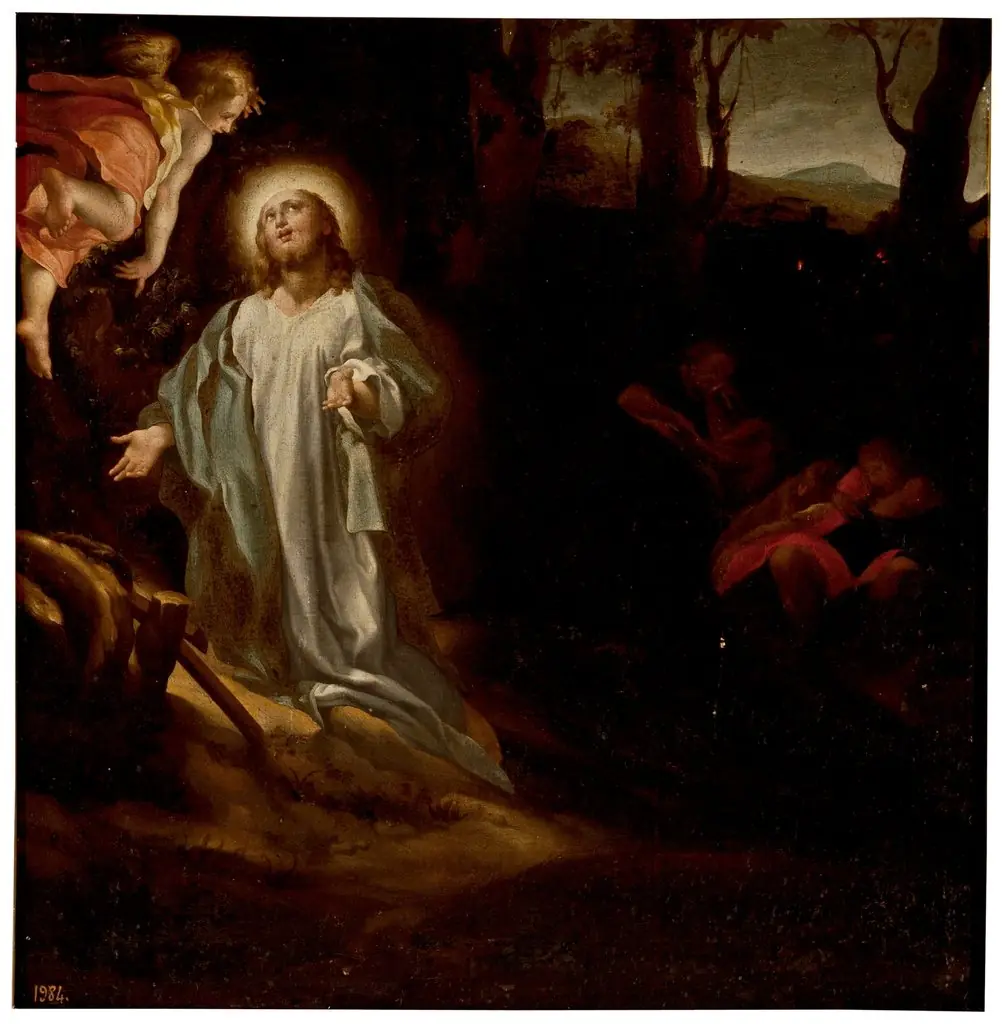
The artwork depicts the Agony in the Garden, a biblical episode occurring after the Last Supper and before the betrayal and arrest of Jesus. According to the Synoptic Gospels, Jesus retreated to the garden of Gethsemane on the Mount of Olives, experiencing profound anguish and praying for deliverance from his impending suffering while accepting divine will. In Honthorst's interpretation, an angel descends to strengthen Christ, an event described in the gospels. The angel rests upon a cloud, a visual device signifying divine presence and mediating between the heavenly and earthly realms. Christ is draped in a vivid red cloak, a color that functions symbolically to cue into pre-existing cultural imagery, representing the vital life force, sacrifice, and the blood of his forthcoming Passion.
Technique & Style
Honthorst executed the painting in oil on canvas, employing a dramatic visual language defined by strong chiaroscuro. The composition compresses two figures into a dark space, where sharp transitions between light and shadow define the forms. The palette is dominated by deep browns and blacks, with minimal detail suggesting the night setting of the garden, save for a faint suggestion of foliage or rocks in the lower left corner. A warm, golden light illuminates the angel and the face and hands of Christ, creating stark contrast against the surrounding darkness. The angel emerges from a luminous mist, heightening the otherworldly atmosphere. Brushwork appears smooth in the flesh tones and more textured in the rendering of the drapery and the large, feathered wings. Christ kneels with his body angled backward, eyes closed and head tilted upward, with one hand extended outward, physically manifesting his spiritual anguish.
History & Provenance
The painting was created in the Netherlands in 1617. While the specifics of its early commission and ownership chain are not documented in the available sources, the work ultimately entered the collection of the Hermitage Museum, where it remains today. The painting has been featured in public exhibitions, including the exhibition titled Dutch masters from the Hermitage.
Own this work as a print
Artist & collection
Artist
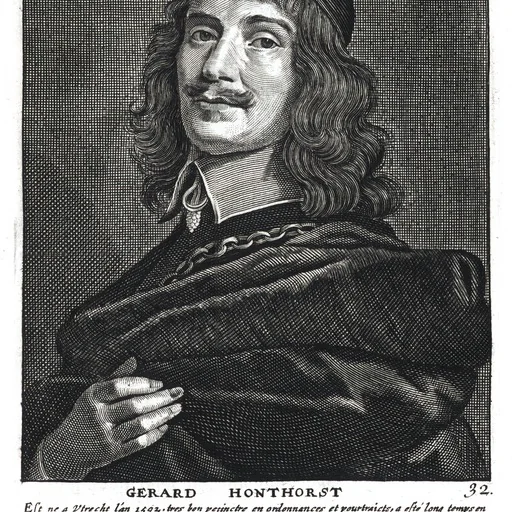
Gerard "Gerrit" van Honthorst (4 November 1592 – 27 April 1656) was a Dutch Golden Age painter who became known for his depiction of artificially lit scenes, eventually receiving the Italian nickname Gherardo delle Notti ("Gerard of the…

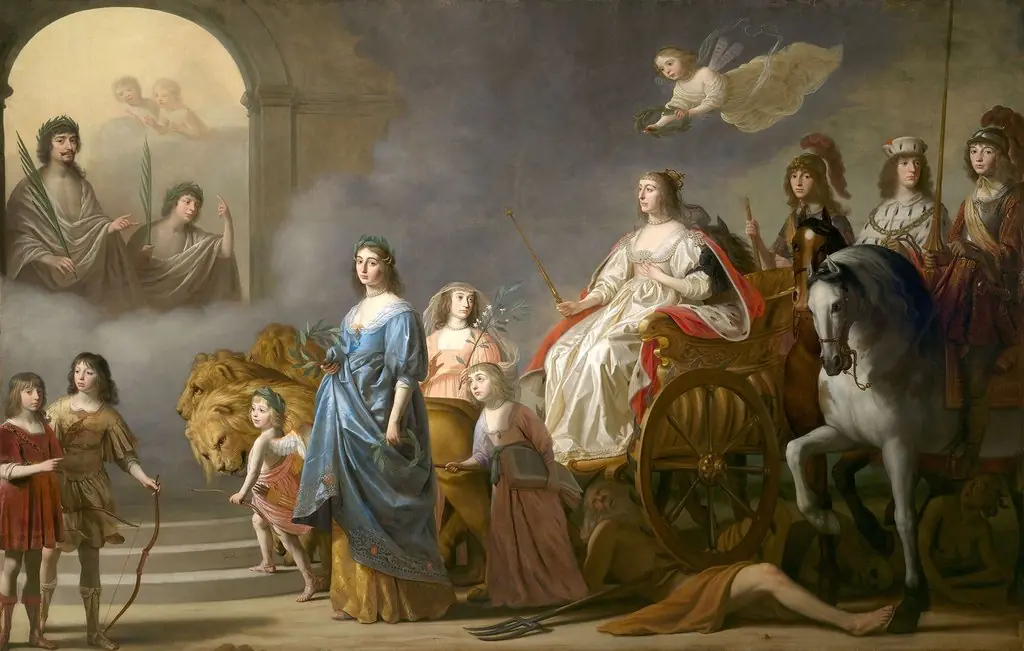 The Triumph of the Winter Queen: Allegory of the Just
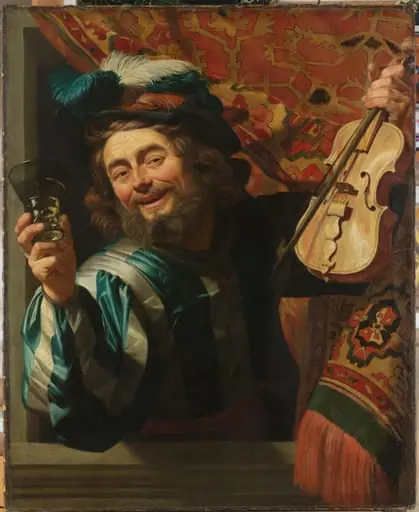 Een vrolijke vioolspeler
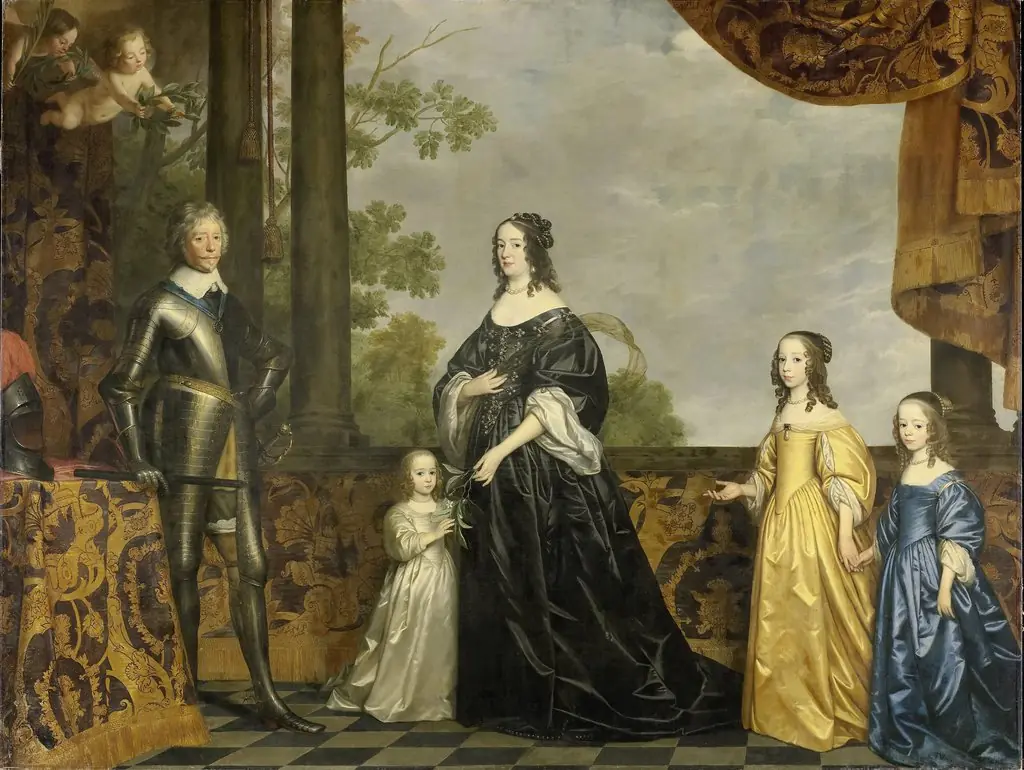 Frederik Hendrik (1584-1647), Prince of Orange, his wife Amalia van Solms (1602-75) and their three youngest daughters, Albertina Agnes (1634-96), Henrietta Catharina (1637-1708) and Maria (1642-88)
 The Concert
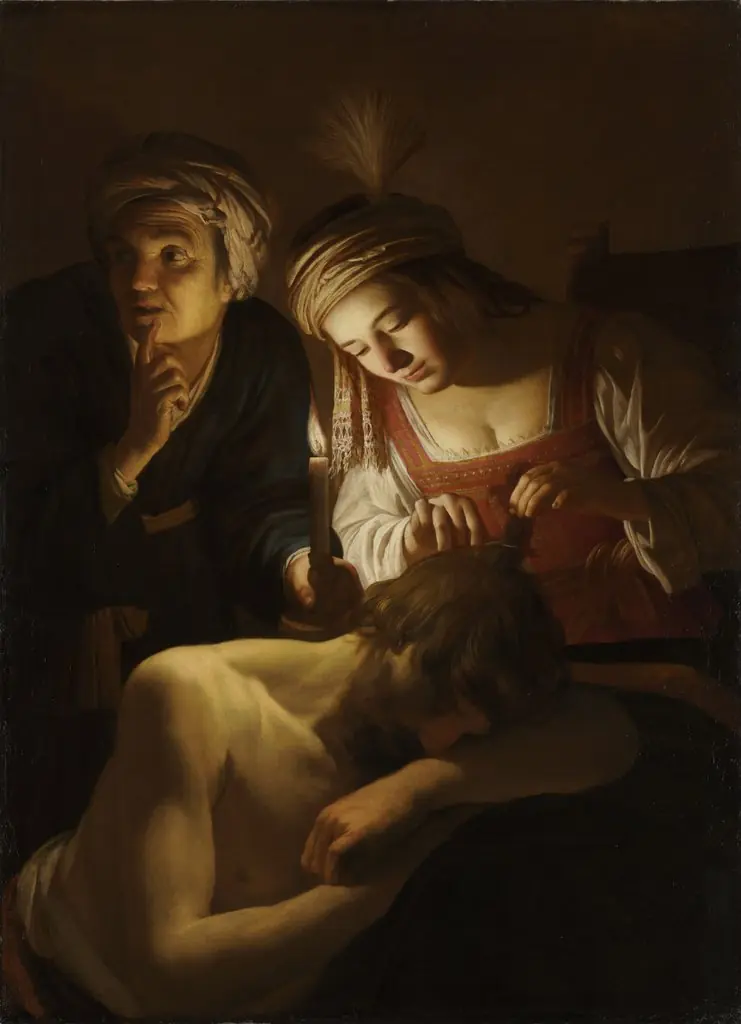 Samson and Delilah
 Satyr and Nymph
 Young Woman with a Candlestick, Old Woman and a Violin Player
 Willem II (1626-50), Prince of Orange, and his wife Maria Stuart (1631-60)
 The Agony in the Garden
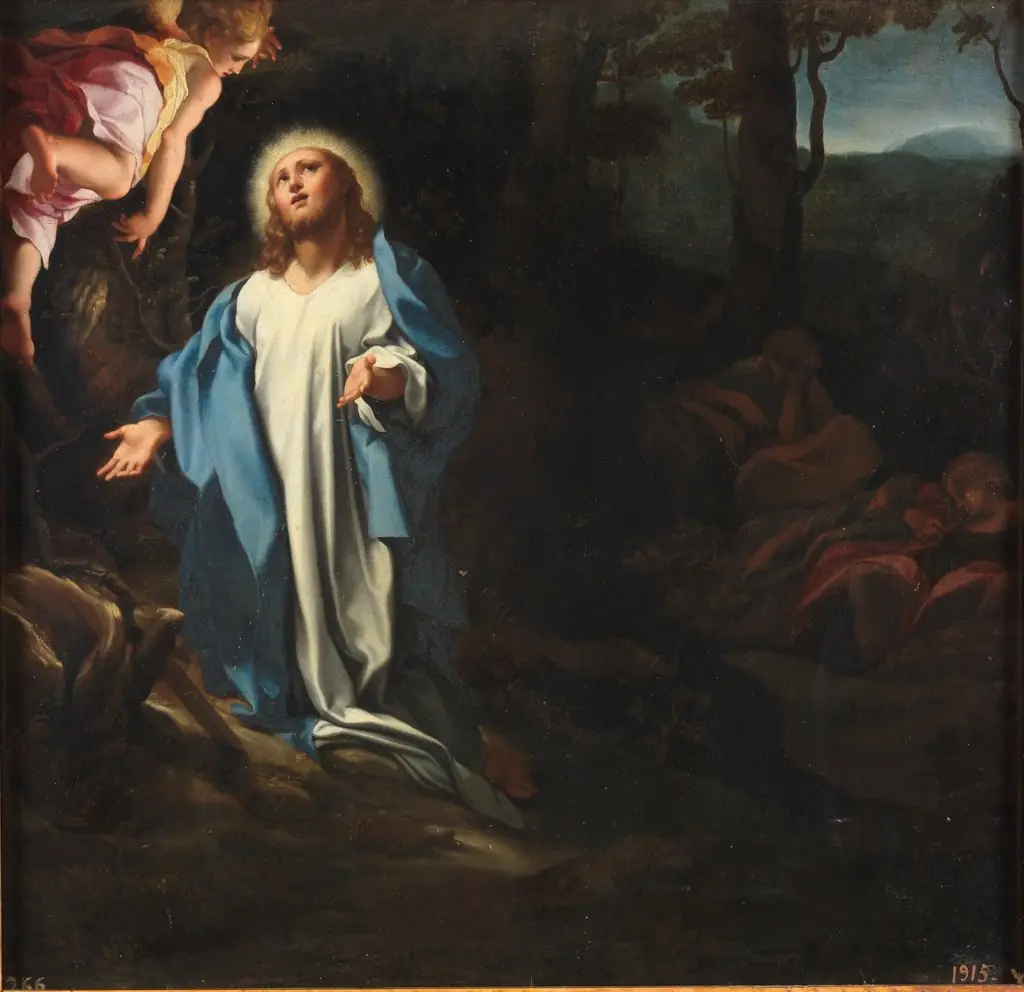 The Agony in the Garden
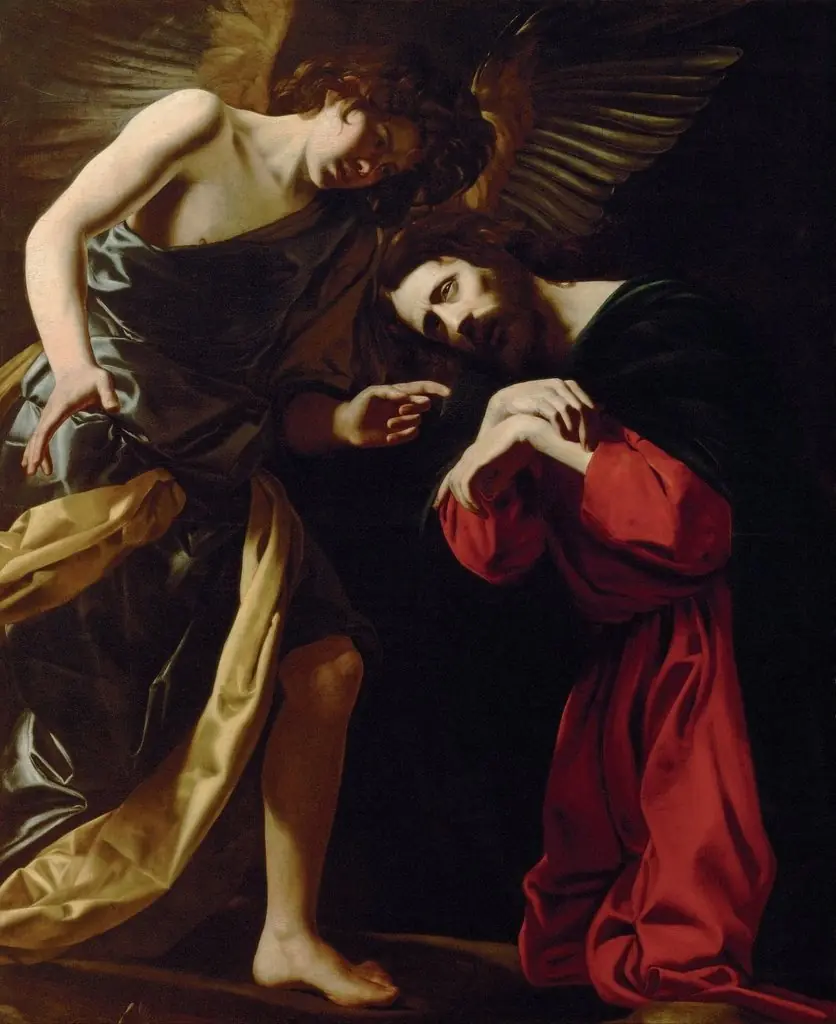 Christ on the Mount of Olives (Christ’s Fear of Death)
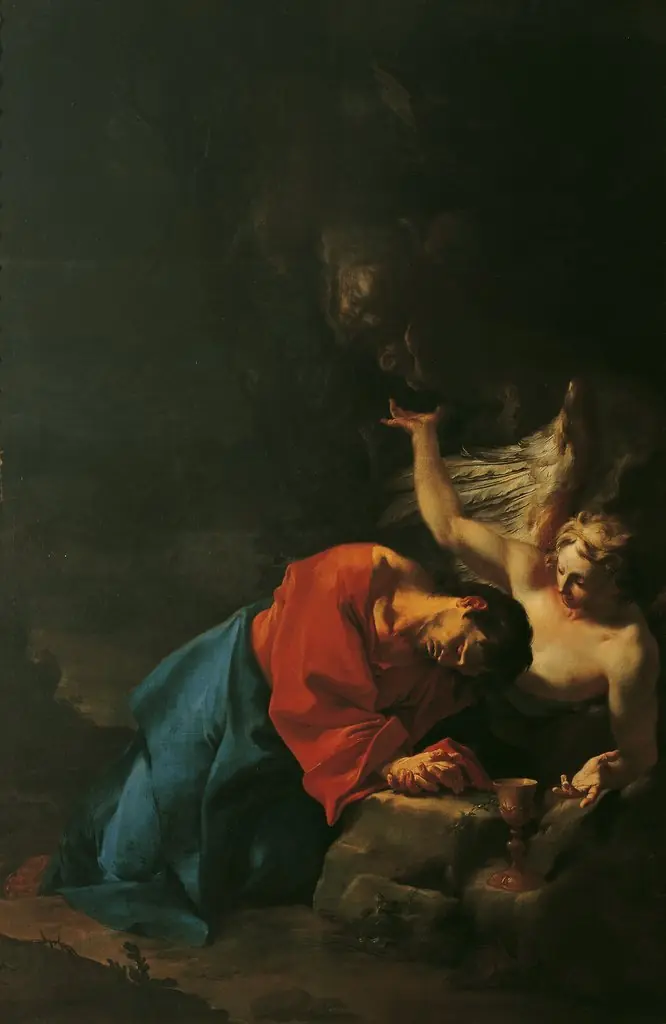 Christ on the Mount of Olives
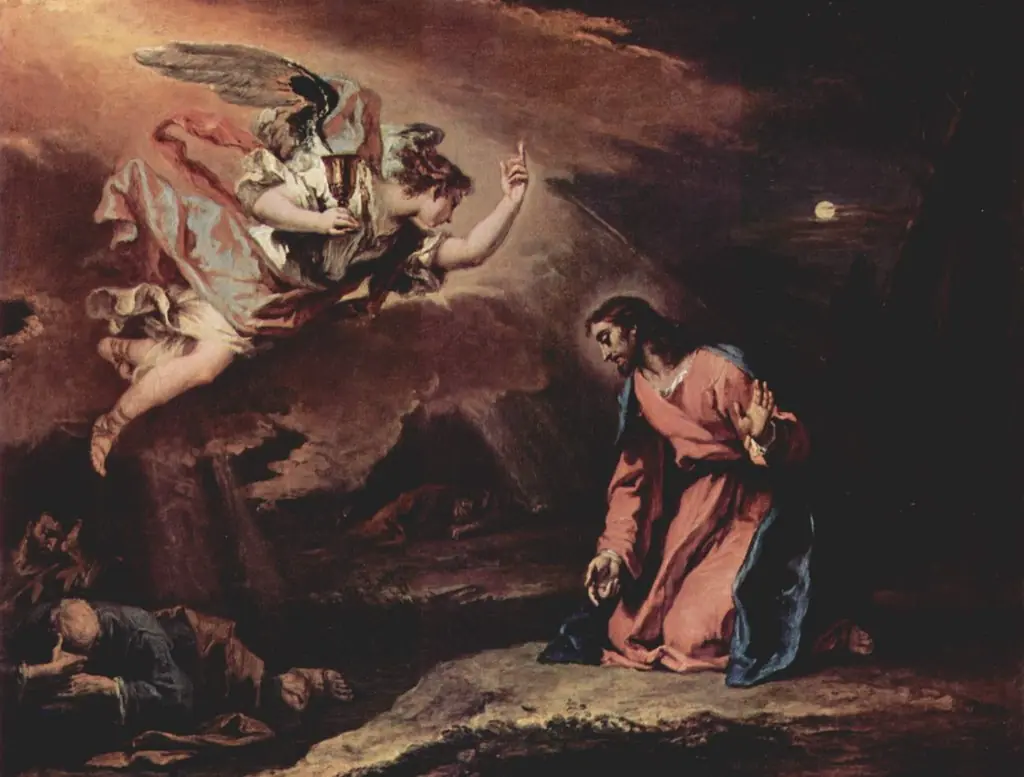 Christ on the Mount of Olives
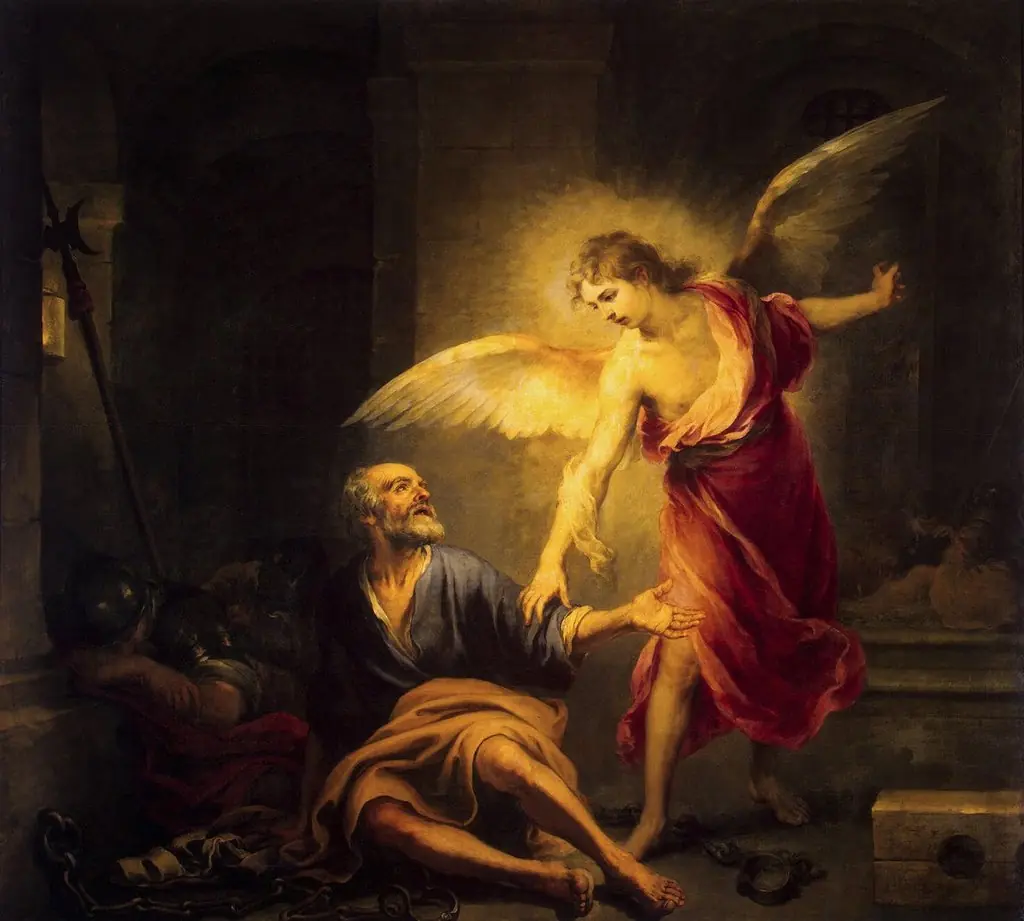 Liberation of Saint Peter
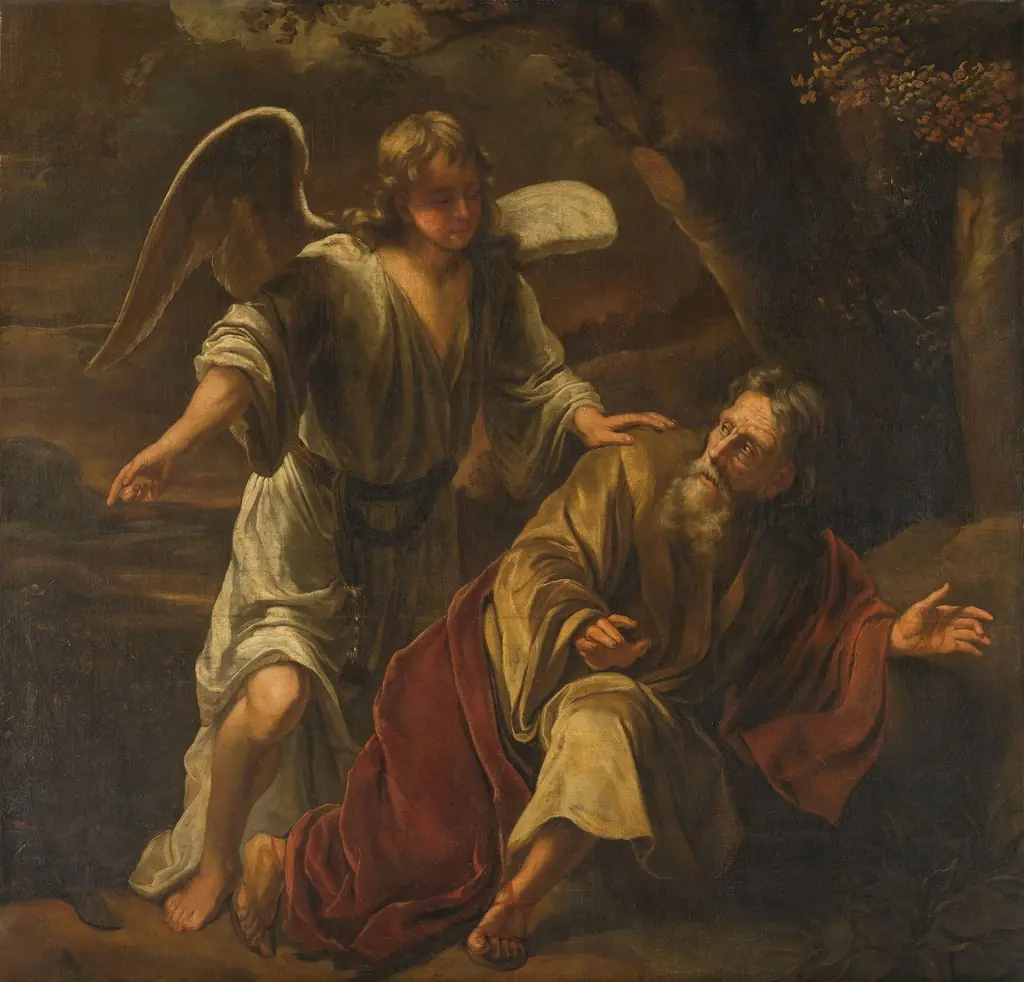 Biblical scene
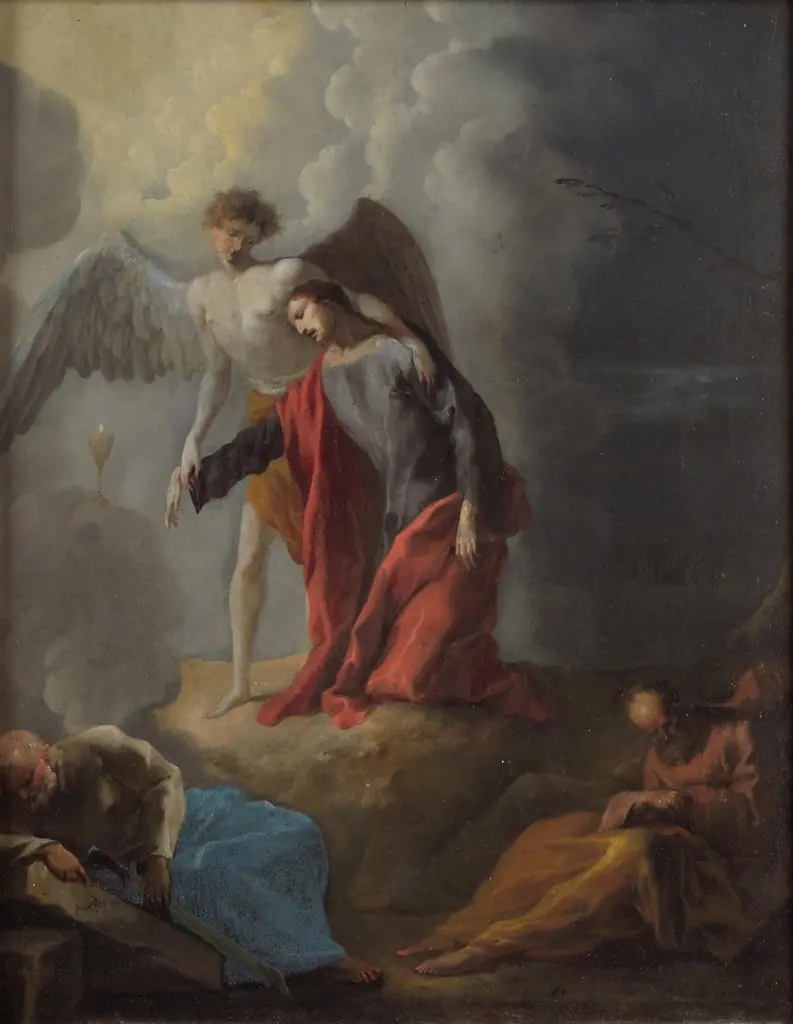 Christ on the Mount of Olives
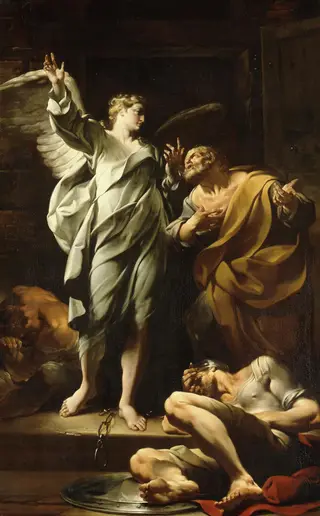 The liberation of saint Peter
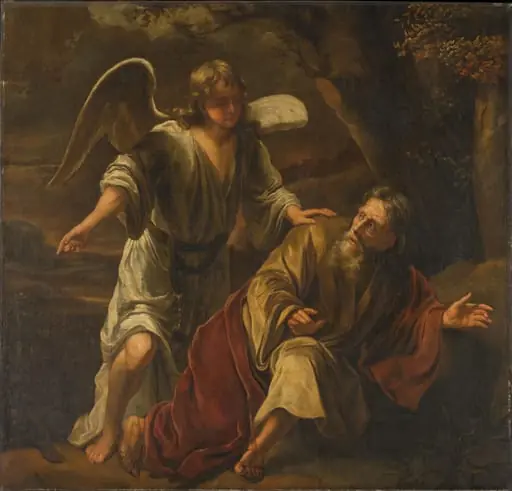 Biblical Scene
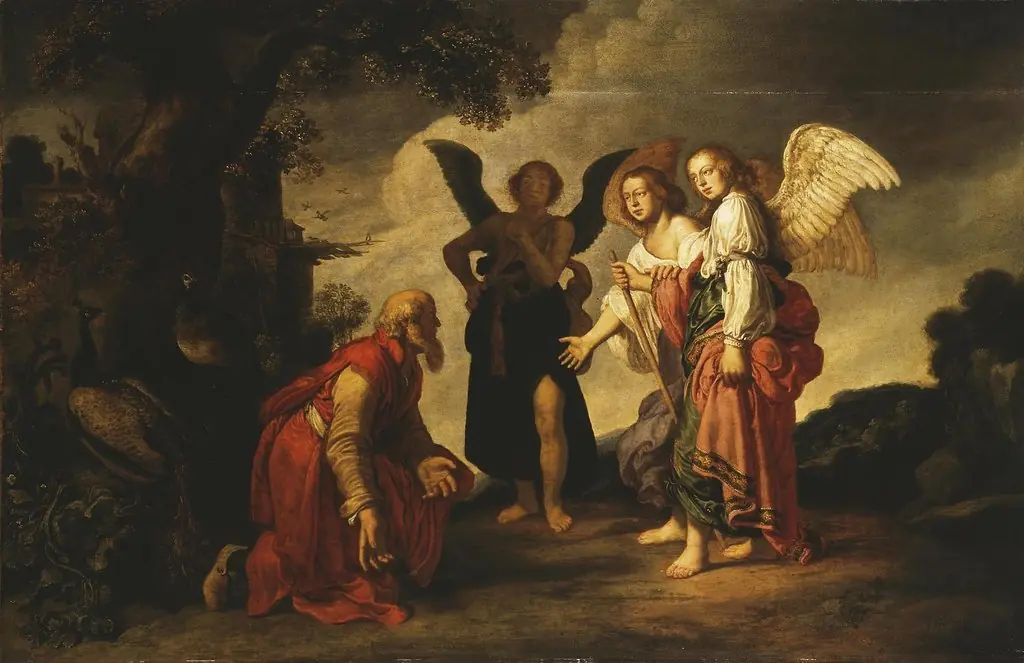 Abraham and the Three Angels
- Christ in the garden of olives at Gethsemane