Artwork
Coriolanus's Mother and Wife Begging Him to Spare Rome
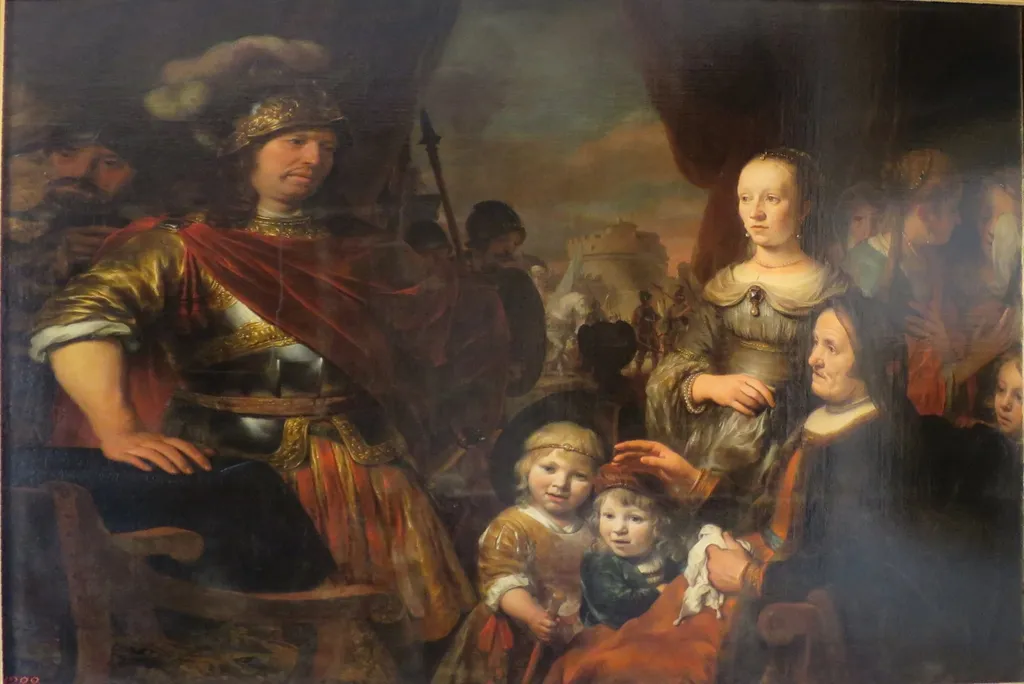
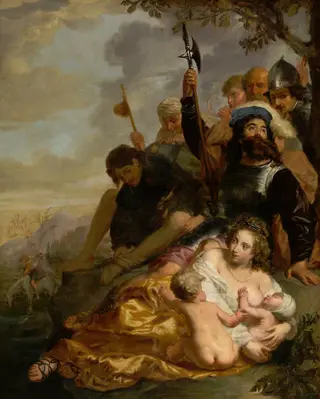
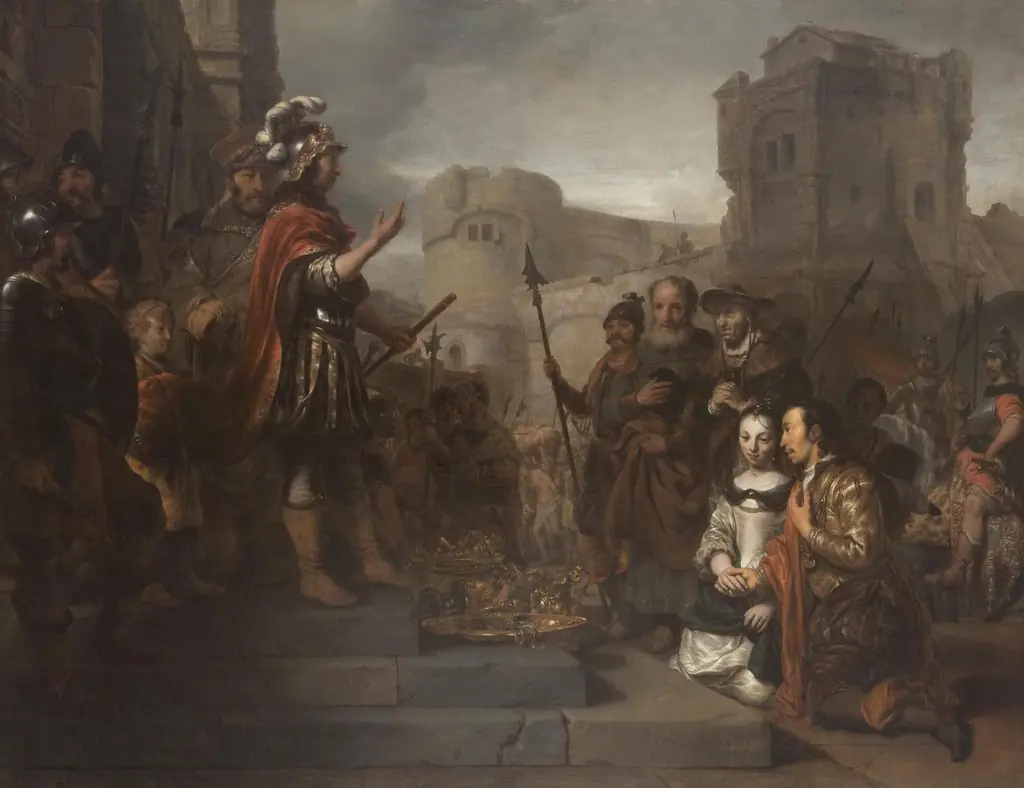
Coriolanus's Mother and Wife Begging Him to Spare Rome is an oil painting by the Dutch Golden Age artist Gerbrand van den Eeckhout. It dates from 1662 and is held in the collection of the Hermitage Museum.
About this work
Subject & Meaning
Gerbrand van den Eeckhout's 1662 history painting illustrates the dramatic moment when the mother and wife of the Roman general Coriolanus implore him to spare the city of Rome. The composition features Coriolanus alongside his mother and a child, capturing the intense familial appeal that ultimately persuades the military leader to halt his siege. As a work of history painting, the scene represents the triumph of domestic duty and emotional persuasion over martial vengeance, highlighting a pivotal narrative from classical antiquity where personal bonds prevent political destruction.
Technique & Style
The painting's surface retains its original oil-based handling characteristics, showing no significant degradation in pigment integrity or support tension.
Gerbrand van den Eeckhout painted 'Coriolanus's Mother and Wife Begging Him to Spare Rome' in 1662 using oil paint on canvas. The work measures 149 centimeters in height and 189 centimeters in width. Executed in the Dutch Republic, it exemplifies the history painting genre with a compositional focus on emotional supplication and narrative clarity, rendered through layered brushwork and controlled chiaroscuro.
The painting's surface retains its original oil-based handling characteristics, showing no significant degradation in pigment integrity or support tension. Stylistically, van den Eeckhout employs precise linear contours and a restrained palette to heighten the drama of the maternal entreaty, balancing intimate detail with grand historical resonance.
These formal qualities align with mid-17th-century Dutch approaches to narrative figuration, where moral urgency is conveyed through meticulous draftsmanship and textured surface treatment.
History & Provenance
The painting was created in the Netherlands in 1662 by Gerbrand van den Eeckhout, commissioned by the Dutch merchant Heinrich von Brühl, who owned the work before it entered the collection of the Hermitage Museum, where it remains on display.
The painting measures 149 cm by 189 cm and is executed in oil on canvas as a history painting depicting Coriolanus, his mother, and his wife. It was completed in 1662 and has been part of the Hermitage Museum's collection since its acquisition.
The painting is held in the collection of the State Hermitage Museum in Saint Petersburg.
Its inventory record is recorded under accession number GE-4444.
The work has been exhibited at the Hermitage’s Dutch and Flemish galleries in multiple reinstallations since the mid-twentieth century, most recently as part of the permanent display dedicated to seventeenth-century Dutch masters.
Overview
Gerbrand van den Eeckhout’s 1662 oil painting presents a dramatic moment from Roman legend, showing the warrior Coriolanus confronted by his mother and child as they plead for the safety of Rome. The composition is dominated by the armored figure, his spear poised, while the surrounding figures convey urgency and sorrow against a backdrop of a burning city under a somber sky.
Context
In 17th‑century Dutch art, history paintings served both educational and moral purposes, drawing on ancient sources to reflect contemporary concerns. Van den Eeckhout’s choice of the Coriolanus episode aligns with the period’s interest in exemplifying the tension between personal honor and civic responsibility, resonating with the political climate of his homeland.
Own this work as a print
Artist & collection
Artist
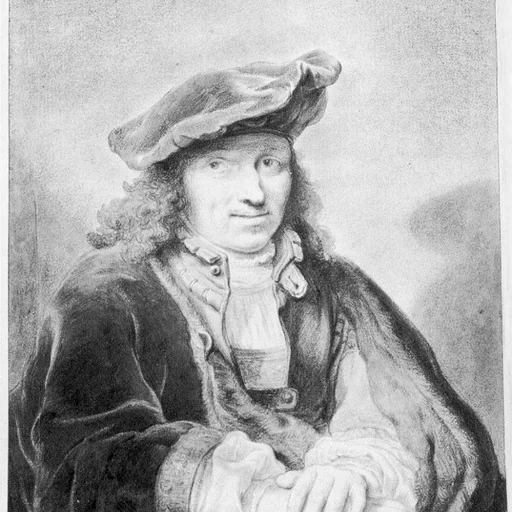
Gerbrand van den Eeckhout (19 August 1621 – 29 September 1674) was a Dutch Golden Age painter and a favourite student of Rembrandt. He was also an etcher, an amateur poet, a collector and an adviser on art.

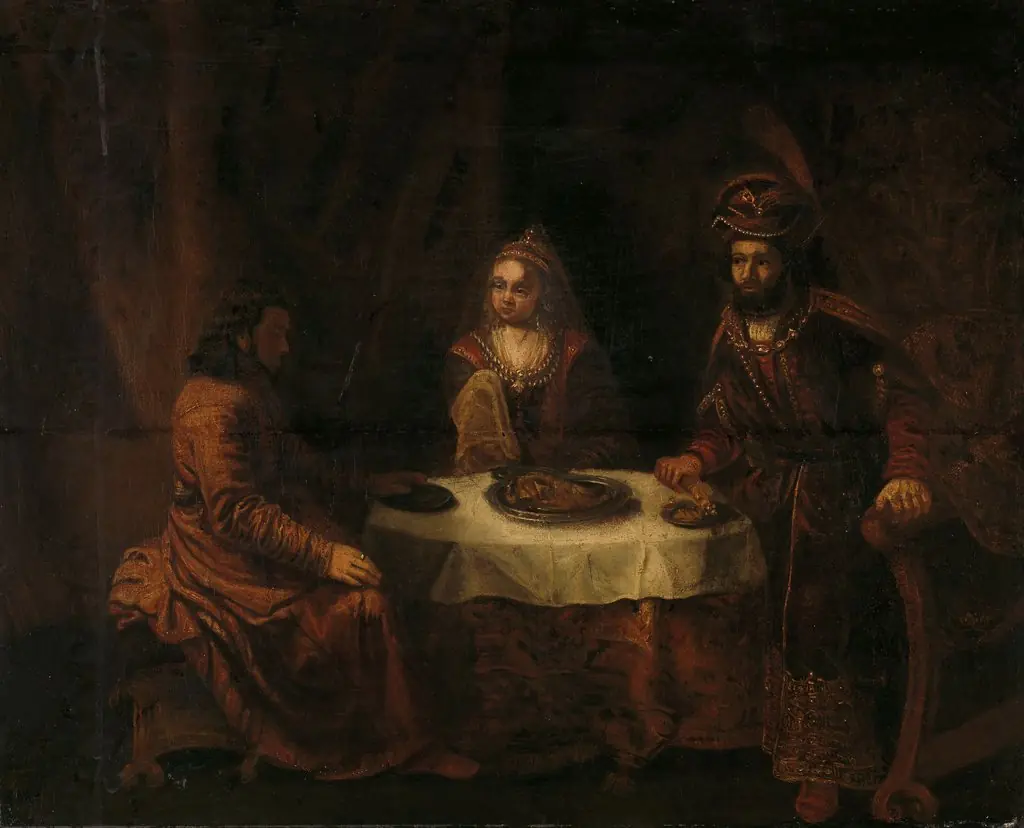
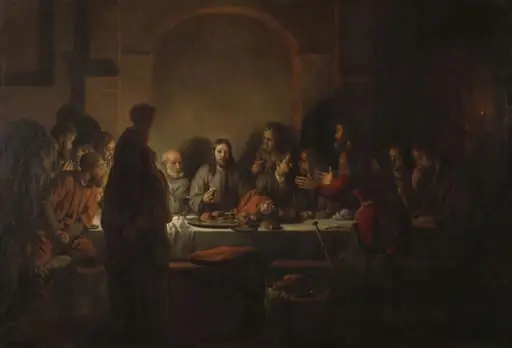
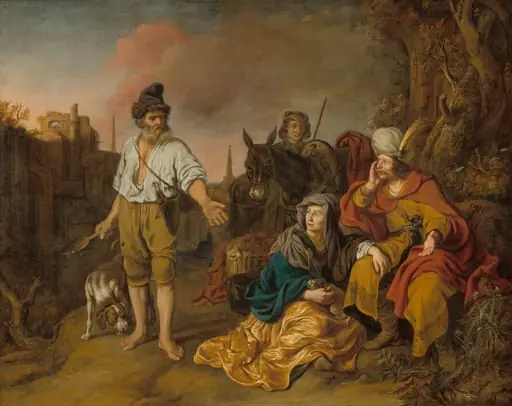
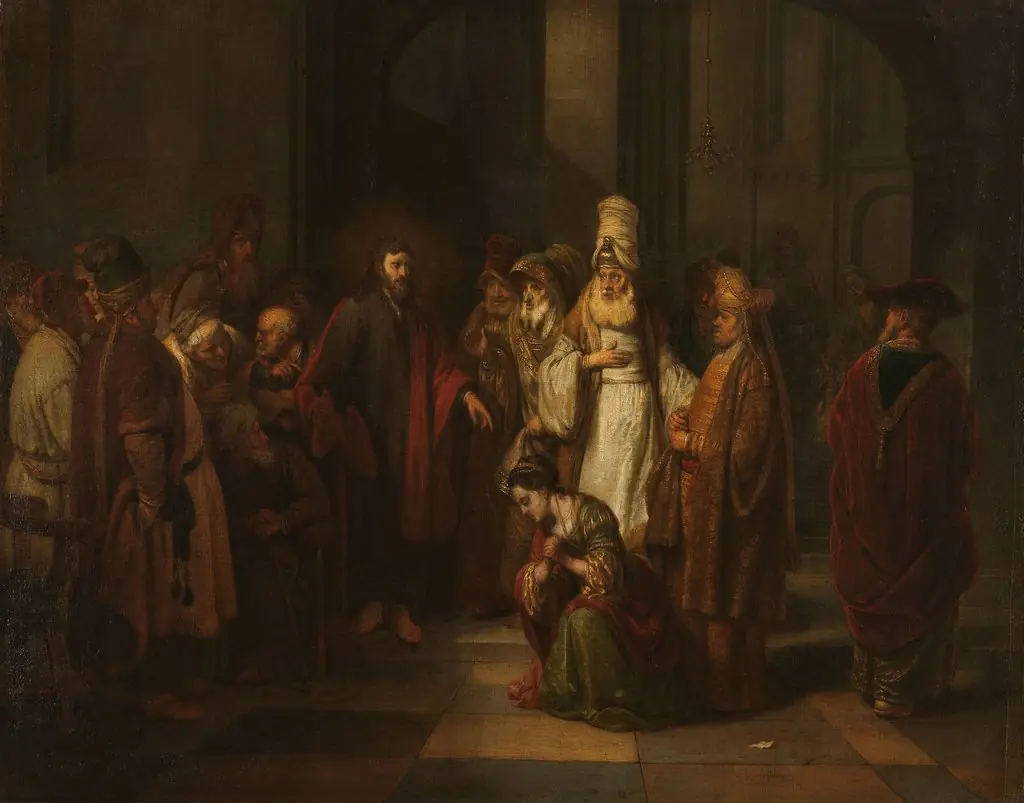
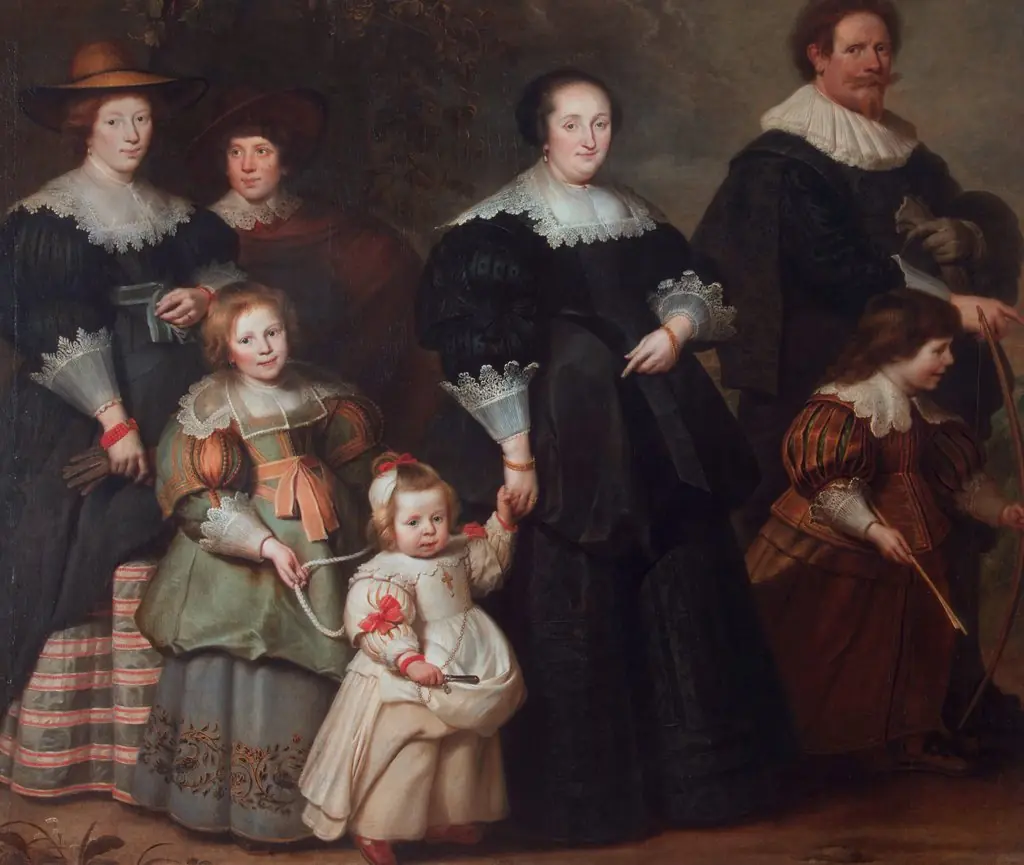
- Self-Portrait of the Artist with his Wife Suzanne Cock and their Children
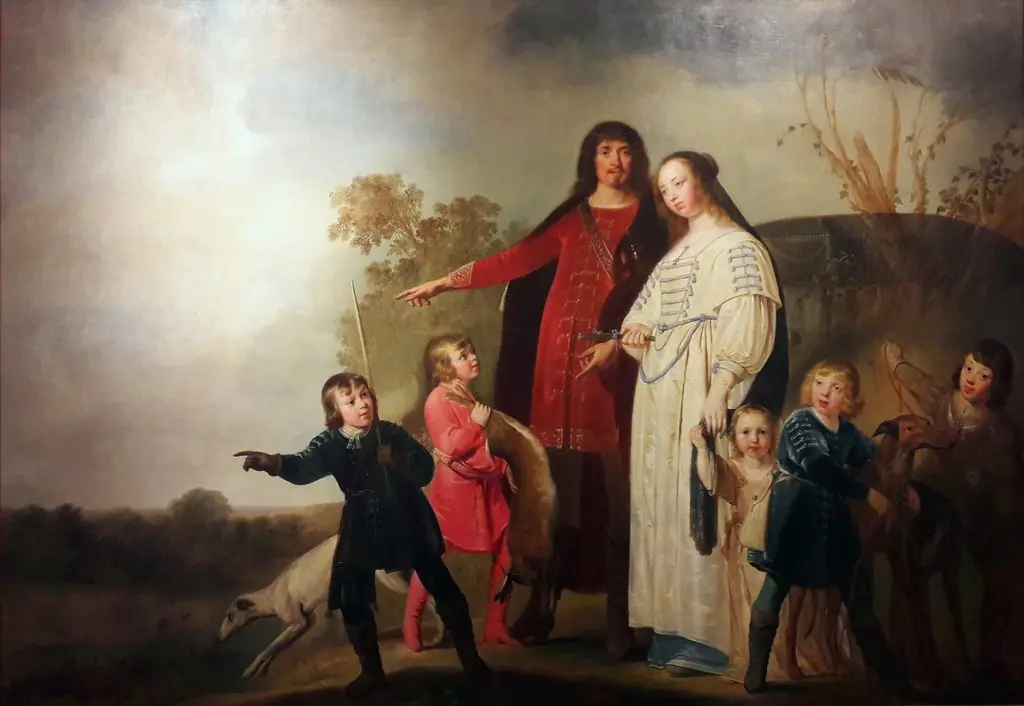 Family portrait in a landscape by Pieter Fransz. de Grebber
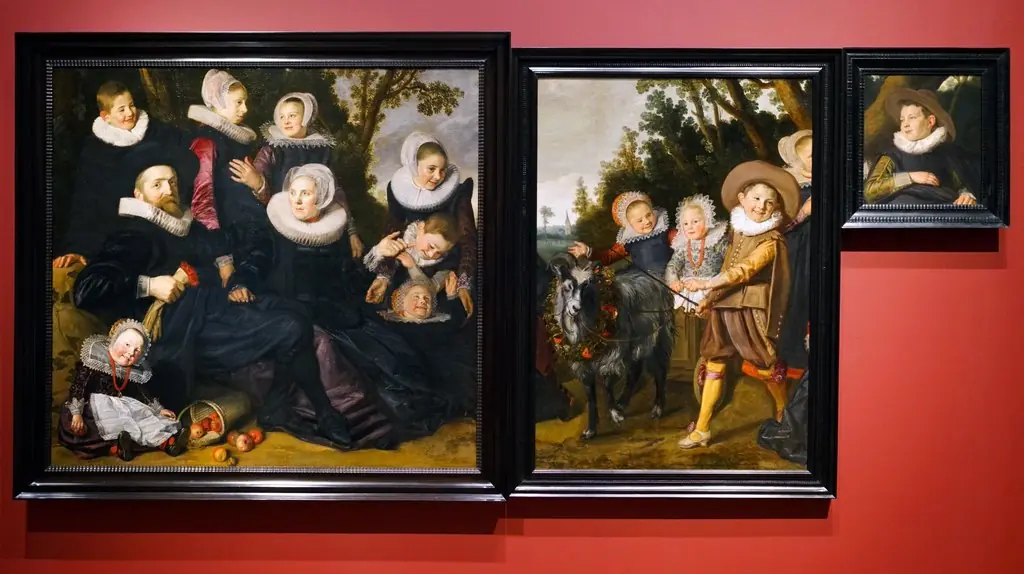 Portrait of a family in a landscape - three temporarily united fragments
 Reyer Reyersz van der Burch (1630-1695), Ammunition Officer attached to the Arsenal of the States-General, Delft, with his Wife Geertruid Graswinckel and their Children Frank, Cornelis, Reyer, Maria and Alida
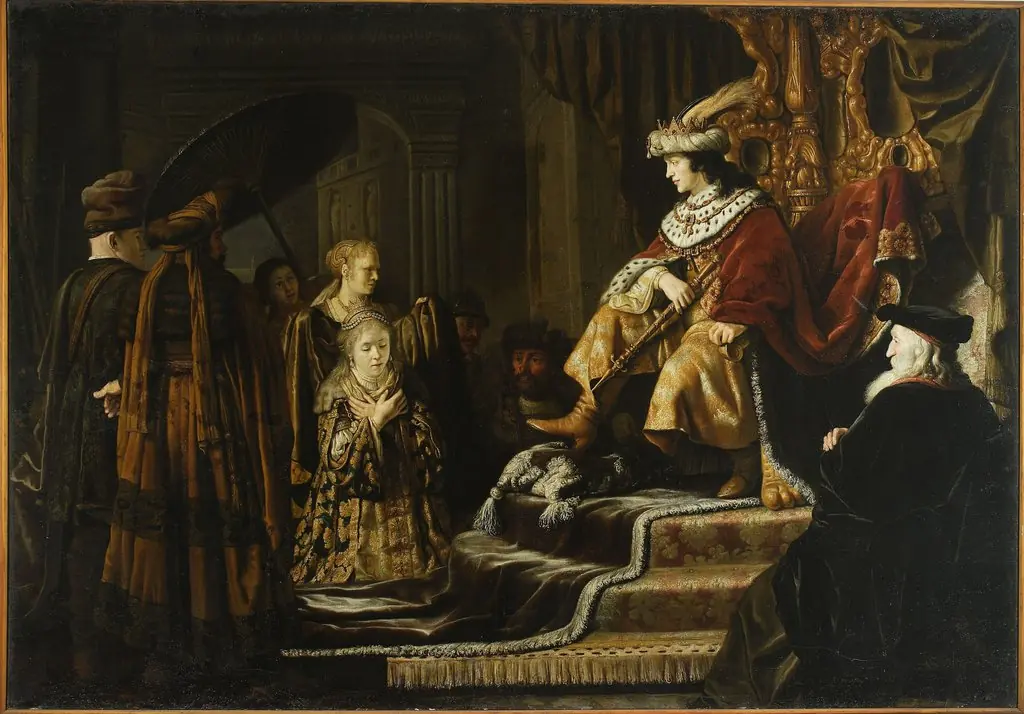 Esther before Ahasuerus (Esther 2:16)
 Family Portrait
 Self-portrait with family
 At the Watering Hole
 Self-Portrait of the Artist with his Wife Suzanne Cock and their Children
 Portrait of the artist with his family
 The Continence of Scipio
 Moses and Pharaoh’s Crown