Artwork
The Levite at Gibeah
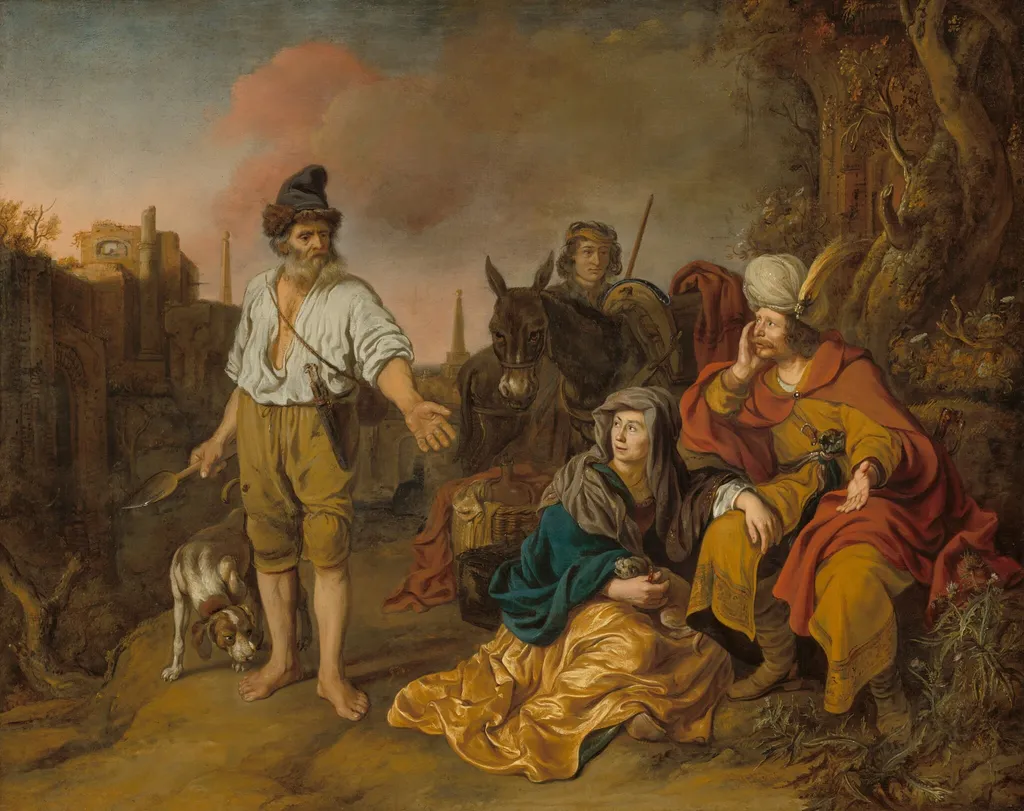
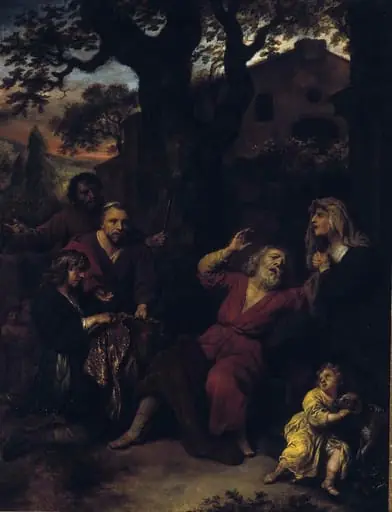
The Levite at Gibeah is an oil painting by the Baroque artist Gerbrand van den Eeckhout. It dates from 1644 and is held in the collection of the National Gallery of Art.
About this work
Technique & Style
Classified as a painting, the piece was acquired by the National Gallery of Art through a partial and promised gift from Emile E.
Gerbrand van den Eeckhout executed The Levite at Gibeah in 1640 using oil paint on a canvas support. The work measures 96.5 cm in height and 121.9 cm in width. Classified as a painting, the piece was acquired by the National Gallery of Art through a partial and promised gift from Emile E. Wolf, which was completed in 2000. The painting's physical dimensions and medium align with the artist's practice during this period.
History & Provenance
The painting was created by Gerbrand van den Eeckhout in 1640, as documented in the National Gallery of Art’s records and supported by its Wikidata entry.
The work entered the public art market in New York during the 1960s, initially as an anonymous lot before being purchased by Emile E. Wolf. Wolf later gifted a partial and promised portion of the painting to the National Gallery of Art in 1996, with the gift completed in 2000. Wolf’s 1987 letter to Arthur Wheelock notes its anonymous sale at Parke-Bernet, though no definitive auction record has been identified.
The painting is held by the National Gallery of Art in Washington, D.C., where it has been part of the collection since a 2000 gift that completed a partial promised donation from New York collector Emile E. Wolf, who acquired it in the 1960s through a private transaction brokered by Park Bernet, though the exact auction remains unidentified. The work's accession details are not specified in the sources, but its presence in the National Gallery of Art's collection is confirmed, and it has not been documented in major public exhibitions beyond its inclusion in the museum's holdings.
Context
Gerbrand van den Eeckhout's 1640 painting The Levite at Gibeah entered the National Gallery of Art collection through a circuitous path documented in curatorial correspondence. Emile E. Wolf acquired the work in the 1960s via Parke-Bernet Gallery, though the exact auction remains unidentified despite review of relevant catalogs, as noted in his 1987 letter to Arthur Wheelock [1]. The work entered the museum through a partial and promised gift completed in 2000, reflecting evolving acquisition practices.
Its placement within the National Gallery's collection underscores its significance as an example of Dutch Golden Age narrative painting, though specific scholarly analyses of its critical reception or art historical context are not detailed in the provided documentation [1].
Overview
Gerbrand van den Eeckhout, a Dutch painter of the mid‑17th century and a prominent pupil of Rembrandt, executed The Levite at Gibeah in oil on canvas around 1644. The composition captures a brief, unsettled encounter among four travelers beside a deteriorating stone wall at twilight, their gestures and expressions heightened by stark contrasts of light and shadow.
Subject & Meaning
The work visualises the biblical episode from Judges in which a Levite discovers a grievous crime in the town of Gibeah. By showing the Levite, a woman, a richly dressed man, and a dark‑clad figure with a spear, the painter suggests a moment of moral tension and impending violence, inviting contemplation of justice and hospitality in the ancient narrative.
Own this work as a print
Artist & collection
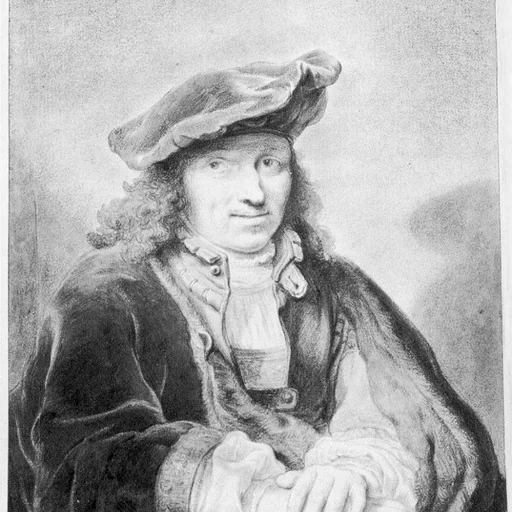
Artist
Gerbrand van den Eeckhout (19 August 1621 – 29 September 1674) was a Dutch Golden Age painter and a favourite student of Rembrandt. He was also an etcher, an amateur poet, a collector and an adviser on art.