Artwork
Foot Combat with Poles
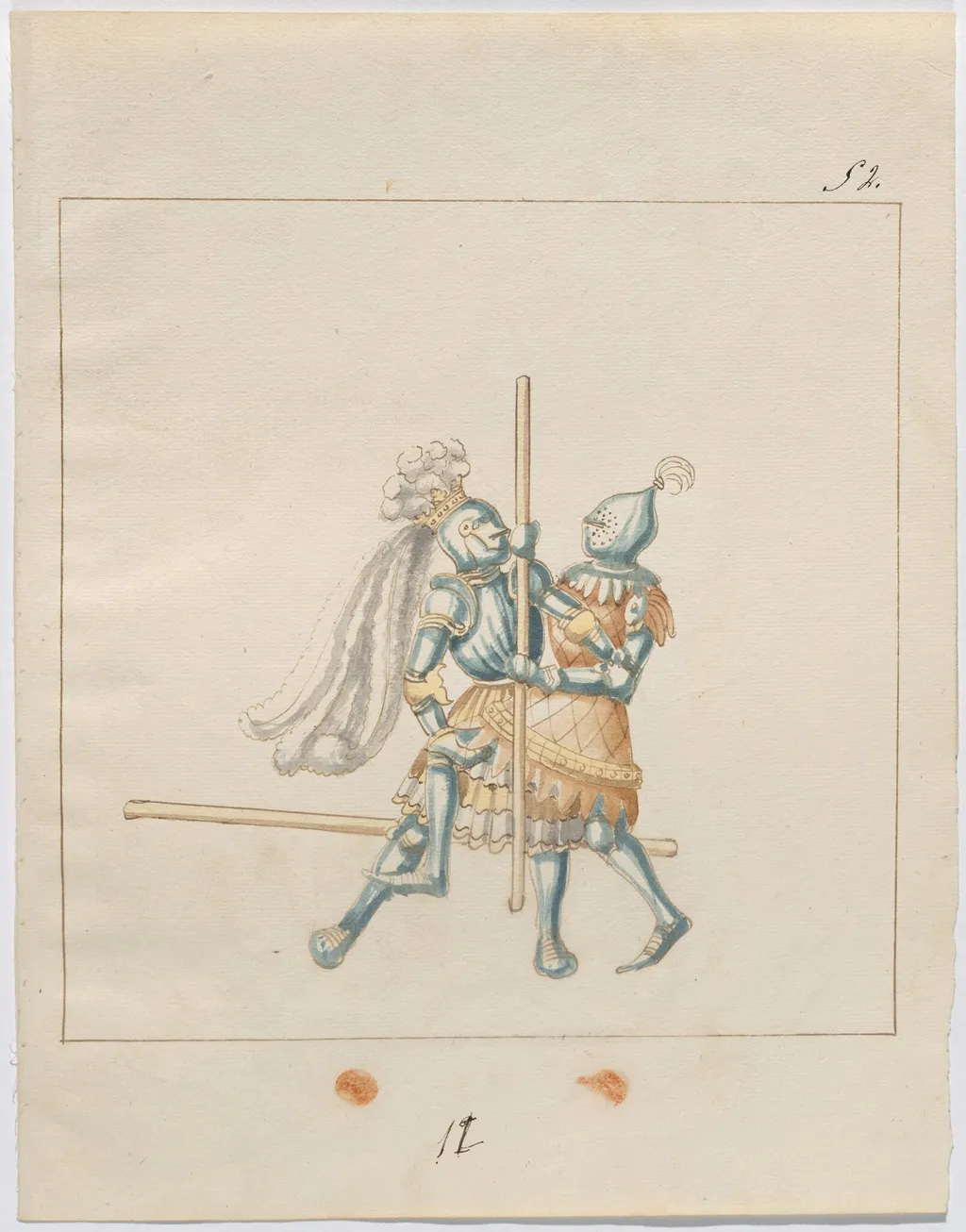
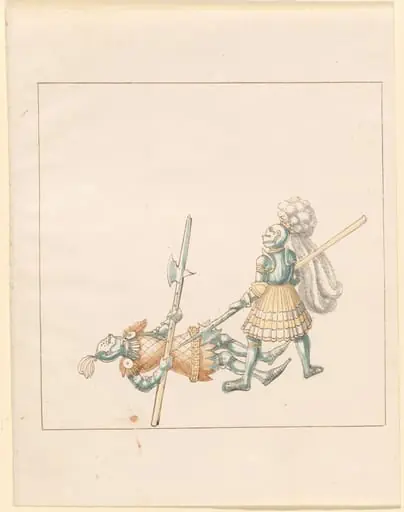
Foot Combat with Poles is an ink drawing by the Renaissance artist German 16th Century. It dates from 1514 and is held in the collection of the National Gallery of Art. This drawing, created in early 16th-century Germany around 1515, captures two armored combatants engaged in a contest with wooden poles.
- Inscription
- Inscribed:upper right by unknown hand in black ink: 52; lower center unknown hand in black ink: [11?]; lower left on mount in black ink: 14; lower right on mount in black ink: A 246
About this work
Overview
This drawing, created in early 16th-century Germany around 1515, captures two armored combatants engaged in a contest with wooden poles.
This drawing, created in early 16th-century Germany around 1515, captures two armored combatants engaged in a contest with wooden poles. Executed in pen and black ink with watercolor on laid paper, it reflects the technical precision and observational focus characteristic of German Renaissance draftsmanship. The medium’s fluidity enhances the sense of motion, while the paper’s texture contributes to the work’s tactile immediacy.
Subject & Meaning
The scene portrays a formalized martial exercise, likely a training or ceremonial duel common among German knights and mercenaries. The figures, fully armored and clad in patterned tunics, suggest a ritualized display of skill rather than battlefield chaos. The plumed helmet on one combatant may indicate rank or regional affiliation, hinting at social distinctions within martial culture.
Technique & Style
The artist employed fine pen lines to define the intricate surfaces of armor and fabric, while translucent watercolor washes added depth and shadow without obscuring detail. Laid paper, with its visible chain lines, provided a subtle texture that enhanced the drawing’s organic feel. The restrained palette and controlled brushwork emphasize anatomical tension and dynamic posture over decorative flourish.
History & Provenance
The work originates from a German artistic milieu familiar with martial manuals and tournament culture. Though its early ownership is undocumented, its style aligns with drawings produced in workshops associated with Nuremberg or Augsburg, centers of armor design and military illustration in the early 1500s. It likely served as a study or record of combat techniques.
Context
During the early 16th century, German cities maintained active traditions of armored combat training, often documented in illustrated manuscripts. This drawing fits within a broader genre of martial sketches produced by artists employed by noble households or guilds. Such works preserved knowledge of weapons handling and armored movement, bridging practical instruction and artistic representation.
Legacy
The drawing contributes to the historical record of European martial practices, offering insight into how combat was visually codified outside of battlefield scenes. Its technical clarity influenced later illustrators of fencing manuals and armor design. As a surviving example of non-narrative martial drawing, it remains a key reference for understanding the intersection of art and military culture in Renaissance Germany.
Artist & collection

Artist
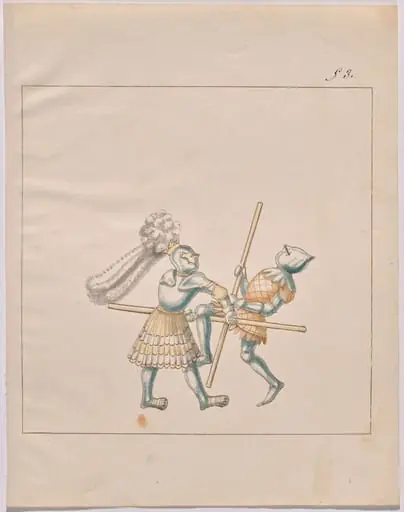
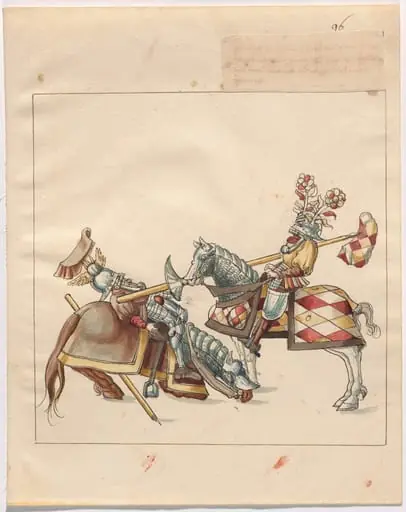
A German artist of the late 1500s drew knights clashing in parades and mock battles, filling sheets with detailed ink colored lightly in watercolor: soldiers mid-joust, shields flying, foot soldiers sparring with spears.

![Abraham Entertaining the Angels [verso], by German 16th Century](https://artifactworldgallery.com/img/german-16th-century--abraham-entertaining-the-angels-verso--69d1b25f4eba0a53-w320.webp)
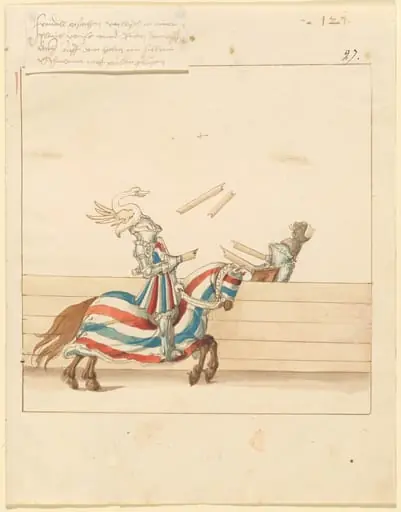
- Foot Combat with Poles
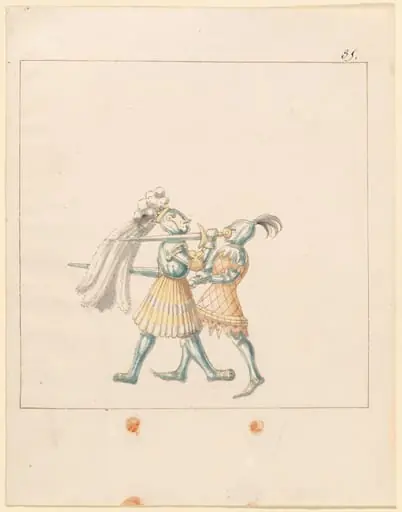 Foot Combat with Longswords
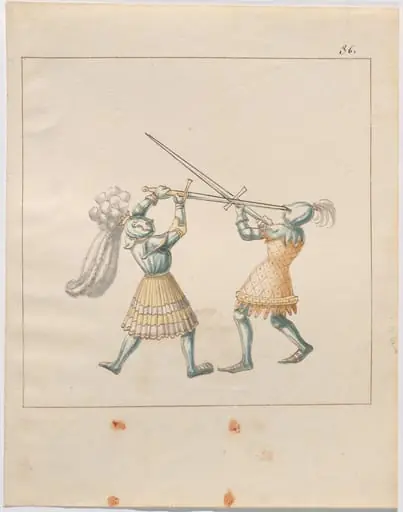 Foot Combat with Longswords
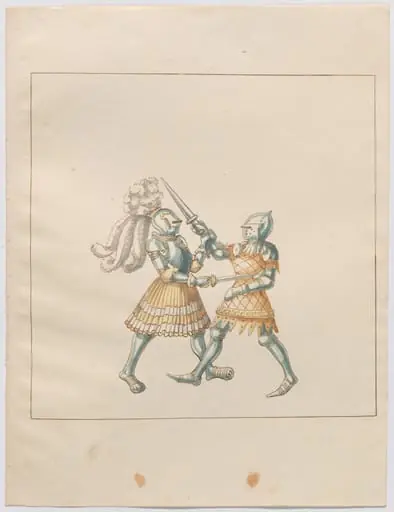 Foot Combat with Daggers
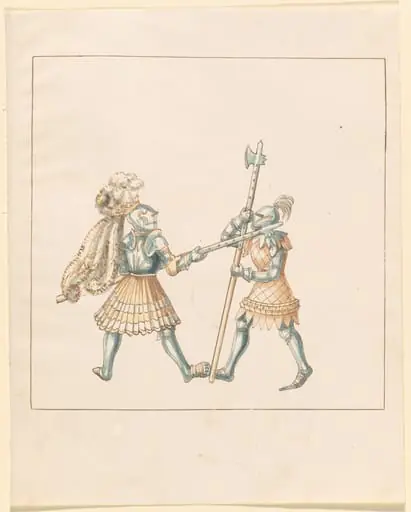 Foot Combat with Halberds
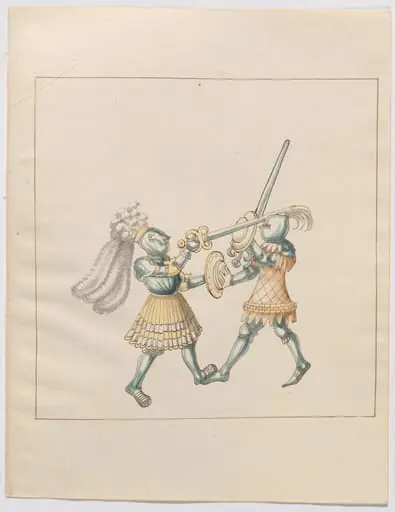 Foot Combat with Longswords and Buckler Shields
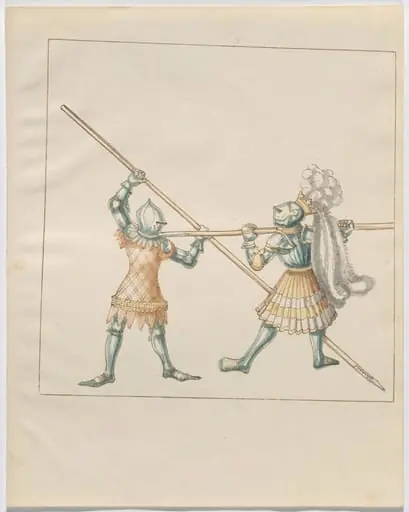 Foot Combat with Pikes
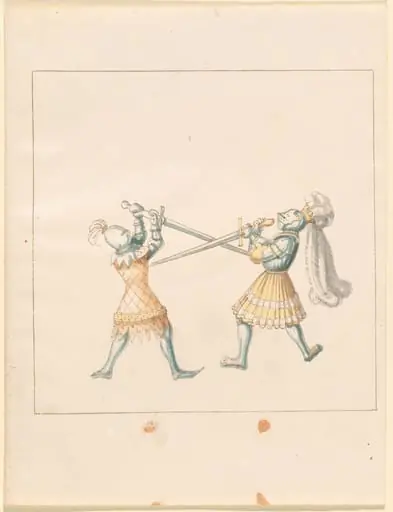 Foot Combat with Longswords
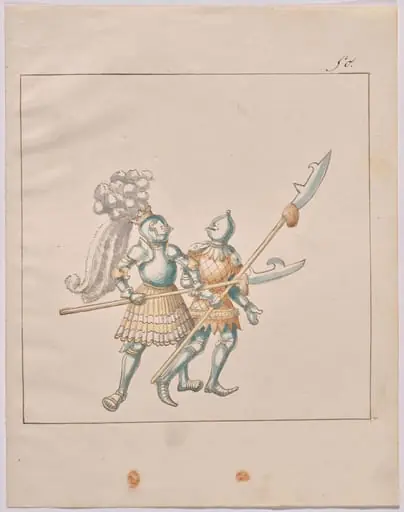 Foot Combat with Glaives
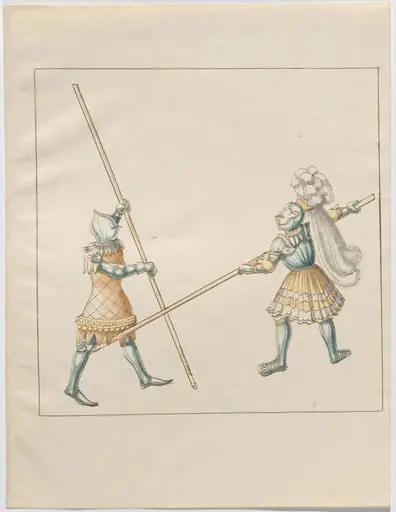 Foot Combat with Pikes
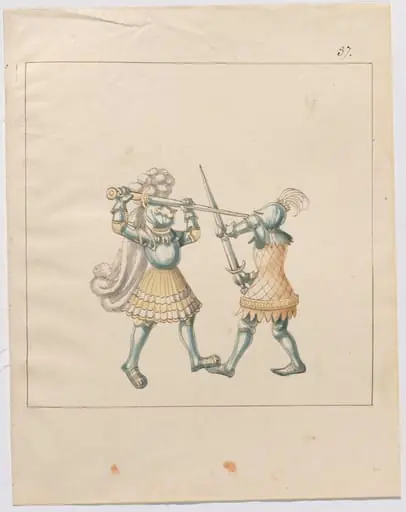 Foot Combat with Longswords
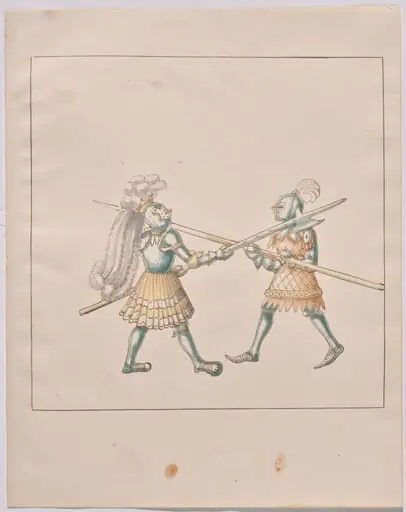 Foot Combat with Halberds