Artwork
Foot Combat with Poles
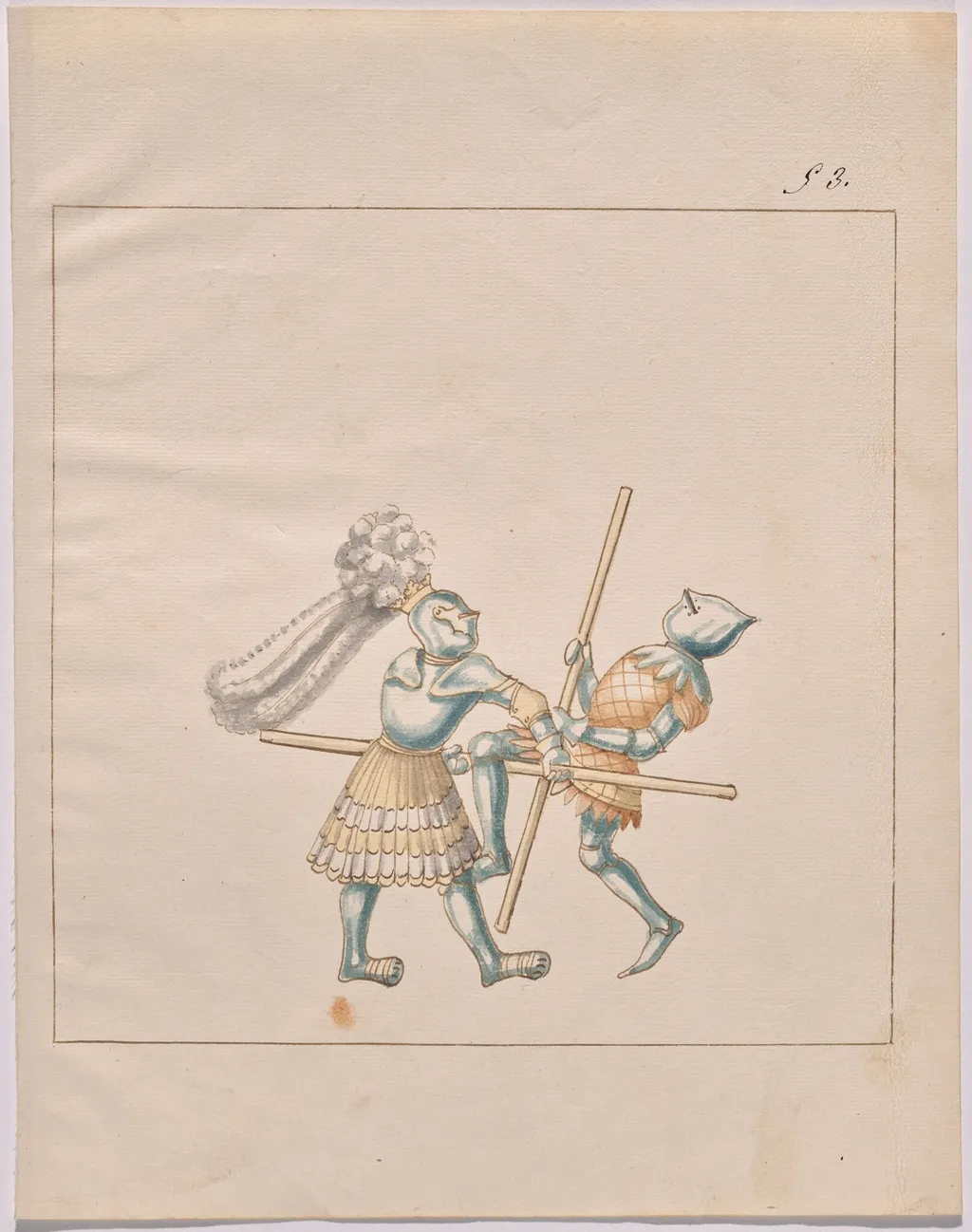
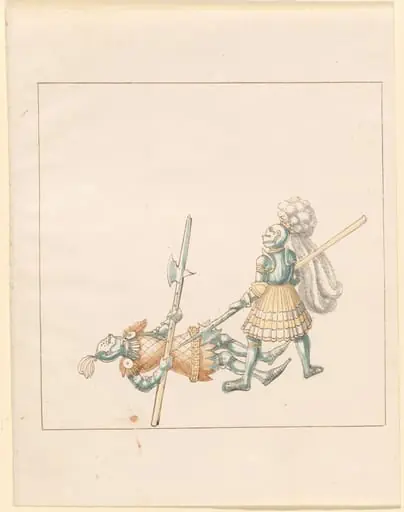
Foot Combat with Poles is an ink drawing by the Renaissance artist German 16th Century. It dates from 1514 and is held in the collection of the National Gallery of Art. This 16th-century German drawing, dated around 1515, captures two armored combatants engaged in a pole-based sparring match.
- Inscription
- Inscribed:upper right by unknown hand in brown ink: 53; lower left on mount in black ink: 15; lower right on mount in black ink: A 67
About this work
Overview
This 16th-century German drawing, dated around 1515, captures two armored combatants engaged in a pole-based sparring match. Executed in pen and black ink with subtle watercolor washes on laid paper, it functions not as a decorative piece but as a pedagogical tool. The composition emphasizes anatomical precision and positional clarity, suggesting its use in martial instruction.
Subject & Meaning
The two figures, fully armored and wielding long wooden poles, demonstrate techniques likely used in military training.
The two figures, fully armored and wielding long wooden poles, demonstrate techniques likely used in military training. Their stances and grip positions are carefully rendered to illustrate balance, reach, and defensive posture. The presence of plumed helmets and tailored tunics signals their status as trained soldiers, not generic warriors. The scene prioritizes instructional value over dramatic flair.
Technique & Style
The artist employed fine pen lines to define each plate of armor, with watercolor washes in muted blue-gray establishing ambient tone without distraction. Laid paper, typical of the period, provides a textured ground that enhances the drawing’s tactile realism. Details like joint articulation and pole grip are rendered with methodical accuracy, reflecting a systematic approach to visual instruction.
History & Provenance
Created in the German-speaking regions during the early Reformation era, the drawing aligns with a tradition of martial manuals produced for professional soldiers. Its survival suggests it was valued as a reference, possibly within a noble household or mercenary company. It entered the National Gallery of Art’s collection through documented acquisitions in the 20th century.
Context
In early 16th-century Europe, infantry combat with poles such as halberds and staves was central to battlefield tactics. Illustrated manuals like this one emerged alongside printed fencing treatises, serving as visual aids for recruits. The emphasis on armor detail reflects the increasing sophistication of personal equipment and the need for standardized training.
Legacy
The drawing remains a rare surviving example of a practical, non-illustrative martial guide from the period. Its focus on biomechanical accuracy influenced later military training materials and offers insight into how combat skills were transmitted visually before the advent of photography. It continues to inform modern studies of Renaissance martial culture.
Artist & collection

Artist
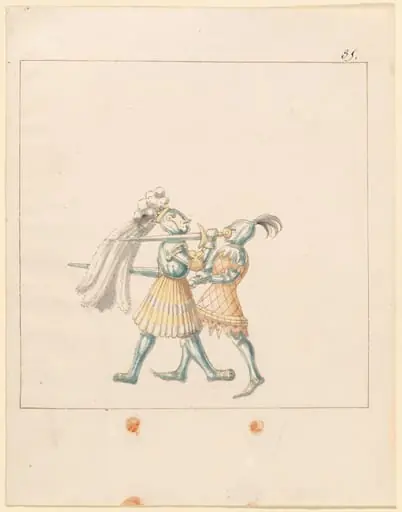
A German artist of the late 1500s drew knights clashing in parades and mock battles, filling sheets with detailed ink colored lightly in watercolor: soldiers mid-joust, shields flying, foot soldiers sparring with spears.

![Abraham Entertaining the Angels [verso], by German 16th Century](https://artifactworldgallery.com/img/german-16th-century--abraham-entertaining-the-angels-verso--69d1b25f4eba0a53-w320.webp)
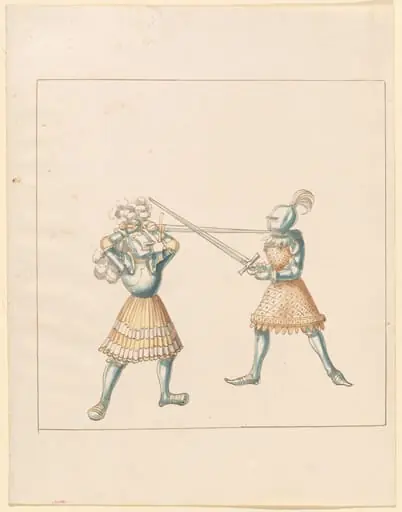 Foot Combat with Longswords
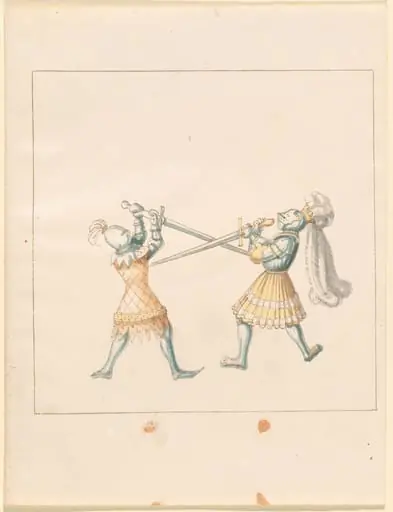 Foot Combat with Longswords
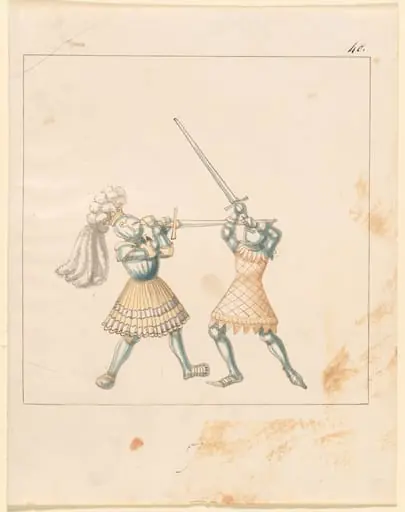 Foot Combat with Longswords
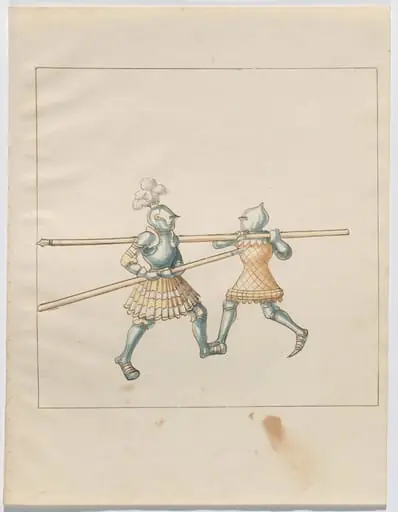 Foot Combat with Pikes
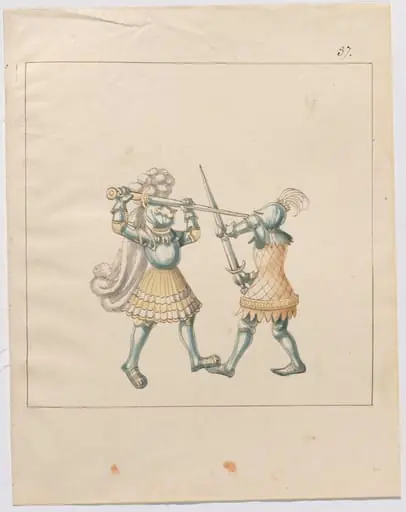 Foot Combat with Longswords
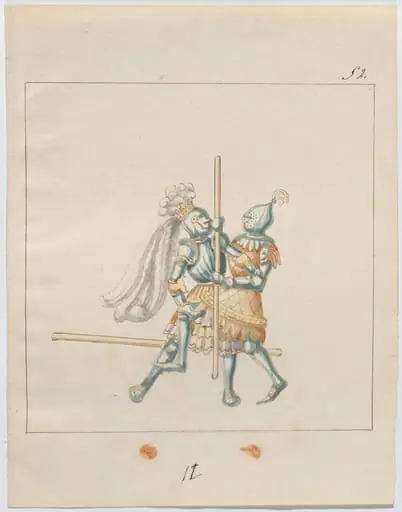 Foot Combat with Poles
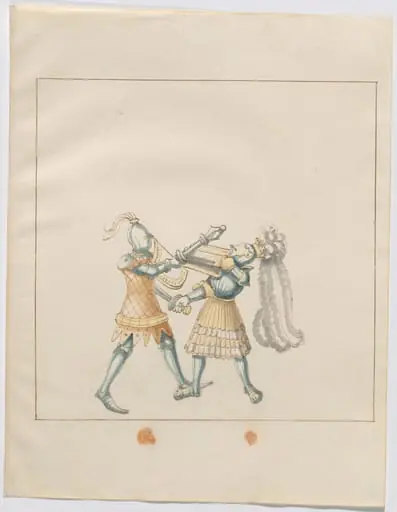 Foot Combat with Maces and Tartsche Shields
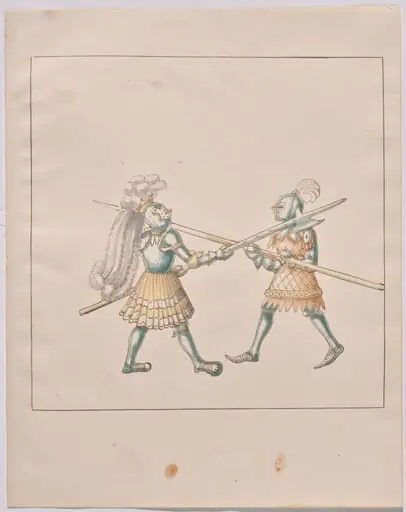 Foot Combat with Halberds
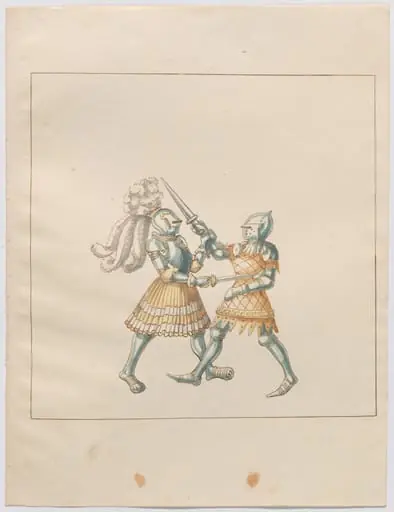 Foot Combat with Daggers
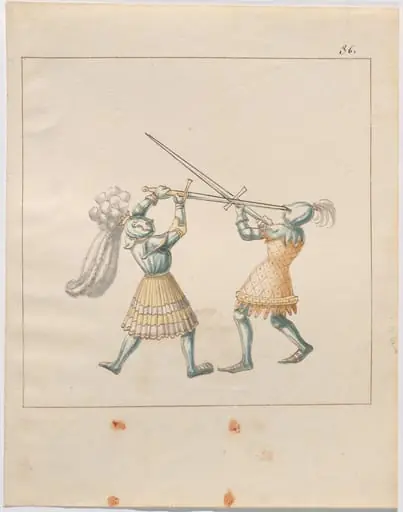 Foot Combat with Longswords
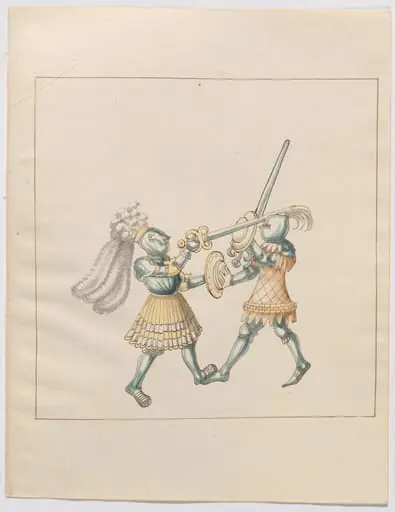 Foot Combat with Longswords and Buckler Shields