Artwork
Still life
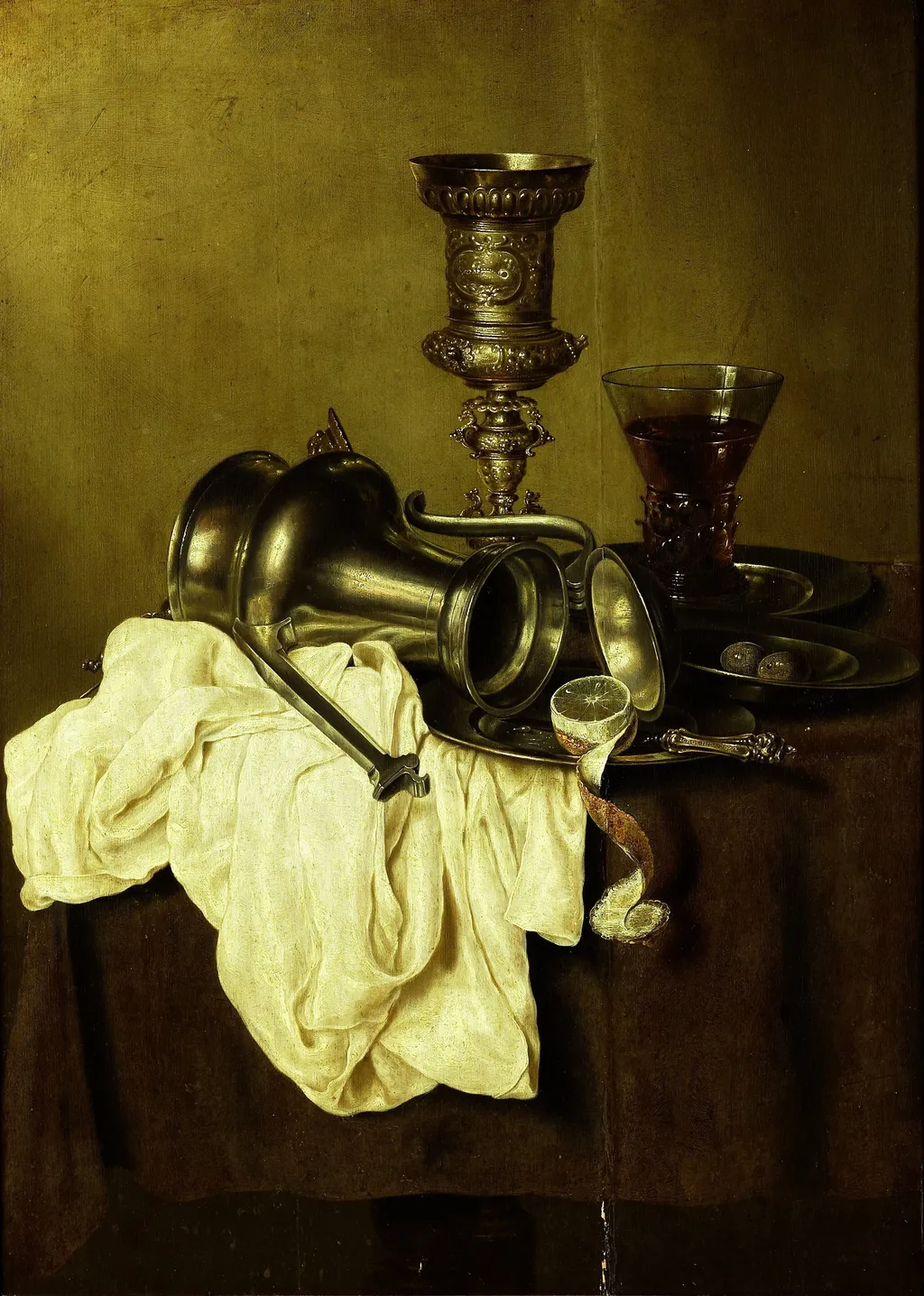
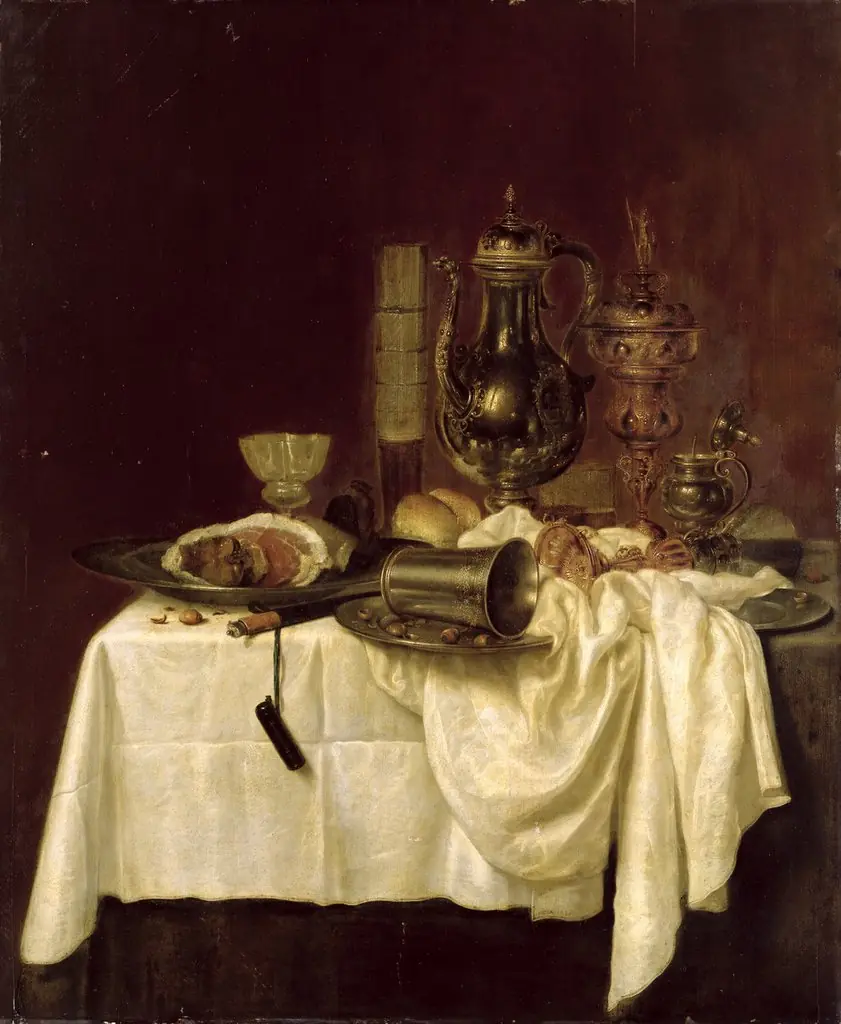
Still life is an oil painting by the Dutch Golden Age artist Gerret Willemsz. Heda. It dates from 1642 and is held in the collection of the Rijksmuseum.
About this work
Subject & Meaning
The inclusion of fine glassware and the partly peeled lemon aligns with traditional Dutch still-life conventions of the period.
Gerret Willemsz. Heda's 1642 oil painting on panel depicts a laid table arranged with luxury items and tableware. The composition features a silver trophy cup, a berkemeyer glass, and a partially peeled lemon resting upon a tablecloth.
These objects constitute the main subject, presenting a detailed arrangement of a feast setting. The inclusion of fine glassware and the partly peeled lemon aligns with traditional Dutch still-life conventions of the period.
Technique & Style
The painting is executed in oil on a wooden panel, a common support for Dutch still lifes of the period. Heda's handling is characterized by a restrained palette and smooth, blended brushwork that emphasizes the tactile qualities of the objects. The composition centers on a laid table with a partially peeled lemon, a berkemeyer glass, and a silver trophy cup, all rendered with precise yet understated modeling.
The subdued lighting and careful attention to reflective surfaces suggest a moment frozen in time, aligning with the Dutch still-life tradition.
History & Provenance
The still life was created in 1642 by Gerret Willemsz. Heda as an oil painting on panel, depicting a laid table with a silver trophy cup, a berkemeyer, a tablecloth, and a lemon. Measuring 82 cm in height and 60 cm in width, the work is held in the Rijksmuseum, Amsterdam.
Overview
This oil painting, titled Still Life, was created by Gerret Willemsz. Heda in 1642. A notable figure in the Dutch Golden Age of painting, Heda was active in Haarlem and specialized in still life compositions.
The work showcases a carefully arranged collection of domestic and luxury items on a table, characteristic of the period's artistic trends. It is currently held in the collection of the Rijksmuseum.
Context
Gerret Willemsz. Heda was a significant contributor to the Dutch Golden Age still life tradition, building upon the legacy of his father and teacher, Willem Claesz. Heda.
Operating from Haarlem, he was particularly recognized for his fruit still lifes and vanitas themes. His artistic approach and compositions also left an impression on other painters of the era, notably influencing the work of Jan Jansz. Treck.
Own this work as a print
Artist & collection
Artist
Gerret Willemsz. Heda (1620/25, in Haarlem – 1647/59, in Haarlem), was a Dutch Golden Age painter; known for fruit still lifes and vanitas paintings. He was the son and pupil of Willem Claesz. Heda, and influenced the…

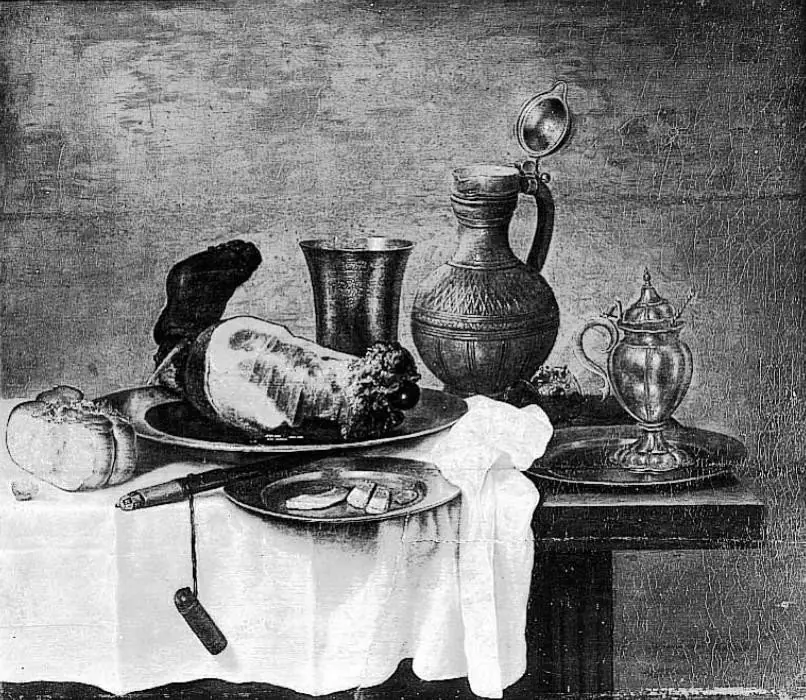
- Still Life
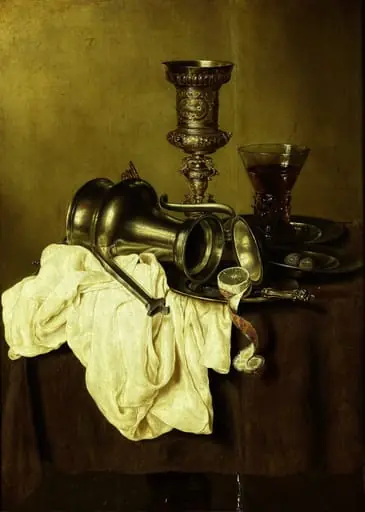 Still Life
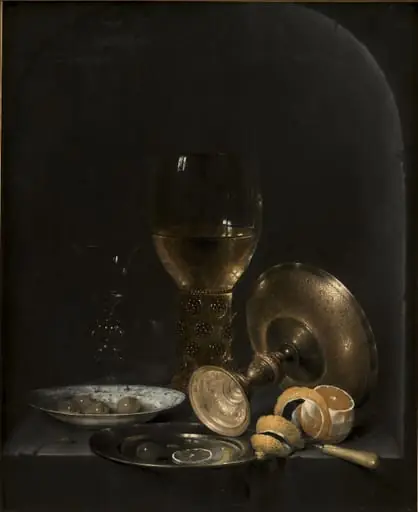 Still life. Breakfast Piece in a Stone Niche
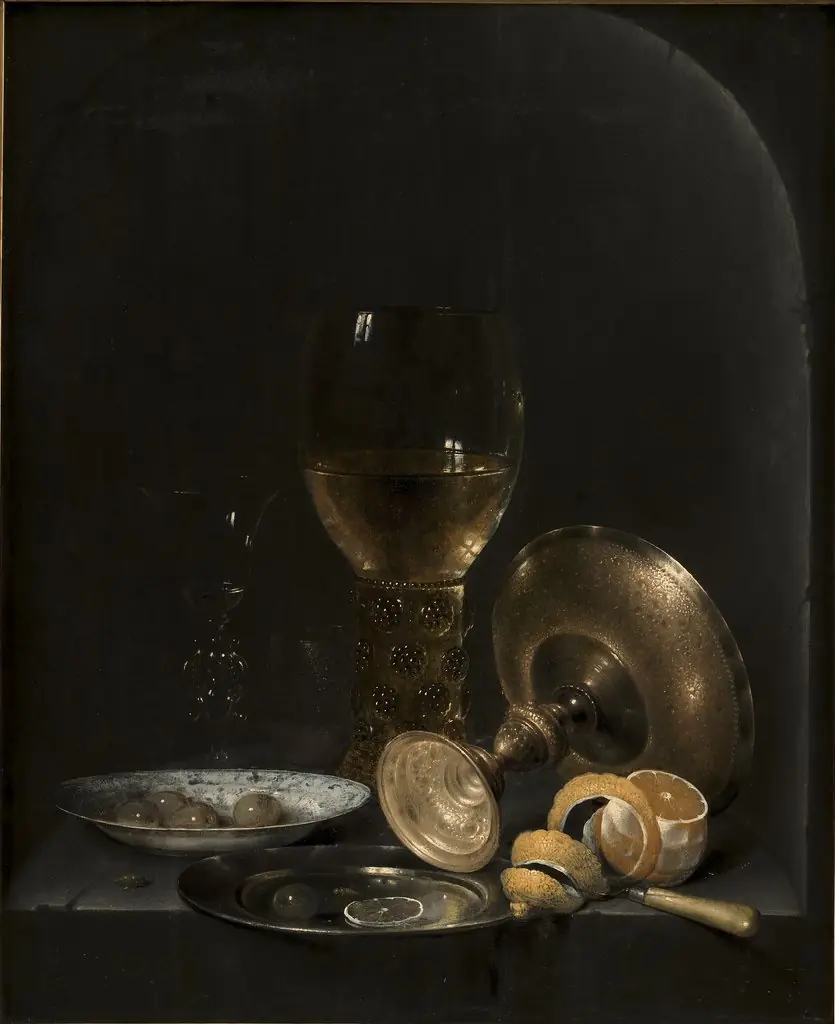 Still life. Breakfast Piece in a Stone Niche
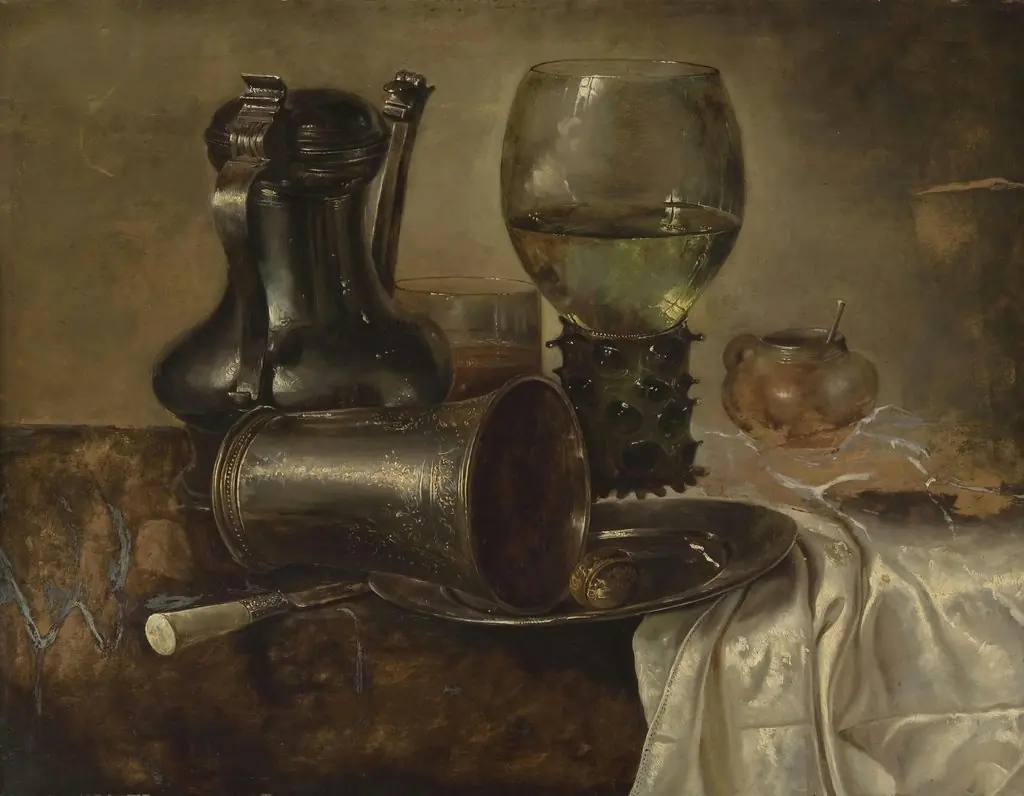 Still Life with a Roemer, a Covered Flagon, and a Beaker
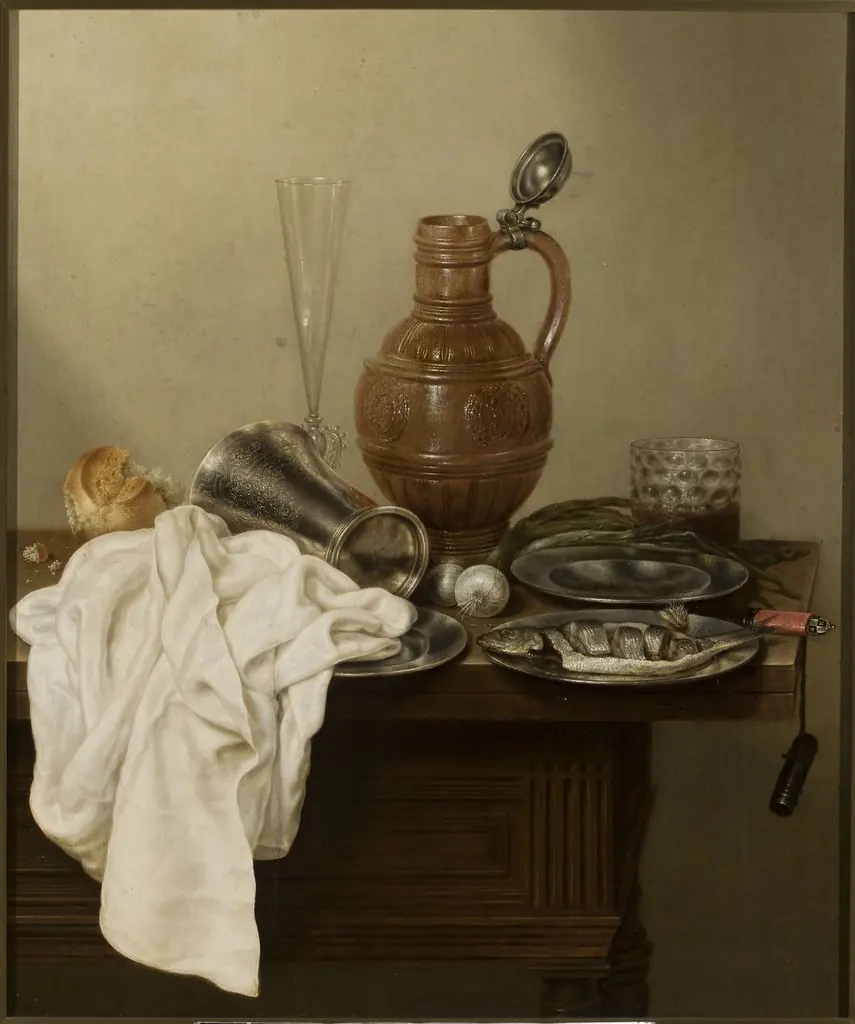
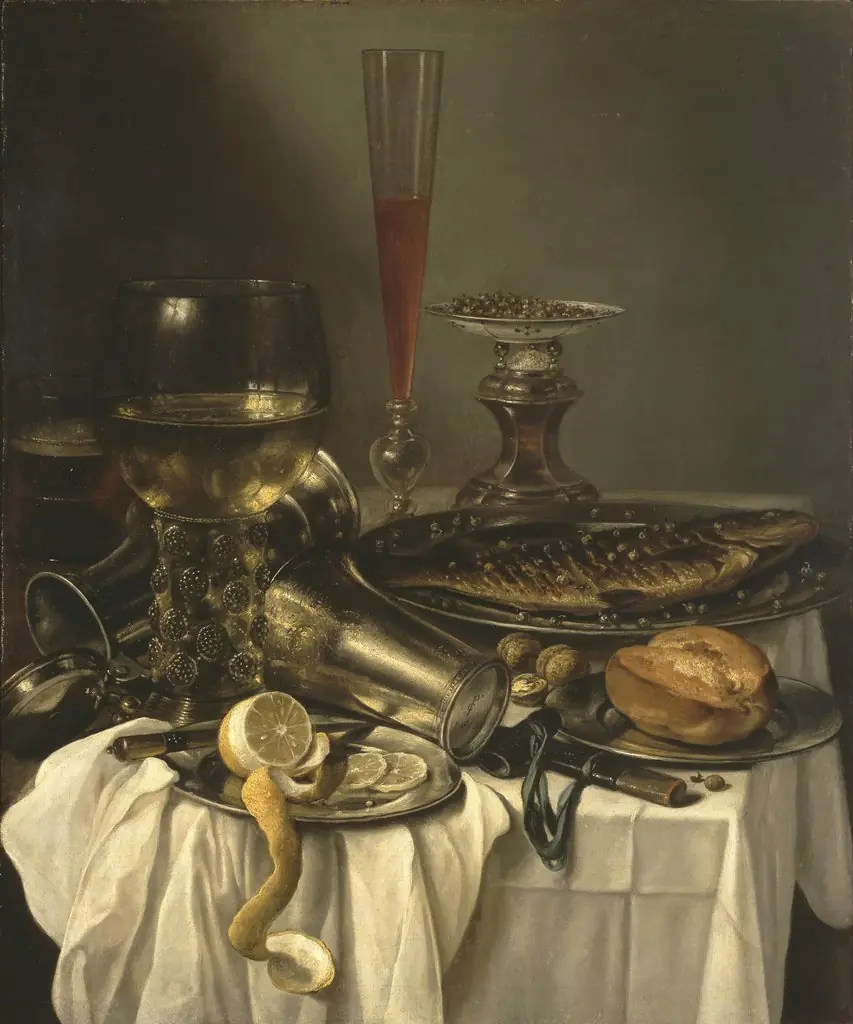 Breakfast with Fish
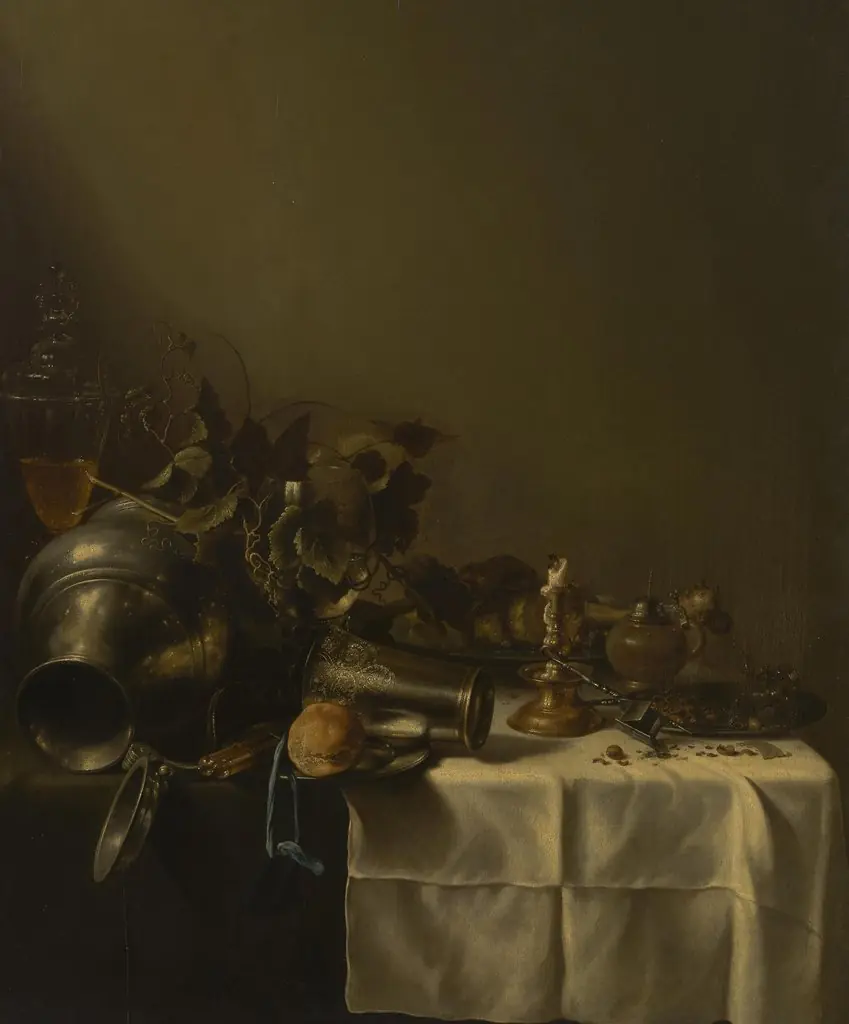 Overturned Jug and Other Items on the Tablecloth
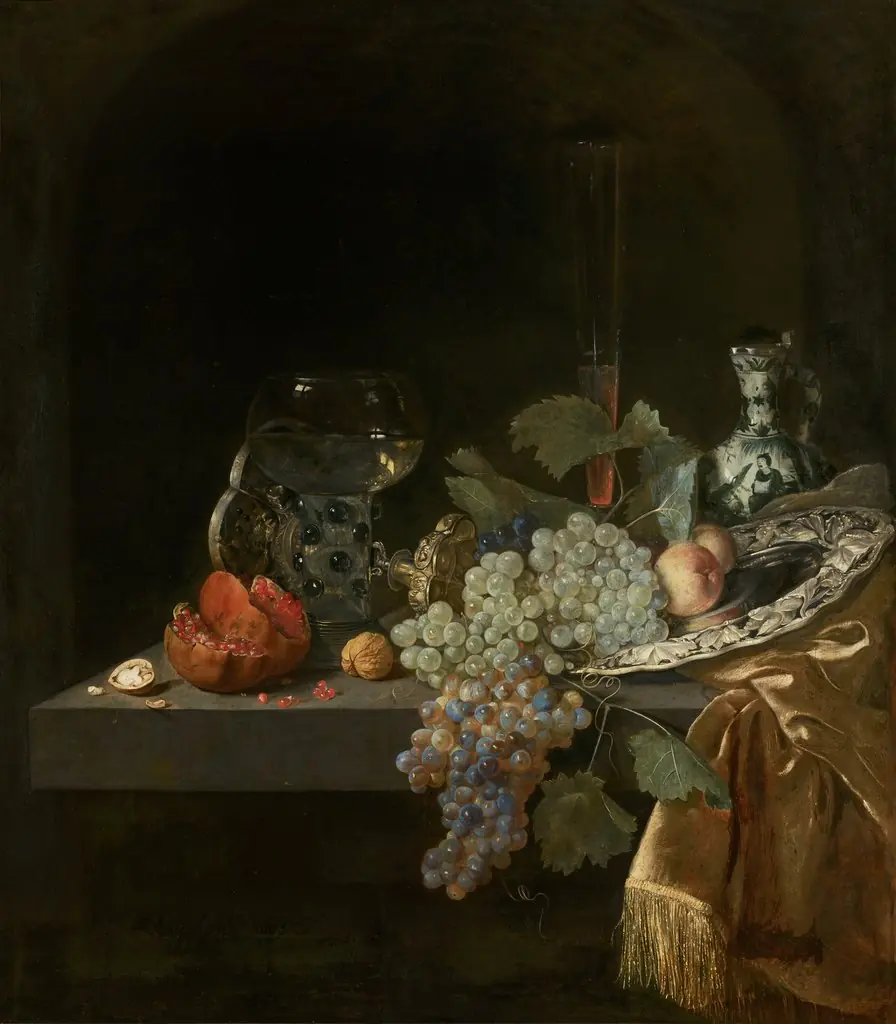 Still life
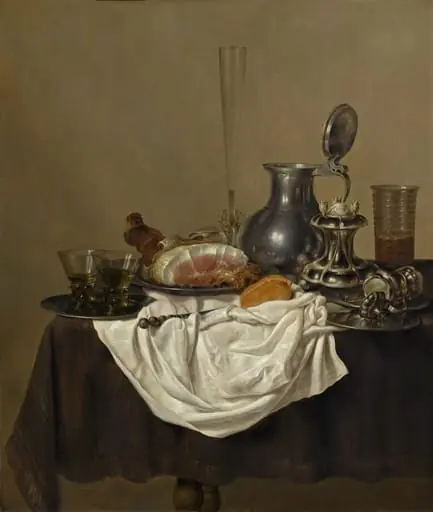
 Still life with ham, decanter, columbine cup and passglass on a laid table
 Still Life with Ewer, Vessels and Pomegranate
 Sumptuous still life