Artwork
De avondschool
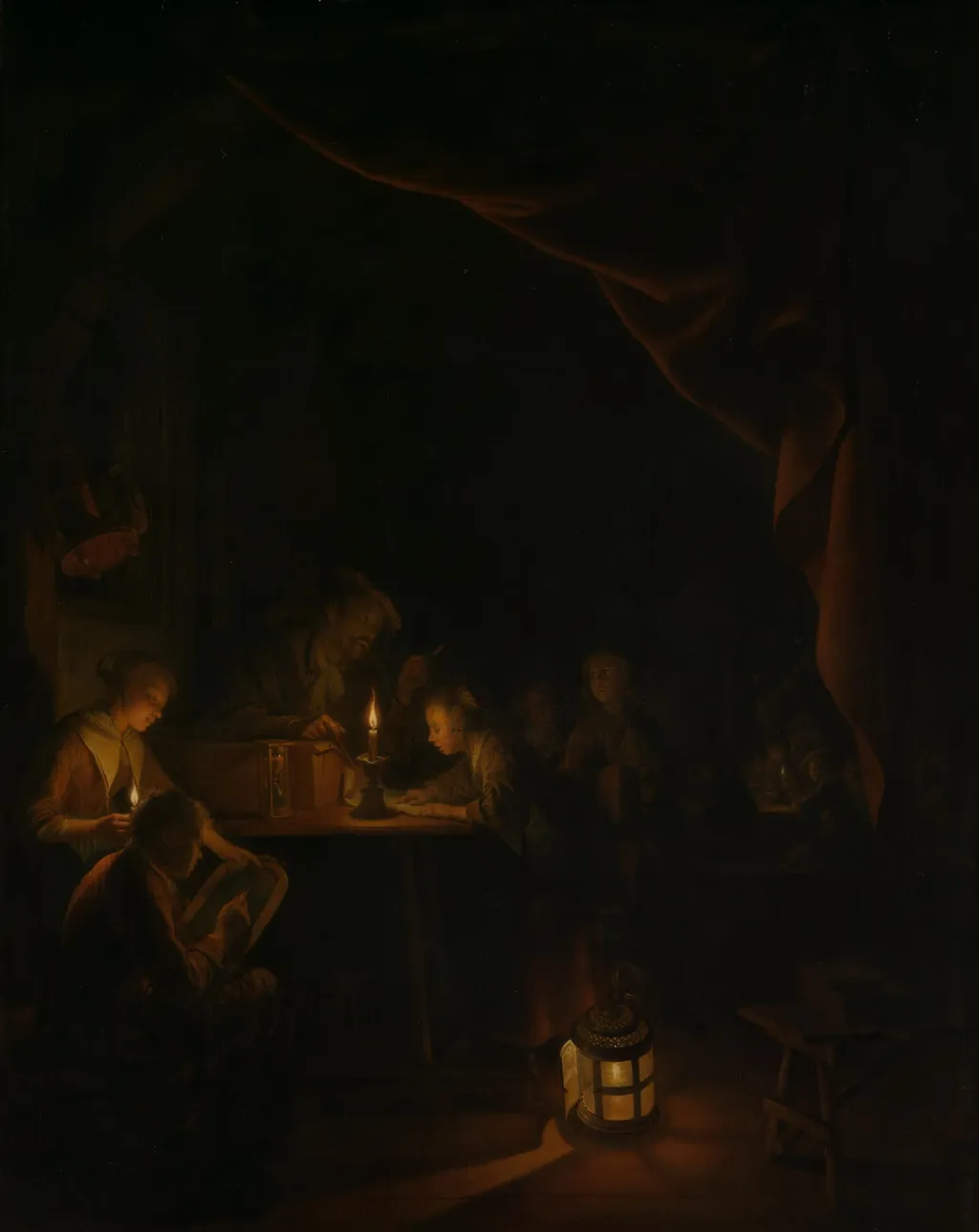
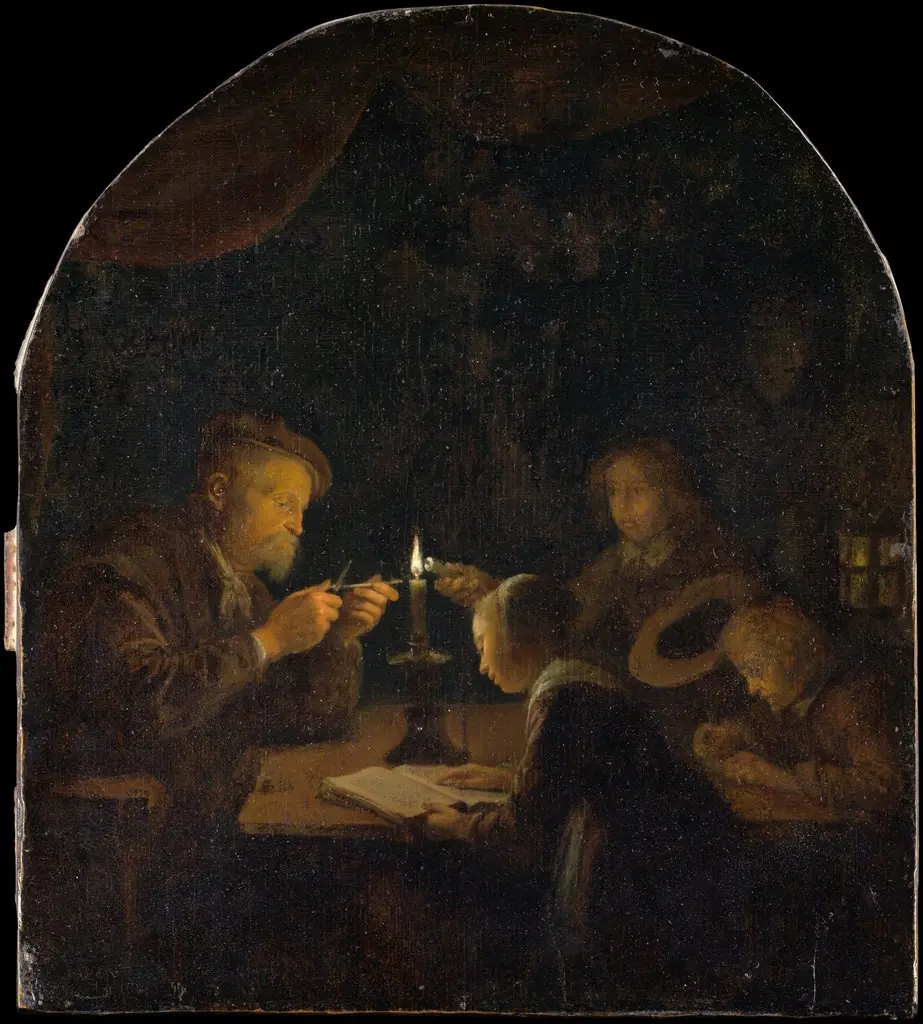
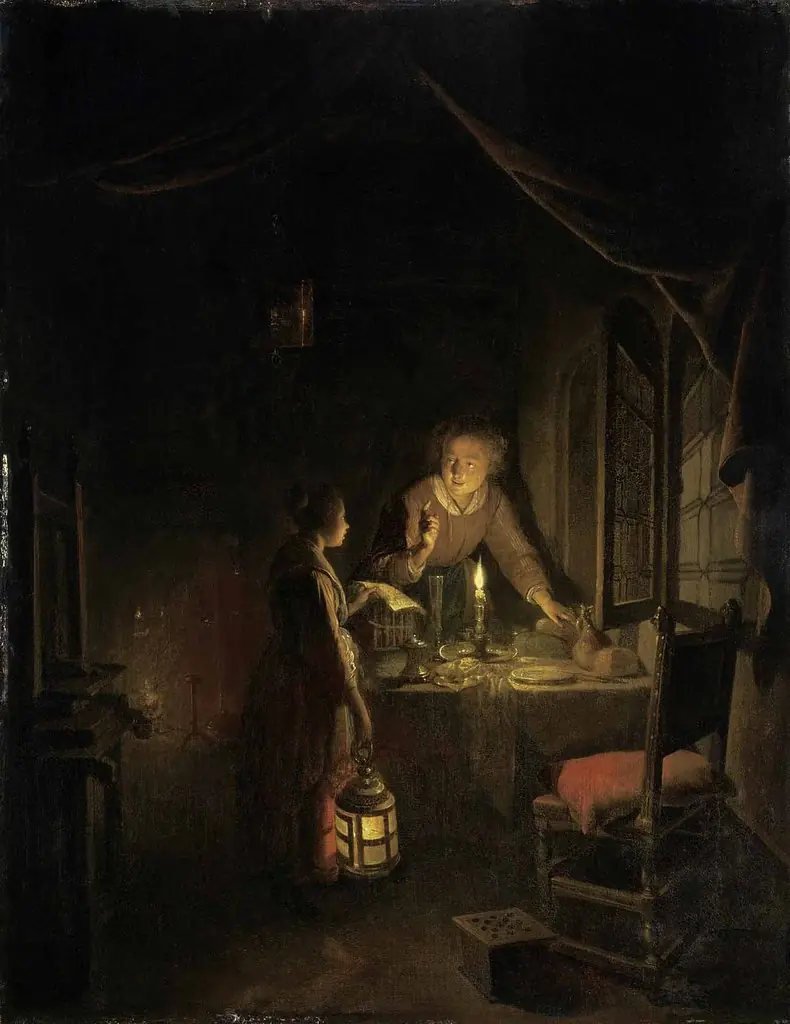
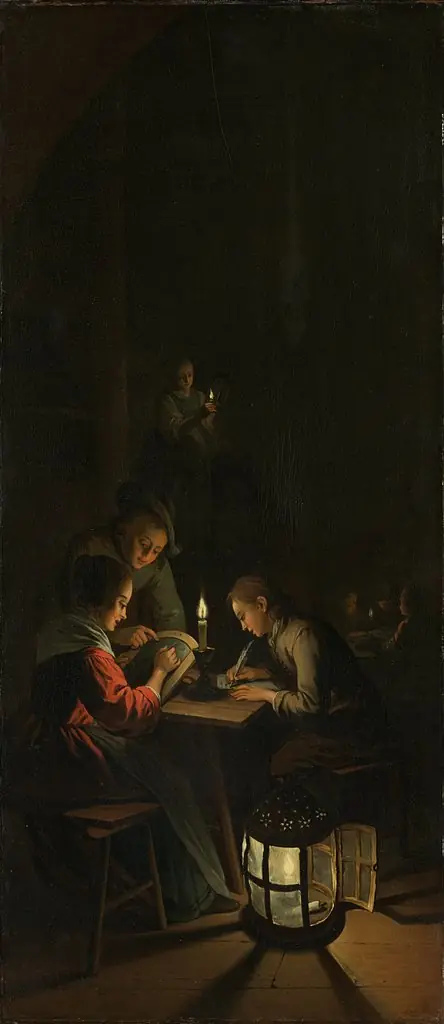
De avondschool is an unspecified painting by the Dutch Golden Age artist Gerrit Dou. It dates from 1665 and is held in the collection of the Rijksmuseum. The canvas depicts an intimate evening lesson illuminated by a single candle.
About this work
Subject & Meaning
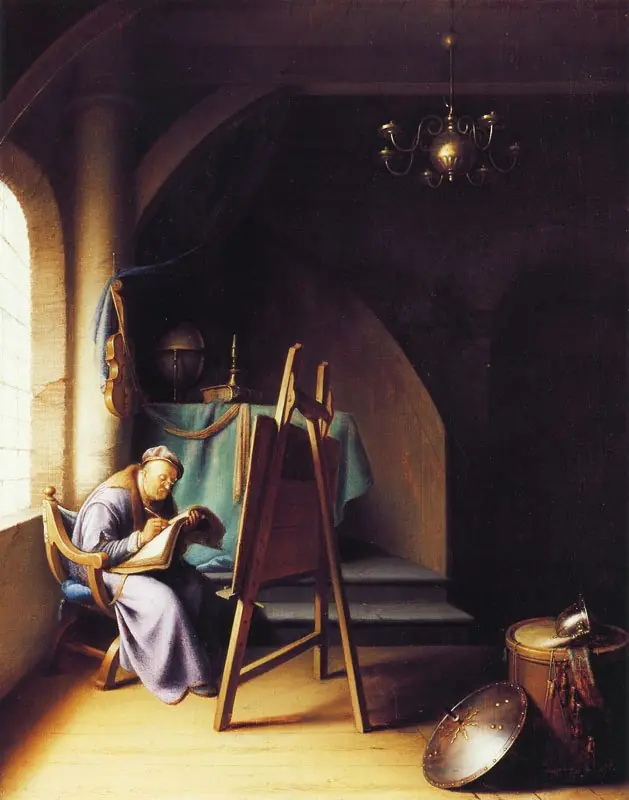
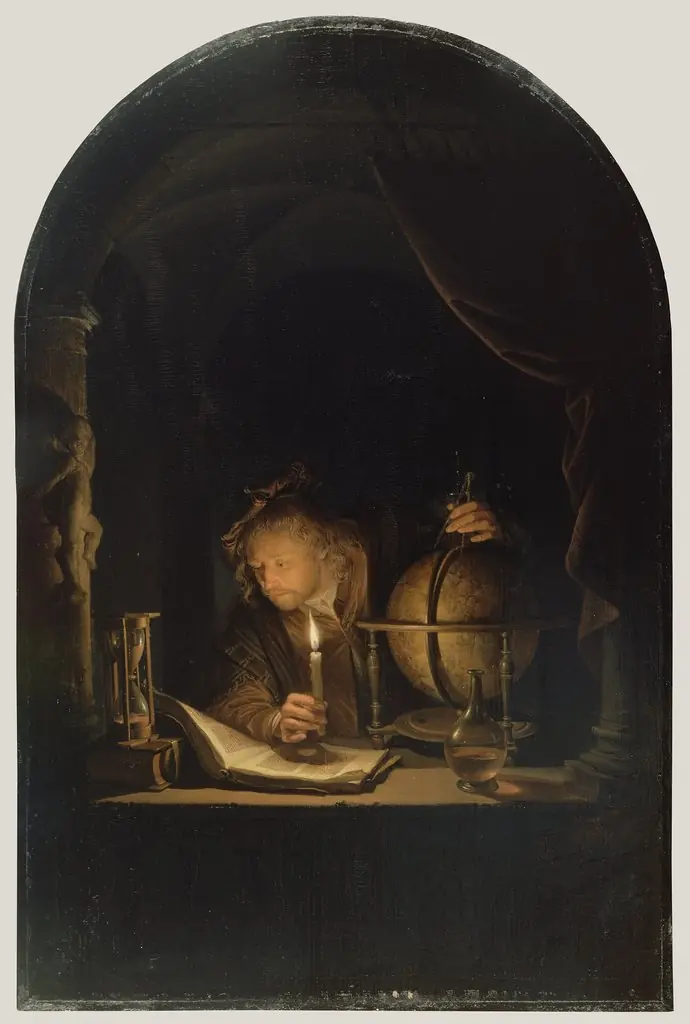
In works like Old Painter at work, he included a sculptured head and printed book to show painting could surpass sculpture and printed paper.
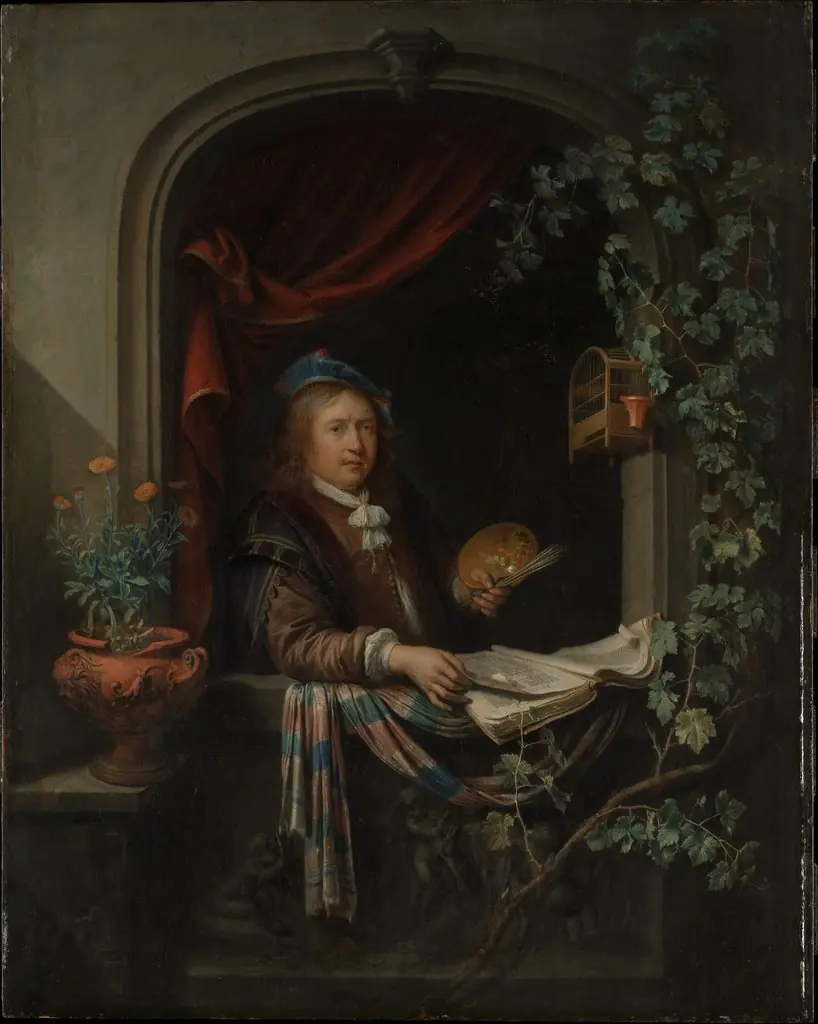
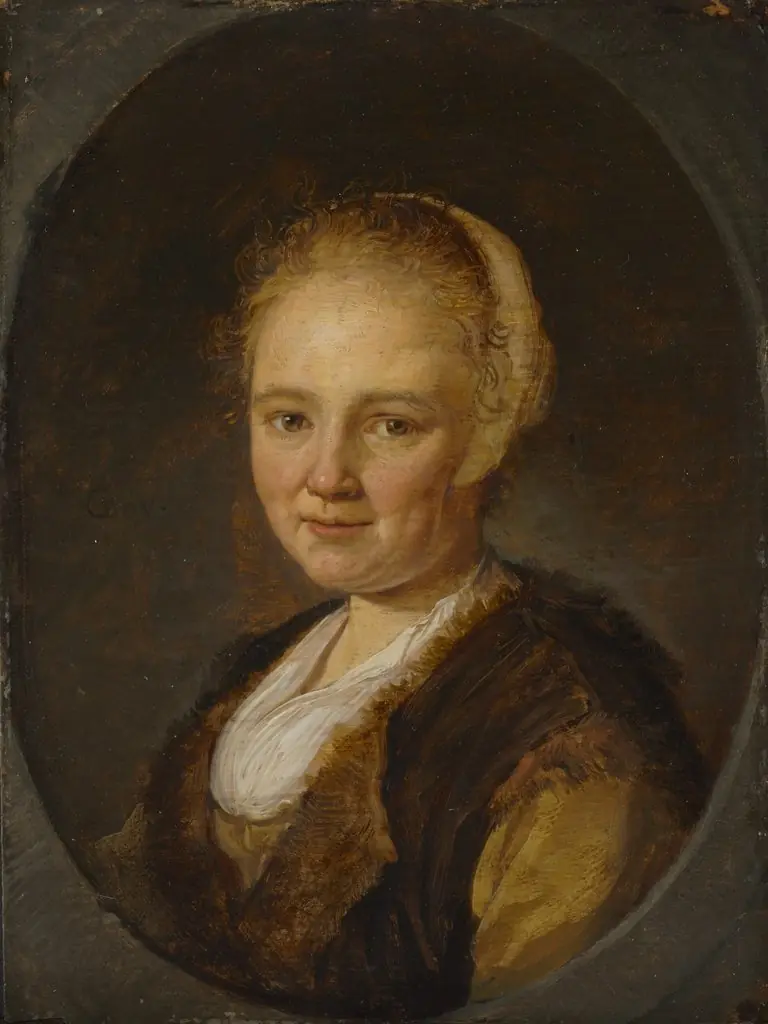
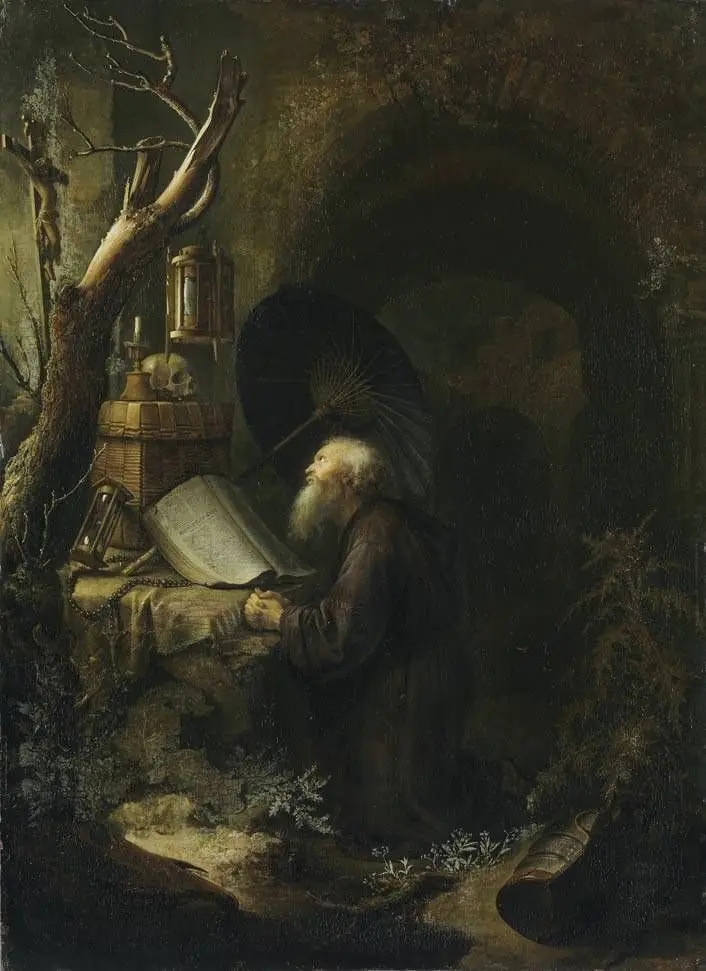
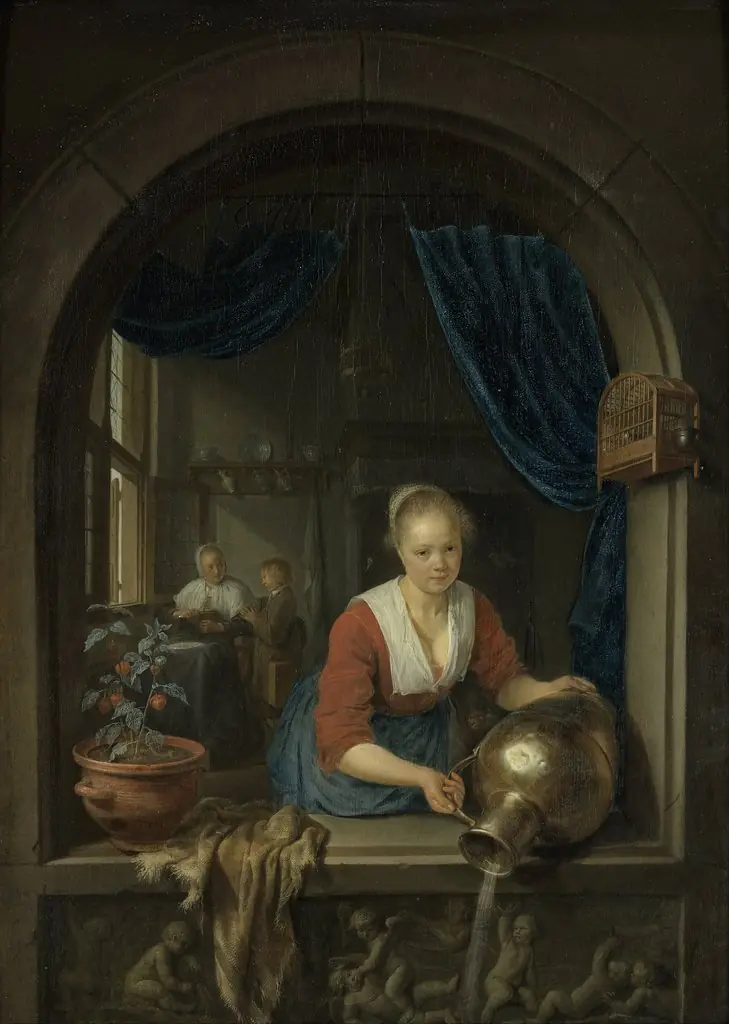
Gerrit Dou depicted himself as a painter in a niche setting, surrounded by objects that demonstrated his skill in imitation, reflecting the paragone debate of his time. In works like Old Painter at work, he included a sculptured head and printed book to show painting could surpass sculpture and printed paper. The relief by François Duquesnoy called Putti Teasing a Goat appears in many of his paintings with window-sill motifs and has been interpreted as symbolizing 'the deceitfulness of human desires' through the goat representing lust. Dou's candlelit genre scenes, such as The Evening School, used precise details and chiaroscuro to capture everyday life, often featuring symbolic objects like peacocks that represented painting's ability to preserve transient nature. His paintings frequently incorporated symbolic elements to convey moral or intellectual themes, as seen in The Trumpeter where the relief signifies deceptive desires.
Technique & Style
Gerrit Dou worked on small wooden panels using oil paint, a technique typical of Leiden fijnschilders. His method relied on meticulous brushwork, often requiring handmade brushes to achieve fine detail. He frequently depicted scenes illuminated by candlelight, using strong chiaroscuro and illusionistic effects such as trompe-l'œil niches. Dou employed optical aids like concave lenses and convex mirrors to assist in rendering precise forms, and he painted through gridded frames to maintain accuracy. This approach produced highly polished, realistic genre scenes noted for their clarity and spatial depth.
History & Provenance
Gerrit Dou (1613-1675) painted De avondschool before 1665, likely in Leiden. He developed his distinctive style during his early career, focusing on small, highly detailed genre scenes illuminated by candlelight. His technique involved meticulous brushwork, sometimes spending five days on a single hand, and he often painted with the aid of optical devices like concave lenses and convex mirrors. He was a pupil of Rembrandt from 1628 to 1631, acquiring skills in colour and chiaroscuro, though he soon diverged from his master's style. His works were collected by notable figures including Queen Christina of Sweden and Cosimo III de' Medici, and he received an annual payment of 500 guilders from patron Pieter Spiering for first refusal on his paintings. De avondschool exemplifies his mastery of nocturnal genre scenes, a hallmark of his Leiden school 'fijnschilder' style, reflecting the paragone debate of the era through its detailed illusionistic elements.
Gerrit Dou's painting De avondschool is held in the Rijksmuseum Amsterdam, where it is catalogued under the inventory number SK-C-5. The work has been exhibited in major retrospectives of Dutch Golden Age painting, including the 1988 exhibition "Dutch Masters of the 17th Century" at the Rijksmuseum and a 2001 showing of Dutch genre paintings at the Musée d'Orsay in Paris.
Exhibition history includes its presentation in the 1988 Rijksmuseum exhibition and a 2001 display at the Musée d'Orsay, both of which highlighted Dou's contributions to the Leiden fijnschilder movement and his use of candlelit genre scenes.
Context
De avondschool belongs to the body of work that established Gerrit Dou as the founding figure of the Leiden fijnschilders, the highly meticulous school of "fine painters" active in the Dutch Golden Age. Trained in Rembrandt's Leiden studio from 1628, Dou diverged from his master's looser manner toward an almost miniaturist finish, often working through a concave lens and a gridded silk frame and manufacturing his own brushes to sustain his minute touch. The painting belongs to the candlelit night scenes for which Dou was celebrated; the English Wikipedia article singles out The Evening School in the Rijksmuseum as "the best example of the candlelight scenes in which he excelled."
Contemporary reception was strongly positive. Philips Angel, in his Lof der Schilderkunst, praised Dou for his imitation of nature and visual illusion, situating his work within the paragone debate over which art form best represented nature. Dou's pictures commanded exceptional prices in his lifetime: the Swedish ambassador Pieter Spiering paid him 500 guilders annually for first refusal, and Queen Christina of Sweden owned eleven of his paintings, placing De avondschool within an oeuvre prized by the highest European patrons.
Legacy
Gerrit Dou is recognized as the founder of the Leiden fijnschilder (fine painting) school, a style characterized by minute detail and high polish that persisted well into the eighteenth century. His specific technique of depicting subjects through a trompe-l'œil archway or niche was widely imitated by subsequent artists. Dou's reputation for technical perfection was established during his lifetime, attracting international patrons such as Queen Christina of Sweden and drawing the attention of Cosimo III de' Medici. His influence extended beyond the visual arts into literature, with his works appearing in Jules Verne's *Twenty Thousand Leagues Under the Sea* and Honoré de Balzac's *La Peau de chagrin*. While the Dutch royal court often preferred classical styles, Dou's candlelit night scenes and genre paintings secured his status as a master whose works commanded high prices and were collected by major European figures.
Own this work as a print
Artist & collection
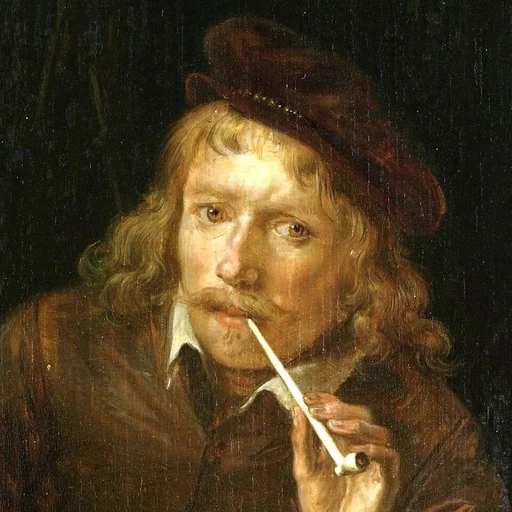
Artist
Gerrit Dou (pronounced; 7 April 1613 – 9 February 1675), also known as Gerard Douw or Dow, was a Dutch Golden Age painter, whose small, highly polished paintings are typical of the Leiden fijnschilders.