Artwork
Herring Seller
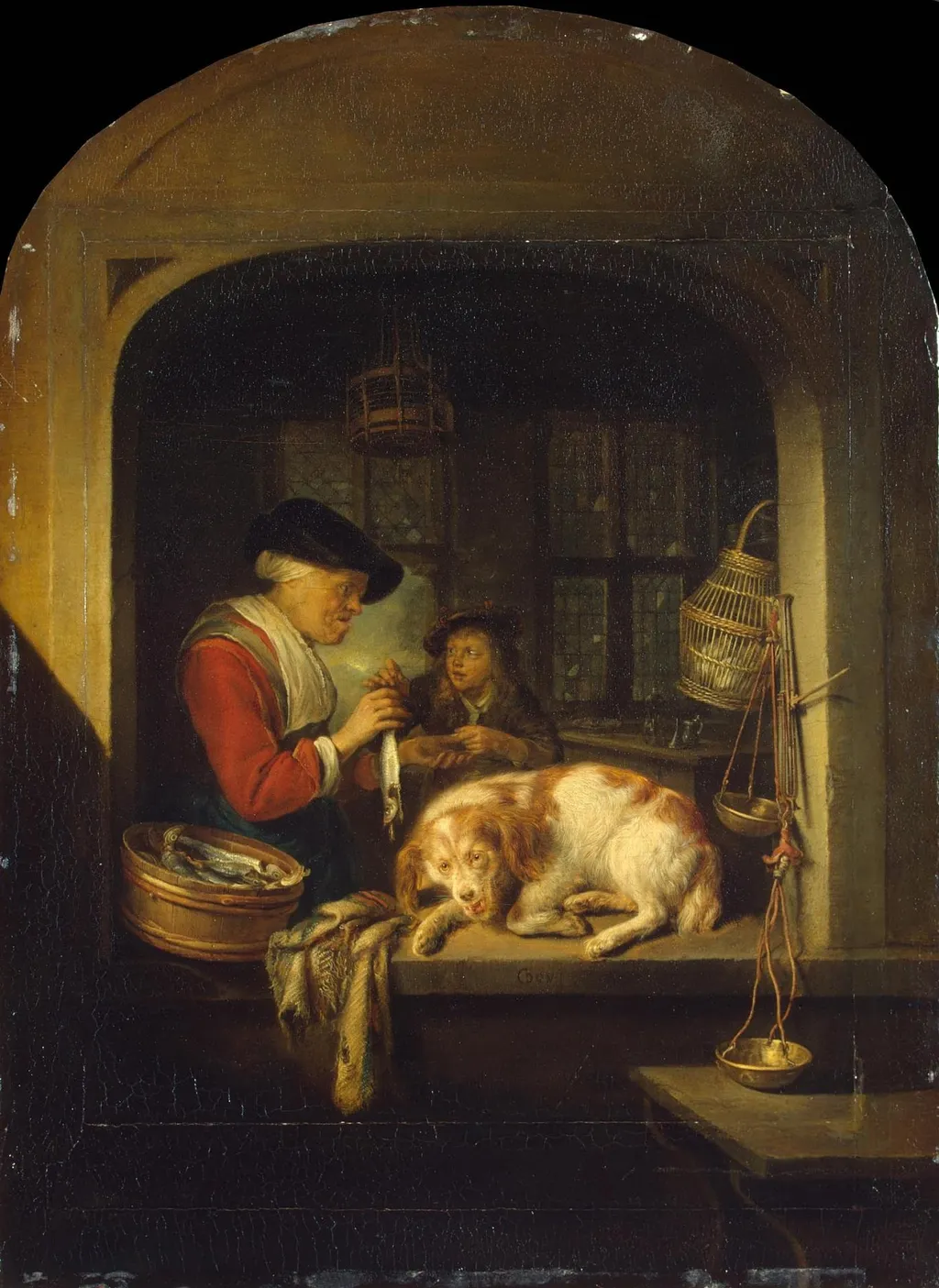
Herring Seller is an oil painting by the Dutch Golden Age artist Gerrit Dou. It dates from 1673 and is held in the collection of the Hermitage Museum.
About this work
Subject & Meaning
As a piece of genre art, the painting captures a slice of everyday life, emphasizing the transaction or preparation of food within a household setting.
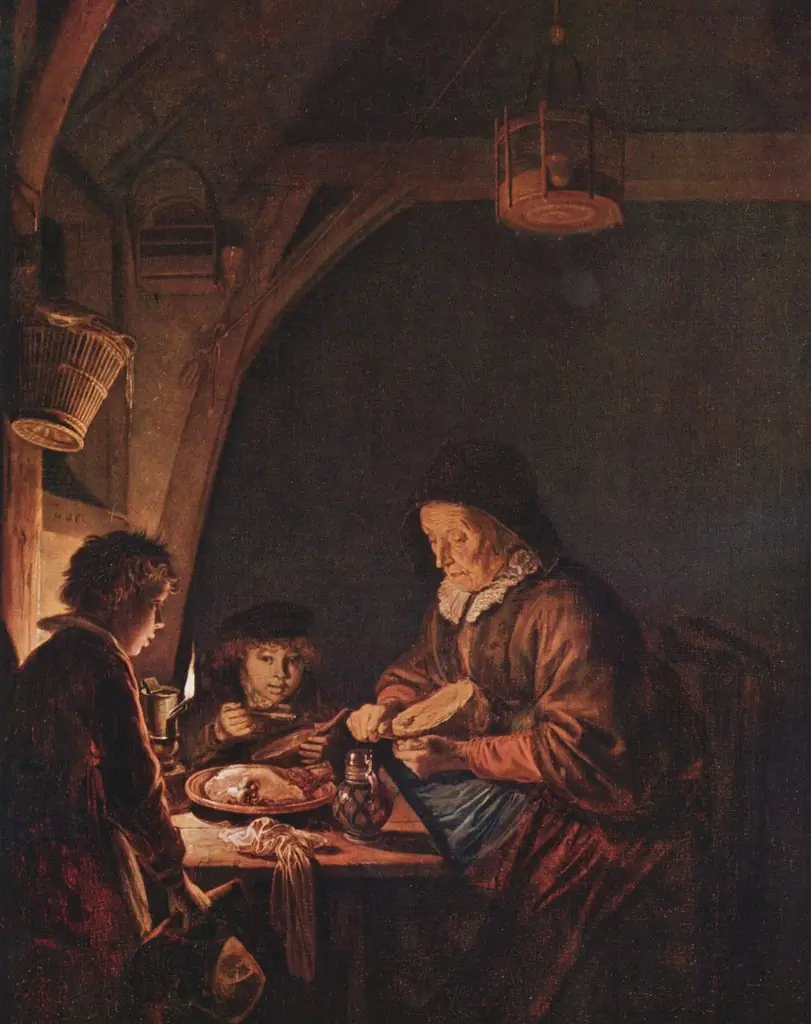
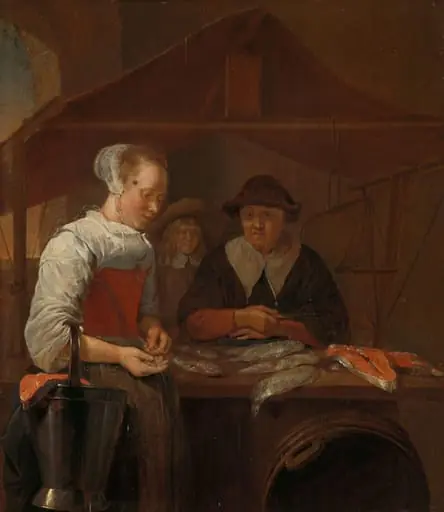
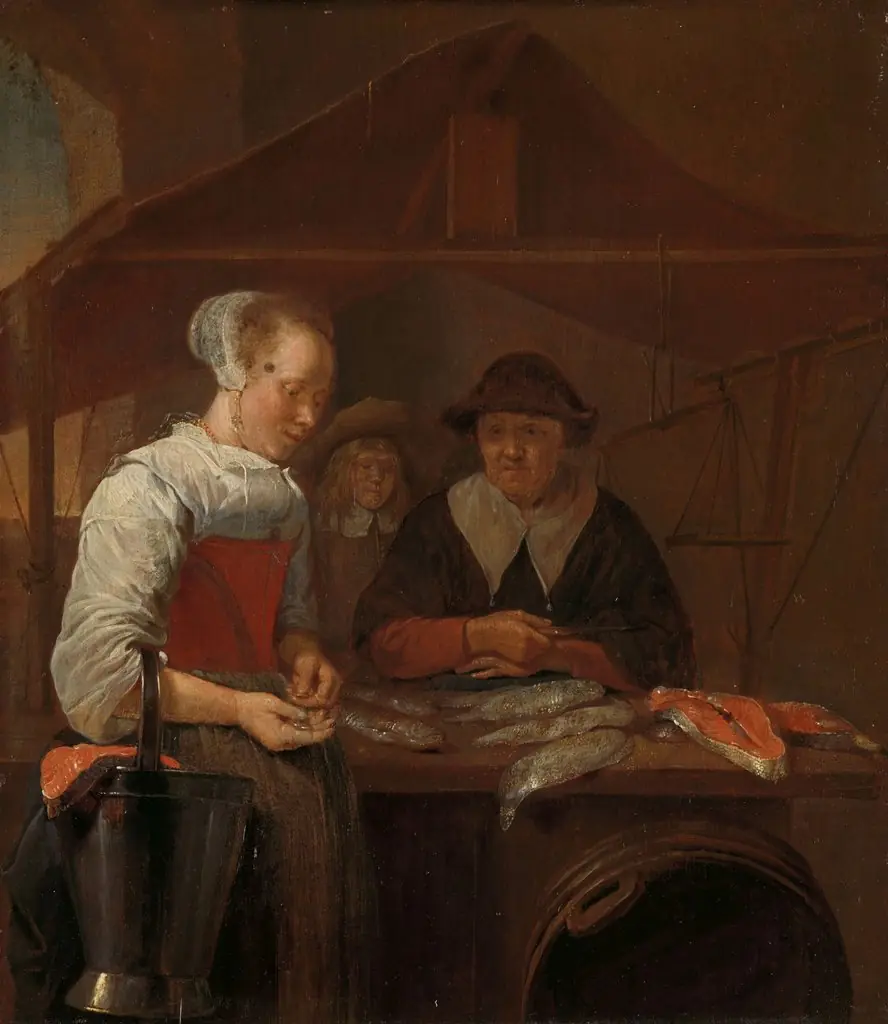
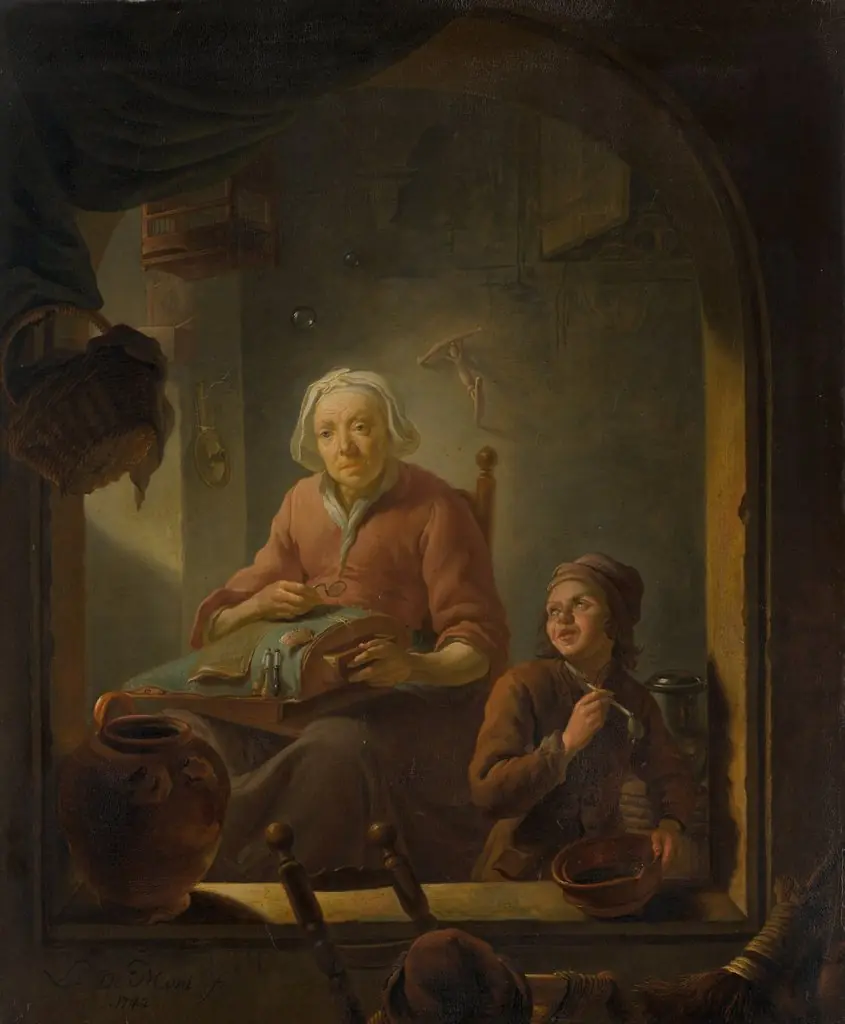
Created in 1673, Gerrit Dou's Herring Seller is a genre scene depicting a woman accompanied by a young boy and a dog. The central figure holds a herring, which serves as the work's titular subject and primary visual focus. The composition also features a window, framing the domestic interaction between the figures.
As a piece of genre art, the painting captures a slice of everyday life, emphasizing the transaction or preparation of food within a household setting. The inclusion of the dog and the child alongside the woman selling fish suggests a narrative of daily commerce and family presence in 17th-century Dutch society.
Technique & Style
The Herring Seller is an oil painting on panel measuring 41 by 30 cm. Gerrit Dou executed the work in 1673 using oil paint, a medium in which he specialized as a leading Dutch Golden Age painter. The painting belongs to the genre scene tradition, depicting a woman, boy, dog, and herring arranged near a window. Dou's characteristic fine technique and detailed handling are evident in this intimate domestic composition.
History & Provenance
The painting Herring Seller by Gerrit Dou is dated to 1673. It entered the collection of the Hermitage Museum, where it remains housed. The work was included in the exhibition Dutch masters from the Hermitage, which presented highlights from the museum’s holdings of Dutch art.
The painting is held in the collection of the Hermitage Museum in Saint Petersburg.
Its inventory number is not specified in the cited sources. The work entered the museum’s holdings as part of its Dutch masters collection.
It was included in the exhibition Dutch masters from the Hermitage, which presented works from the museum’s Dutch collection.
Legacy
Herring Seller (1673) by Gerrit Dou emerged as a refined example of Dutch Golden Age genre painting, influencing later artists through its meticulous detail and domestic narrative. The composition, featuring a woman, boy, dog, and herring within a domestic interior, established a template for mid-level genre scenes that would be emulated by 18th- and 19th-century painters seeking to capture everyday life with realism and quiet storytelling. Its restrained palette and emphasis on interior domesticity resonated with contemporaries and successors in the Dutch and broader European tradition.
The work is part of the Hermitage Museum's collection and was included in the exhibition Dutch Masters from the Hermitage, underscoring its enduring institutional recognition. The painting's legacy persists in art historical discourse as a representative of Dou's mastery in rendering intimate, narrative-driven scenes with technical precision.
Overview
Gerrit Dou’s oil painting Herring Seller, executed in 1673, belongs to the intimate genre scenes typical of the Leiden fijnschilders. The work measures only a few centimeters across, inviting close inspection of its finely rendered details. It is part of the State Hermitage Museum’s collection in St. Petersburg.
Context
Herring Seller exemplifies the fijnschilder tradition, a movement in Leiden that prized precision and smooth surfaces. As a pupil of Rembrandt, Dou inherited a mastery of light, yet he applied it to small, domestic scenes that catered to the tastes of affluent Dutch patrons.
Own this work as a print
Artist & collection

Artist
Gerrit Dou (pronounced; 7 April 1613 – 9 February 1675), also known as Gerard Douw or Dow, was a Dutch Golden Age painter, whose small, highly polished paintings are typical of the Leiden fijnschilders.