Artwork
The Schoolmaster
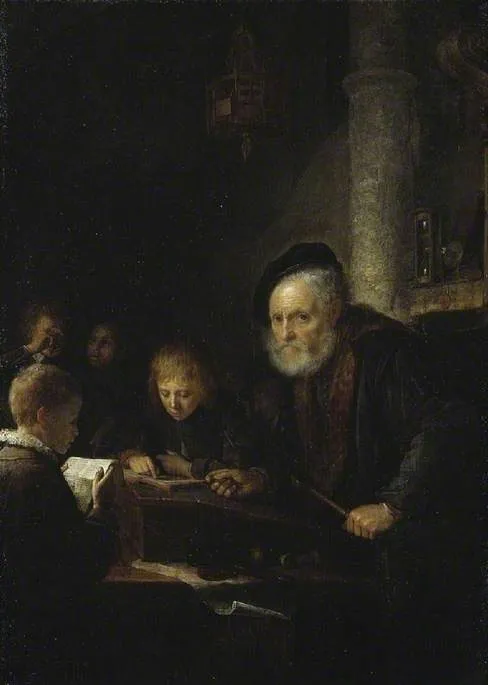
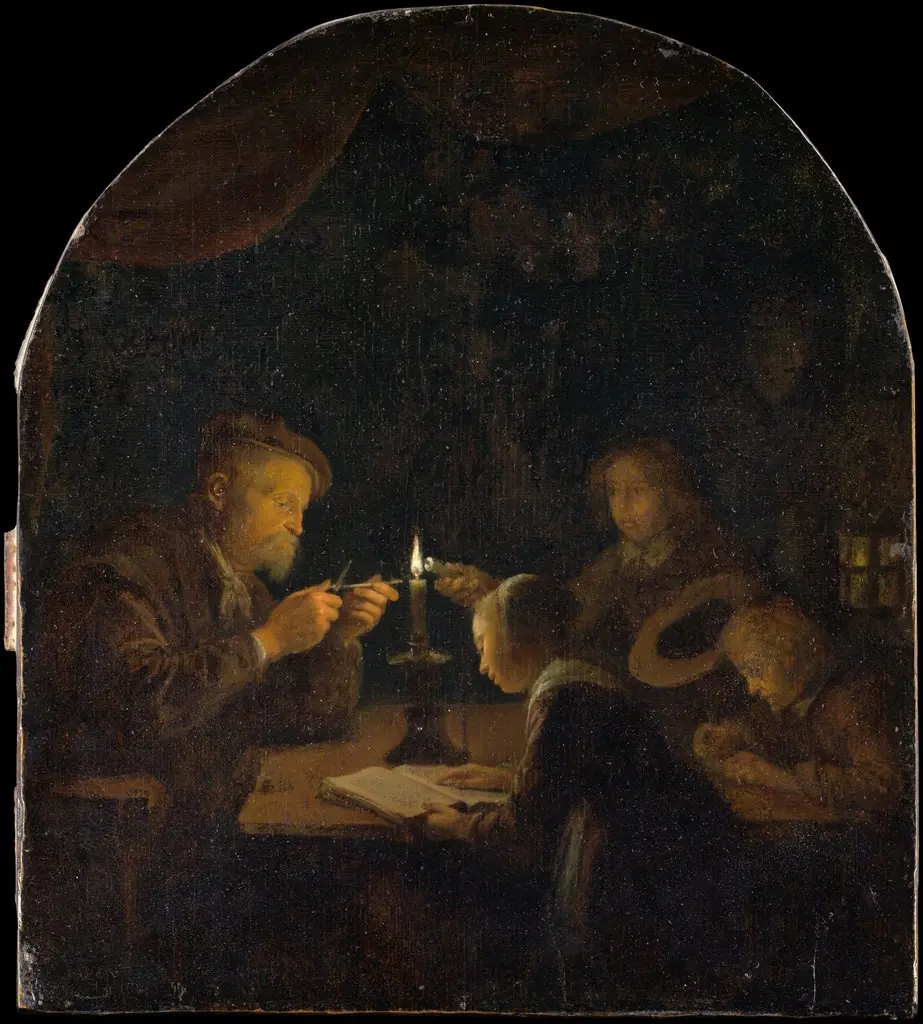
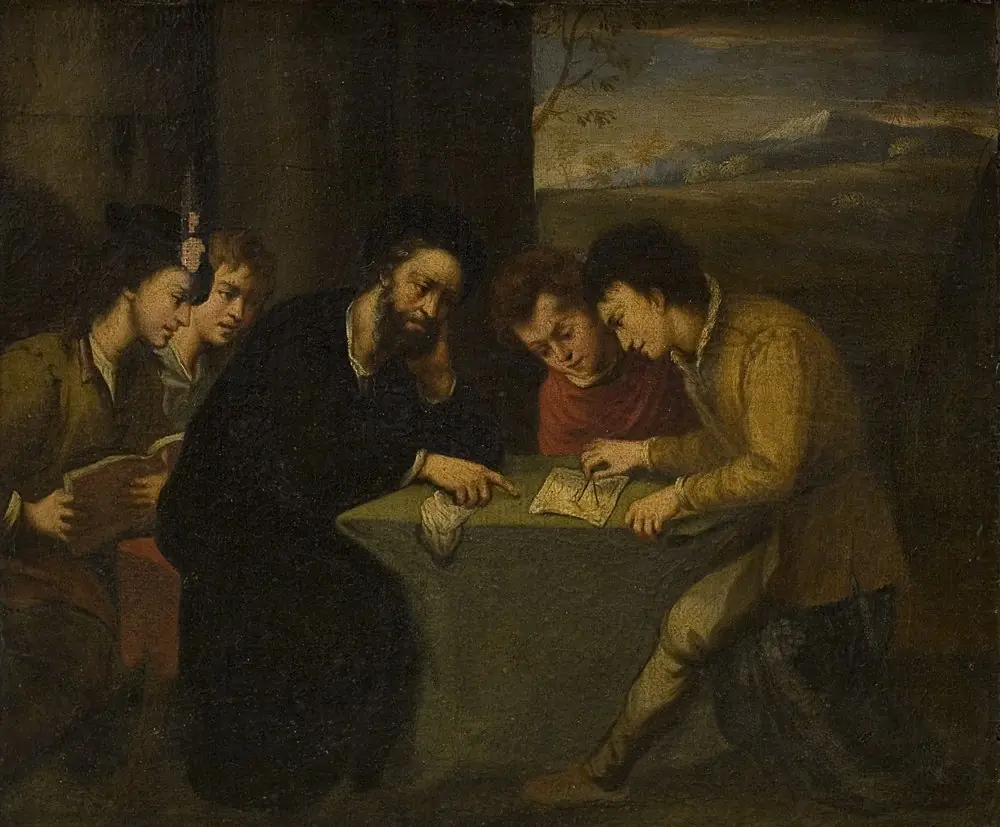
The Schoolmaster is an oil painting by the Dutch Golden Age artist Gerrit Dou. It dates from 1645 and is held in the collection of the Fitzwilliam Museum.
About this work
Overview
3 cm in width, the work is a genre scene depicting an elderly teacher instructing children in a dimly lit interior.
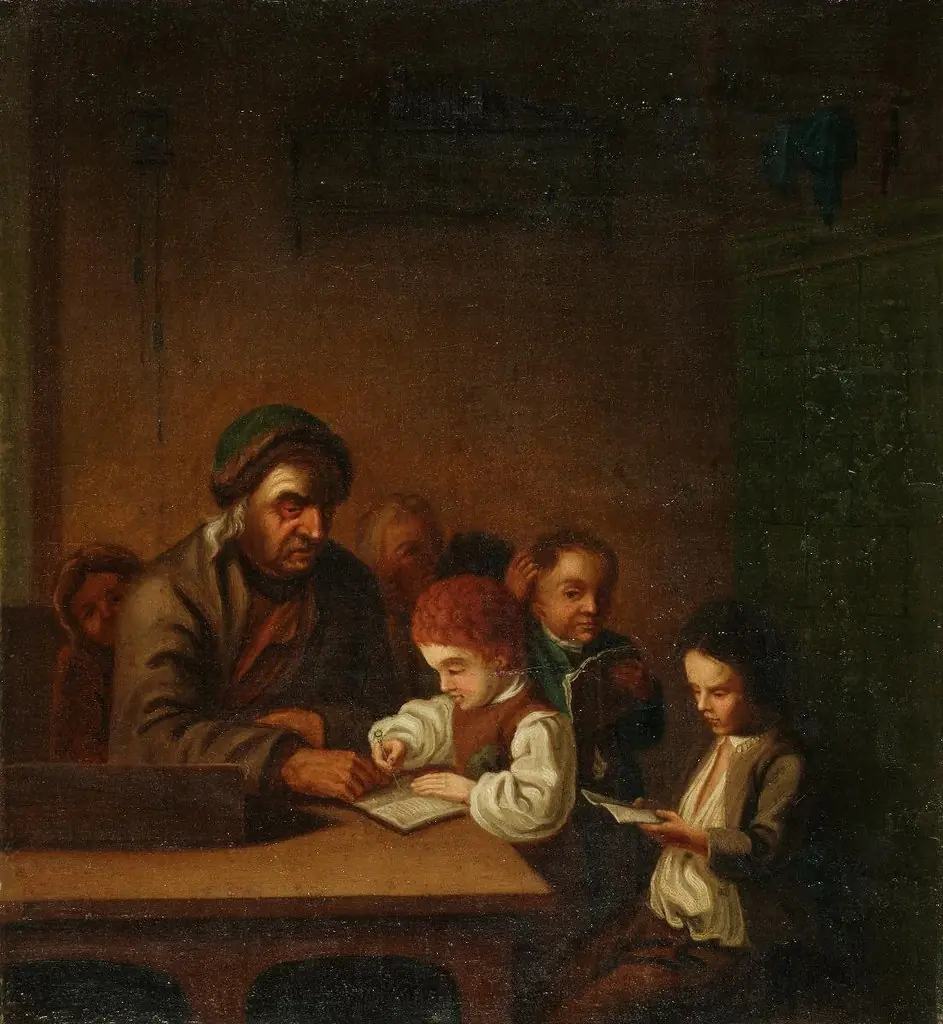
The Schoolmaster is an oil on panel painting by the Dutch Golden Age artist Gerrit Dou, dated to 1645. Measuring 27 cm in height and 19.3 cm in width, the work is a genre scene depicting an elderly teacher instructing children in a dimly lit interior. The painting is renowned for its meticulous detail, dramatic chiaroscuro, and intimate portrayal of everyday life, hallmarks of the Leiden fijnschilders movement that Dou helped found. It is currently held in the Fitzwilliam Museum in Cambridge, accessioned as number 33.
Subject & Meaning
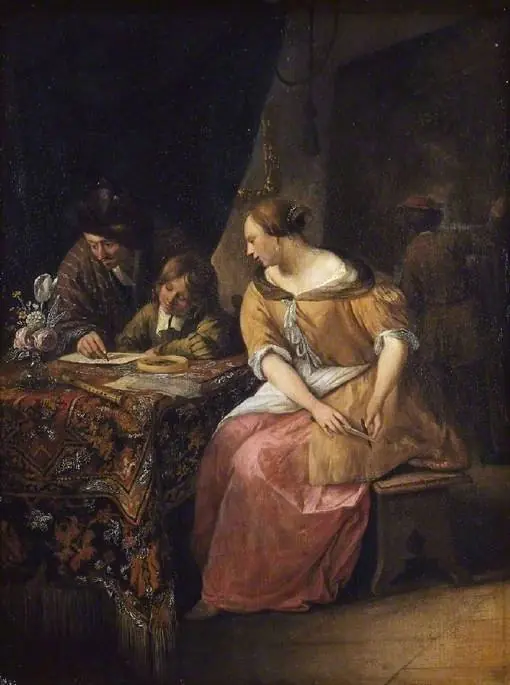
The composition centers on an elderly, bearded schoolmaster wearing a dark cap and robes, who sits at a wooden table holding a thin rod or pointer. To his left, a light-haired child leans over an open book, pointing at the page, while another child in the left foreground reads from a separate book, seen from behind. Two additional children peer from the dark background. The setting includes a stone column behind the master and a hanging lantern. Objects on the table, such as books, papers, and a pen or stylus, anchor the theme of education. The interaction between the older master and the young students highlights a generational dialogue concerning the transfer of knowledge, underscoring the high value placed on education and scholarly diligence in 17th-century Dutch society.
Technique & Style
Executed in oil on a wooden panel, the painting demonstrates Dou's signature fine painting technique. The palette is dominated by deep browns, blacks, and muted earth tones, with illumination concentrated on the faces, hands, and open pages. This strategic deployment of chiaroscuro accentuates the materiality of the objects, rendering the sheen of polished wood and the textures of skin and paper with precise, fine brushwork. The brushwork appears smooth in the faces and more loosely handled in the darker, receding areas. The composition uses an archway as a frame within a frame, drawing the viewer's eye inward and creating a palpable, weighted sense of reality that contrasts the sharp illumination of the figures with the near-total darkness of the background.
History & Provenance
Painted in 1645, The Schoolmaster carries an inscription of the artist's mark, G dov. The work's documented provenance traces back to King William III of Orange at Castle Het Loo. It was sold in Amsterdam on July 26, 1713, and subsequently entered the collection of the Duke of Chandos. The painting was sold again in London on May 6 through 8, 1747, when it was purchased by Sir Matthew Decker, Bart. It descended through his family to his grandson, Richard FitzWilliam, the 7th Viscount FitzWilliam, who bequeathed it to the Fitzwilliam Museum in 1816, where it has since remained.
Context
Gerrit Dou, a prominent figure of the 17th-century Dutch Golden Age, was a pupil of Rembrandt van Rijn before emerging as a leading force in the Leiden School. While Rembrandt explored dramatic compositions, Dou developed a unique style combining realism with a delicate, meticulous touch, becoming a founding figure of the Leiden fijnschilders, or fine painters. The socio-economic conditions of the era, particularly the rise of the merchant class, fueled the demand for genre paintings focused on everyday life and domestic scenes. The Schoolmaster fits squarely within this tradition, capturing the quiet dignity of common routines and the societal emphasis on education, distinguishing itself from the broader thematic explorations of contemporaries like Johannes Vermeer.
Legacy
The Schoolmaster composition achieved considerable popularity, leading to numerous copies and adaptations. In the 19th century, inexpensive reproductions of the composition were produced as souvenirs for European tourists, created by transferring lithograph prints onto metal plates and painting over them in oils. Dou's meticulous approach to genre painting influenced many artists in the 18th and 19th centuries, paving the way for later movements such as Realism to explore similar themes of everyday life. The painting endures as a significant work in art history, celebrated for its intricate details and its role in illustrating the cultural values of 17th-century Dutch society.
Artist & collection

Artist
Gerrit Dou (pronounced; 7 April 1613 – 9 February 1675), also known as Gerard Douw or Dow, was a Dutch Golden Age painter, whose small, highly polished paintings are typical of the Leiden fijnschilders.