Artwork
The Young Mother
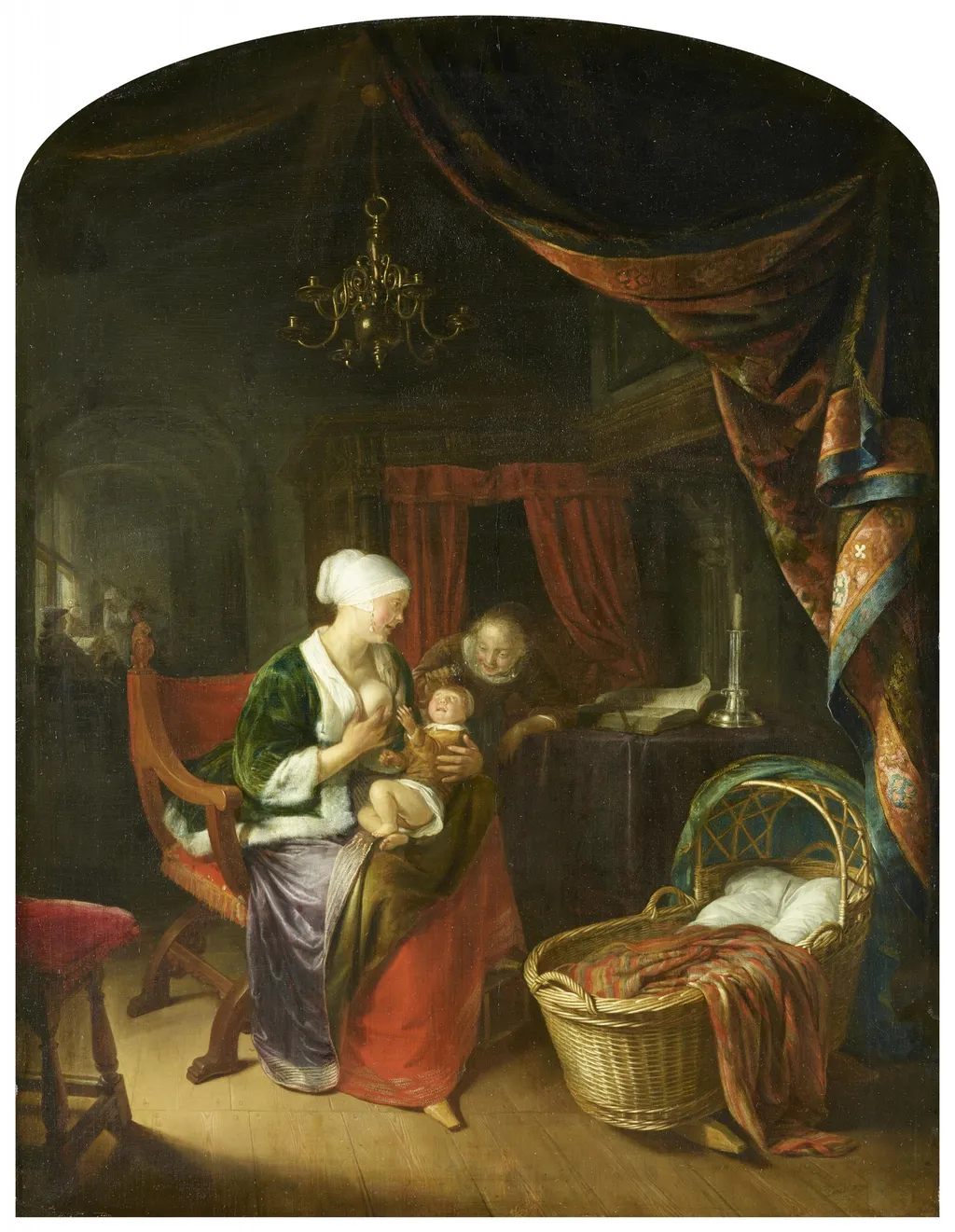
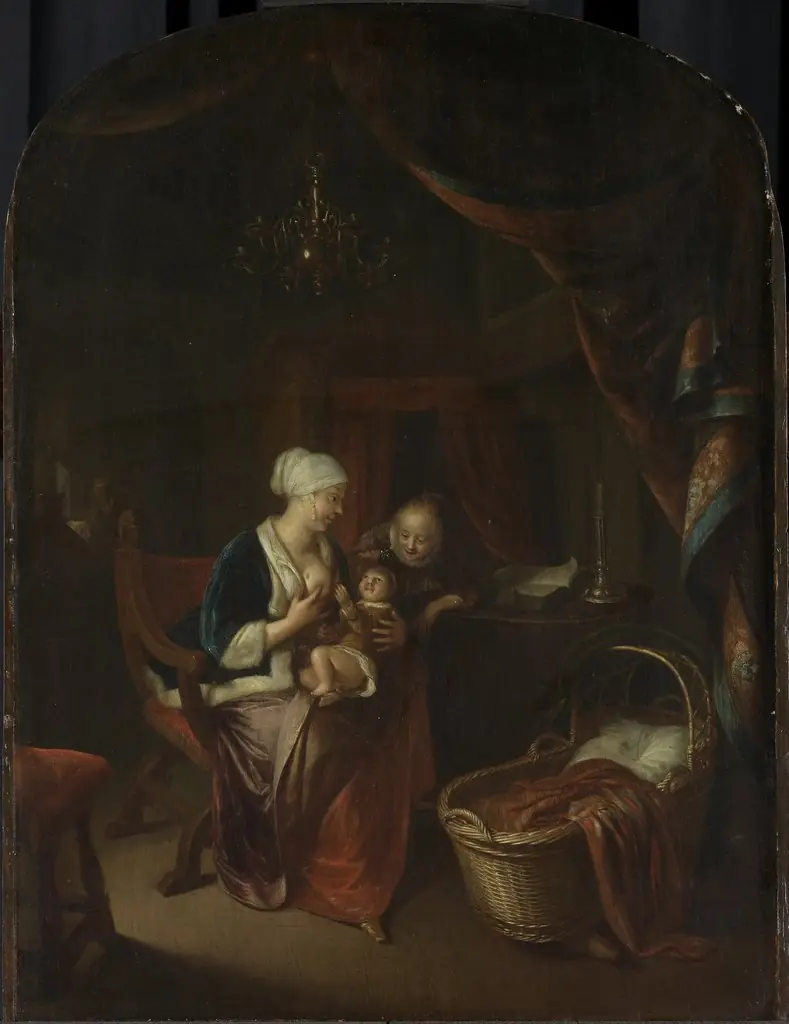
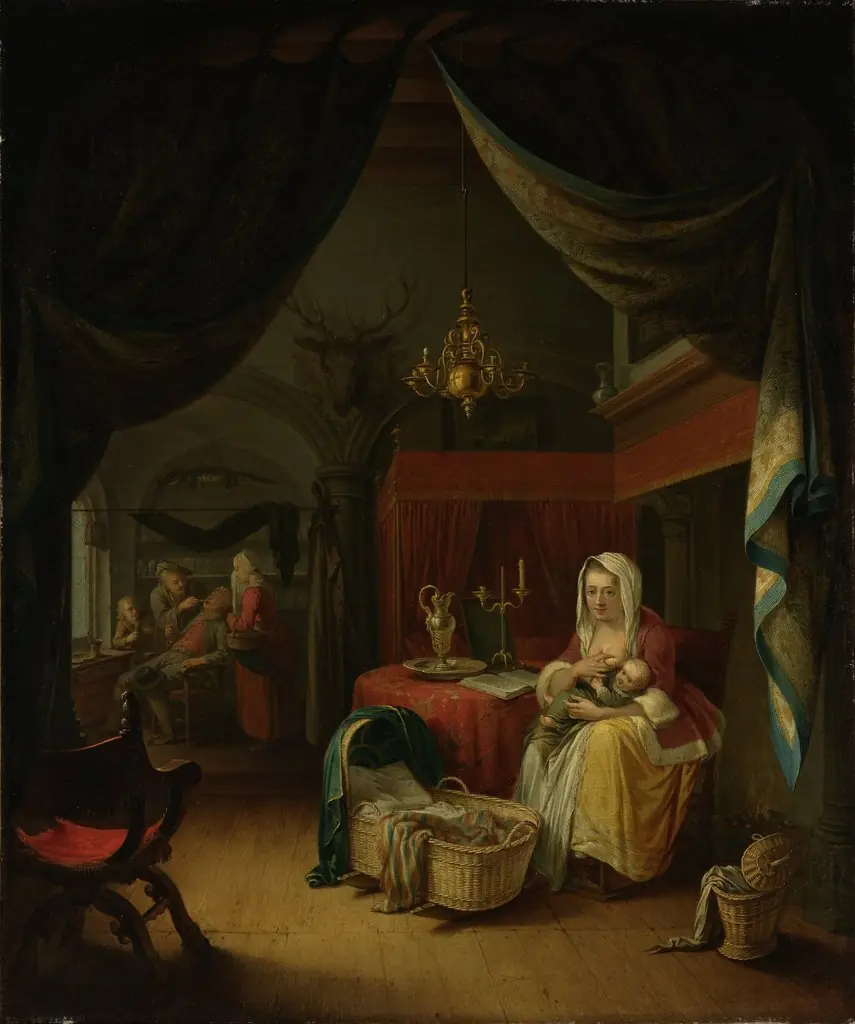
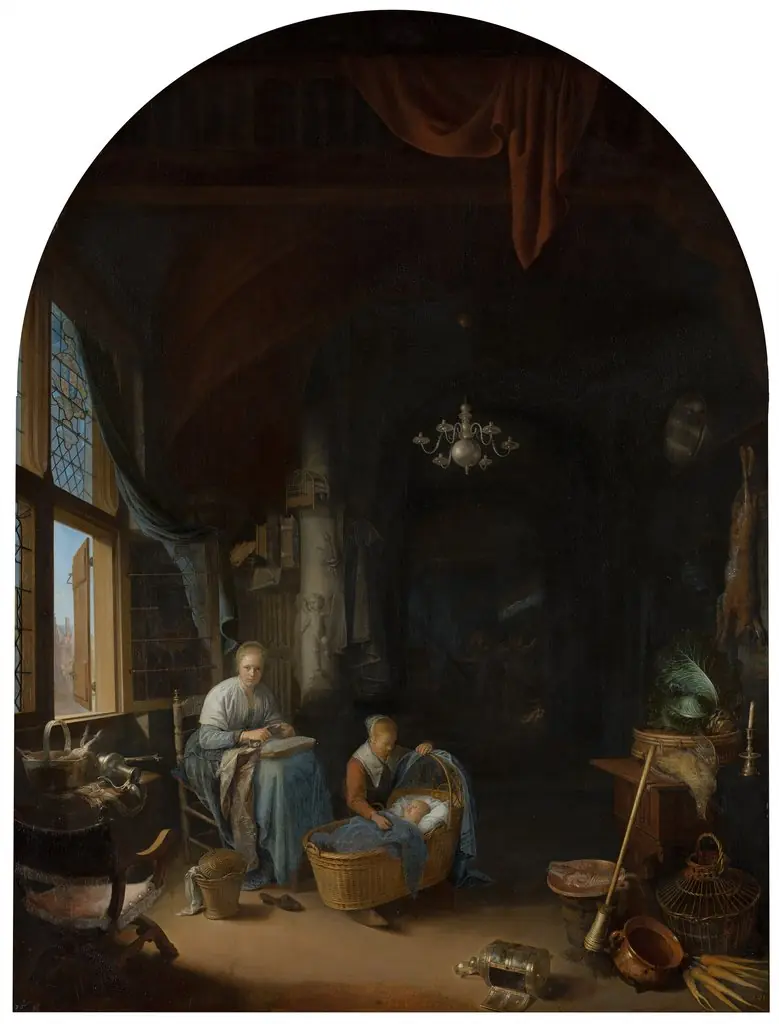
The Young Mother is an oil painting by the Dutch Golden Age artist Gerrit Dou. It dates from 1657 and is held in the collection of the Gemäldegalerie Berlin.
About this work
Overview
The Young Mother is a genre painting by the Dutch artist Gerrit Dou, created in 1658.
The Young Mother is a genre painting by the Dutch artist Gerrit Dou, created in 1658. Executed in oil on panel, the work measures 73.5 cm by 55.5 cm and is currently held in the Mauritshuis in The Hague. The painting is an exemplary work by the founder of the Leiden fijnschilders, renowned for its meticulous detail, invisible brushwork, and complex domestic interior. It holds significant historical importance as part of the 1660 Dutch Gift to King Charles II of England, a diplomatic offering that so impressed the monarch that he immediately offered Dou a permanent court position, which the artist declined.
Subject & Meaning
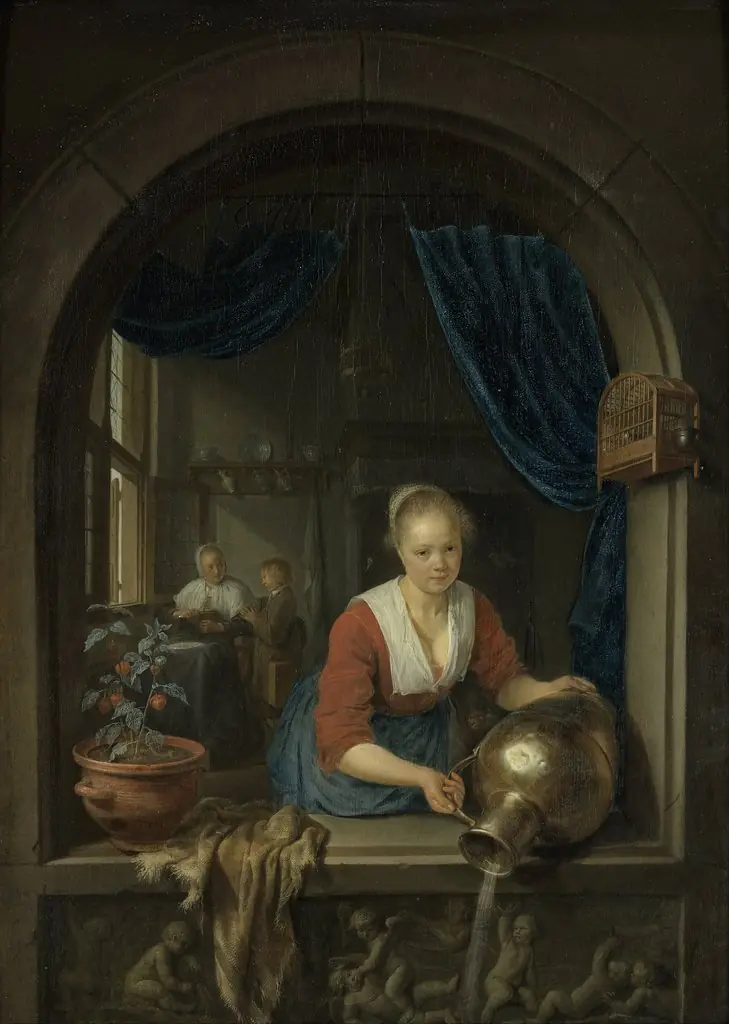
The composition features a young woman seated by a window doing needlework, while a maid kneels beside a wicker cradle caring for her baby. The interior is populated with diverse objects, including a still life with a basket, rabbit carcass, and fallen tin can, as well as a fallen lantern, broom, carrots, fish, and dead bird. The scene carries layered symbolism. The mother's handiwork and her skirt covering a footstool symbolize virtue. A relief of Cupid on the pillar references conjugal love, while the husband's cloak and sword hung on the same pillar allude to the absent father. A slipper and birdcage function as erotic symbols. The background features figures in a dimly lit kitchen, and the objects strewn about the room, such as a globe, inkwell, and folio volumes, represent the domain of study and the patriarch's scholarly pursuits.
Technique & Style
Dou employed the refined, polished technique characteristic of the Leiden fijnschilders, rendering the scene with such precision that individual brushstrokes are virtually invisible. The painting features a theatrical composition, framed by an arched top and revealed by a raised curtain that enhances the spatial depth. Light falls from the left, illuminating the central figures and bringing out the diverse textures of the wicker cradle, gleaming kitchenware, and the woman's face. The smooth brushwork captures the distinct materiality of surfaces, contrasting the velvet of the mother's house jacket with the rough weave of the curtain, and differentiating the warm sheen of brass from the cooler silver of the candlestick. Dou's approach, while sharing Rembrandt's interest in chiaroscuro, is more conventional and focused on the meticulous rendering of textures.
History & Provenance
Signed subtly in the stained glass window with GDOV.1658, the painting was selected in 1660 by the States of Holland and West Friesland as part of a diplomatic gift to Charles II on the occasion of the Restoration. The king kept the work in his royal collection for decades. Stadtholder William III of Orange, who became King of England in 1689, later brought the painting back to the Netherlands, placing it in Het Loo palace as a counterpart to Rembrandt's The Song of Praise by Simeon. After moving through various locations, the work entered the Prince William V Gallery in The Hague in 1774. During Napoleon's era, it was taken to the Louvre. Following its return to the Netherlands, it was exhibited in the Prince William V Gallery before being transferred to the Mauritshuis in 1822, where it remains under inventory number 32.
Context
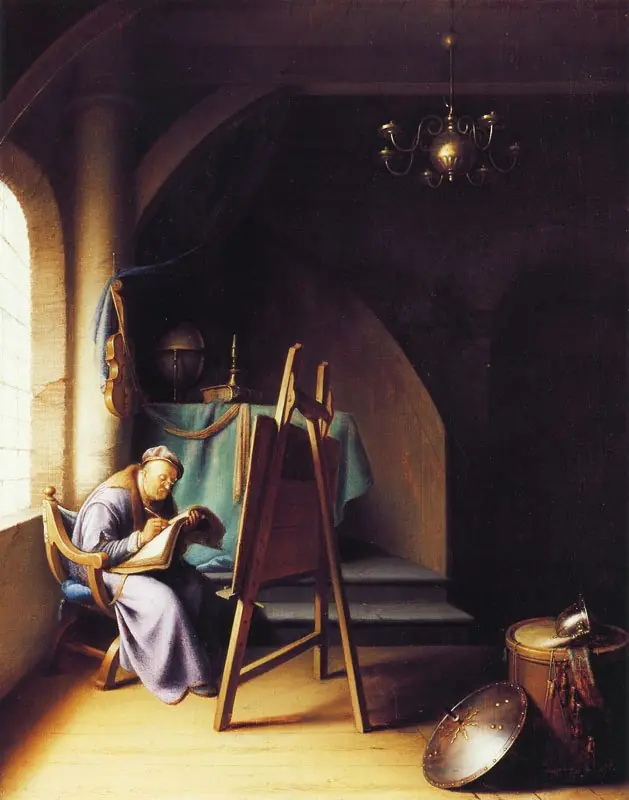
Gerrit Dou began his career in 1628 as Rembrandt's first pupil in Leiden. However, he diverged from his master's style, founding the Leiden fijnschilders, a school that included Frans van Mieris the Elder, Gabriel Metsu, and Godfried Schalcken. Dou elevated the rendering of textures to his primary objective, working with immense care. According to the biographer Arnold Houbraken, Dou would set up a large parasol over his easel and wait for the dust to settle before painting. Contemporary viewers recognized this extraordinary precision. The English diarist John Evelyn noted the work was painted so finely it could hardly be distinguished from enamel, and the burgomaster of Leiden remarked that no one could help but be astonished at the remarkable care of its execution. The painting's subject may have been intended as a reference to Mary Henrietta Stuart, sister of Charles II and widow of stadtholder William II, who protected her son's interests under difficult political circumstances.
Legacy
The Young Mother stands as a defining achievement of the Leiden fijnschilders, a movement whose meticulous painting style continued to be practiced well into the 18th century. Dou's founding of this school through works of such extraordinary detail established a tradition that prioritized flawless surface finish and precise observation over the dramatic chiaroscuro of his teacher Rembrandt. The painting's inclusion in the Dutch Gift and its long tenure in the English Royal Collection cemented Dou's international reputation, leading to King Charles II's immediate offer of a court position. The work's provenance, linking the collections of Charles II and William III, highlights its enduring status as a prized masterpiece across European royal collections.
Own this work as a print
Artist & collection
Artist
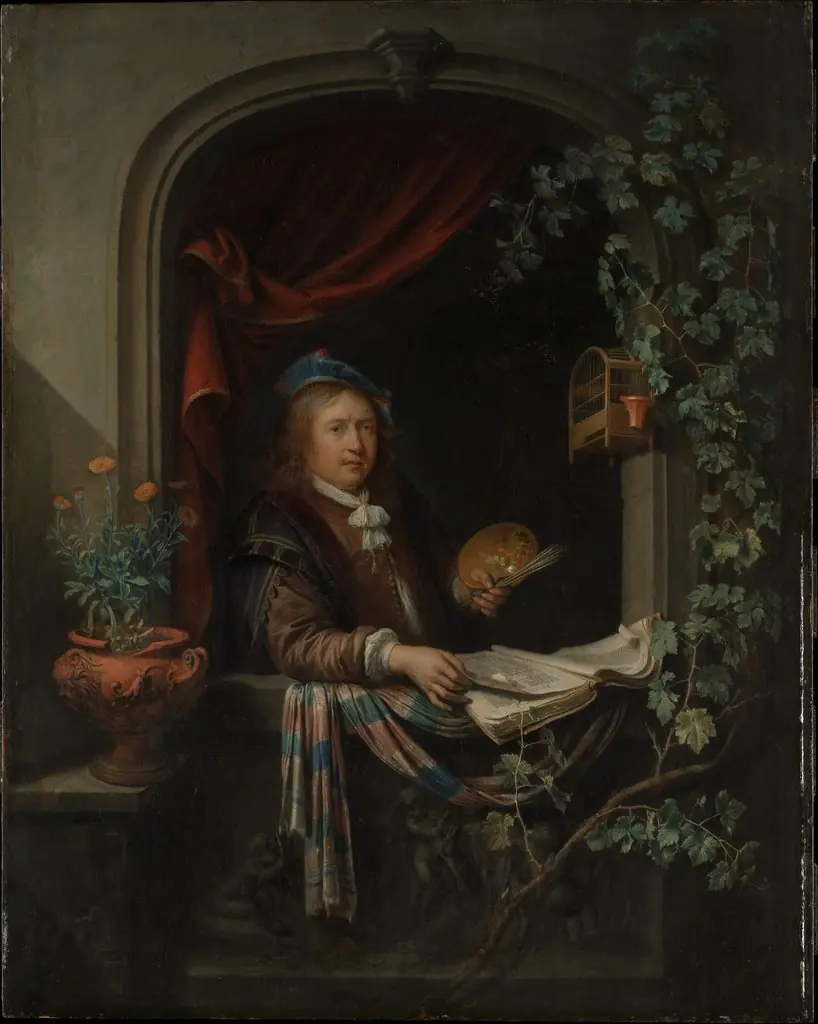
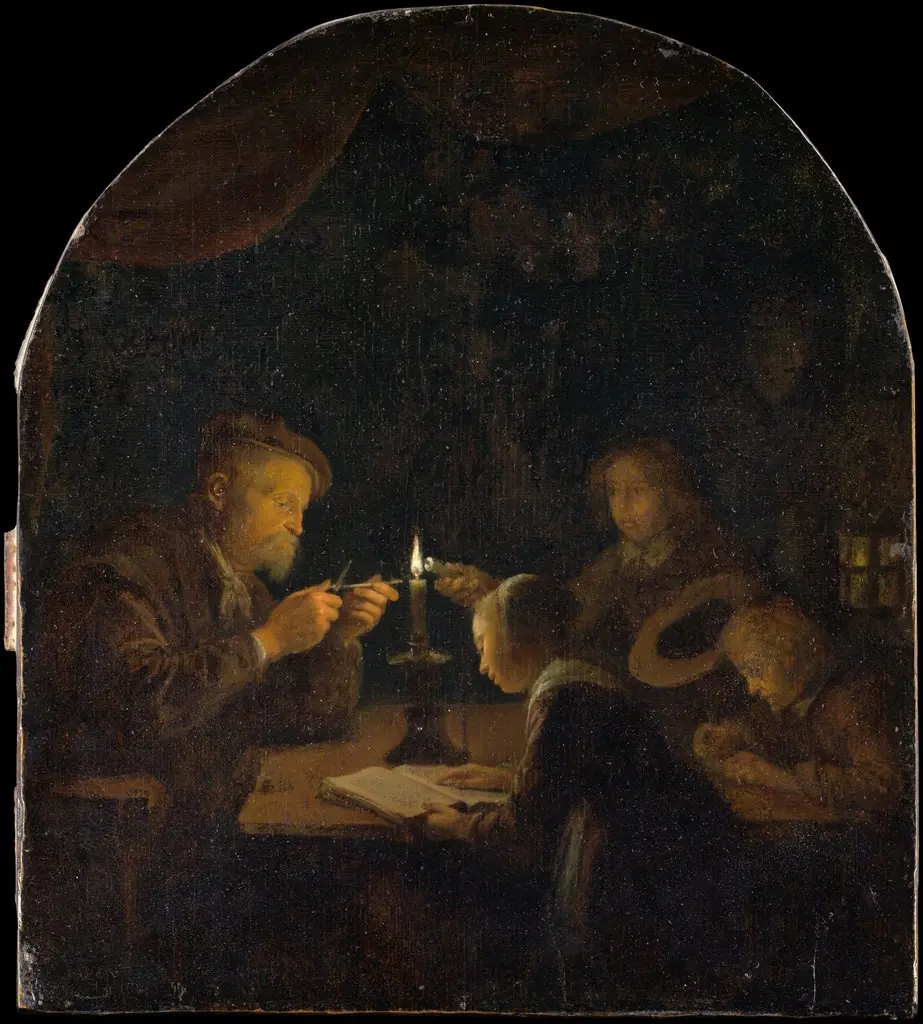
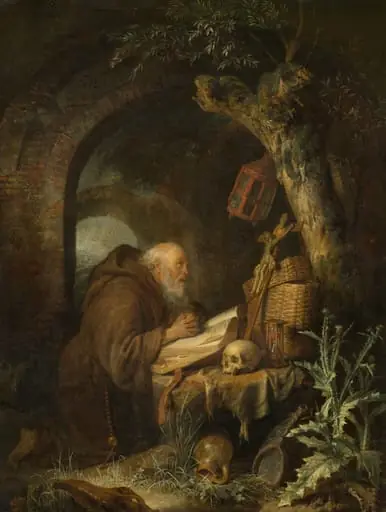
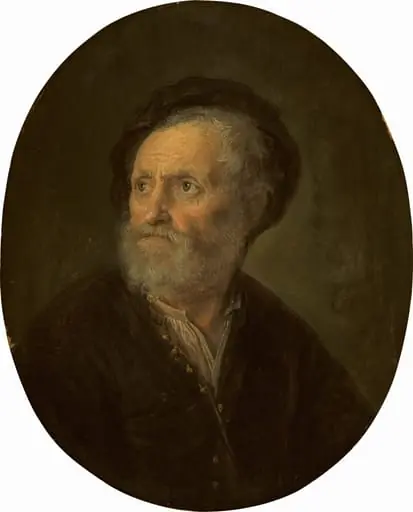
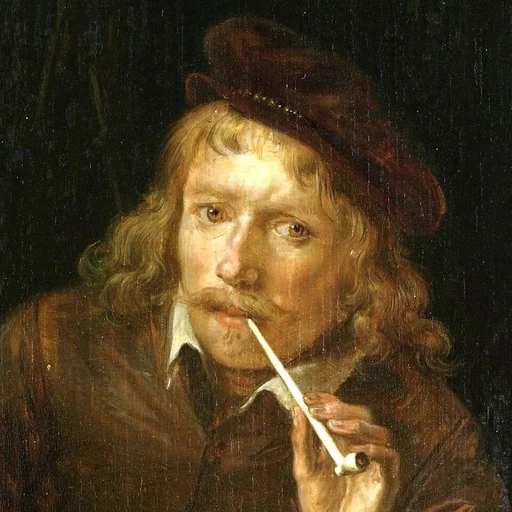
Gerrit Dou (pronounced; 7 April 1613 – 9 February 1675), also known as Gerard Douw or Dow, was a Dutch Golden Age painter, whose small, highly polished paintings are typical of the Leiden fijnschilders.