Artwork
Madonna of Humility
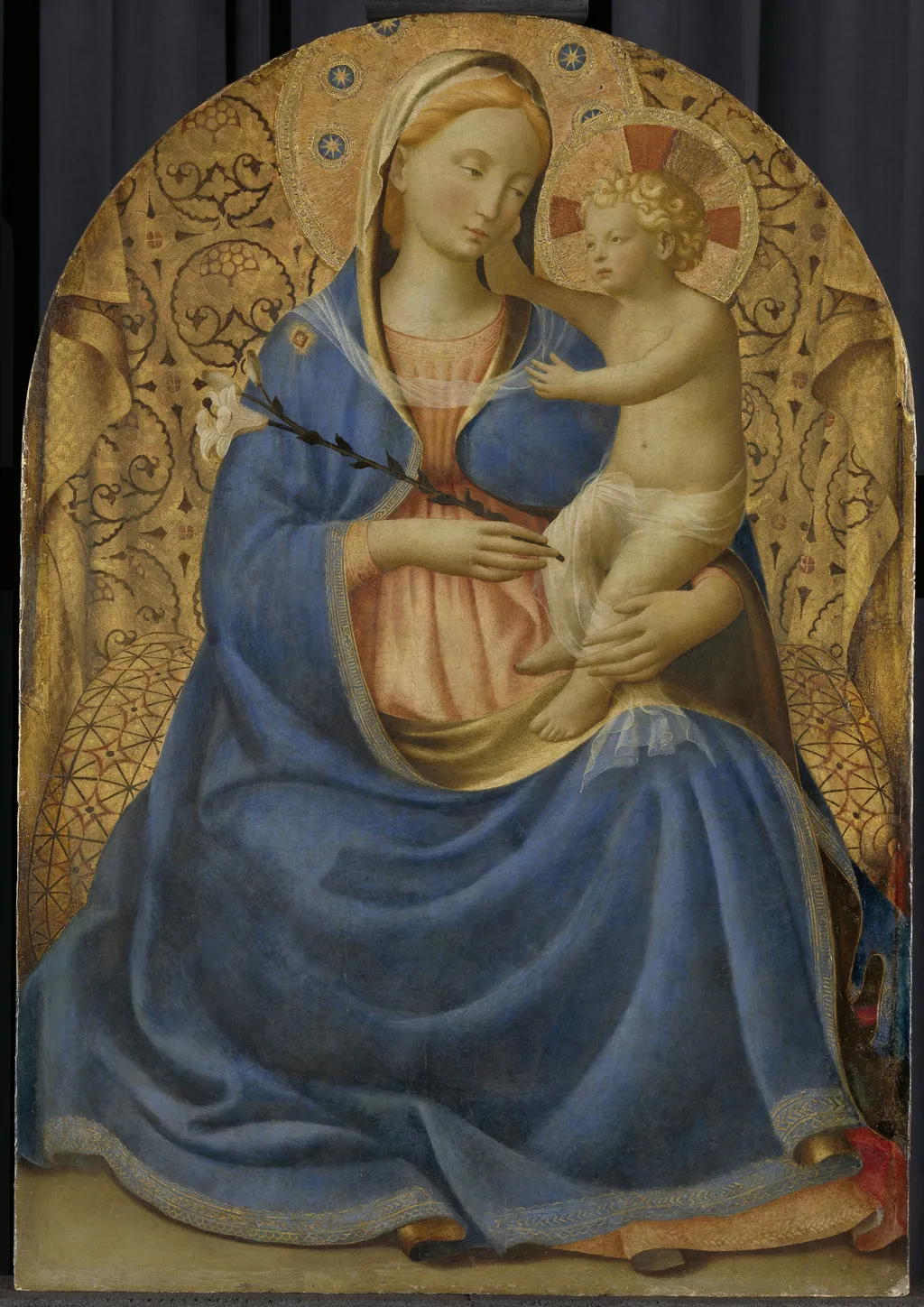
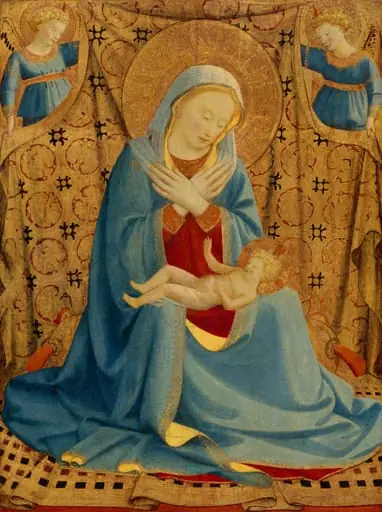
Madonna of Humility is a tempera painting by the High Renaissance artist Fra Angelico. It dates from 1440 and is held in the collection of the Rijksmuseum.
About this work
Subject & Meaning
The artwork depicts the Madonna and Child, a central subject of religious art within the Italian Renaissance.
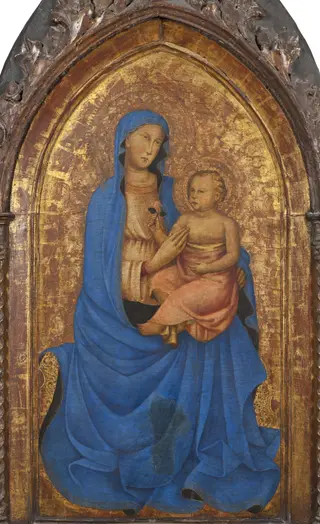
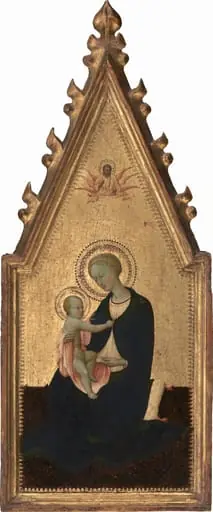
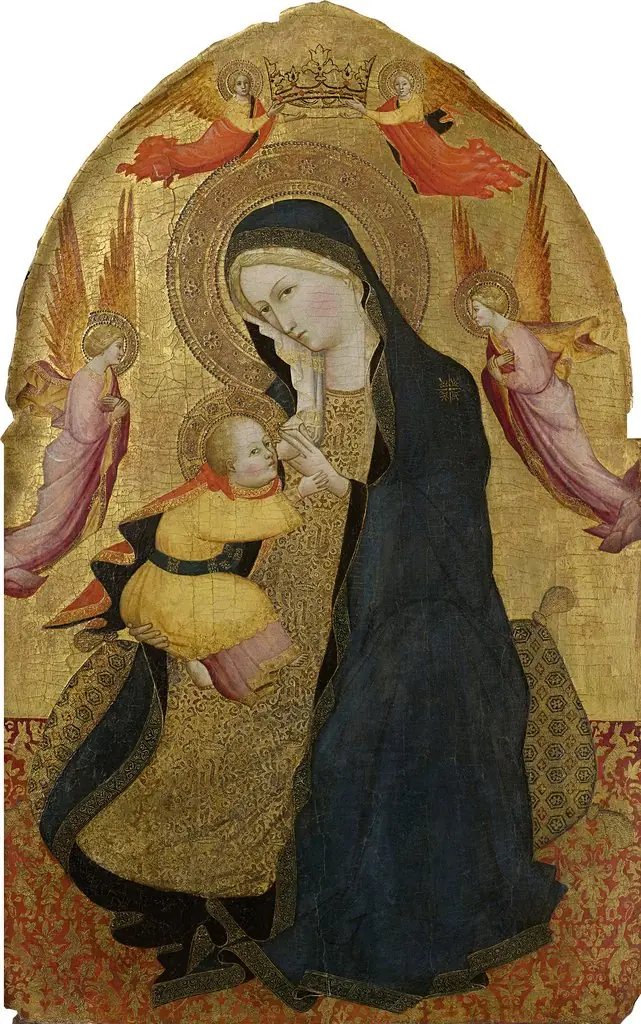
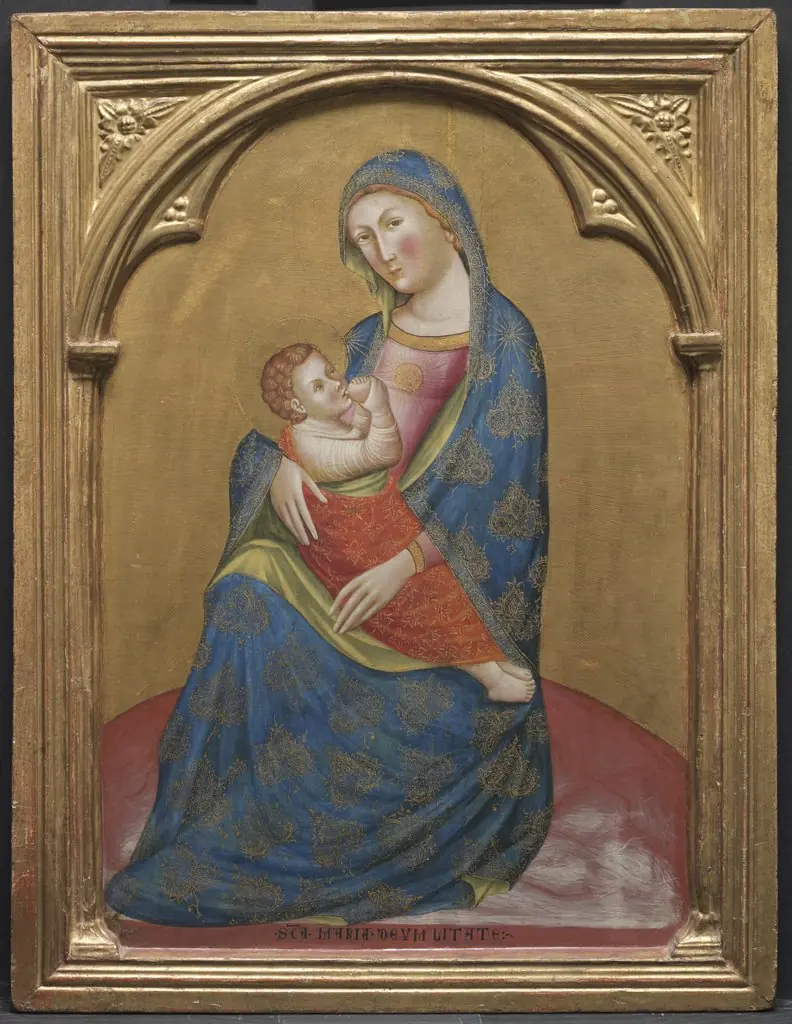
The artwork depicts the Madonna and Child, a central subject of religious art within the Italian Renaissance. Specifically, the composition portrays the Virgin Mary seated directly on the ground rather than a throne, a visual convention known as the Madonna of Humility that emphasizes her modesty and accessibility. She is shown holding the Christ Child, who is identified as a boy in the iconographic record.
Both figures are distinguished by aureolas, signifying their sanctity, while the child bears a cross-nimbus, a specific symbol foretelling his future crucifixion. The scene captures the intimate relationship between mother and son, presenting Mary not as a distant queen but as a humble woman, thereby reinforcing the theological theme of divine humility.
Technique & Style
The Madonna of Humility is executed in tempera on panel, a technique characteristic of mid-fifteenth-century Florentine practice. The work measures 74 cm in height by 52 cm in width, producing a vertically oriented devotional format. Stylistically, it belongs to the Italian Renaissance movement and reflects Fra Angelico's religious imagery, presenting the Madonna and Child as the principal subject.
The composition incorporates iconographic elements including an aureola and a cross-nimbus, with the Virgin depicted seated and shown as a mother figure alongside the Christ Child, who is rendered as a boy. The painting was produced in Florence around 1440, consistent with the panel-based tempera tradition of the period.
History & Provenance
Created in Florence around 1440, the Madonna of Humility is a tempera-on-panel painting by Fra Angelico. The work passed through the collection of Johann Gottlob von Quandt before entering the Grand Ducal collection of Oldenburg, owned successively by Peter II and Frederick Augustus II, Grand Dukes of Oldenburg, and displayed at the Augusteum in Oldenburg. The panel is now held in the collection of the Rijksmuseum, Amsterdam.
The work depicts the Madonna and Child within an Italian Renaissance stylistic framework. While the work dates to approximately 1440, the available sources do not list specific public exhibition events or provide a formal accession number.
Overview
Fra Angelico, an Italian Dominican friar and painter, created Madonna of Humility around 1440. This tempera painting exemplifies the early Florentine Renaissance, depicting the Virgin Mary seated on the ground while holding the Christ Child. The composition highlights a theme of maternal tenderness and humility, characteristic of the period's religious art. This significant work is part of the Rijksmuseum's collection.
Own this work as a print
Artist & collection

Artist
Fra Giovanni da Fiesole (born Guido di Pietro; c. 1395 – 18 February 1455), known posthumously as Fra Angelico ( FRAH an-JEL-ik-oh, Italian: ), was an Italian Dominican friar and painter active during the early…