Artwork
Hooiwagen
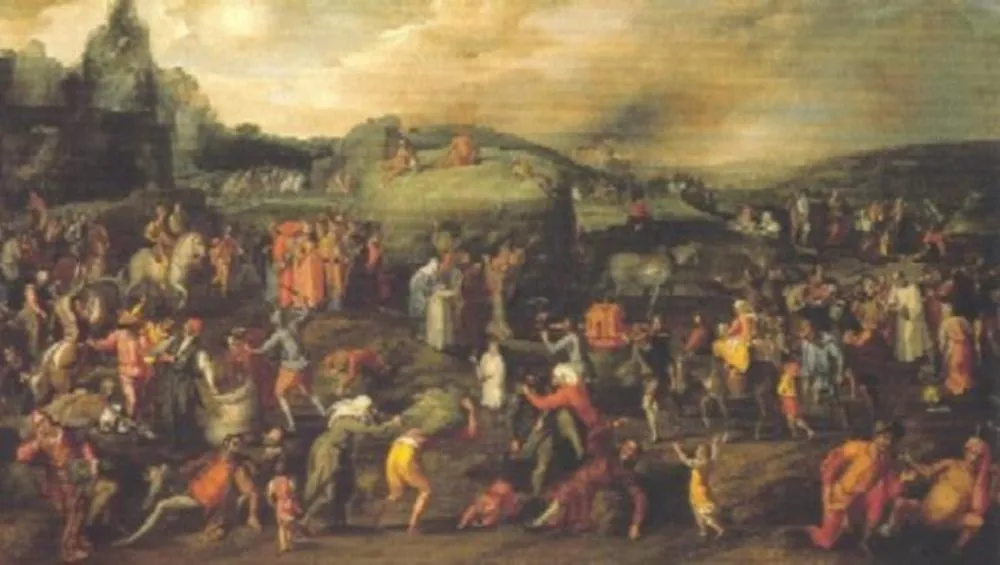
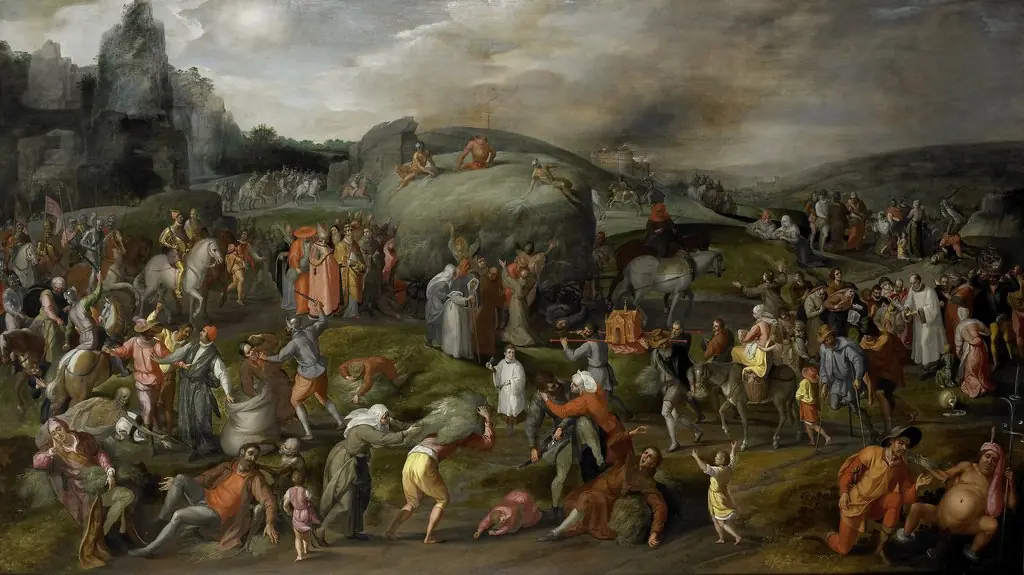
Hooiwagen is an oil painting by the Flemish Baroque painting artist Gillis Mostaert. It dates from 1574 and is held in the collection of the Rijksmuseum.
About this work
Technique & Style
Gillis Mostaert executed Hooiwagen in 1574 as a religious painting using oil paint on a panel support. The work measures 115.5 cm in height and 202.5 cm in width. Classified as a religious artwork, the piece is currently associated with the Museum Catharijneconvent and the Rijksmuseum.
History & Provenance
While the artwork is also associated with the Rijksmuseum in some records, the primary holding institution is the Museum Catharijneconvent in Utrecht.
The painting known as Hooiwagen was created in 1574 by the artist Gillis Mostaert. Executed in oil paint on a panel support, the work measures 115.5 cm in height and 202.5 cm in width. The piece is classified as a religious genre painting.
Regarding its ownership history, the work is held within the collection of the Museum Catharijneconvent. Sources also indicate an association with the Rijksmuseum in relation to its collection status.
The painting Hooiwagen by Gillis Mostaert is held in the collection of the Museum Catharijneconvent, where it is located. While the artwork is also associated with the Rijksmuseum in some records, the primary holding institution is the Museum Catharijneconvent in Utrecht. The work dates to 1574 and is executed in oil on panel.
No specific inventory or accession numbers are provided in the available sources, nor is there any recorded exhibition history for this piece.
Context
Gillis Mostaert painted Hooiwagen in 1574, a religious scene depicting a peasant cart laden with hay, reflecting the everyday labor and spiritual context of the Dutch Golden Age. The work, executed in oil on panel, measures 115.5 cm in height and 202.5 cm in width, and is housed in the Museum Catharijneconvent, which also holds it within the Rijksmuseum collection. Scholars consider this painting part of Mostaert's broader oeuvre focusing on rural life and moralizing subjects, situating it within the early Northern Renaissance tradition of detailed naturalism and religious narrative.
Critical reception of Hooiwagen remains limited in historical records, but its scholarly analysis emphasizes its role in understanding 16th-century visual culture and the artist's contribution to genre painting before the rise of Dutch masters like Rembrandt.
Overview
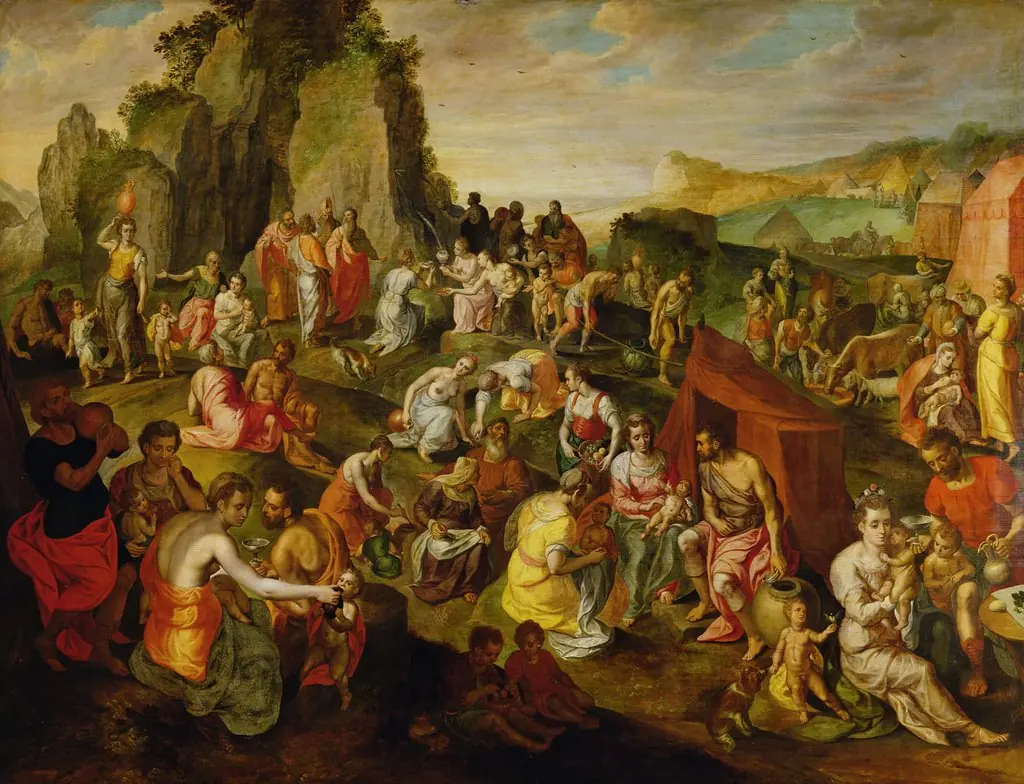
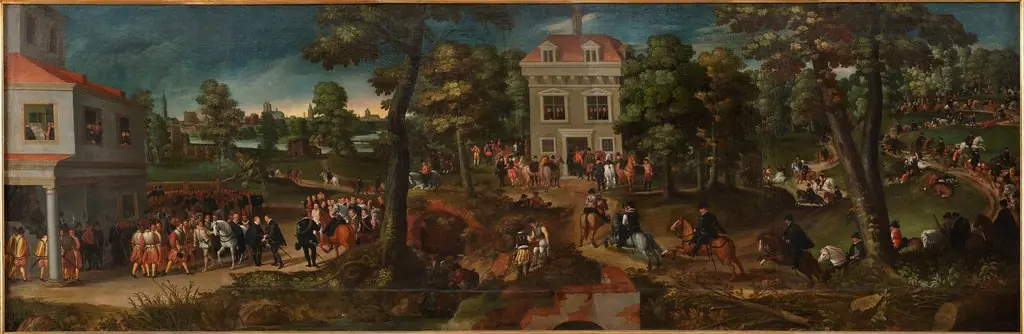
Gillis Mostaert the Elder painted Hooiwagen in 1574 while working in Antwerp. Executed in oil on canvas, the work belongs to the Flemish Baroque tradition and is now held by the Rijksmuseum. The composition presents a bustling crowd in a rural landscape, their vivid attire contrasting with a cloudy sky and distant hills, creating a scene of palpable unrest.
Subject & Meaning
The canvas depicts a large assembly of figures caught in a moment of confusion. Some individuals flee, others stand or sit, while a man in a bright red coat dominates the foreground. A rider on horseback appears in the distance, adding depth to the chaotic tableau. The overall atmosphere suggests panic or disorder within an otherwise ordinary setting.
Artist & collection
Artist
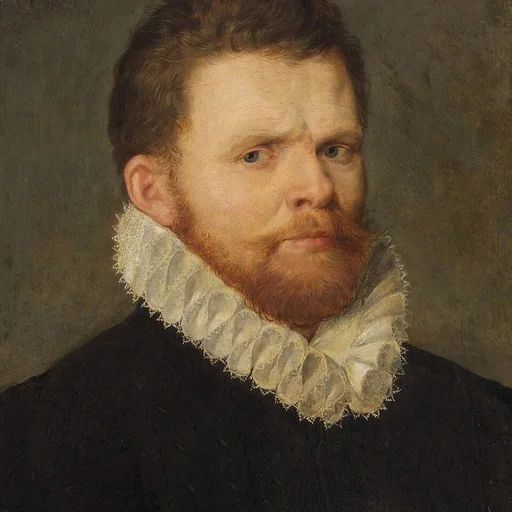
Gillis Mostaert the Elder (27 or 28 November 1528 – 28 December 1598) was a Flemish Renaissance painter and draughtsman active in Antwerp in the second half of the 16th century.

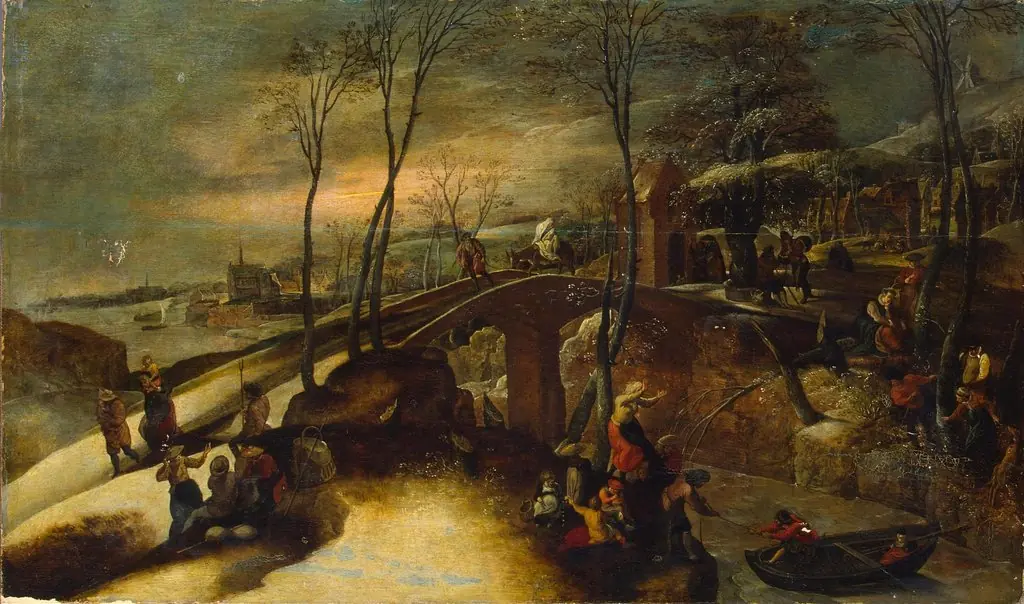
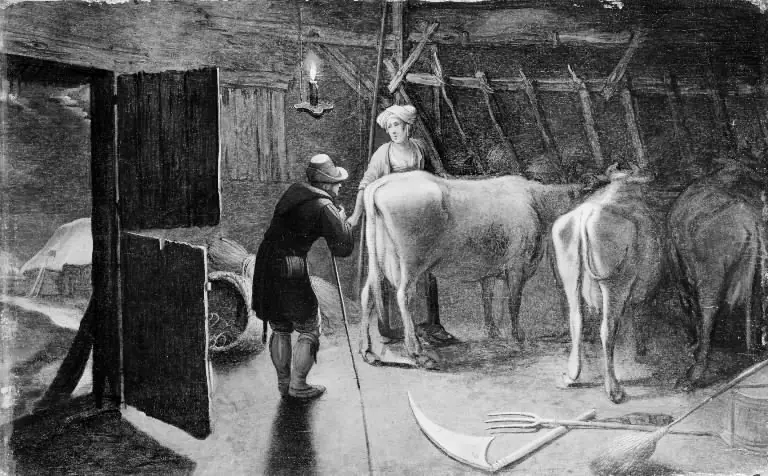
- Vara
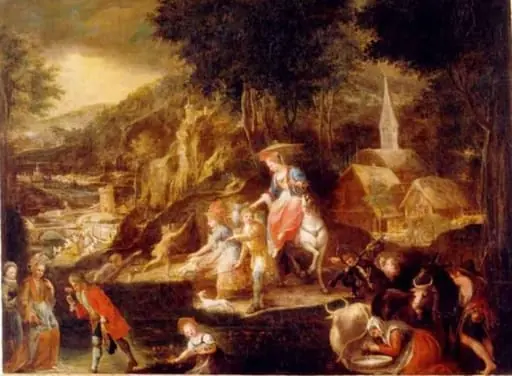 Primăvara
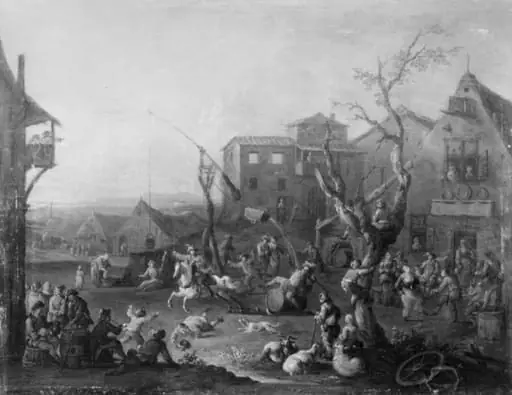 Landscape with Merrymakers outside an Inn
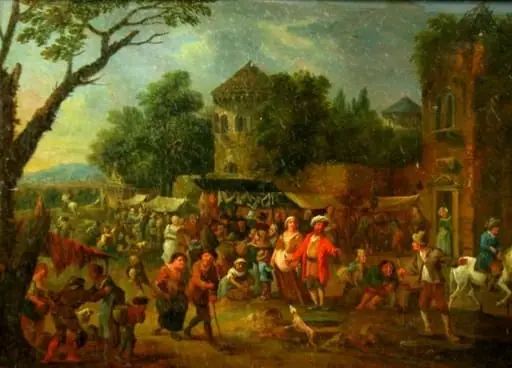 Scenă de târg (Iarmarocul)
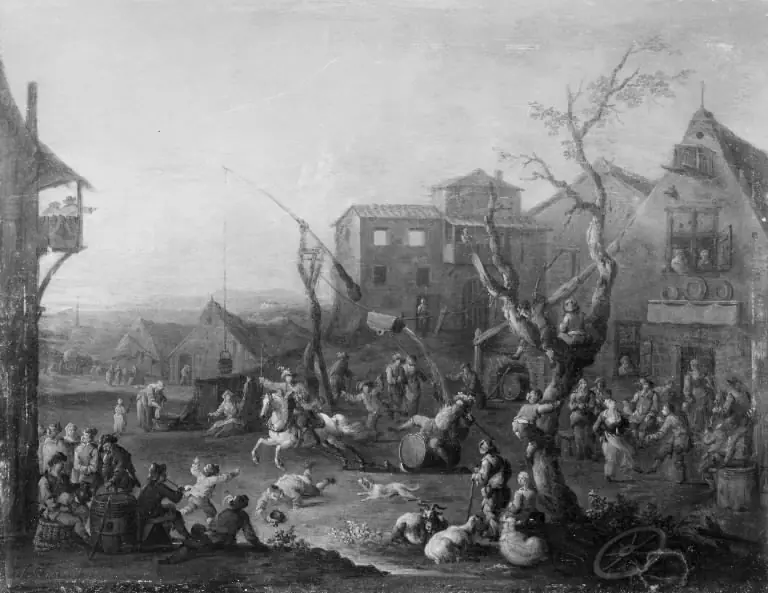 Landscape with Merrymakers outside an Inn
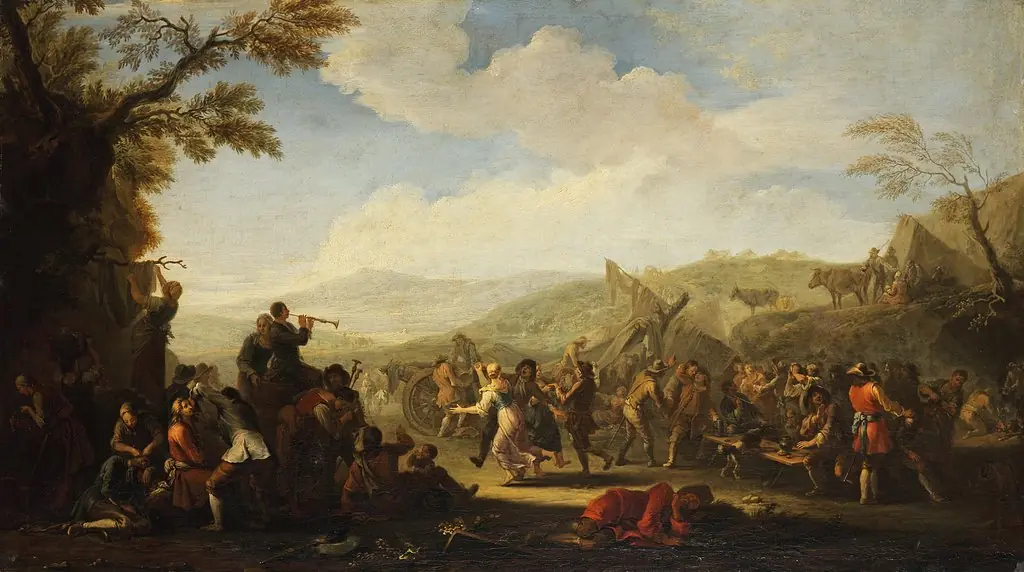 Amusement in the Field Camp
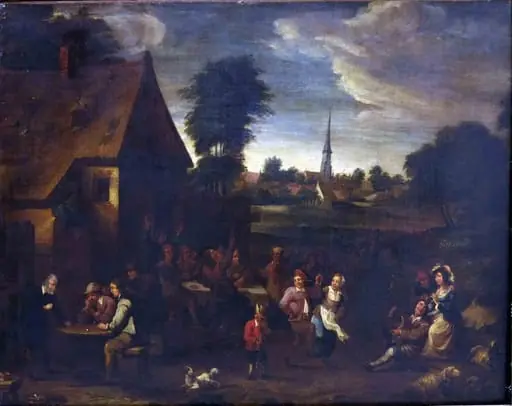 Chermeză
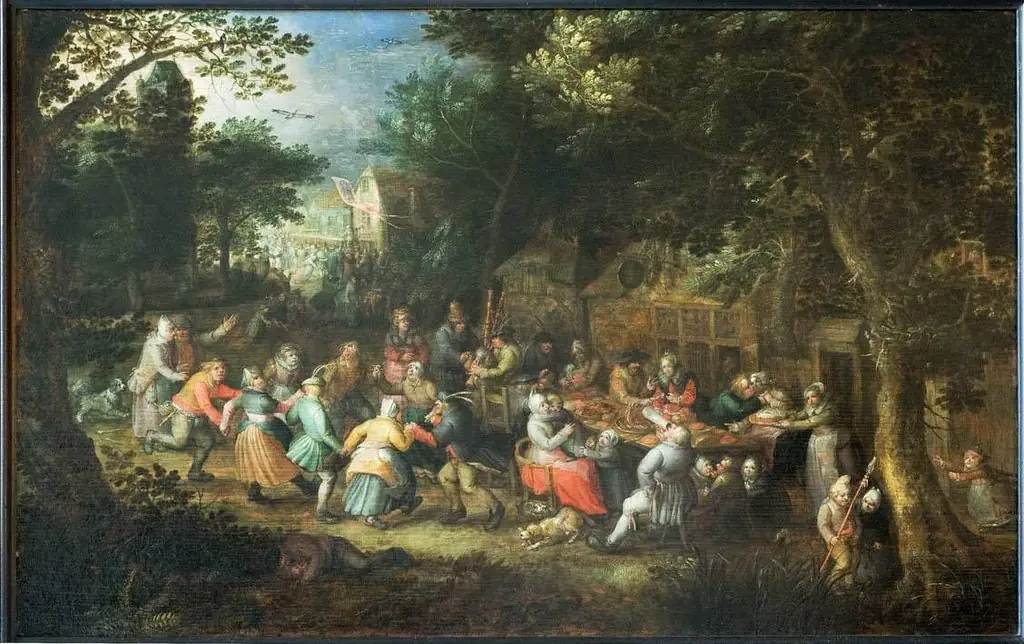 Eine Bauernkirmes
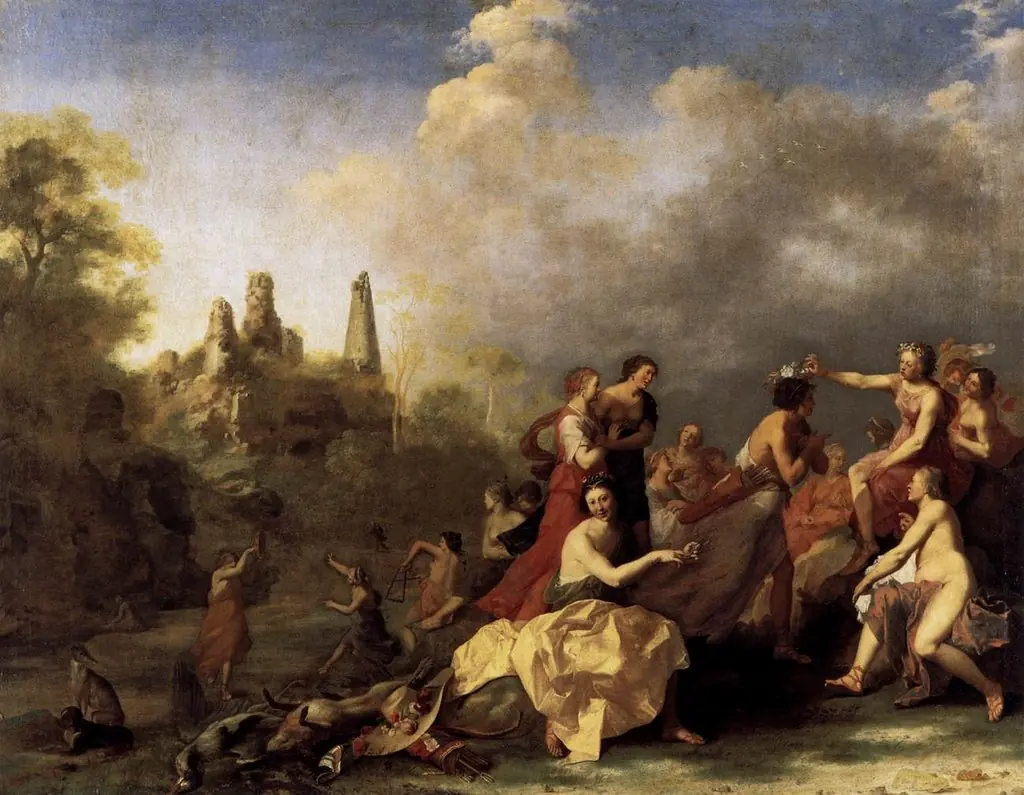 The coronation of Mirtillo after the kissing contest (Guarini, Il Pastor Fido)
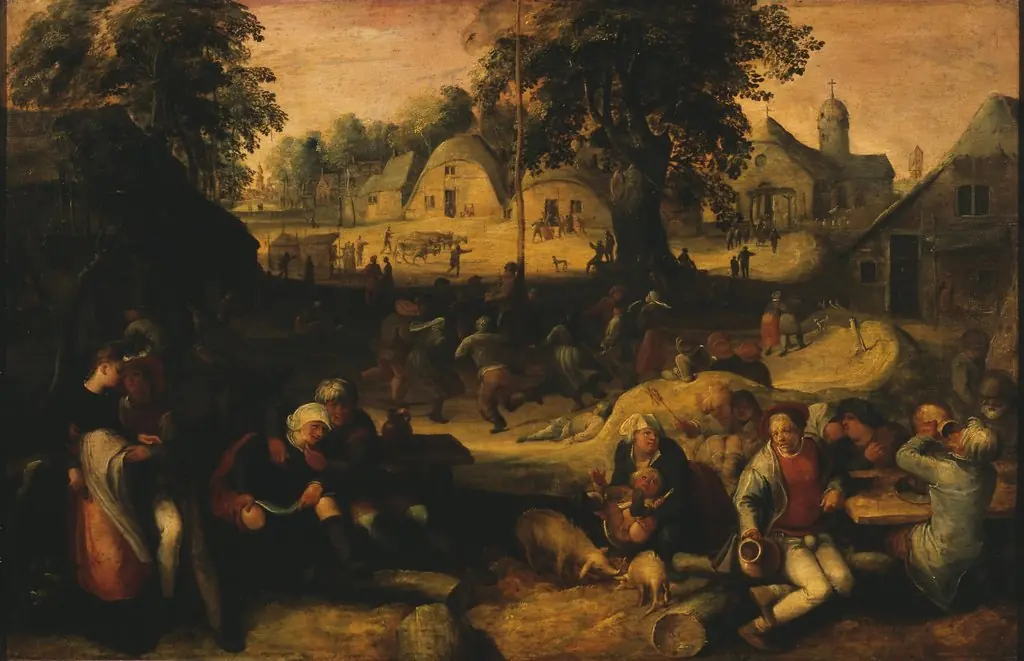 Rural Feast (Kermess)
 Postreise Erzherzog Ferdinands II. (1529-1595) nach Brüssel