Artwork
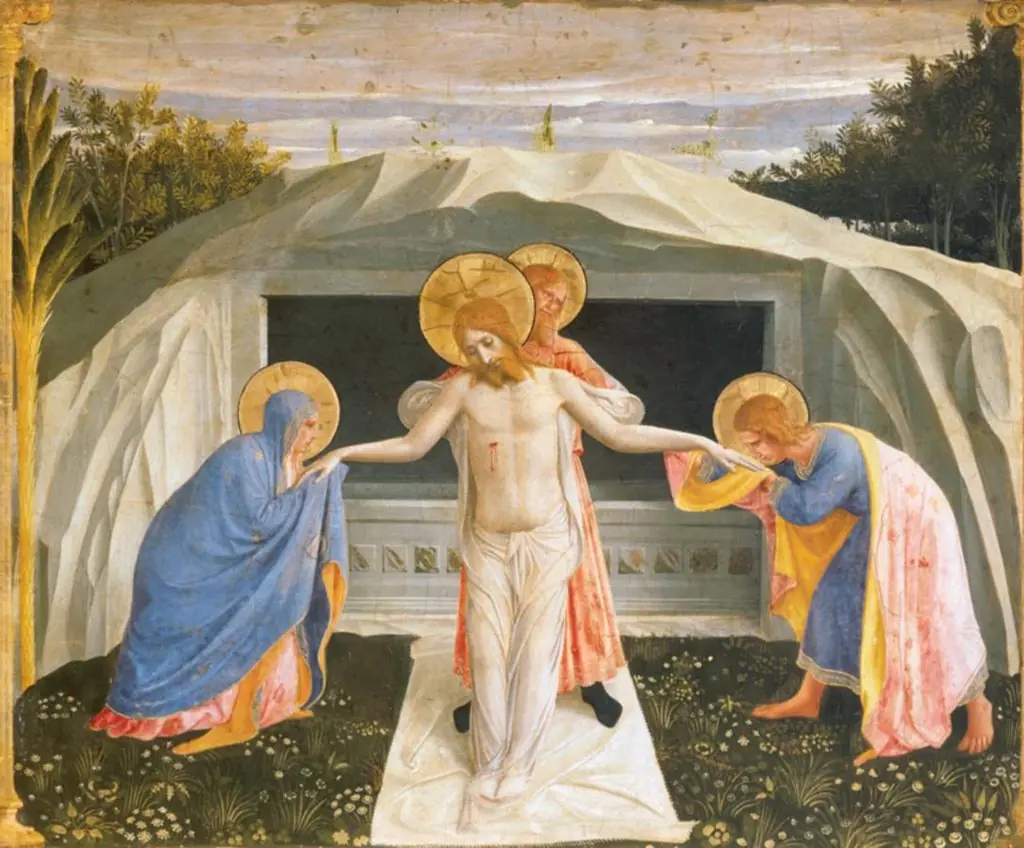
The Entombment of Christ
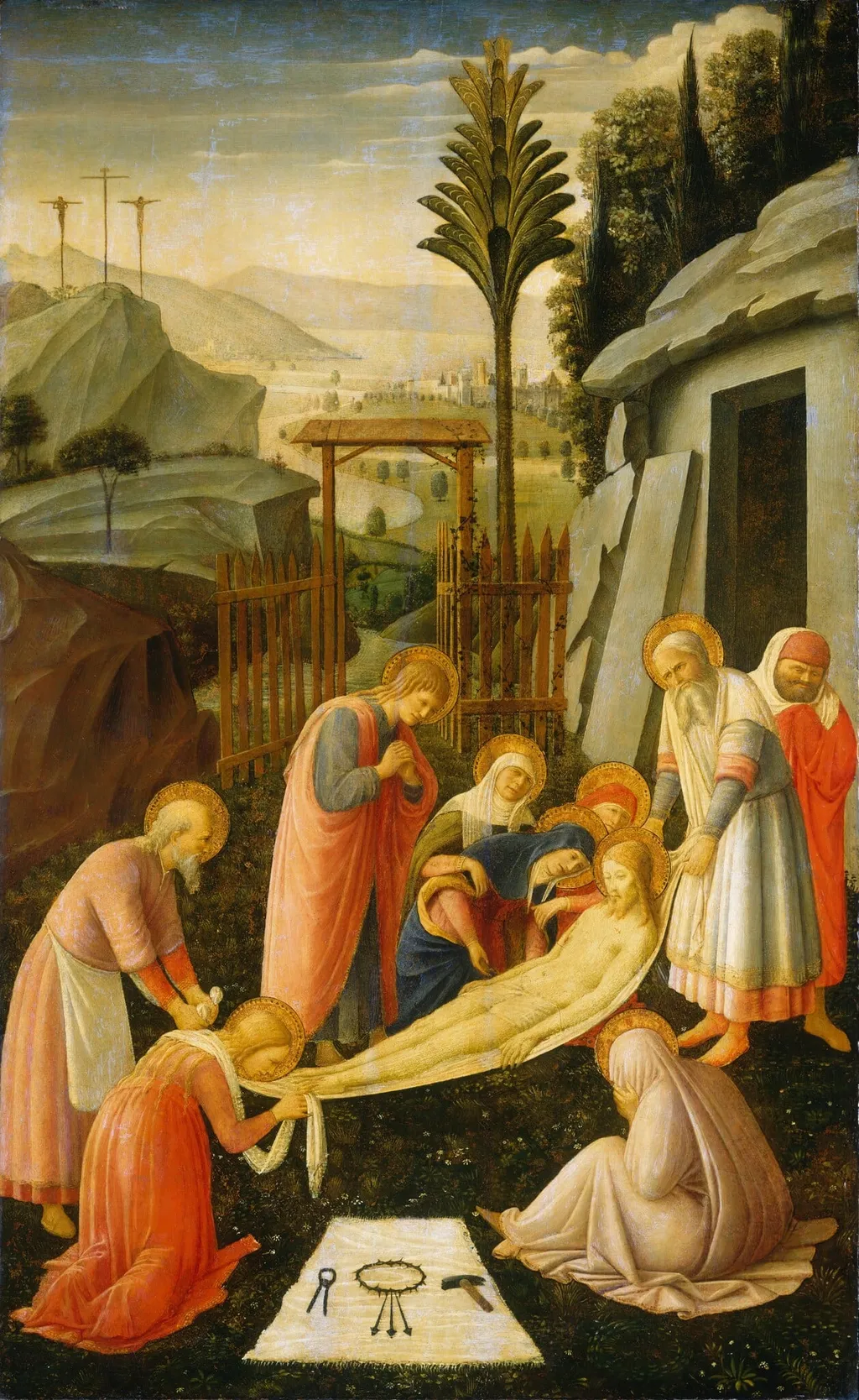
The Entombment of Christ is a tempera painting by the High Renaissance artist Fra Angelico. It dates from 1450 and is held in the collection of the National Gallery of Art.
About this work
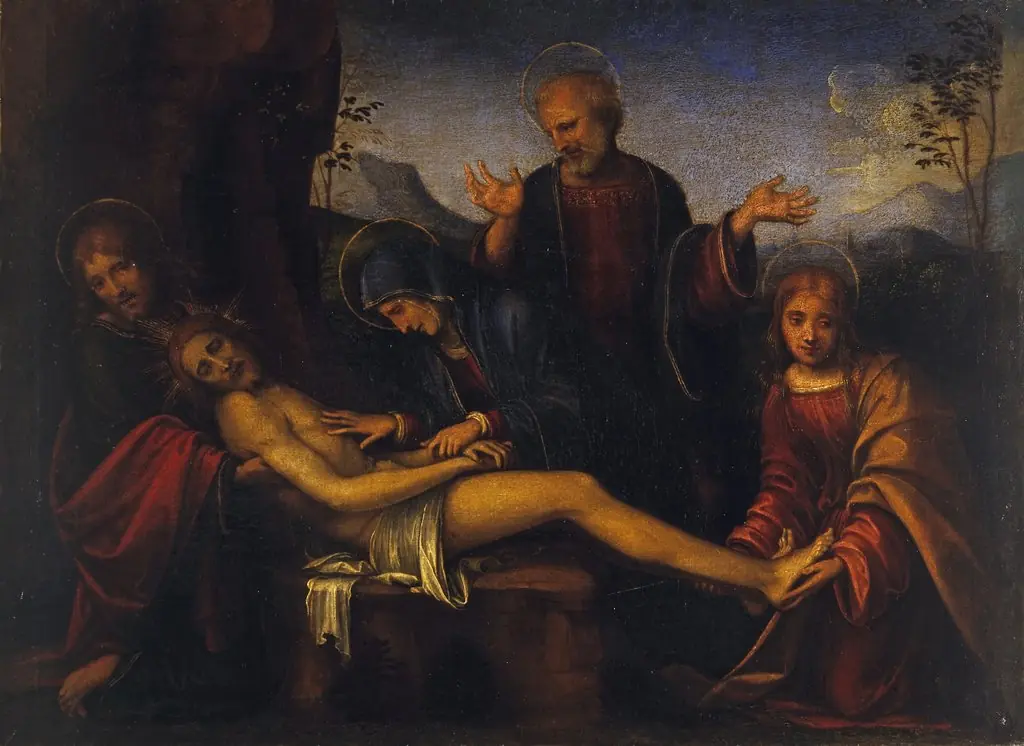
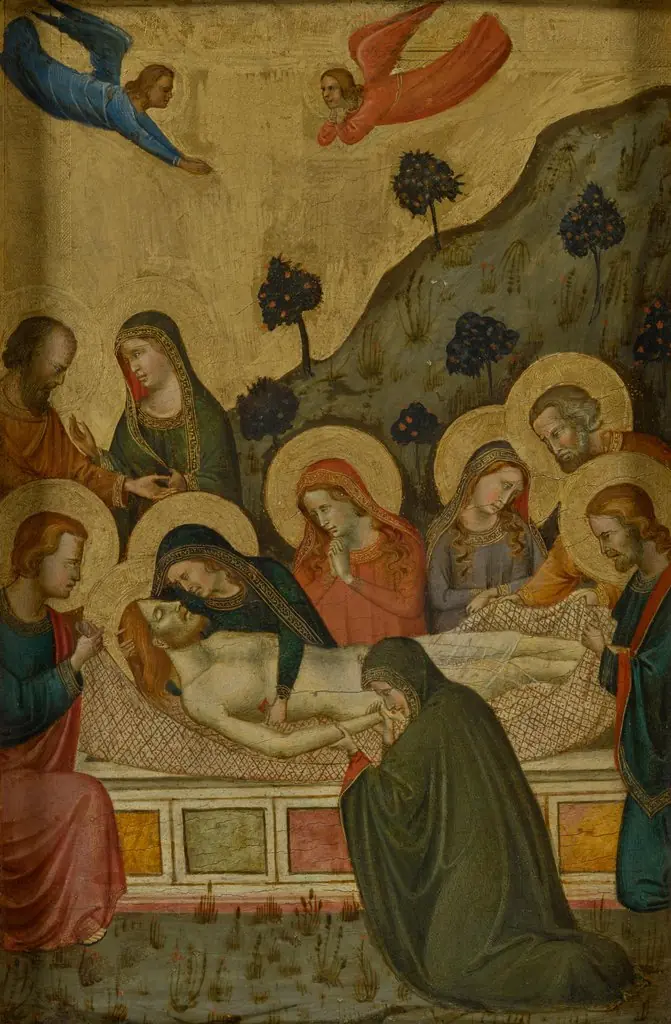
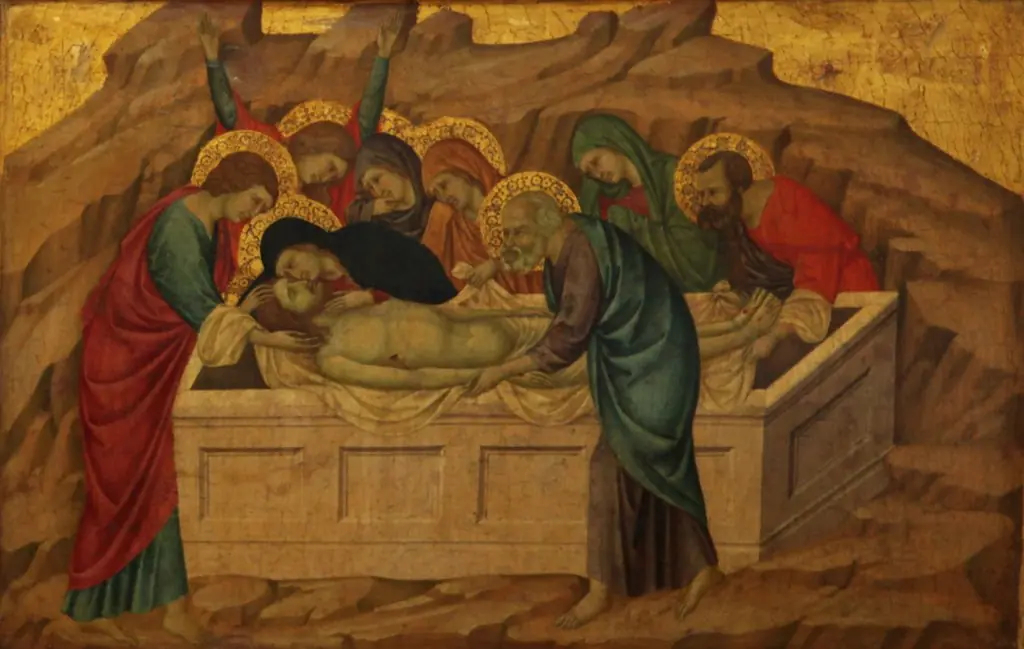
Christ's body is lowered into a stone tomb, shadows across his pale skin, as Mary and John the Evangelist kneel and a few men wrap his arms in cloth. Fra Angelico painted it around 1450 in tempera, egg yolk mixed with pigment, colors that stay bright centuries later.
Subject & Meaning
Fra Angelico’s The Entombment of Christ (1450) depicts the moment Christ’s body is laid to rest by grieving followers, a central scene in Christian iconography.
Fra Angelico’s The Entombment of Christ (1450) depicts the moment Christ’s body is laid to rest by grieving followers, a central scene in Christian iconography. The composition centers on the lifeless Christ, carried by figures likely including Nicodemus, Joseph of Arimathea, and the Virgin Mary, whose sorrow embodies the Passion’s emotional weight. Symbolic elements, such as Christ’s pale, emaciated form, underscore his sacrifice, while the rocky tomb alludes to Golgotha’s sacred geography.
The work’s restrained palette and serene expressions reflect Fra Angelico’s fusion of human grief with divine transcendence, conveying redemption through Christ’s death. As a devotional image, it invites contemplation of salvation and the promise of resurrection.
Technique & Style
Created around 1450, The Entombment of Christ is executed in tempera on a poplar panel support. The work measures 88.9 cm in height and 54.9 cm in width, adhering to the material conventions of the Italian Renaissance. As a religious painting by Fra Angelico, the artist applied tempera pigments to the wooden surface to depict the scene of Christ's burial with saints.
The physical support consists of a single poplar board, a common choice for panel paintings of this period in Florence. The piece remains in the collection of the National Gallery of Art, where its dimensions and medium are documented as tempera on poplar. No specific details regarding surface handling, current condition, or stylistic brushwork beyond the general classification are provided in the available records.
History & Provenance
Dated to 1450, this tempera on poplar panel by Fra Angelico possibly originated in the collection of the Medici family in Florence by 1492. An inventory of Lorenzo de' Medici's chamber describes a small panel depicting the dead Christ carried to the sepulchre by saints, attributed to Fra Giovanni, which scholars associate with this work due to the subject's rarity. The painting later entered the collections of Stefano Bardini and Professor Luigi Grassi in Florence.
In January 1923, the Duveen Brothers purchased the piece, subsequently selling it to Henry Goldman of New York by 1924. After reacquiring the work, Duveen sold it to the Samuel H. Kress Foundation in March 1937. The foundation gifted the painting to the National Gallery of Art in 1939.
The painting is held by the National Gallery of Art in Washington, D.C., as part of the Samuel H. Kress Collection, where it is inventoried under accession number 1939.1.260. Its documented provenance traces from a possible early association with the Medici family in Florence by 1492, through the dealer Stefano Bardini and the scholar Luigi Grassi in Florence, before being purchased by Duveen Brothers in January 1923. Henry Goldman acquired it by 1924, and Duveen resold it in March 1937 to the Samuel H. Kress Foundation, which gifted it to the National Gallery of Art in 1939.
The Duveen Brothers Records further itemize the work as "ex Bardini" and document a commission paid to "Tolentino," while early identification with a Medici inventory entry describing a small panel of the dead Lord carried to the sepulchre by Fra Giovanni is supported by the rarity of the subject.
Overview
Created by the Italian Dominican friar and painter Fra Angelico around 1450, The Entombment of Christ is a tempera painting on a poplar panel. This work exemplifies the early Florentine Renaissance style, reflecting the artist's focus on religious narratives. Fra Angelico, a figure known posthumously by his monastic name, dedicated his artistic practice primarily to sacred themes, producing works that often conveyed profound spiritual emotion.
Context
As a Dominican friar, Fra Angelico's artistic output was deeply intertwined with his spiritual life, focusing almost exclusively on religious narratives. His work flourished within the vibrant artistic environment of the early Florentine Renaissance. Notably, he received significant patronage from influential figures like Cosimo de’ Medici, who commissioned extensive fresco cycles for the Dominican convent of San Marco in Florence, solidifying his reputation.
Own this work as a print
Artist & collection

Artist
Fra Giovanni da Fiesole (born Guido di Pietro; c. 1395 – 18 February 1455), known posthumously as Fra Angelico ( FRAH an-JEL-ik-oh, Italian: ), was an Italian Dominican friar and painter active during the early…