Artwork
Madonna and Child
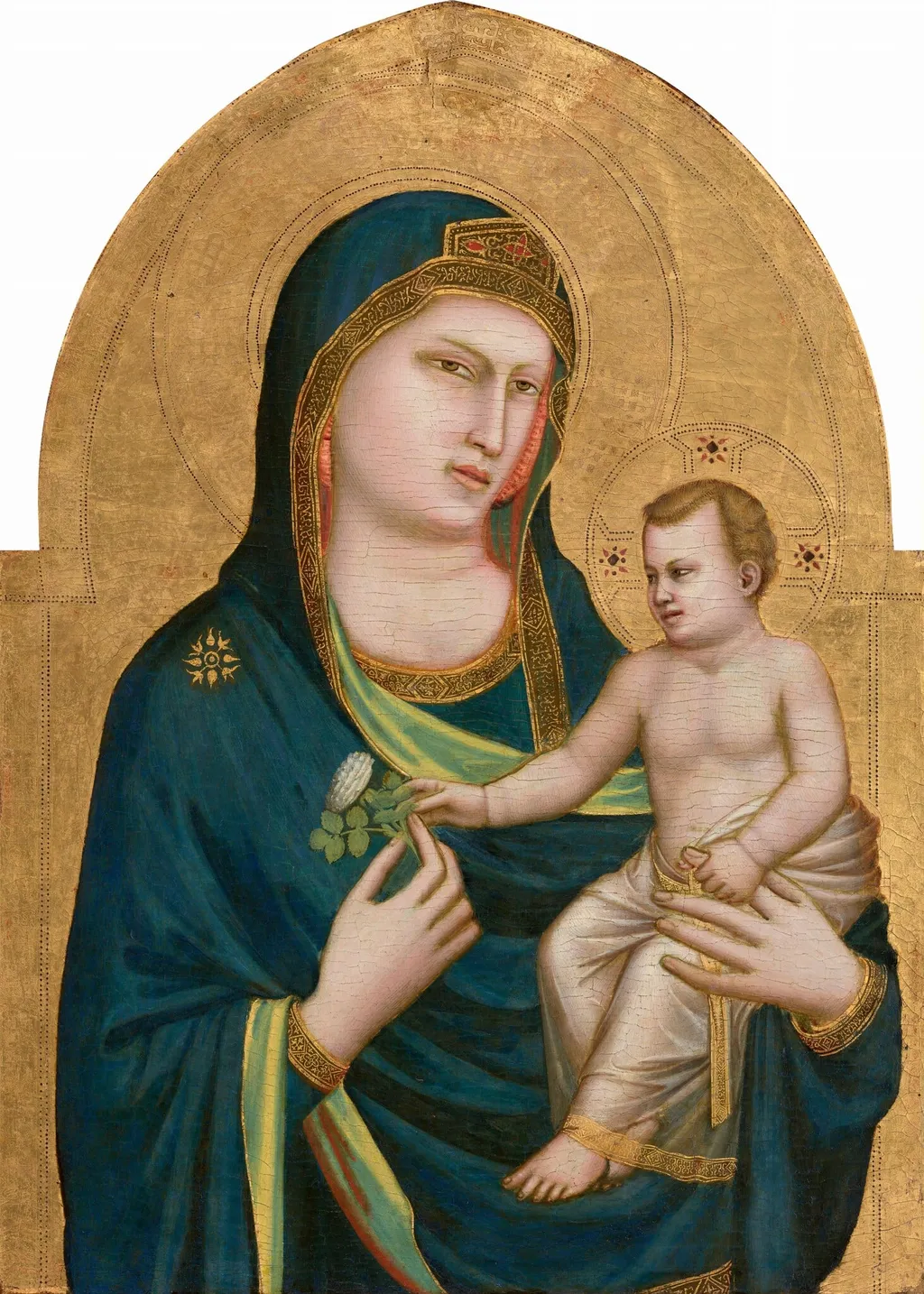
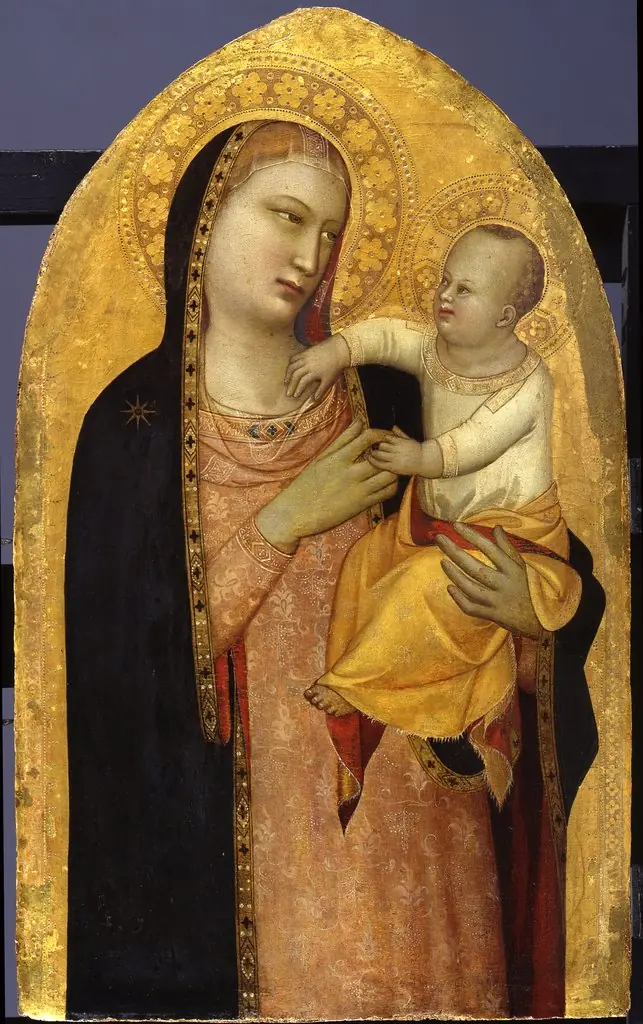
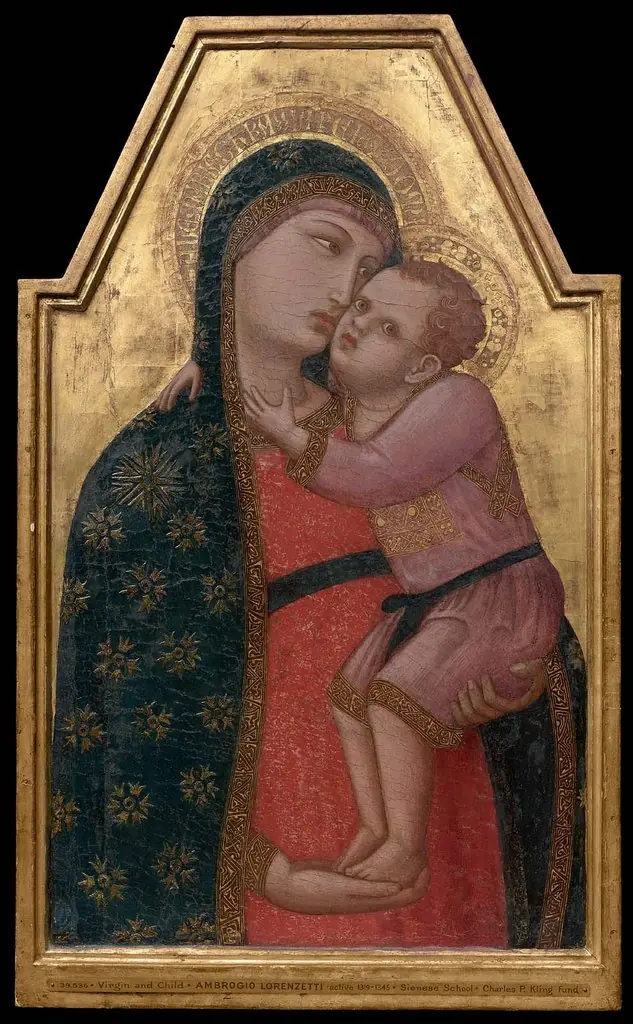
Madonna and Child is a tempera painting by the Proto Renaissance artist Giotto. It dates from 1312 and is held in the collection of the National Gallery of Art.
About this work
Against a gold ground punched with freehand halos, the Virgin holds a white rose while the Christ child grasps her forefinger, a gesture at once playful and symbolic. Giotto painted this panel, known as the Goldman Madonna, around 1310 to 1315 as the centerpiece of a now-dispersed Florentine polyptych. Its tempera surface shows his shift from Byzantine solemnity toward human immediacy.
Subject & Meaning
Symbolically, Mary holds a white rose without thorns, representing innocence and the Immaculate Conception (sinlessness through the absence of thorns).
The painting depicts the Virgin Mary and the Christ Child half-length against a gold ground, following Byzantine icon tradition. Giotto modernized the subject with volumetric modeling and sinuous, realistic poses. Symbolically, Mary holds a white rose without thorns, representing innocence and the Immaculate Conception (sinlessness through the absence of thorns).
The Child reaches for the rose while grasping Mary’s finger with his left hand, a tender gesture that emphasizes their human bond. Mary’s elongated eyes echo the elegance of Simone Martini’s Madonnas. Three star-shaped crosses on the border of Mary’s robe form a diadem, referencing Byzantine hieratic formulas. The work blends traditional iconography with a new humanism, focusing on the intimate mother–child relationship.
History & Provenance
The painting was likely commissioned for a Florentine church, possibly Santa Croce or Ognissanti. Proposing it was originally part of a polyptych, Roberto Longhi hypothesized in 1930 that it belonged to a chapel in Santa Croce. Its early history is undocumented until it appeared in the collection of Parisian actor Édouard de Max.
In 1917 De Max sold it to Duveen Brothers; by 1920 it was owned by Henry Goldman of New York. Goldman sold it back to Duveen on 1 February 1937, and in 1939 the Samuel H. Kress Foundation acquired it. That same year, Kress gifted the work to the National Gallery of Art. Generally dated to about 1325–1330, the painting falls within Giotto's late period.
Context
Giotto's Madonna and Child occupies a notable position as the only work outside Europe to receive unanimous attribution to the artist. Its critical reception has involved significant scholarly debate: Roberto Longhi (1930) first proposed it belonged to a multi-panel polyptych, a hypothesis later refined by technical analyses, which excluded some associated panels. Early connoisseur Bernard Berenson initially ascribed it to Bernardo Daddi, highlighting attributional challenges.
Stylistically, the panel dates to Giotto's late phase, near his Bardi Chapel frescoes, blending Gothic elegance with the volumetric modeling and naturalistic gesture that define his Proto-Renaissance innovations. The work thus exemplifies Giotto's pivotal role in mediating Byzantine tradition and emerging naturalism, securing its place in art history as a touchstone for early Italian Renaissance painting.
Overview
The "Madonna and Child," also known as the Goldman Madonna, is a tempera painting on poplar panel by Giotto, created between 1310 and 1315. This vertical panel likely served as the central element of a larger polyptych for a Florentine church. It depicts the Virgin Mary holding a white rose, while the infant Christ reaches for the blossom and gently grasps her finger.
This work exemplifies Giotto's evolving style, moving towards greater naturalism and emotional depth, a departure from earlier, more rigid Italo-Byzantine portrayals.
Technique & Style
Executed in tempera on a poplar panel with a gold leaf ground, the painting measures approximately 85 by 62 centimeters. Technical analysis has revealed a fabric layer beneath the gesso, freehand incised designs on the halos and border, and underdrawing adjustments. Infrared reflectography shows Giotto initially drew the child's face differently, later tilting it upward to enhance the sense of interaction.
This period, known as his "Peruzzi phase," marks a move beyond the serene classicism of his earlier work, emphasizing naturalistic mass, gesture, and emotion.
Own this work as a print
Artist & collection


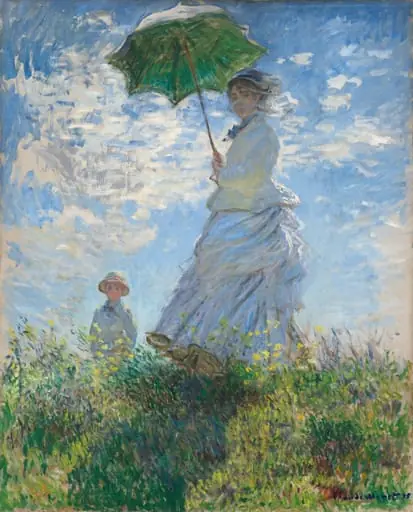 Woman with a Parasol - Madame Monet and Her Son
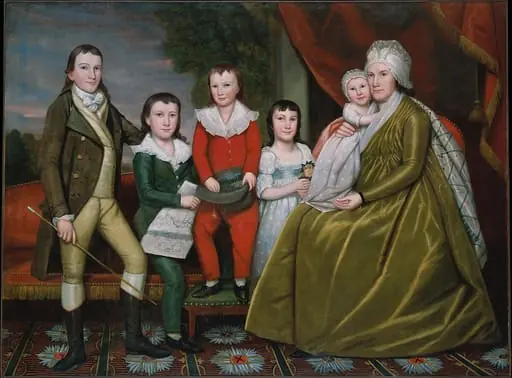 Mrs. Noah Smith and Her Children
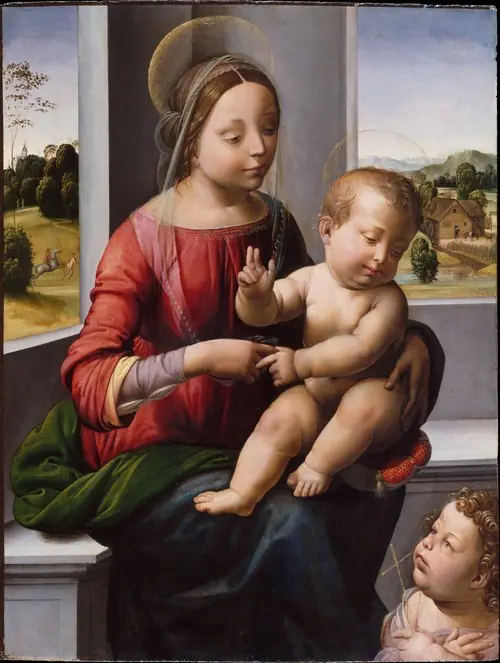 Madonna and Child with the Young Saint John the Baptist
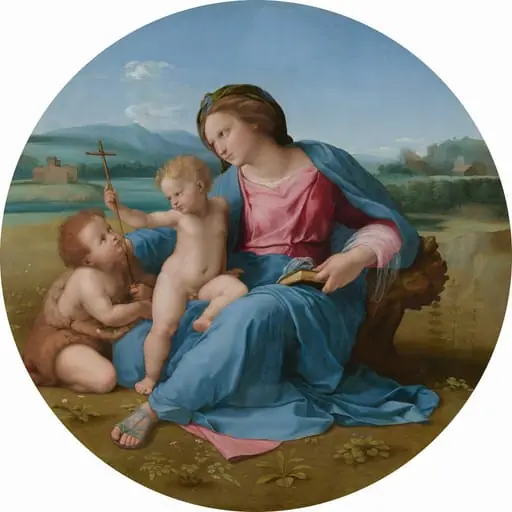 The Alba Madonna
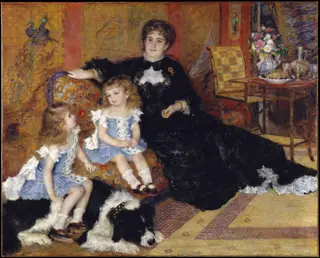 Madame Georges Charpentier and her Children
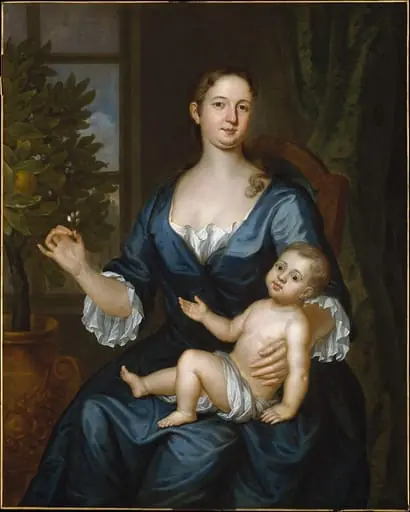 Mrs. Francis Brinley and Her Son Francis
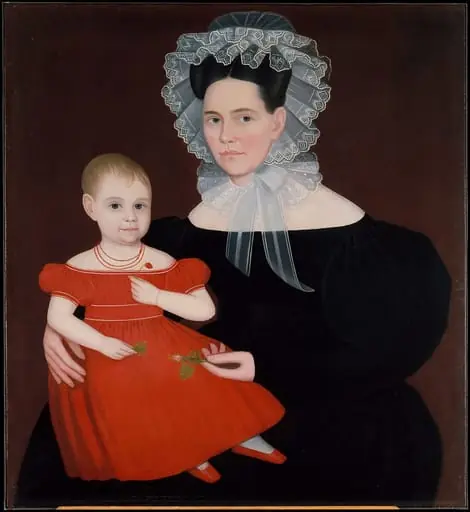 Mrs. Mayer and Daughter
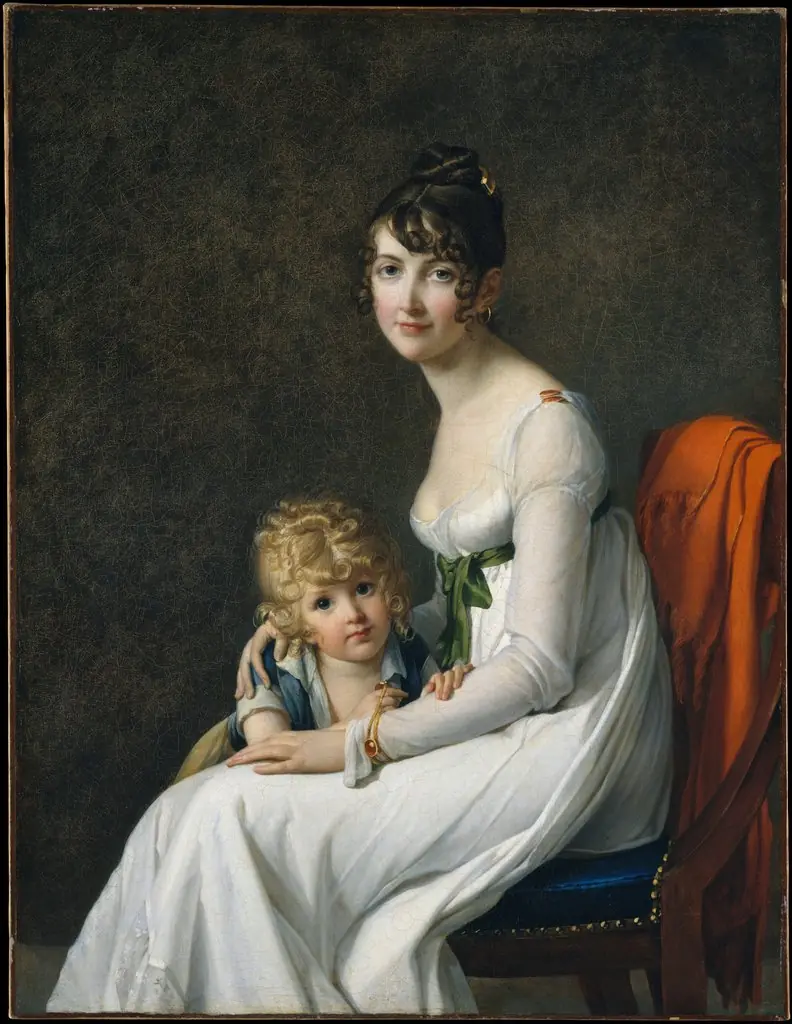 Madame Philippe Panon Desbassayns de Richemont (Jeanne Eglé Mourgue, 1778–1855) and Her Son, Eugène (1800–1859)