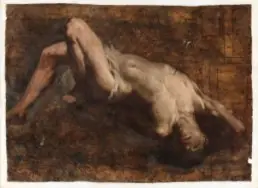
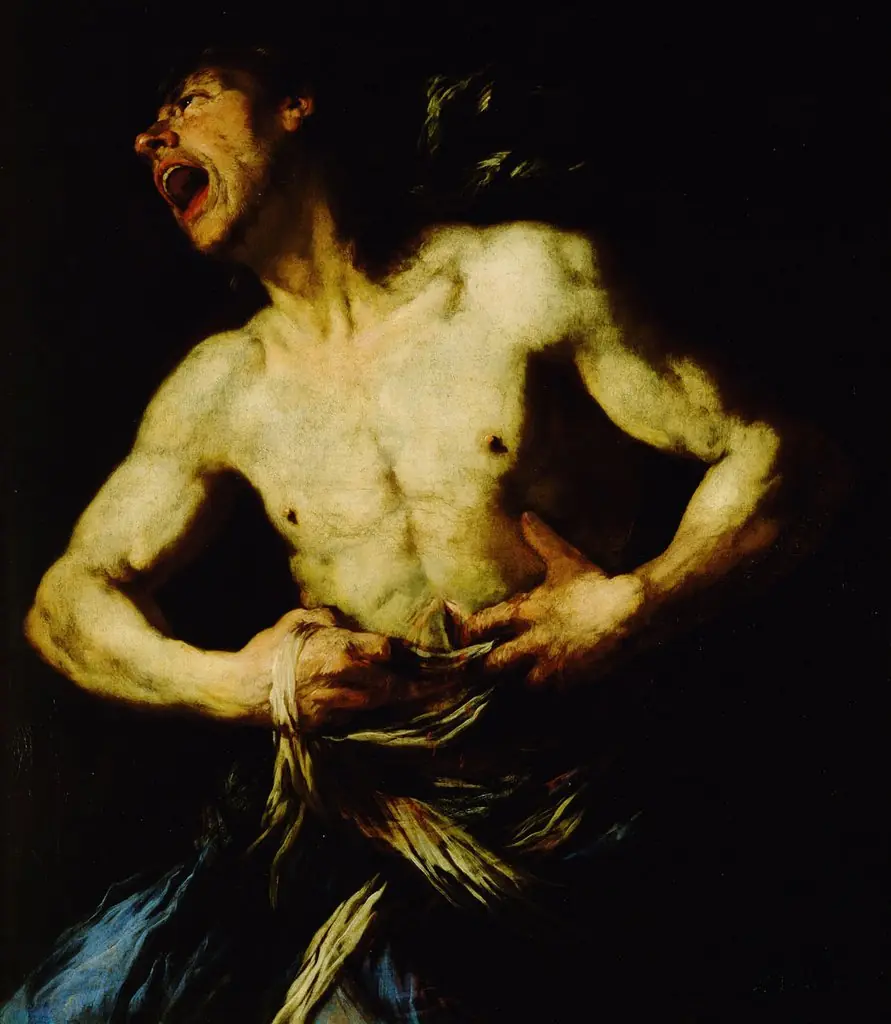
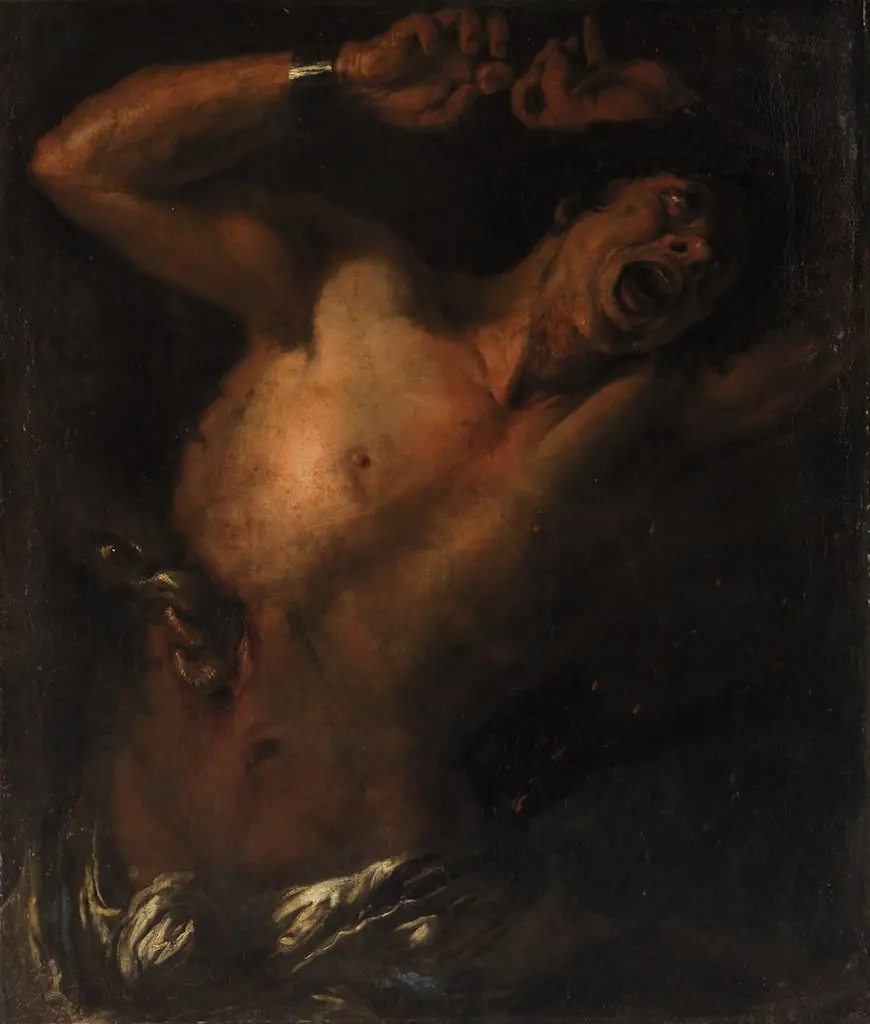
Artwork
Death of Cato of Utica
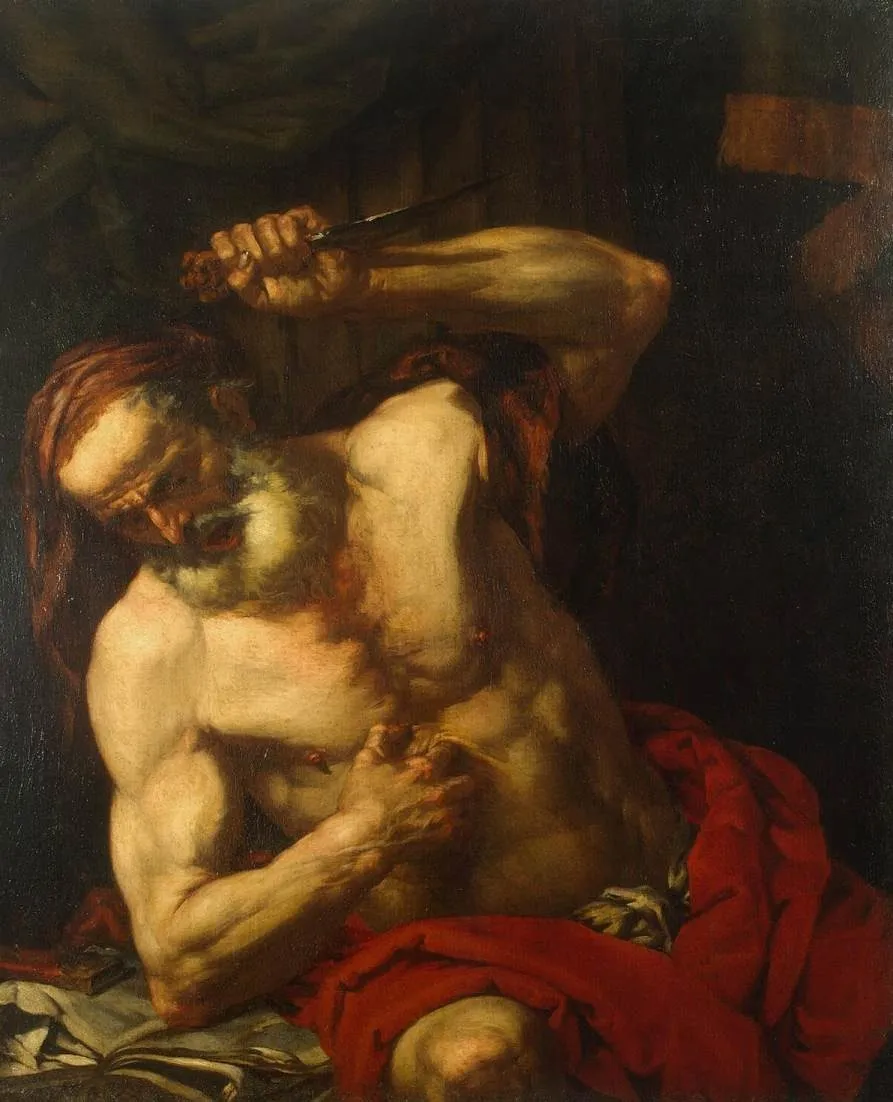
Death of Cato of Utica is an oil painting by the High Baroque Italian artist Giovan Battista Langetti. It dates from 1670 and is held in the collection of the Hermitage Museum.
About this work
Overview
The painting is held in the collection of the Hermitage Museum in Saint Petersburg, where it is identified by the title Death of Cato of Utica.
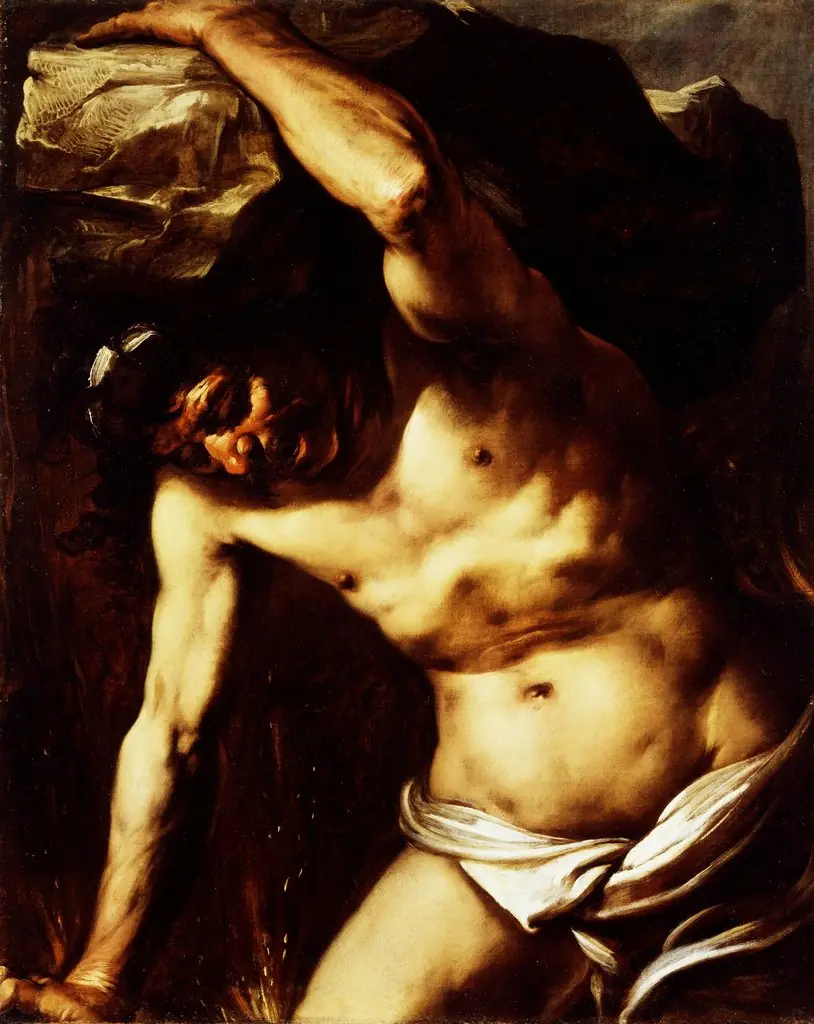
The Death of Cato of Utica is an oil on canvas painting by the Italian Baroque artist Giovan Battista Langetti, dated to 1670. Measuring 117 by 106 centimeters, the work depicts the suicide of Cato the Younger, the Roman statesman and Stoic philosopher who chose death over submission to Julius Caesar. The painting is held in the collection of the Hermitage Museum in Saint Petersburg, where it is identified by the title Death of Cato of Utica. As a dramatic history painting from the Venetian Baroque, it exemplifies Langetti's engagement with classical subjects rendered through intense chiaroscuro and muscular physicality.
Subject & Meaning
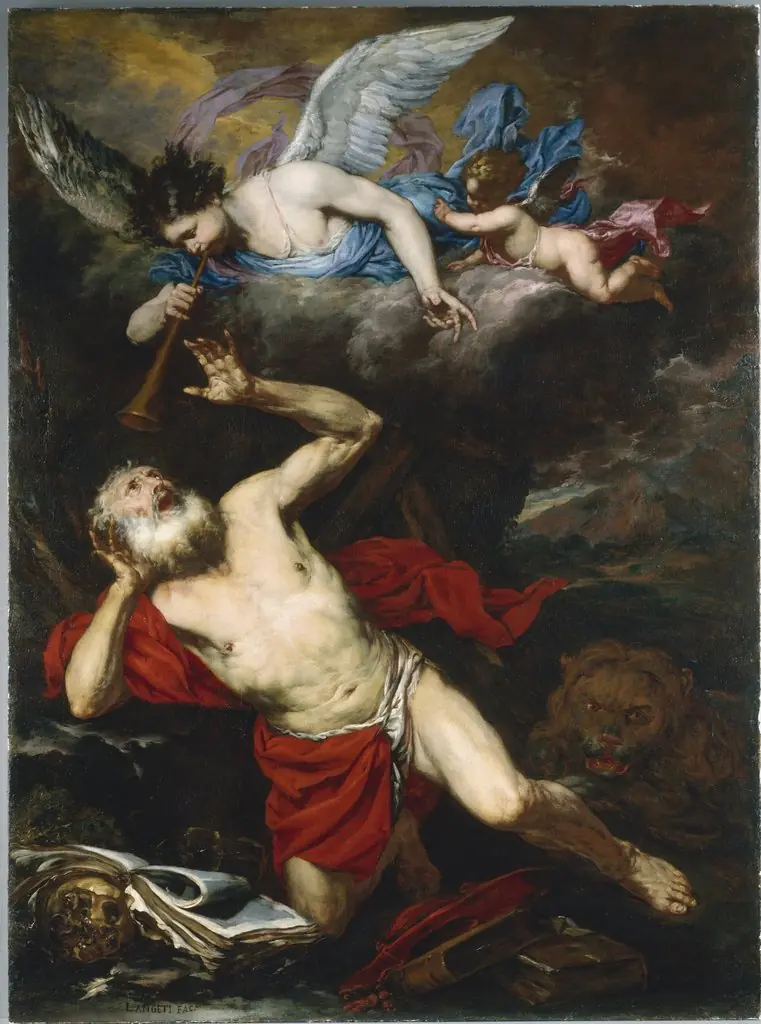
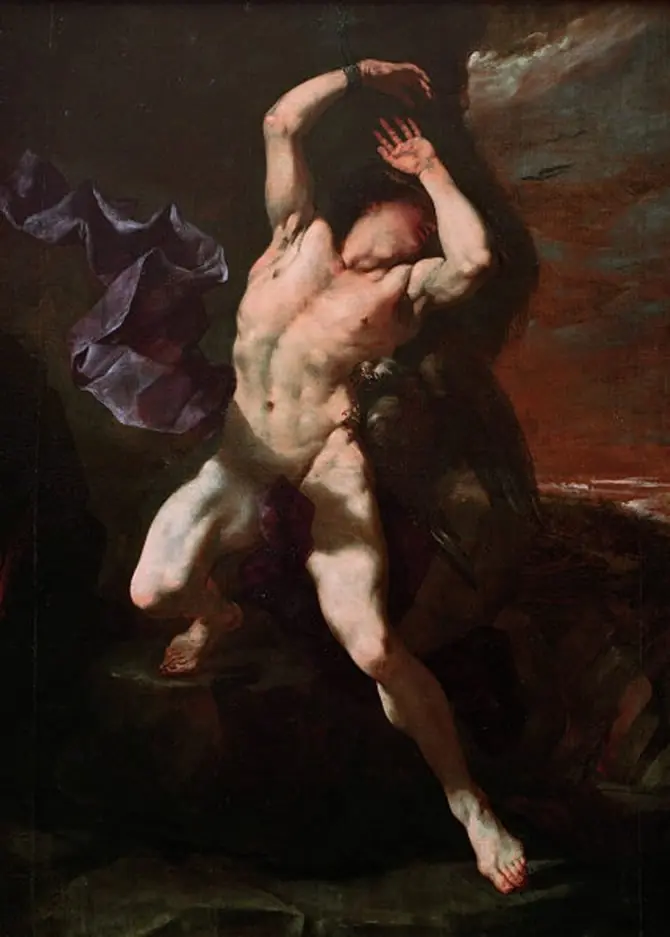
The painting represents the moment of Cato the Younger's self-inflicted death at Utica in 46 BCE, an event that became a powerful emblem of political integrity and Stoic resolve in early modern European art. Cato is shown seated, bare-chested, with a red drapery across his lower body, his right arm raising a blade above his head in the act of striking. His head tilts downward, eyes cast down in contemplation or acceptance. An open book lies near his left elbow, accompanied by a small closed box, attributes that signal his philosophical learning and perhaps the instruments of his final deliberation. The composition isolates the figure against a dark, indistinct background, focusing attention on the psychological and physical tension of the suicidal act. The vivid red cloth against deep browns and blacks creates a stark chromatic drama, while the downward gaze and compressed posture suggest introspection rather than theatrical heroism. The subject carried particular resonance in seventeenth-century Venice, where republican virtue and resistance to tyranny held urgent contemporary relevance.
Technique & Style
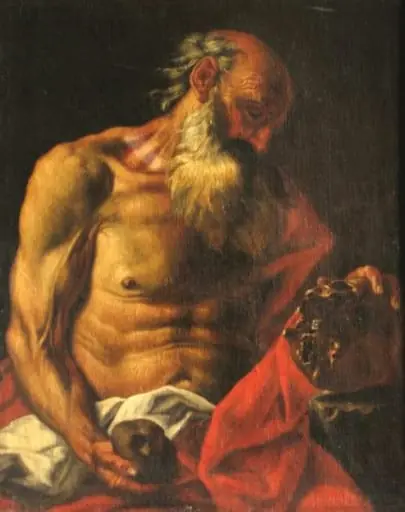
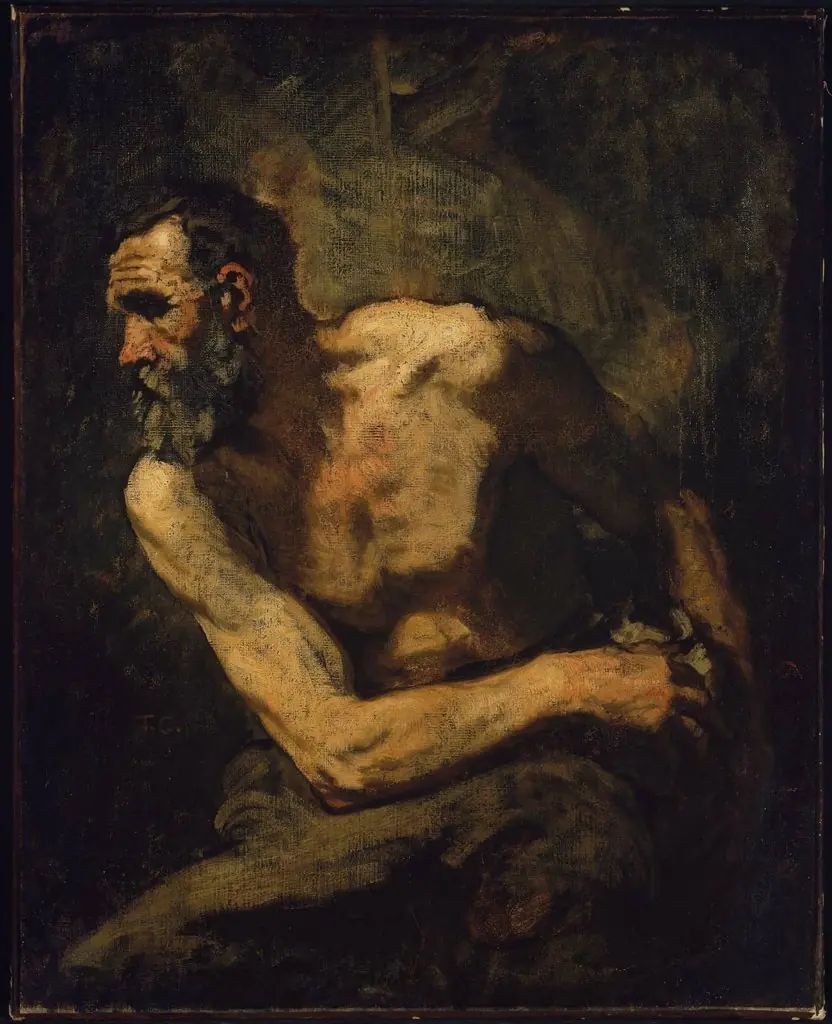
Langetti executed the work in oil on canvas, employing the textured, painterly brushwork characteristic of the Venetian Baroque. Light falls dramatically from the upper left, illuminating the torso and arms while plunging much of the scene into shadow, a technique that reveals the influence of tenebrist masters. The musculature is rendered with visible, tactile strokes that emphasize physical substance and strain. The figure occupies most of the frame, positioned slightly off-center to create dynamic tension within the confined pictorial space. Warm flesh tones emerge from the enveloping darkness, with the red drapery providing the sole chromatic accent against the dominant palette of deep browns and blacks. The surface shows the characteristic texture of oil paint on canvas, with brushwork that is simultaneously descriptive and expressive. This handling aligns Langetti with the legacy of Titian and the more immediate influence of Giovanni Battista Piazzetta, though the specific dramatic lighting also suggests awareness of Neapolitan and Roman tenebrist practice.
History & Provenance
The painting was created in Italy in 1670, during the mature phase of Langetti's career. Its provenance before acquisition by the Hermitage Museum remains undocumented in the available sources. The work is now held in the Hermitage Museum in Saint Petersburg, Russia, where it is catalogued under the title Death of Cato of Utica. The accession number and specific circumstances of the museum's acquisition have not been established from the sources consulted. The painting has been reproduced photographically by the Web Gallery of Art and is distributed commercially through Bridgeman Images, indicating its established place in the canon of seventeenth-century Italian painting accessible to scholars and the general public.
Context
Giovan Battista Langetti (1635-1676) was a Genoese painter who worked primarily in Venice, where he became known for his history paintings and portraits executed in a dramatic, tenebrist style. His career unfolded during a period of vigorous artistic production in Venice, where painters negotiated between the legacy of the Venetian coloristic tradition and the more austere, dramatically lit approaches associated with Bolognese and Roman Baroque. Langetti's choice of Cato as a subject places him within a broader European tradition of Stoic themes that gained particular currency among republican and aristocratic patrons in the seventeenth century. The Hermitage's holding of this work reflects the museum's extensive collection of Italian Baroque painting, assembled primarily through the acquisitions of Catherine the Great and later imperial collectors. Critical reception of Langetti has historically been overshadowed by his more famous contemporaries, though scholarly attention to Venetian Baroque painting has increasingly recognized his distinctive contribution to the genre of history painting.
Legacy
The Death of Cato of Utica continues to circulate as a significant example of Langetti's oeuvre through its inclusion in major image databases and commercial reproduction services. Its presence in the Hermitage ensures sustained visibility among scholars of seventeenth-century Italian art. The painting's subject, the noble suicide of Cato, retained cultural currency well beyond Langetti's era, informing subsequent treatments across European art and literature. The work's afterlife in the digital age, evidenced by its distribution through Wikimedia Commons and commercial print services, demonstrates the enduring accessibility of canonical Baroque imagery. While Langetti himself remains a secondary figure in most surveys of Italian Baroque art, this canvas represents a compelling instance of how Venetian painters of his generation engaged with classical history and Stoic philosophy through the visceral language of tenebrist painting.
Artist & collection
Artist
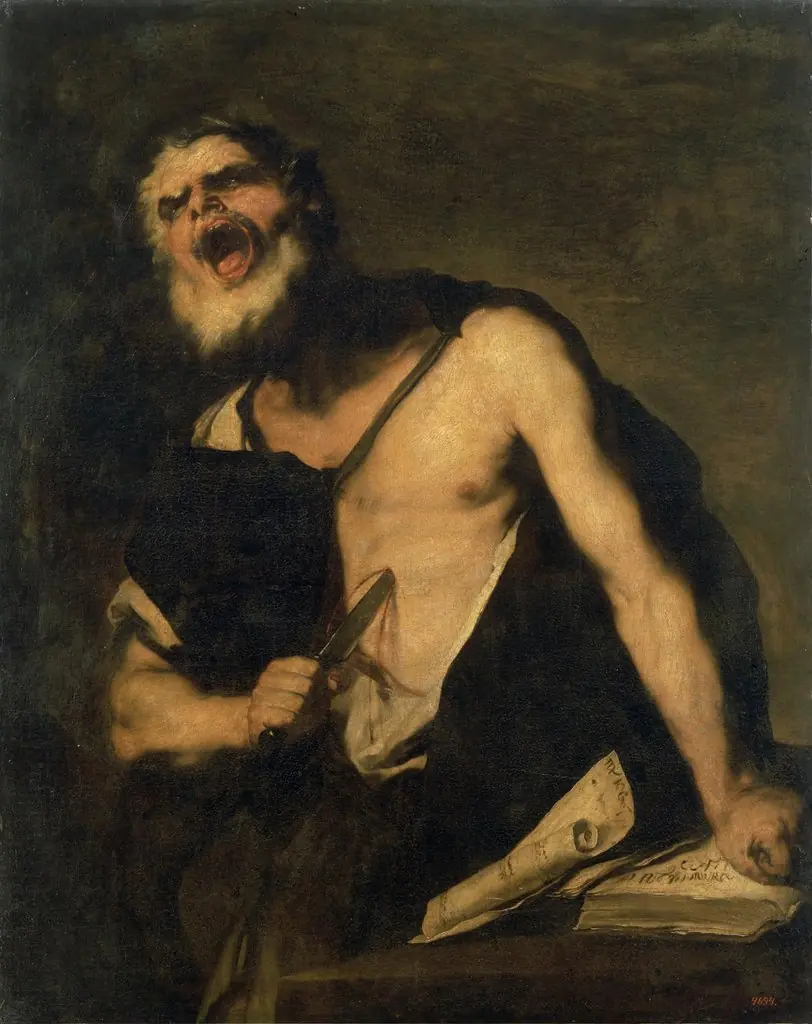
Giovanni Battista Langetti (1635 – 22 October 1676), also known as Giambattista Langetti, was an Italian late-Baroque painter. He was active in his native Genoa, then Rome, and finally for the longest period in Venice.