Artwork
Geometry
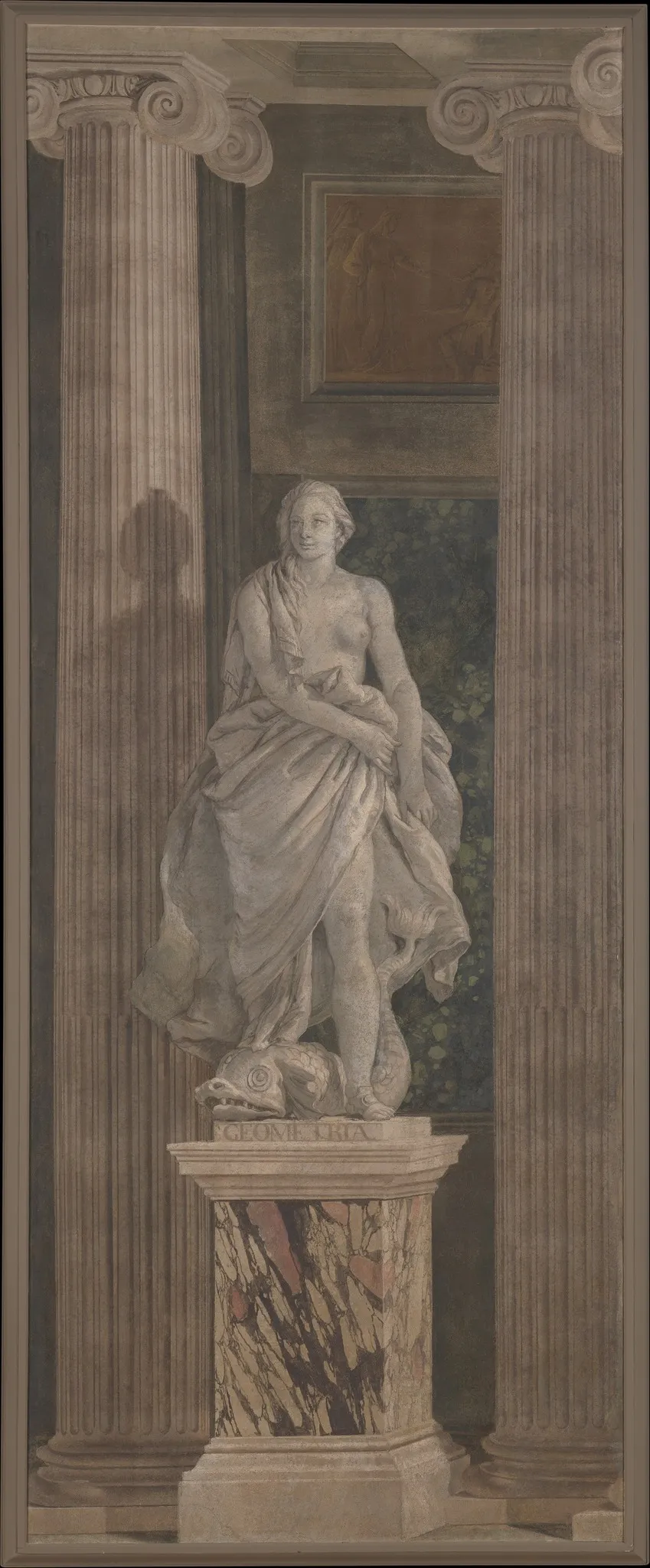
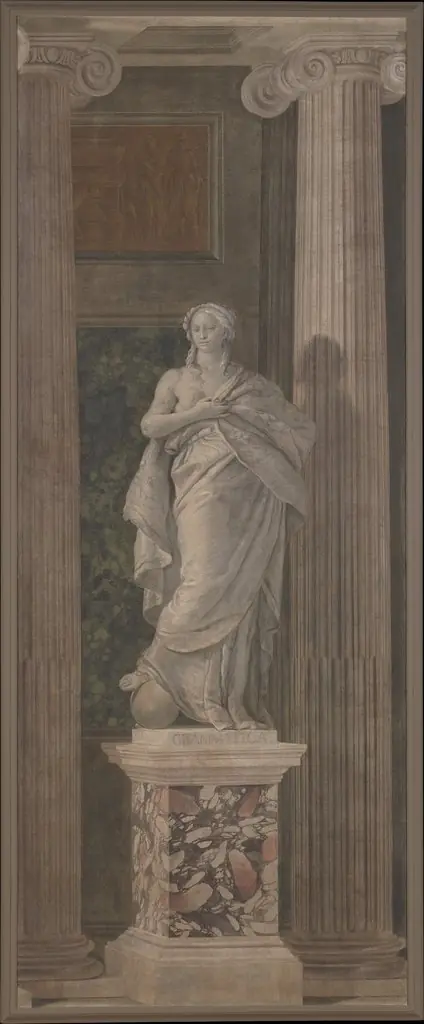
Geometry is an unspecified painting by the Rococo painting artist Giovanni Battista Tiepolo. It dates from 1760 and is held in the collection of the Metropolitan Museum of Art.
About this work
Subject & Meaning
Giovanni Battista Tiepolo's 1760 painting Geometry serves as an allegorical representation of the mathematical discipline.
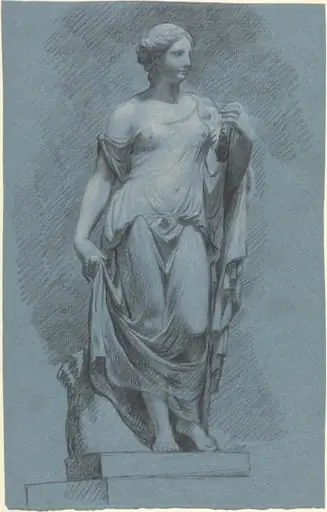
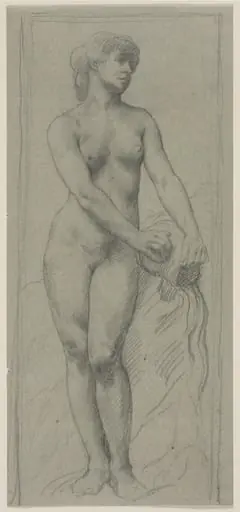
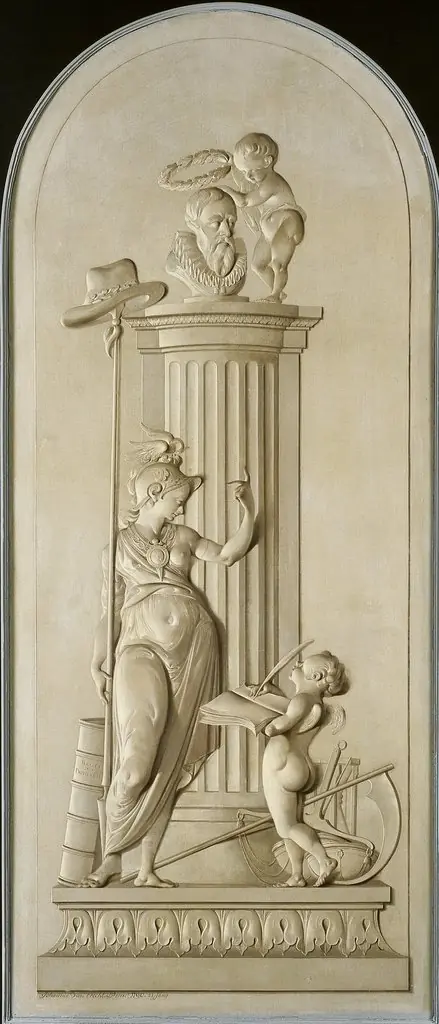
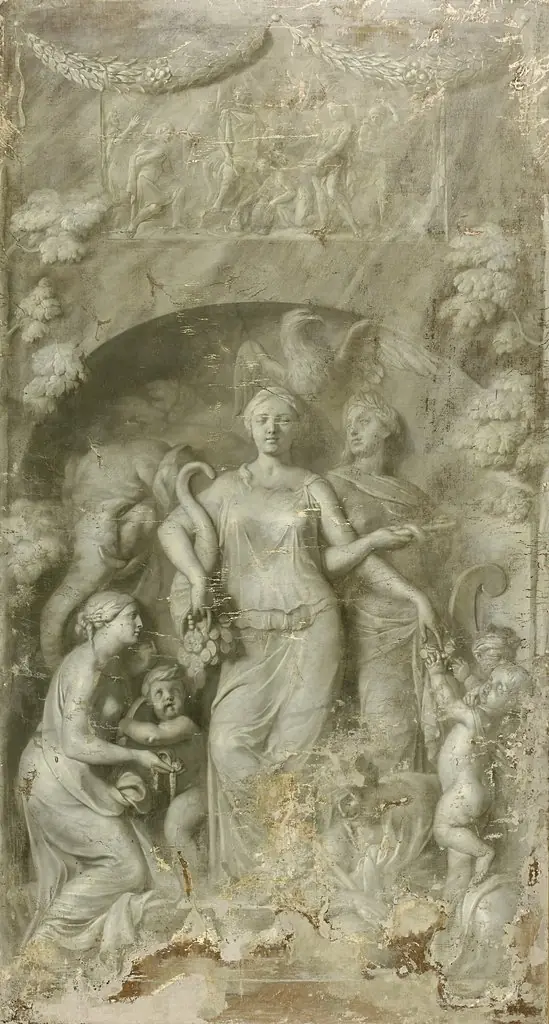
Giovanni Battista Tiepolo's 1760 painting Geometry serves as an allegorical representation of the mathematical discipline. The composition depicts a nude figure, likely personifying Geometry itself, accompanied by a sculpture that suggests the study of form and proportion, with a fish also included among the elements of the scene. Executed in the Rococo style, the work uses these visual components to embody the intellectual pursuit of geometry rather than illustrating a historical narrative.
The presence of the nude and the sculpture underscores the classical foundations of the subject matter, while the overall arrangement reflects the period's interest in personifying the abstract sciences.
Technique & Style
The work is an oil painting on canvas executed in 1760 by Giovanni Battista Tiepolo. The composition is characterized by a Rococo sensibility, employing loose, fluid brushwork to render the nude figure, the classical sculpture, and a fish. The support measures 370.8 cm in height by 147 cm in width, indicating a vertical format suited to the upward extension of the draped figure and the architectural backdrop.
The handling combines delicate modeling of flesh with broader, atmospheric passages to suggest depth and luminosity, typical of Tiepolo's late style.
History & Provenance
The painting titled Geometry was created by the Italian artist Giovanni Battista Tiepolo in 1760. Executed during the Rococo period, the work measures approximately 370.8 centimetres in height and 147 centimetres in width, and depicts allegorical elements including a nude figure, a sculpture, and a fish. It is held in the collection of the Metropolitan Museum of Art.
No specific details regarding an original commissioner or a chain of previous ownership prior to the museum's acquisition are provided in the available records, and no accession number or exhibition history is documented.
Overview
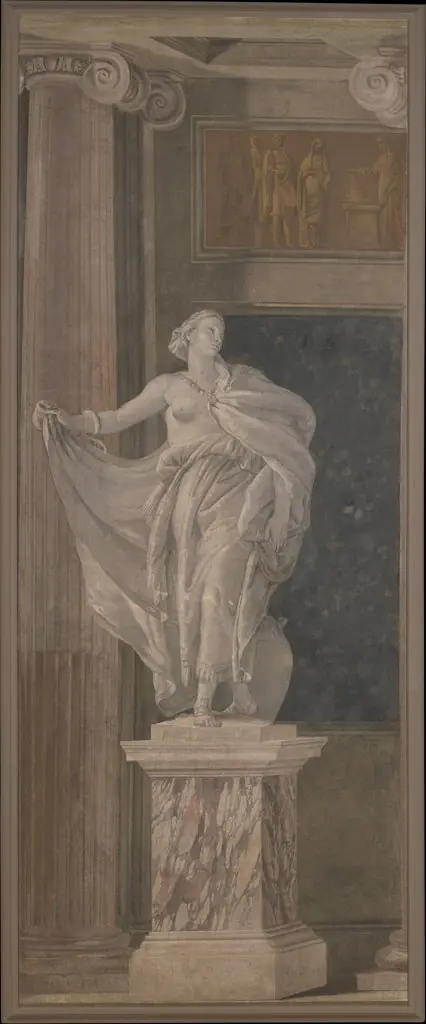
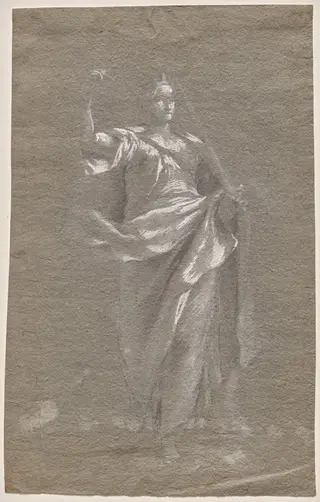
Giovanni Battista Tiepolo's painting, Geometry, created in 1760, is a significant example of Rococo artistry. This work, currently housed at The Metropolitan Museum of Art, presents a draped allegorical figure within an elaborate architectural setting. It showcases the artist's characteristic grand scale and theatricality, inviting viewers to contemplate its symbolic representations of knowledge and artistic skill through a blend of classical form and dynamic composition.
Context
Created during the height of the Rococo period, Geometry reflects the movement's emphasis on ornate detail, dynamic compositions, and often allegorical subjects. Tiepolo, a prominent artist of his time, frequently produced large-scale decorative works for aristocratic patrons. This painting illustrates the era's fascination with classical themes, reinterpreted with a more refined and decorative sensibility, distinguishing it from the preceding Baroque style's heavier drama.
Artist & collection

Artist
Giovanni Battista Tiepolo, also known as Giambattista Tiepolo, was an Italian painter and printmaker from the Republic of Venice who painted in the Rococo style, considered an important member of the 18th-century Venetian school.