Artwork
Grammar
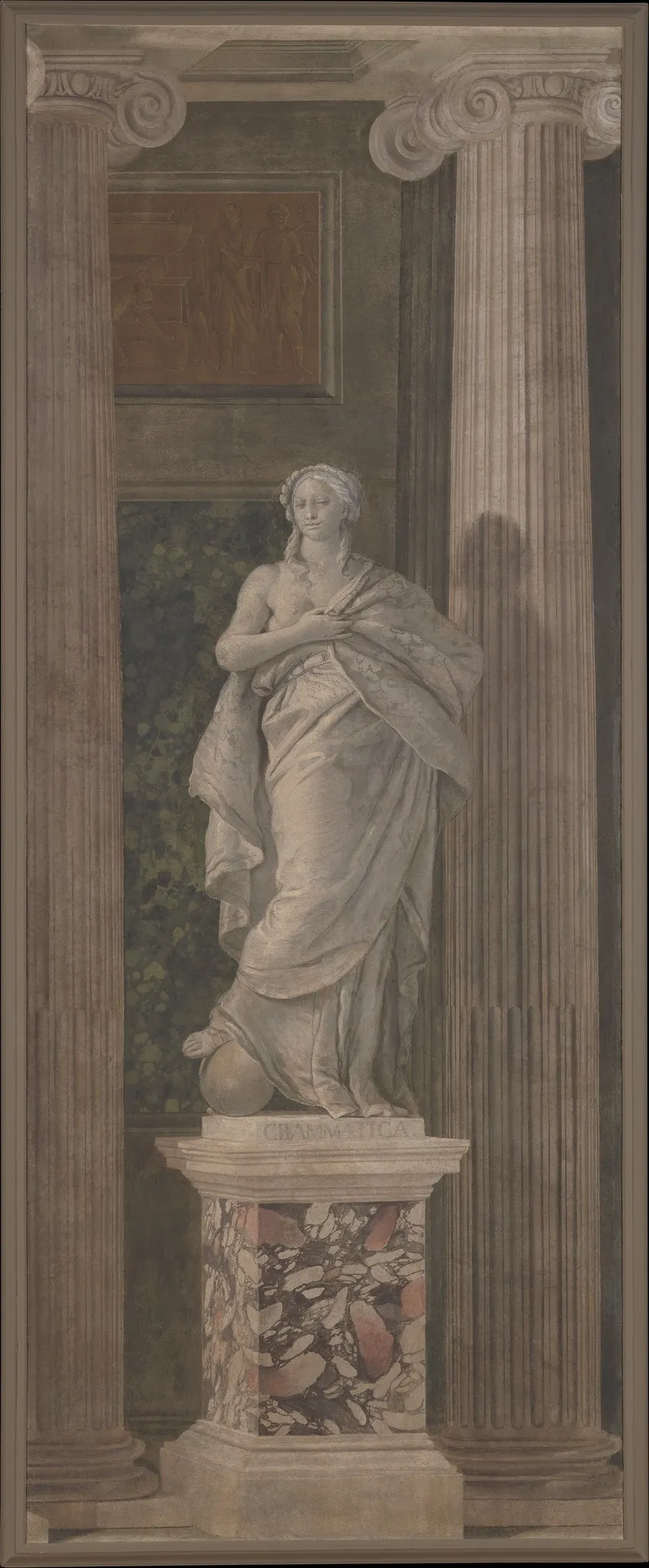
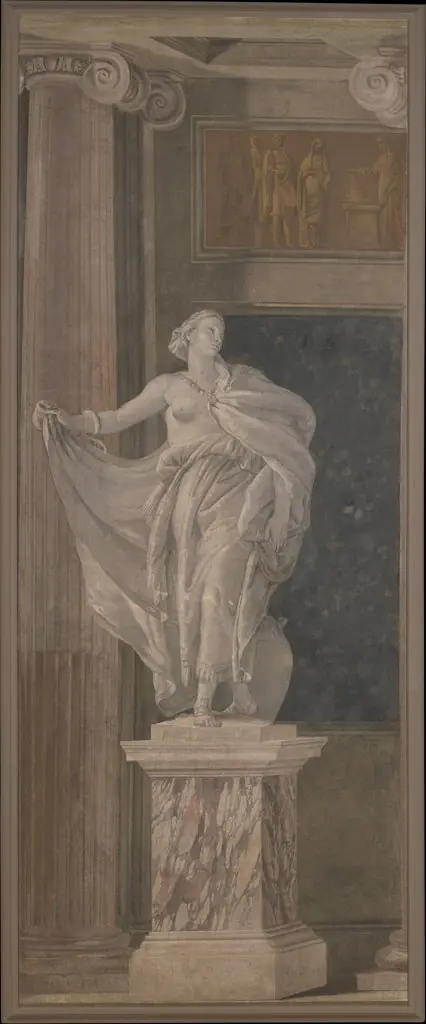
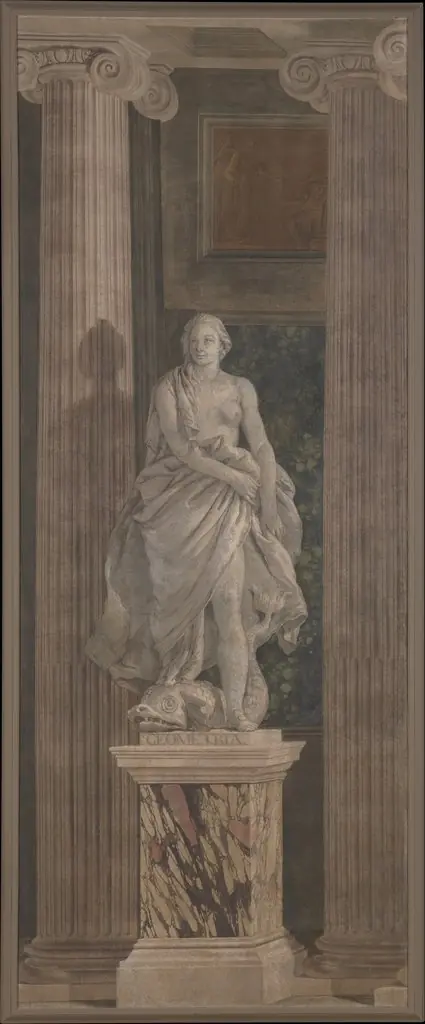
Grammar is an unspecified painting by the Rococo painting artist Giovanni Battista Tiepolo. It dates from 1760 and is held in the collection of the Metropolitan Museum of Art.
About this work
Subject & Meaning
The painting functions as a personification, using the human form to represent the intellectual discipline of grammar within the Rococo style.
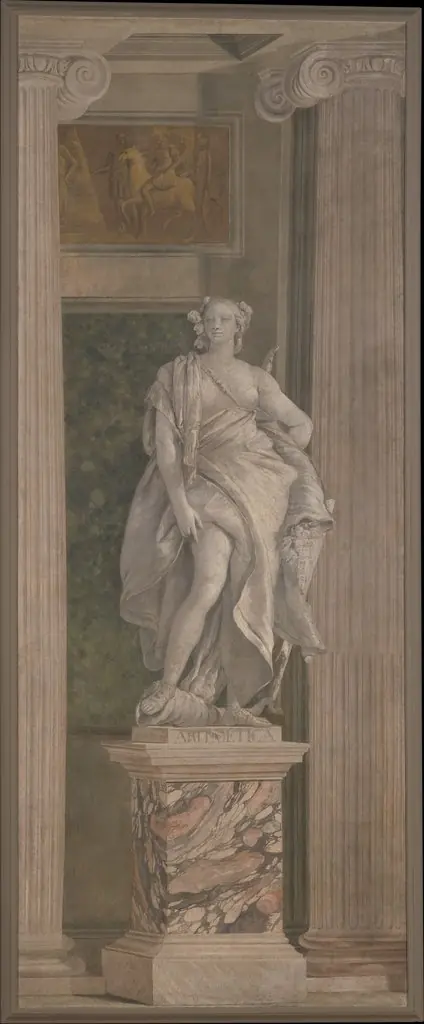
Giovanni Battista Tiepolo's 1760 painting, Grammar, belongs to a series of allegorical works personifying the liberal arts. The composition centers on a single female figure who serves as the visual embodiment of the subject of grammar. While the work relies on the traditional iconographic convention of representing abstract knowledge through an idealized woman, the specific symbolic attributes or narrative actions associated with her in this particular canvas are not detailed in the available records.
The painting functions as a personification, using the human form to represent the intellectual discipline of grammar within the Rococo style.
Technique & Style
Created in 1760, Grammar is a large-scale painting executed by Giovanni Battista Tiepolo during the Rococo period. The work features substantial dimensions, standing approximately 370.8 cm in height with a width of 147 cm. Visually, the composition centers on the depiction of a woman, consistent with Tiepolo's allegorical subjects. While the specific support material and pigment composition are not detailed in the available records, the piece is classified formally as a painting housed within the Metropolitan Museum of Art.
History & Provenance
The painting Grammar was created by the Italian artist Giovanni Battista Tiepolo in 1760. Executed during the Rococo period, the work depicts a female figure and measures 370.8 cm in height by 147 cm in width. The piece is currently held in the collection of the Metropolitan Museum of Art, where it is listed under the accession number 2005.173.
The work has not been documented in major exhibition records beyond its inclusion in the museum’s permanent display.
Context
Grammar by Giovanni Battista Tiepolo, created in 1760, is classified as a painting within the Rococo movement and depicts a woman. The work is housed in the Metropolitan Museum of Art's collection, reflecting its significance within the artist's oeuvre and the broader 18th-century European art context. Scholarship on Tiepolo's output often situates Grammar within discussions of Rococo stylistic traits and compositional innovations, though specific critical reception details are not provided in the sources. Its placement in a major institutional collection underscores its recognized historical and artistic value.
Overview
Created in 1760 by the Venetian painter Giovanni Battista Tiepolo, this oil work titled Grammar belongs to the Rococo period. It is part of the collection of the Metropolitan Museum of Art in New York, where it is displayed as an example of the artist’s late decorative style.
Artist & collection

Artist
Giovanni Battista Tiepolo, also known as Giambattista Tiepolo, was an Italian painter and printmaker from the Republic of Venice who painted in the Rococo style, considered an important member of the 18th-century Venetian school.