Artwork
Allegory of the Planets and Continents
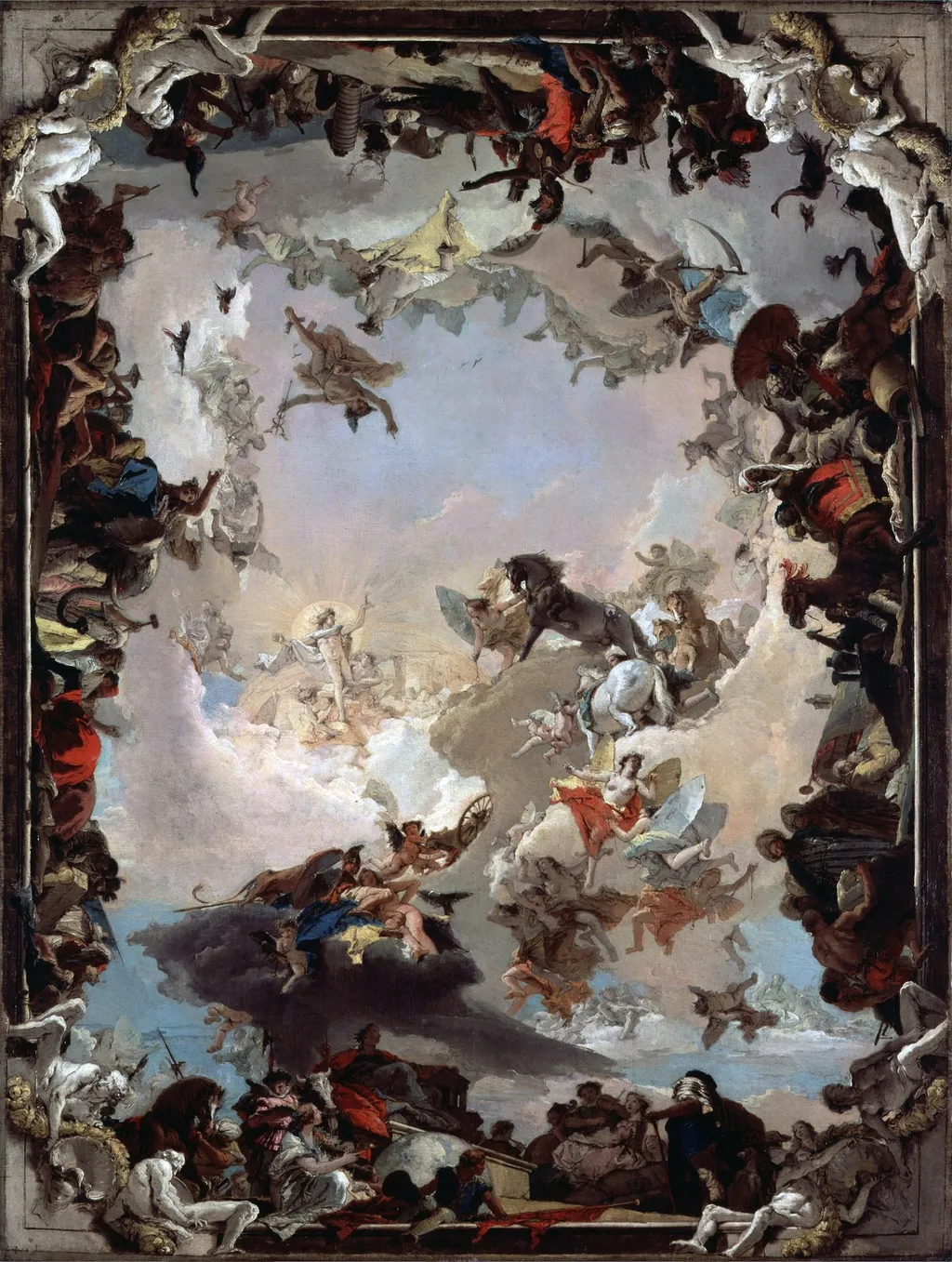
Allegory of the Planets and Continents is an oil painting by the Rococo painting artist Giovanni Battista Tiepolo. It dates from 1752 and is held in the collection of the Metropolitan Museum of Art.
About this work
Subject & Meaning
The work functions as a preparatory oil sketch for the larger ceiling fresco in the Würzburg Residence, where the same iconography is expanded.
The Allegory of the Planets and Continents (1752) by Giovanni Battista Tiepolo depicts a dynamic assembly of allegorical figures that personify celestial bodies and the four known continents. Nude deities, an elephant, a man, a woman and a horse are arranged around Apollo, symbolizing the Sun, while the surrounding cornice identifies Europe, America, Africa and Asia. The work functions as a preparatory oil sketch for the larger ceiling fresco in the Würzburg Residence, where the same iconography is expanded.
Symbolically, the painting conveys the harmony of the cosmos, with the planetary orbit represented by figures circling the central sun god, and the continents denoting the global scope of the Prince-Bishop's patronage.
Technique & Style
Executed in oil on canvas, the work measures 185.4 cm in height and 139.4 cm in width, conforming to the scale of a detailed preparatory sketch rather than a fully realized ceiling fresco. Tiepolo employs a fluid handling of paint, allowing for rapid transitions between light and shadow and emphasizing the Rococo preference for luminous, atmospheric effects. Figures are rendered with loose, confident brushwork that captures drapery and anatomy through suggestion rather than meticulous detail, reinforcing the sketch's provisional purpose.
Compositionally, the arrangement clusters allegorical figures around a central Apollo, whose radiant presence organizes the scene into concentric orbits, while the surrounding cornice symbolically frames the continents. The palette favors cool silvers and warm ochres, heightening the ethereal quality typical of Tiepolo's decorative idiom.
History & Provenance
The Allegory of the Planets and Continents was created by Giovanni Battista Tiepolo in 1752 as an oil-on-canvas preparatory sketch for a larger fresco commissioned by Prince-Bishop Karl Philipp von Greifenclau zu Vollraths to decorate the ceiling of a staircase in his Würzburg palace between 1750 and 1753. The expansive fresco depicts Apollo surrounded by planetary and continental allegories. The sketch's early ownership is unclear; it was identified in 1954 on the ceiling of a corridor at the Hendon Hall Hotel in London, a building formerly associated with the actor David Garrick, though its path to that location is undocumented.
The work's iconography diverges from the Würzburg fresco, omitting portraits of patrons such as Balthasar Neumann and reversing the positions of the Americas and Europe. The painting is now held in the collection of the Metropolitan Museum of Art in New York, though no specific accession number is provided in the available sources.
Context
Created in 1752, Giovanni Battista Tiepolo's Allegory of the Planets and Continents functions as a preparatory oil sketch for the monumental ceiling fresco he executed for the Prince-Bishop of Würzburg between 1750 and 1753, a project that established his reputation as a leading Rococo decorative painter and produced one of the largest frescoes of its time. The work, housed in the Metropolitan Museum of Art, depicts allegorical figures representing deities, planets and the four continents, and its composition diverges from the final fresco by reversing Europe and America and omitting the bishop's portrait. Contemporary scholarship notes ongoing debate over whether the sketch predates the fresco or was produced with the involvement of Tiepolo's son, while its discovery in a London hotel corridor illustrates the painting's later provenance and enduring scholarly interest.
Overview
Giovanni Battista Tiepolo's 1752 oil painting, Allegory of the Planets and Continents, served as a detailed preparatory study for a monumental fresco. This canvas depicts a complex allegorical scene, featuring numerous human figures representing the Greco-Roman gods, celestial bodies, and the four known continents. It offers insight into the artist's process for one of his most ambitious commissions, showcasing the dynamic composition and thematic scope intended for the final, much larger work.
Own this work as a print
Artist & collection

Artist
Giovanni Battista Tiepolo, also known as Giambattista Tiepolo, was an Italian painter and printmaker from the Republic of Venice who painted in the Rococo style, considered an important member of the 18th-century Venetian school.

 Allegorie auf die glückliche Regierung Mährens
 The Coronation of the Virgin
 Sketch for Allegory of the Institution of the Order of Charles III
 Wealth and Benefits of the Spanish Monarchy under Charles III
 Allegory of the donation of the Casino to Queen María Isabel de Braganza by the Municipality of Madrid
 The Apotheosis of Hercules
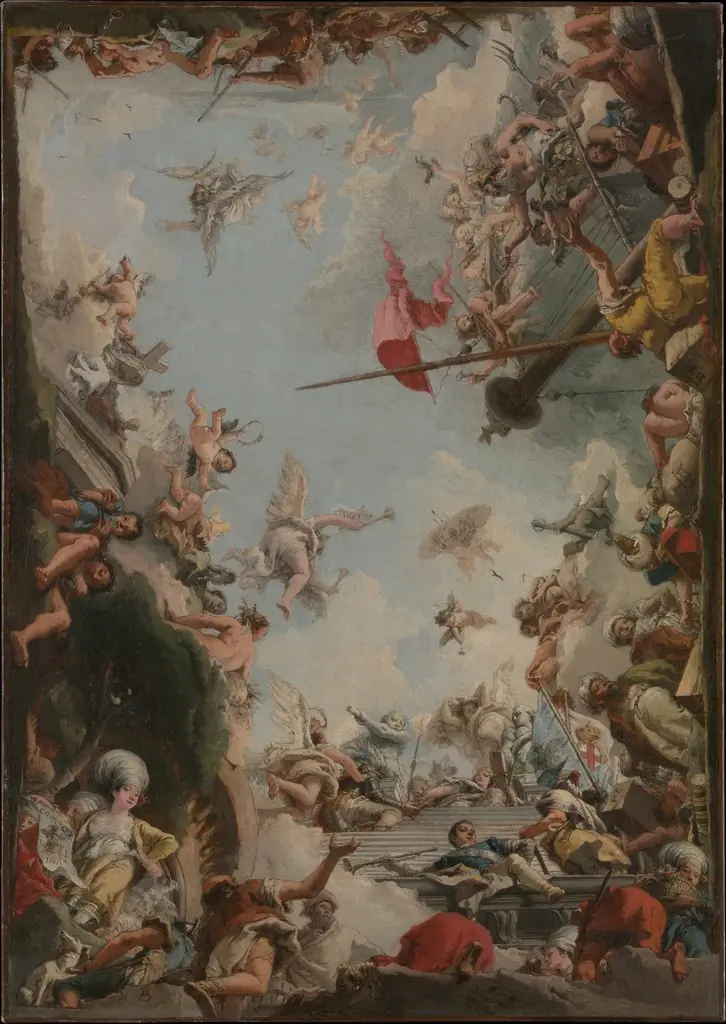 The Glorification of the Giustiniani Family
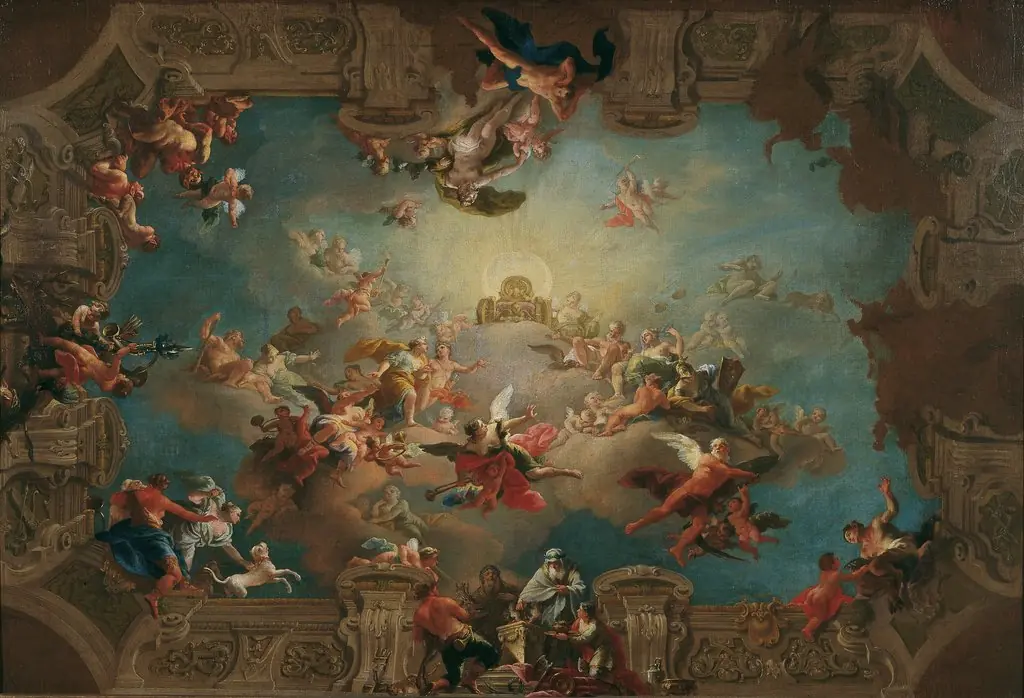 Diana's Admission to Olympus
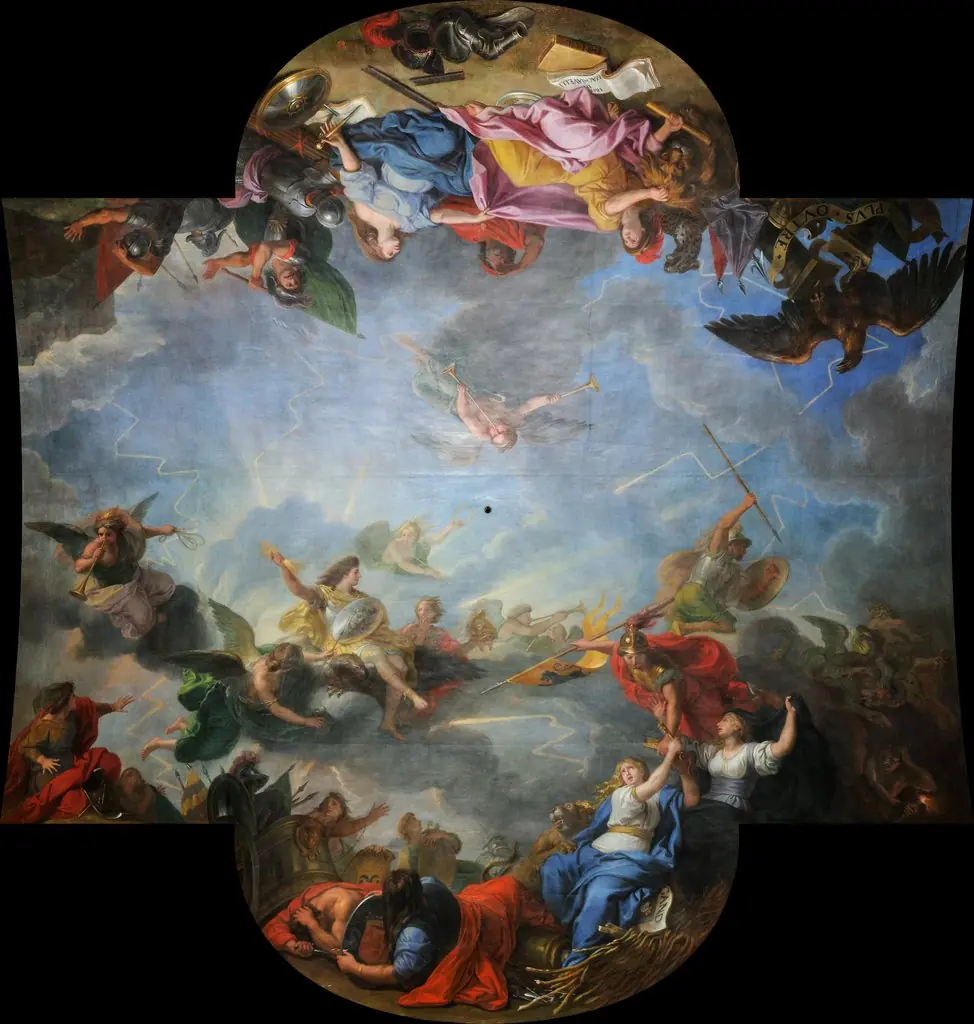 capture the citadel
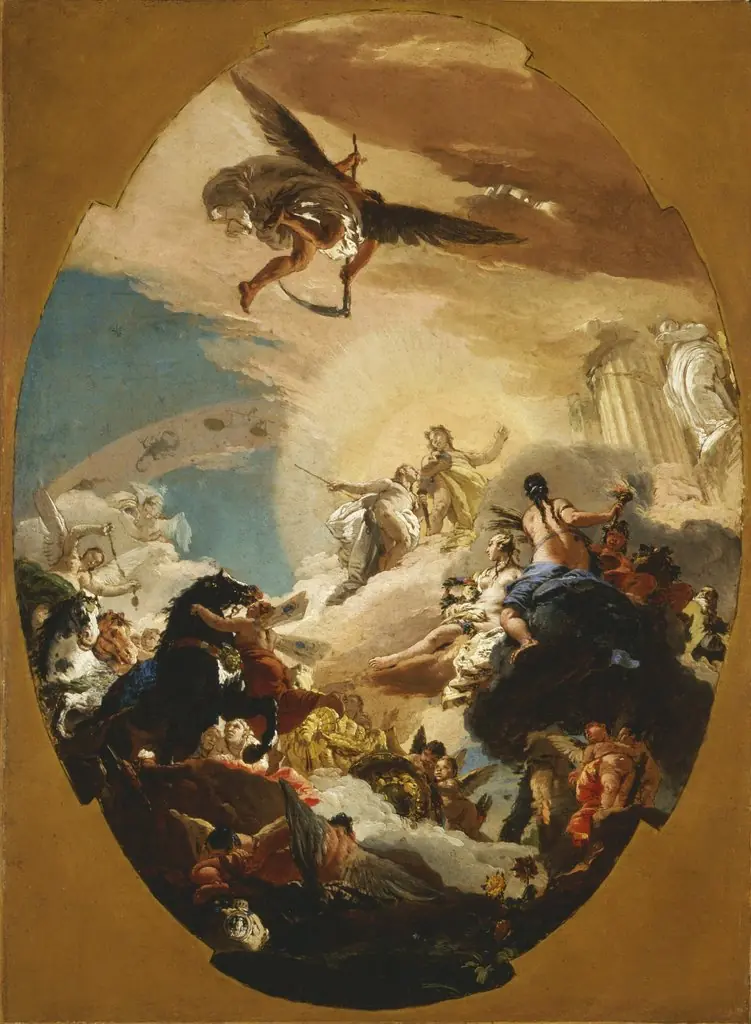 Apollo and Phaëthon