Artwork
Latinus Offering his Daughter Lavinia to Aeneas in Matrimony
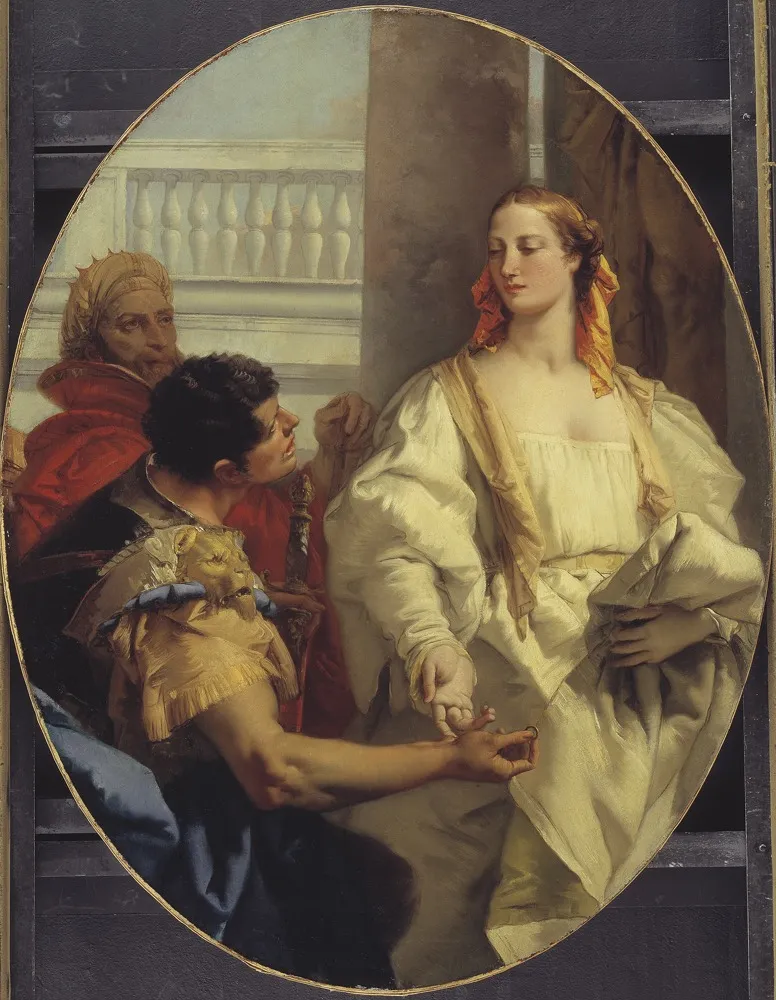
Latinus Offering his Daughter Lavinia to Aeneas in Matrimony is an oil painting by the Rococo painting artist Giovanni Battista Tiepolo. It dates from 1753 and is held in the collection of the Statens Museum for Kunst.
About this work
Subject & Meaning
The composition includes a classical column, a balcony and a sword, attributes that allude to Roman authority, stability and martial destiny.
The canvas, painted by Giovanni Battista Tiepolo in 1753, portrays the legendary moment in which Latinus offers his daughter Lavinia to the Trojan hero Aeneas as a bride, sealing a union that promises the future of the Latin people. The composition includes a classical column, a balcony and a sword, attributes that allude to Roman authority, stability and martial destiny. Executed in oil on canvas, the work exemplifies Rococo style and is housed in the Statens Museum for Kunst in Copenhagen.
By illustrating the marriage described in the seventh book of the Aeneid, the painting symbolizes the mythic foundation of Alba Longa and the destined Roman lineage.
Technique & Style
The painting is executed in oil on canvas. Measuring 140.5 cm in height and 109.5 cm in width, it employs a fluid, luminous handling characteristic of Tiepolo’s mature Rococo manner, with delicate modeling of figures and architectural elements.
Formal qualities include a sweeping, open composition organized around a central column and a raised balcony, which directs the viewer’s eye toward the figures of Latinus, Lavinia, and Aeneas. The palette is light and airy, with silvery tones and soft contrasts that enhance the scene’s theatrical elegance and narrative clarity.
History & Provenance
Giovanni Battista Tiepolo executed the oil painting Latinus Offering his Daughter Lavinia to Aeneas in Matrimony in 1753. While some accounts suggest the work was created over a span extending into 1754, the canonical inception date is recorded as 1753. The composition draws its narrative from the seventh book of Virgil's Aeneas, depicting the moment King Latinus grants his daughter Lavinia to the Trojan hero.
The artwork currently resides in the collection of the Statens Museum for Kunst in Copenhagen. No specific details regarding the original commissioner or the intermediate ownership chain prior to its museum acquisition are provided in the available records.
The painting is held in the Statens Museum for Kunst in Copenhagen. Both the Wikidata record and the Italian Wikipedia entry place the work in that museum's collection, with the Italian source noting it is "custodito nello Statens Museum for Kunst di Copenaghen." No specific inventory or accession number is provided in the available sources.
Regarding exhibition history, the sources do not document any specific past exhibitions. They do, however, reference the work's online presence through external links: a record on the Statens Museum for Kunst's open access platform (open.smk.dk) and an entry on Europeana (europeana.eu), both consulted in August 2022.
Overview
Giovanni Battista Tiepolo completed the oil painting Latinus Offering his Daughter Lavinia to Aeneas in Matrimony in 1753. This work, now housed at the Statens Museum for Kunst, exemplifies the Rococo movement through its depiction of a pivotal moment from Roman mythology. The composition centers on the proposed union between the Trojan hero Aeneas and Princess Lavinia, presented by her father, King Latinus. The scene captures a quiet, yet significant, exchange between the three central figures.
Artist & collection

Artist
Giovanni Battista Tiepolo, also known as Giambattista Tiepolo, was an Italian painter and printmaker from the Republic of Venice who painted in the Rococo style, considered an important member of the 18th-century Venetian school.

- Tizian și Lavinia
 Scene from Ancient History
 Alexander the Great and Roxana
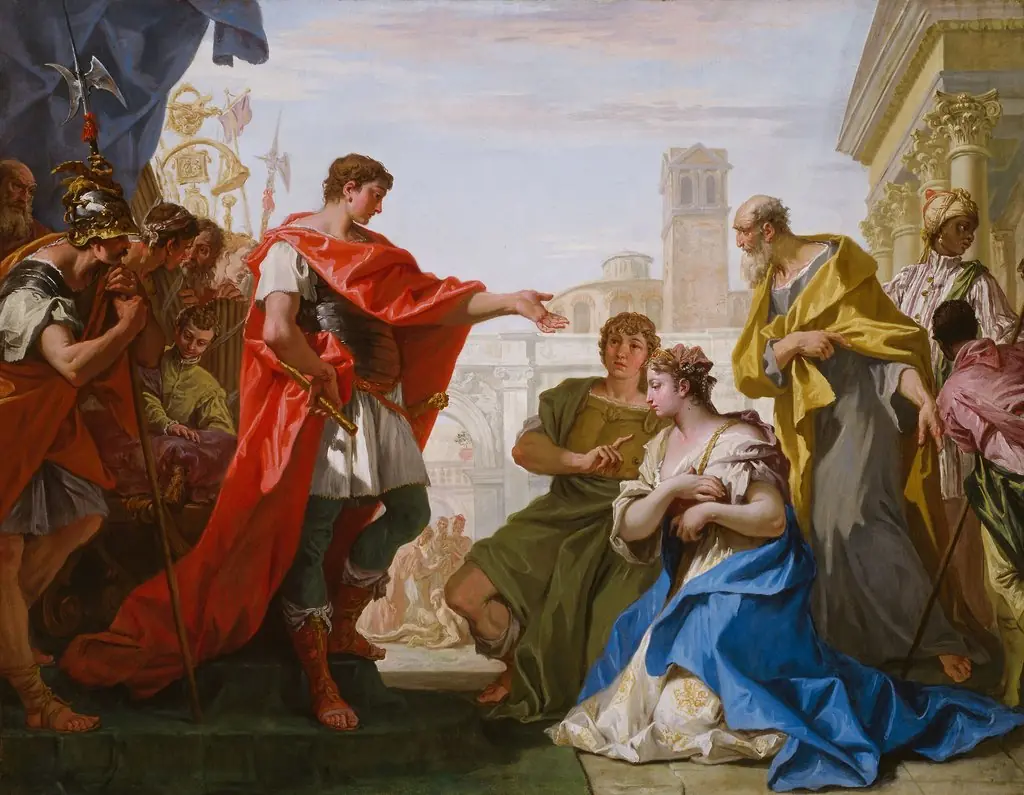 The Continence of Scipio
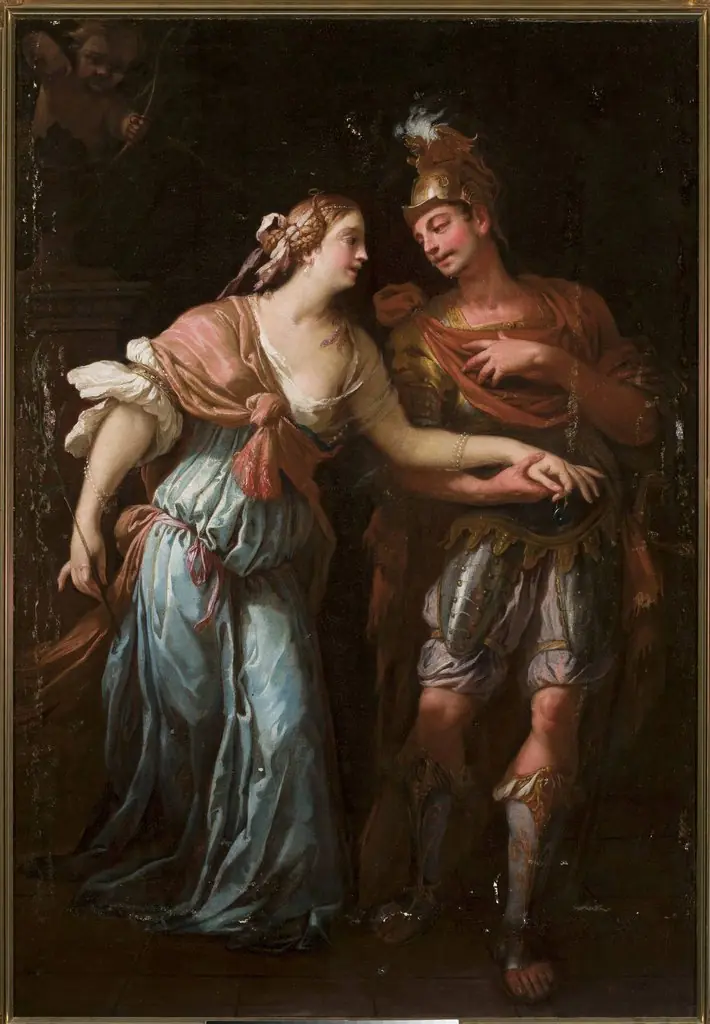 Venus and Mars
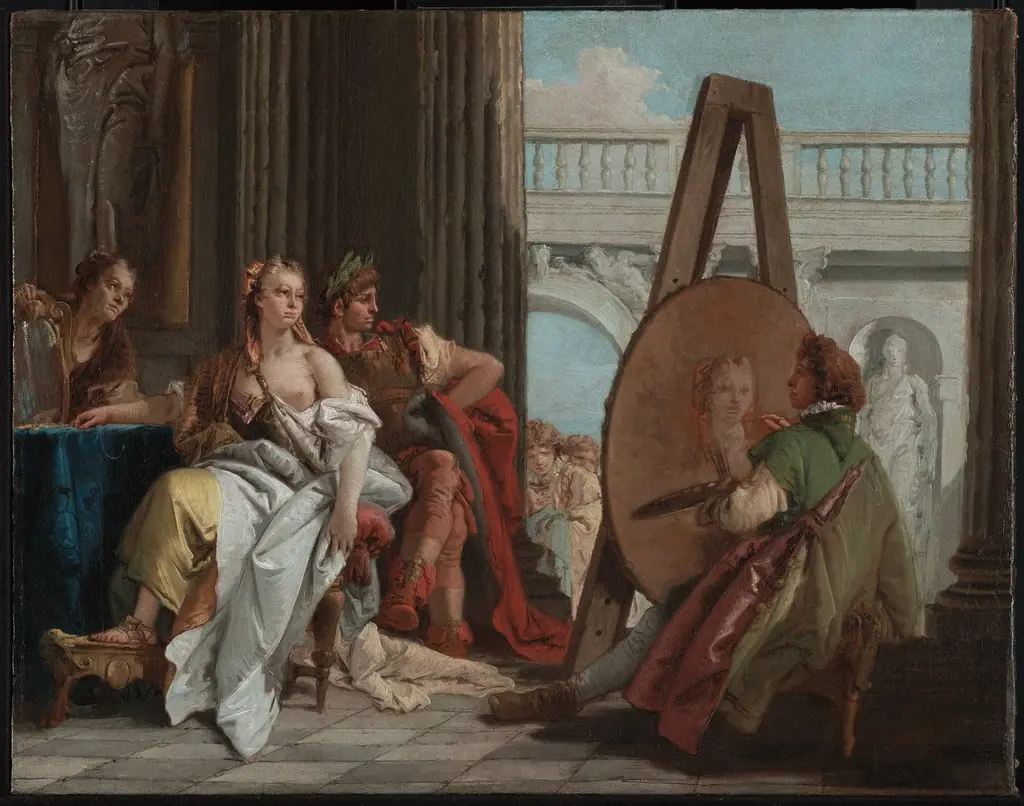 Alexander the Great and Campaspe in the Studio of Apelles
 The Continence of Scipio
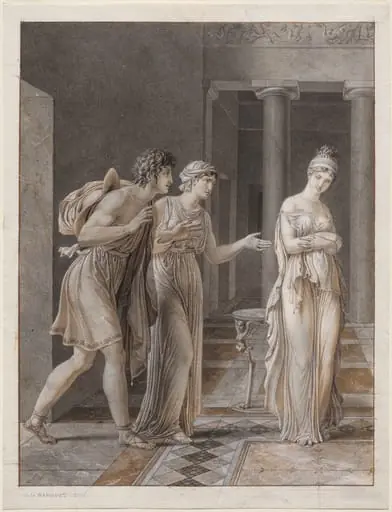 The Meeting of Orestes and Hermione
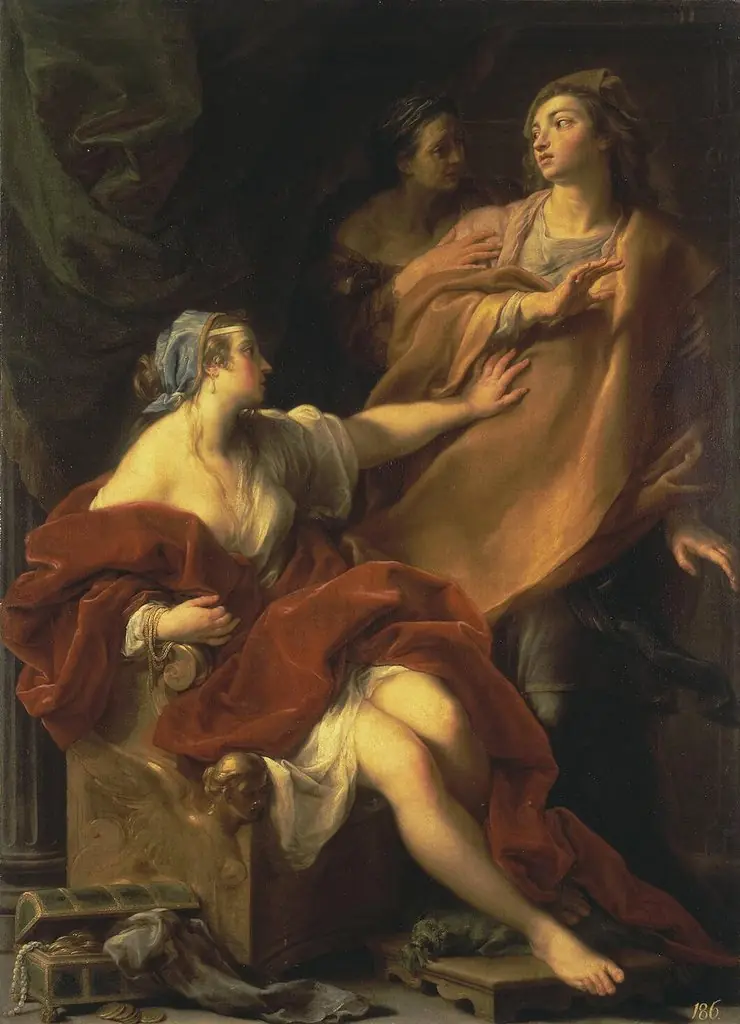 Allegory of Sensuality
 A Betrothal
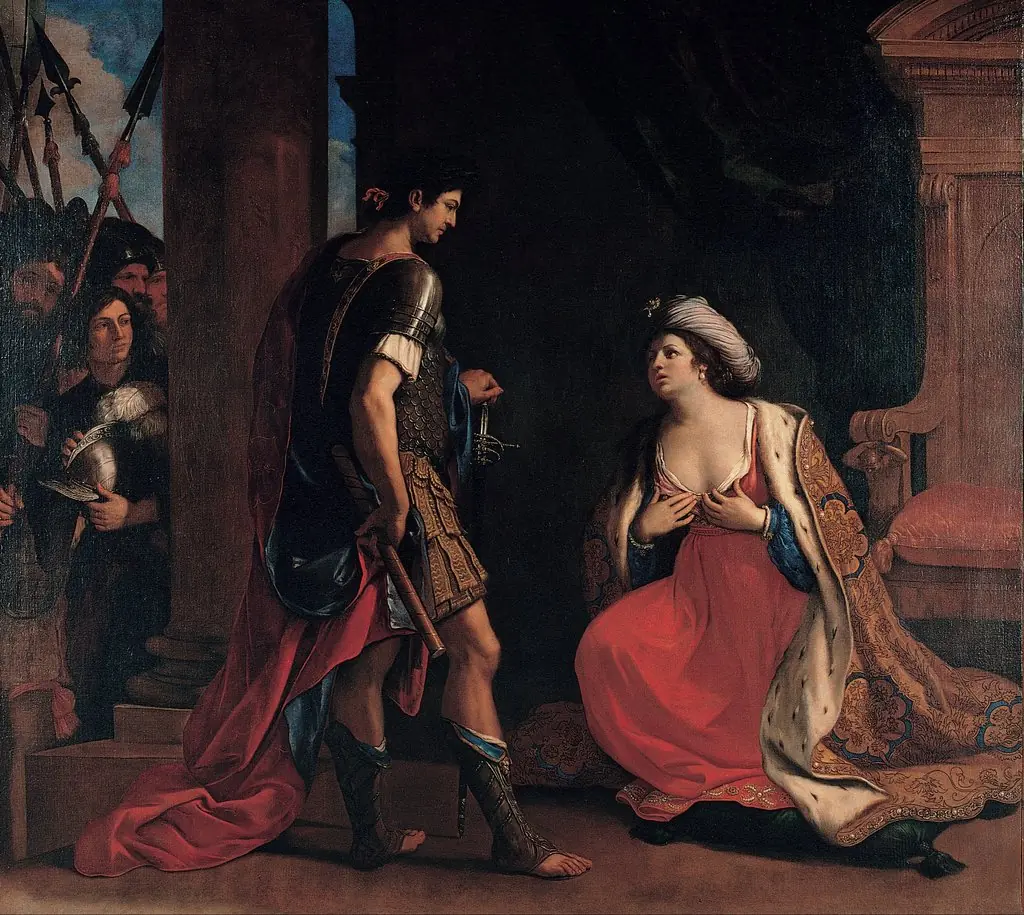 Cleopatra and Octavian
 Das Gastmahl der Kleopatra