Artwork
The Meeting of Antony and Cleopatra
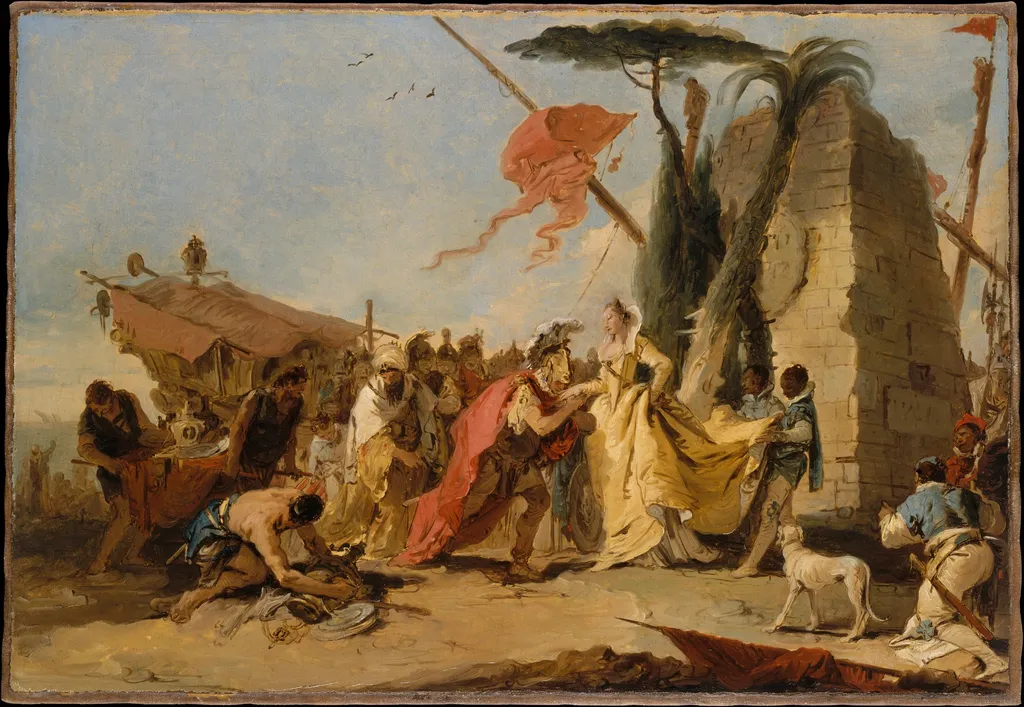
The Meeting of Antony and Cleopatra is an oil painting by the Rococo painting artist Giovanni Battista Tiepolo. It dates from 1746 and is held in the collection of the Metropolitan Museum of Art.
About this work
Subject & Meaning
Cleopatra, positioned centrally, holds a small dog, a symbol of fidelity, while Antony stands beside her, his gesture conveying authority.
The painting depicts the legendary encounter between Mark Antony and Cleopatra, a subject drawn from Plutarch’s Life of Antony. Tiepolo’s composition emphasizes the theatricality of the scene, featuring the two figures in a moment of diplomatic exchange. Cleopatra, positioned centrally, holds a small dog, a symbol of fidelity, while Antony stands beside her, his gesture conveying authority.
The presence of a flag and the opulent setting reinforce the grandeur associated with their historical alliance. The work reflects the Baroque tradition of elevating classical narratives into vivid, emotionally charged imagery, underscoring themes of power, alliance, and the exotic allure of Cleopatra.
Technique & Style
Giovanni Battista Tiepolo executed The Meeting of Antony and Cleopatra in 1746 as an oil painting on canvas. The work is classified as a painting and is housed in the collection of the Metropolitan Museum of Art. While the sources confirm the use of oil paint and a canvas support, they do not provide specific details regarding the artist's handling techniques, the current physical condition of the piece, or a detailed analysis of its formal and stylistic qualities.
The composition depicts the historical figures Mark Antony and Cleopatra alongside a dog and a flag, rendered through the medium of oil on canvas.
Overview
Giovanni Battista Tiepolo's oil painting, The Meeting of Antony and Cleopatra, created in 1746, captures a pivotal moment from classical history. This large-scale work, now housed at The Metropolitan Museum of Art, presents a dramatic outdoor encounter between the Egyptian queen and the Roman general. The composition features a dynamic arrangement of figures, including the central protagonists and their retinue, set against an evocative backdrop.
Own this work as a print
Artist & collection

Artist
Giovanni Battista Tiepolo, also known as Giambattista Tiepolo, was an Italian painter and printmaker from the Republic of Venice who painted in the Rococo style, considered an important member of the 18th-century Venetian school.

 David Returning Victorious after Defeating Goliath and the Philistines
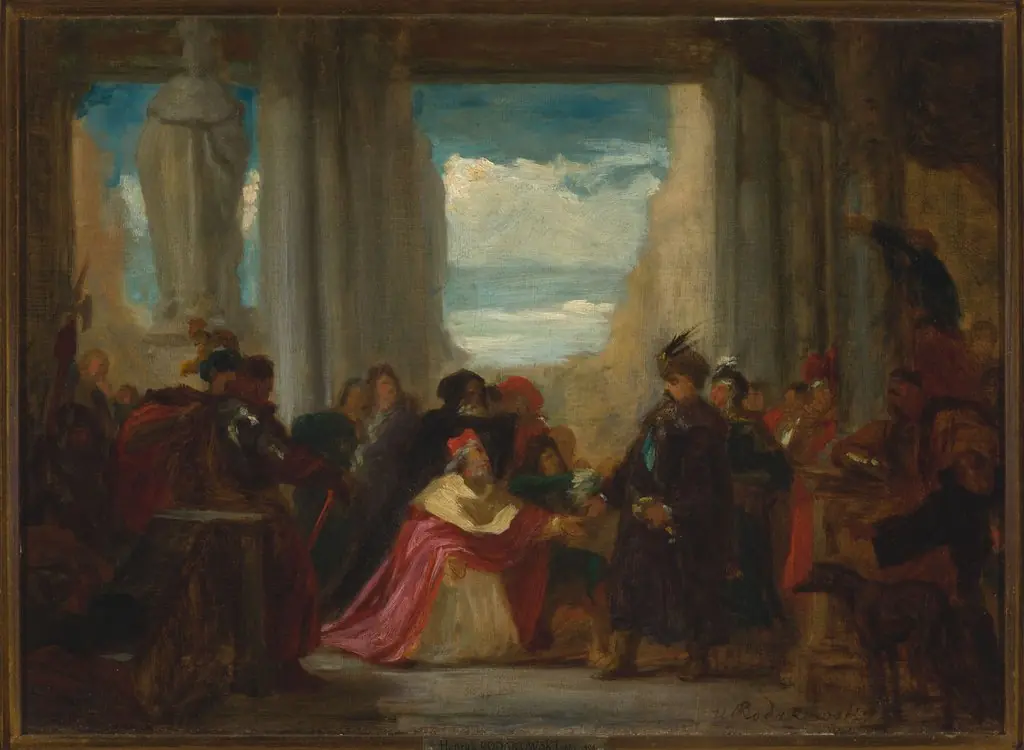 Count Wilczek beseeching king John Sobieski to help Vienna against the Turks, sketch
 The Death of Regulus
 Continence of Scipio
 Festive Procession with Chariot of Venus
 Armida ante Godofredo de Bouillon
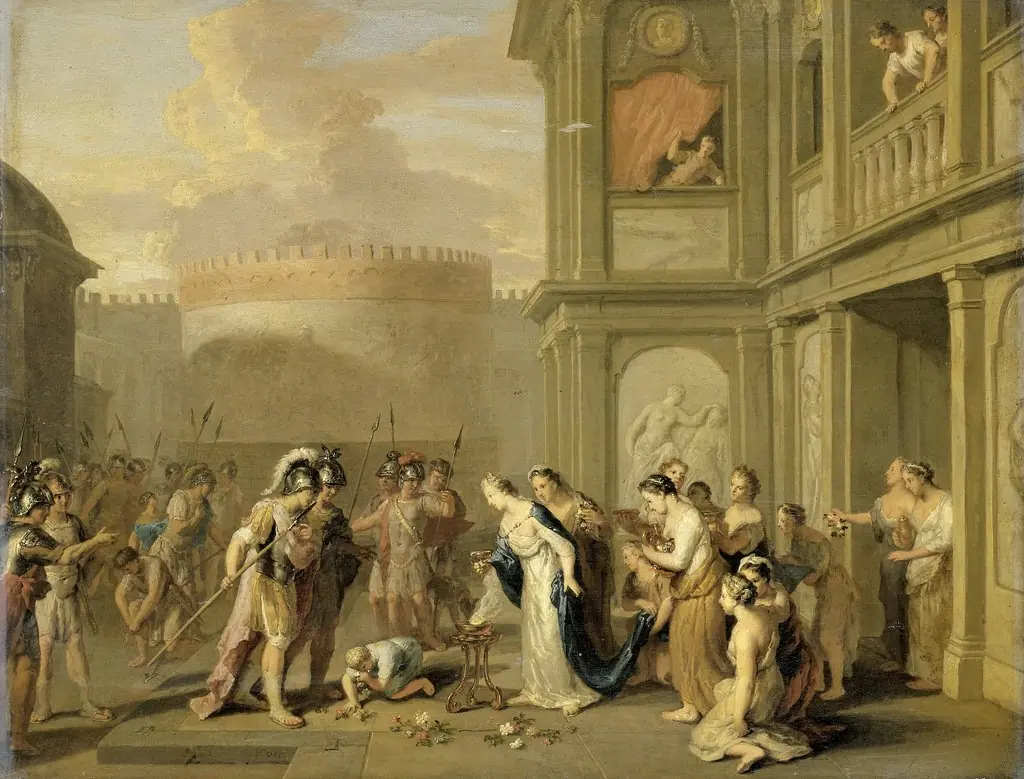 Queen Cleophis Offers Alexander the Great Wine after Conquering Massaga
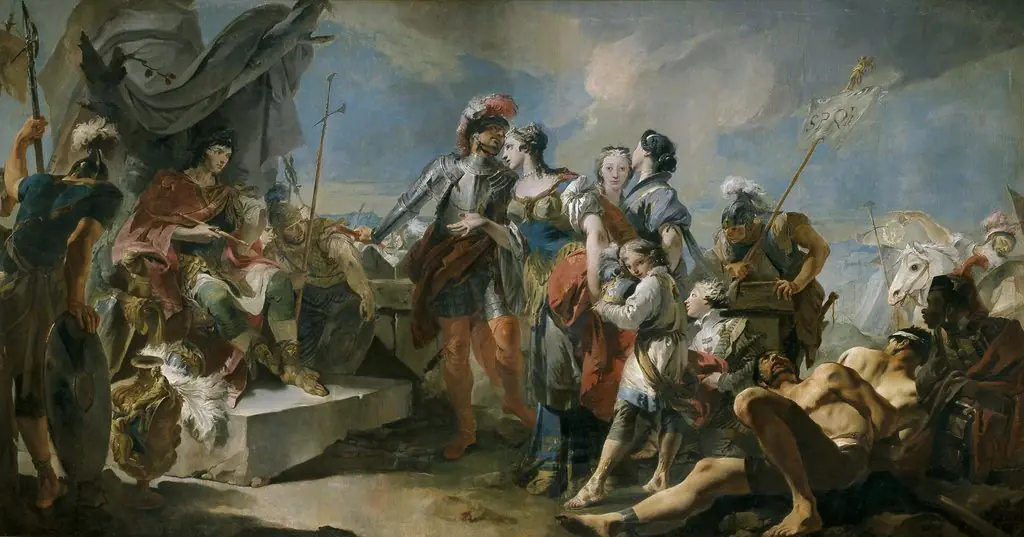 Queen Zenobia before the Emperor Aurelian
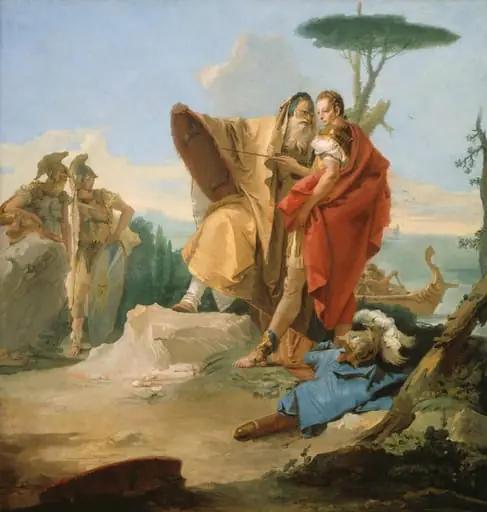 Rinaldo and the Magus of Ascalon
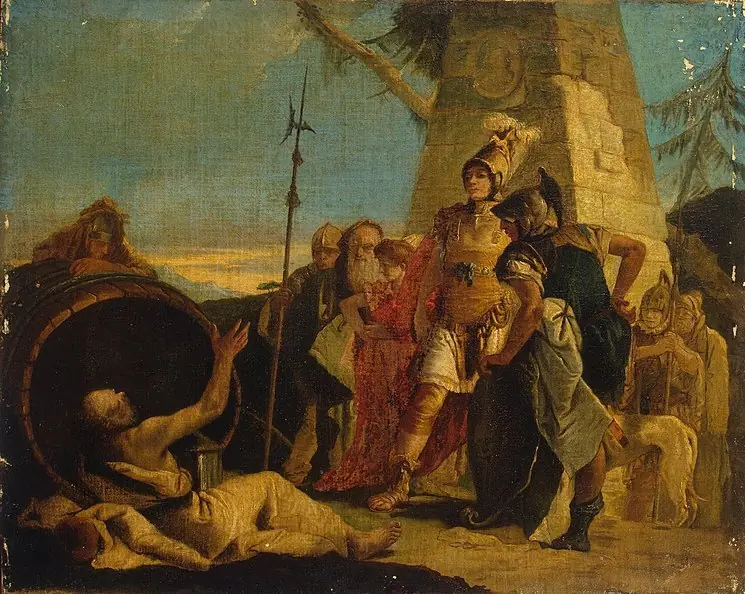 Alexander the Great and Diogenes