Artwork
La Mousmé
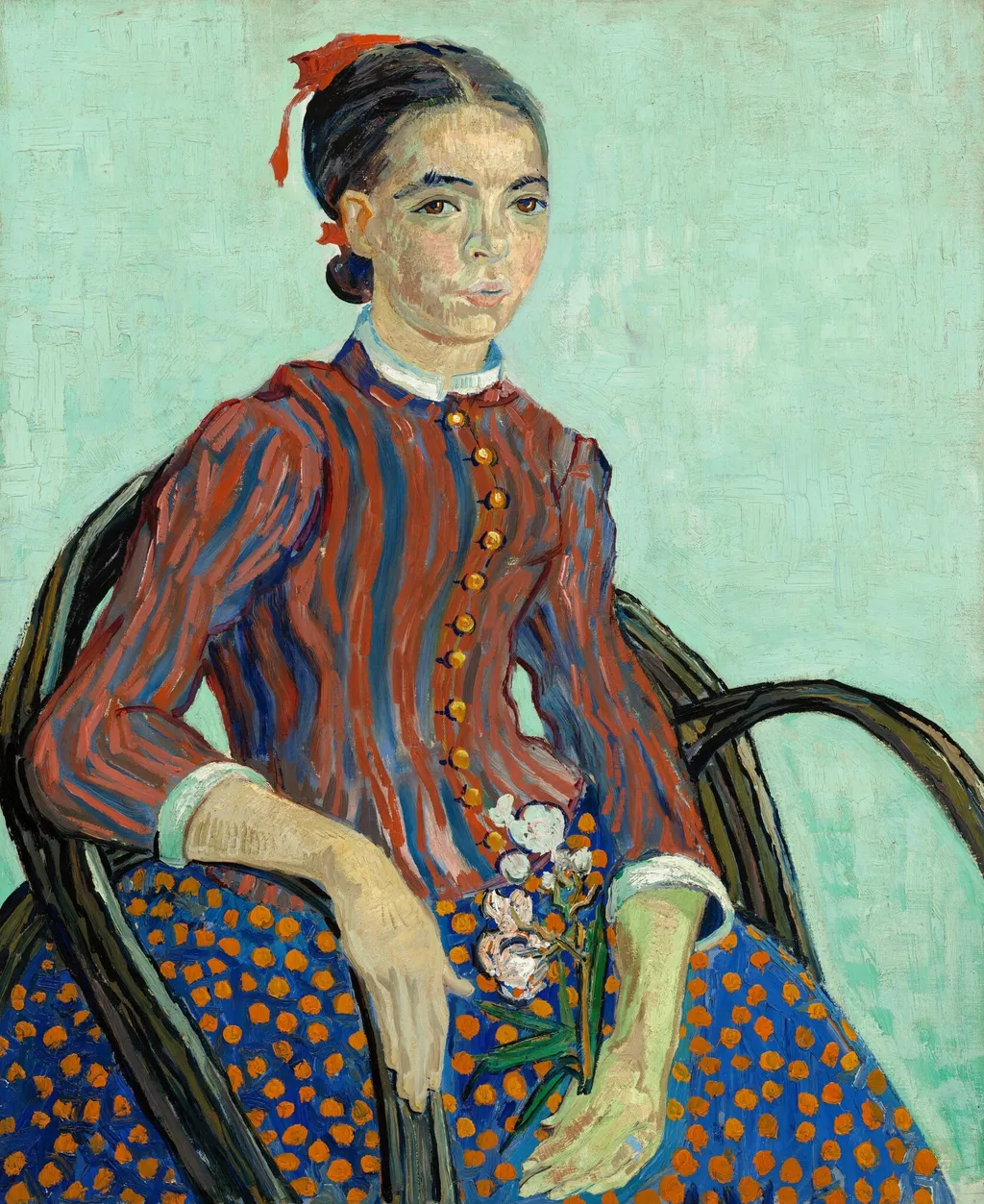
La Mousmé is an oil painting by the Impressionist artist Vincent van Gogh. It dates from 1888 and is held in the collection of the National Gallery of Art.
About this work
Subject & Meaning
Symbolically, the oleander represents the girl's blossoming stage of life and is associated with love and virginity.
La Mousmé depicts a young Provençal girl, described by Van Gogh as being twelve to fourteen years old, seated in a cane chair while holding a branch of oleander. The title derives from Pierre Loti's novel Madame Chrysanthème, where the term signifies a young, innocent, and pure Japanese girl, reflecting the artist's desire to evoke Japanese simplicity in southern France. Symbolically, the oleander represents the girl's blossoming stage of life and is associated with love and virginity.
Van Gogh employed a palette of complementary colors, contrasting the subject's blue and red striped jacket and polka-dot skirt against a pale green background to create vibrancy and intensity. The work synthesizes the girl's Provençal features with a Japanese aesthetic, aiming to achieve a comforting, music-like quality through color rather than sculpture-like form.
Technique & Style
Painted in 1888 in Arles, La Mousmé is an oil on canvas work measuring 73.3 by 60.3 centimeters. Van Gogh executed the portrait with a focus on symbolic color and complementary contrasts, utilizing vibrant blues and oranges against a pale green background to create visual intensity. The figure wears a jacket with vertical blue and red stripes and a dotted skirt, holding an oleander branch that mirrors her posture.
Stylistically, the composition reflects Japanese influence through flat patterns and vivid hues, departing from traditional Impressionist palettes. The artist applied paint to capture the youthful features of the subject with a Provençal coloring yet a Japanese aesthetic. The wooden chair features curvilinear forms that define the spatial arrangement, while the pink tones of the skin and hands contrast with the monochromatic backdrop to enhance the painting's luminosity.
History & Provenance
Painted in Arles during July 1888, La Mousmé was inspired by Pierre Loti's novel Madame Chrysanthème and Japanese aesthetics. Following Vincent van Gogh's death, the work remained with his sister-in-law, Johanna van Gogh-Bonger, in Amsterdam until May 1909, when it was sold to dealer J.H. de Bois in The Hague for 3,000 guilders. It then passed to collector Carl Sternheim in Munich (and later La Hulpe, Belgium), and was traded through Bernheim-Jeune and Paul Rosenberg in Paris to Alphonse Kann by 1917, who lent it to the exhibition Französische Kunst des XIX. u.
XX. Jahrhunderts at the Kunsthaus Zürich that year. It subsequently belonged to J.B. Stang of Oslo until 3 January 1928, when it was sold through Dr. Alfred Gold in Berlin to a joint account of Alex Reid & Lefèvre, Ltd., and M. Knoedler & Co.
On 21 May 1929, Galerie Étienne Bignou in Paris sold the canvas to Chester Dale of New York, who bequeathed it to the National Gallery of Art in Washington, D.C., in 1963, where it remains in the Chester Dale Collection.
Context
Painted in Arles during 1888, La Mousmé represents a pivotal moment when Vincent van Gogh sought to evoke the simplicity and dramatic expression of Japanese art, famously dubbing the region "the Japan of the south." Inspired by Pierre Loti's novel Madame Chrysanthème and his collection of Japanese prints, van Gogh utilized the work to explore symbolic color relationships, specifically employing complementary blues and oranges to create energy distinct from his earlier Impressionist experiments. Scholars identify this period as the height of the artist's career, characterized by confidence and a prolific output where he aimed to make painting "more like music."
The portrait synthesizes modern Provençal attire with an imagined Japanese innocence, reflecting van Gogh's belief that portraiture offered the deepest connection to the infinite. This approach marked a significant stylistic deviation, prioritizing emotional resonance and vibrant luminosity over strict realism.
Overview
Vincent van Gogh's painting La Mousmé (1888) depicts a young girl seated in a cane chair. Executed in oil on canvas, this work captures a half-figure portrait during the artist's productive period in Arles. The title, derived from a Japanese term for a young woman, reflects van Gogh's broader artistic interests at the time, particularly his engagement with Japanese aesthetics.
Own this work as a print
Artist & collection
Artist
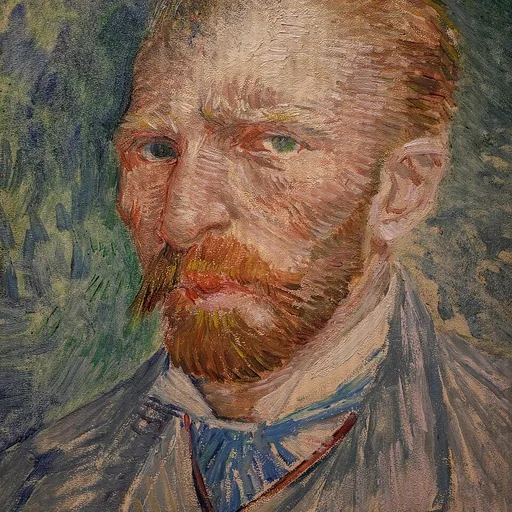
Vincent Willem van Gogh was a Dutch Post-Impressionist painter who is among the most famous and influential figures in the history of Western art.

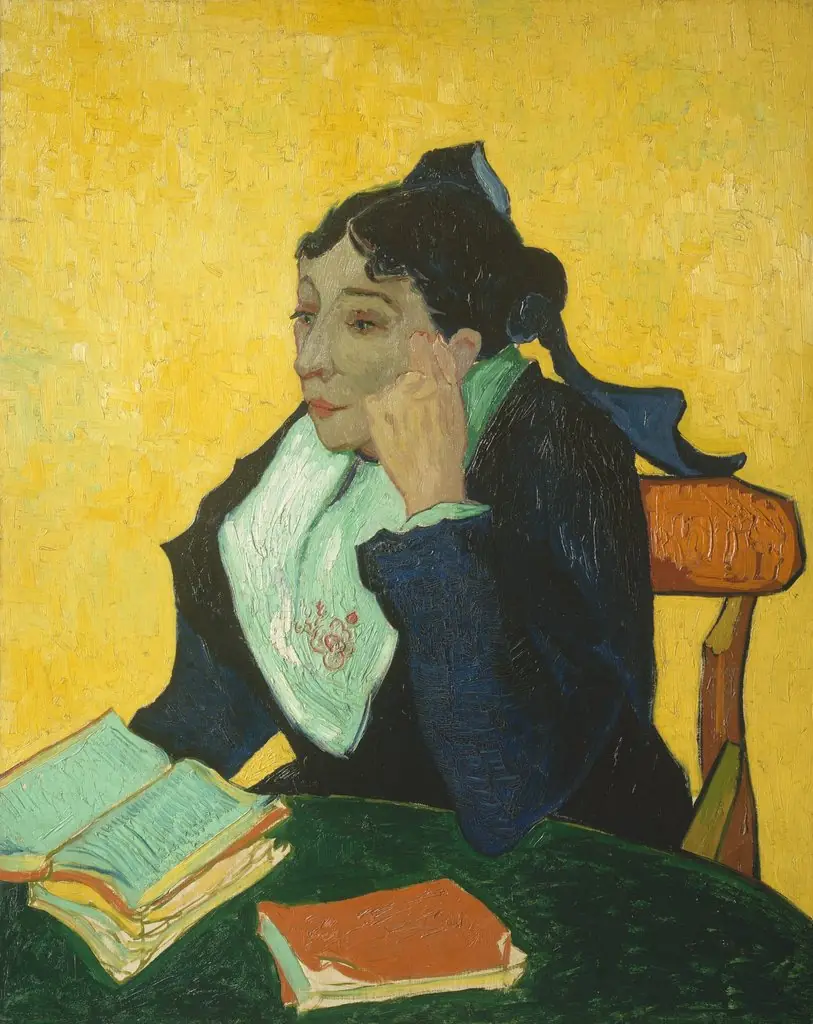
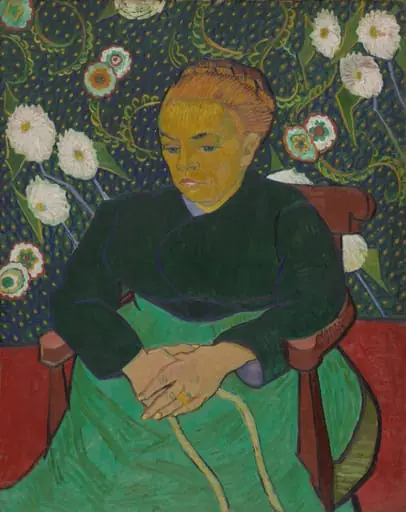
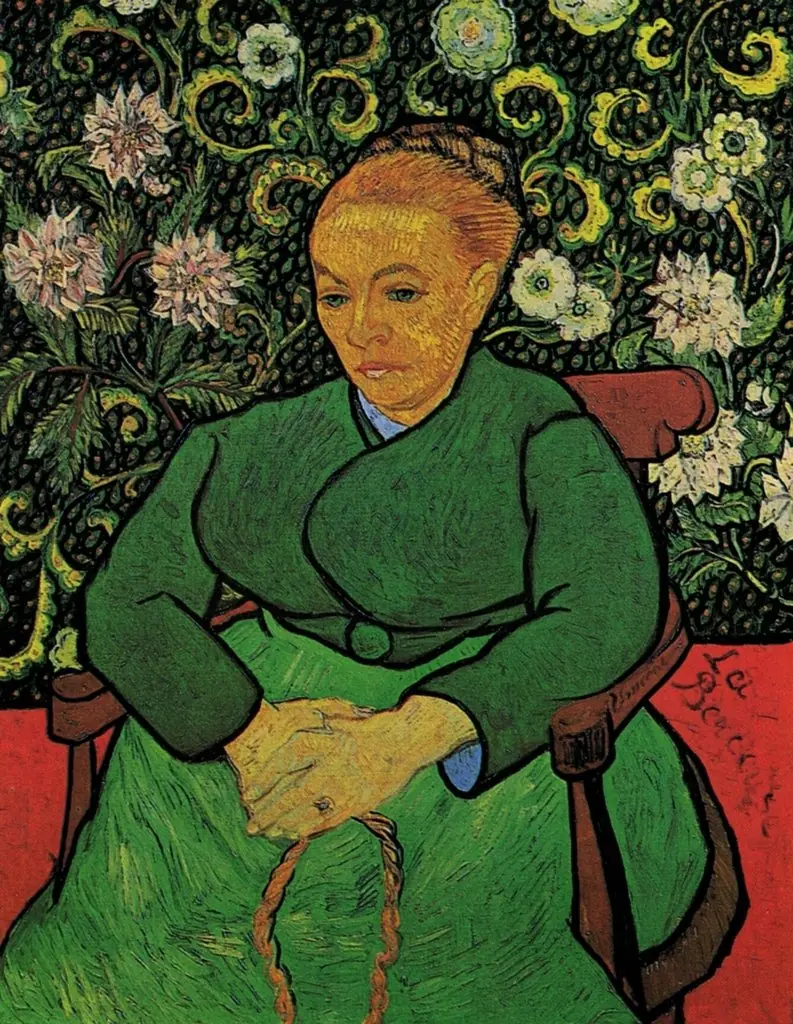
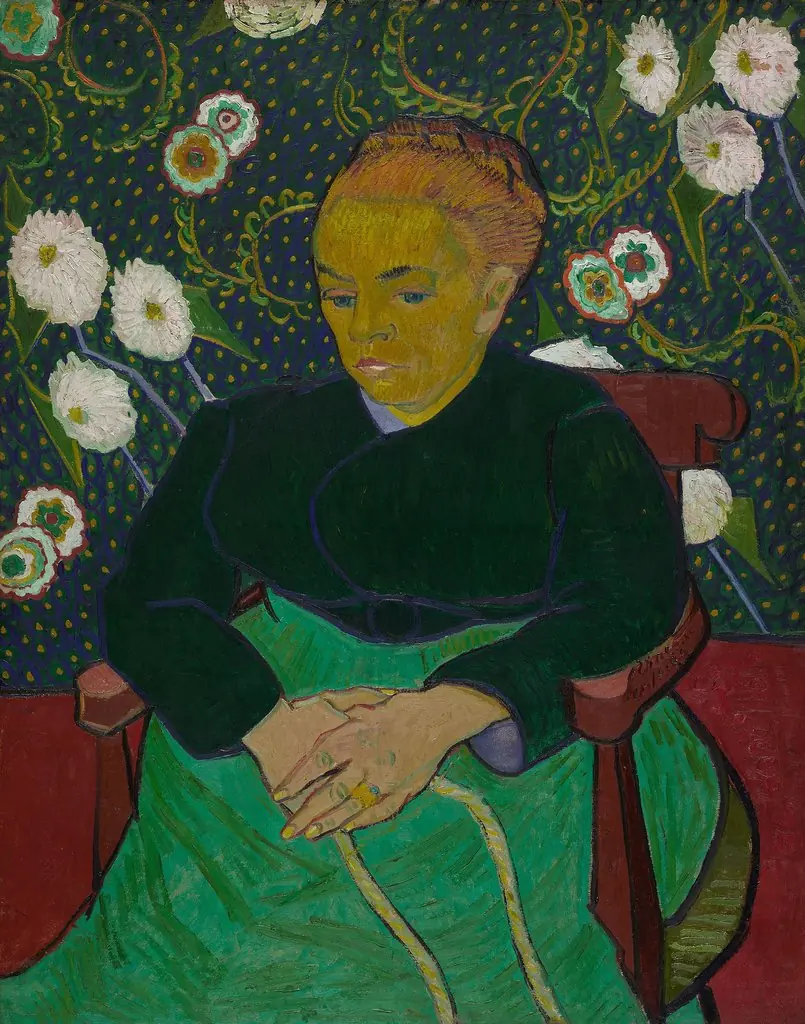 Madame Roulin Rocking the Cradle (La Berceuse)
 La Berceuse (Woman Rocking a Cradle; Augustine-Alix Pellicot Roulin, 1851–1930)
 Little Arlesienne, The
 Eva Meurier in a Green Dress
 Portrait de Madame Trabuc
 Girl in White
 Green Stripe
 La Berceuse
 Lady with a Dog
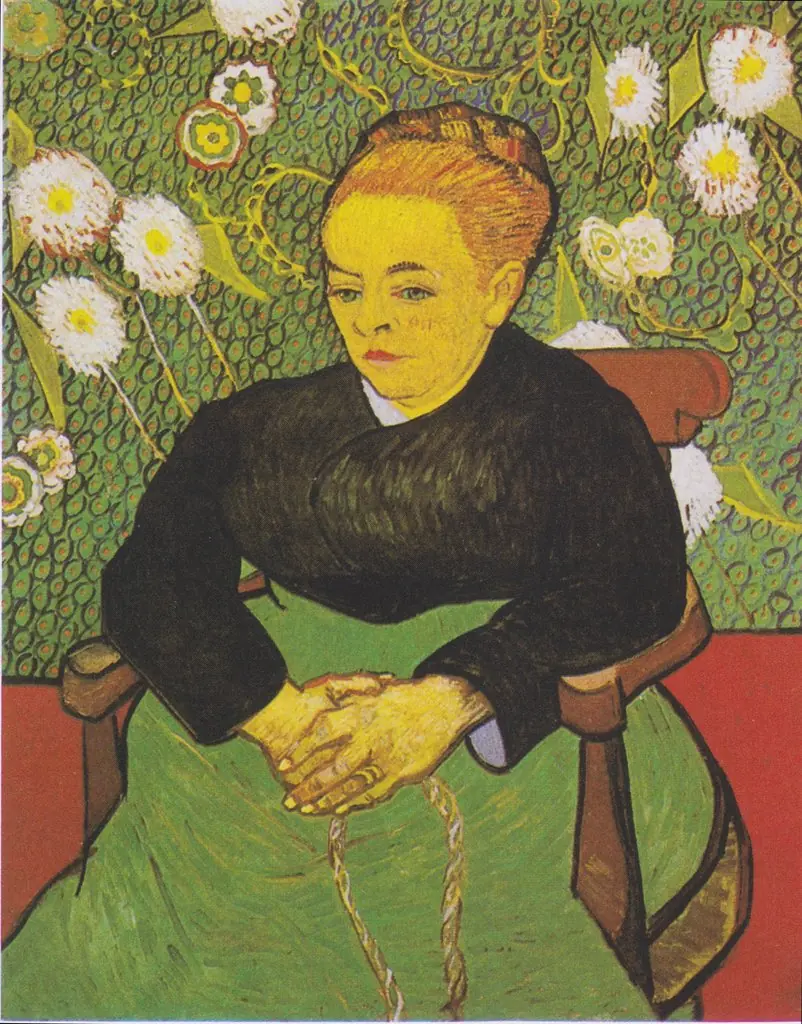 Lullaby: Madame Augustine Roulin Rocking a Cradle (La Berceuse)
- Madame Roulin Rocking the Cradle (La berceuse)