Artwork
Green Stripe
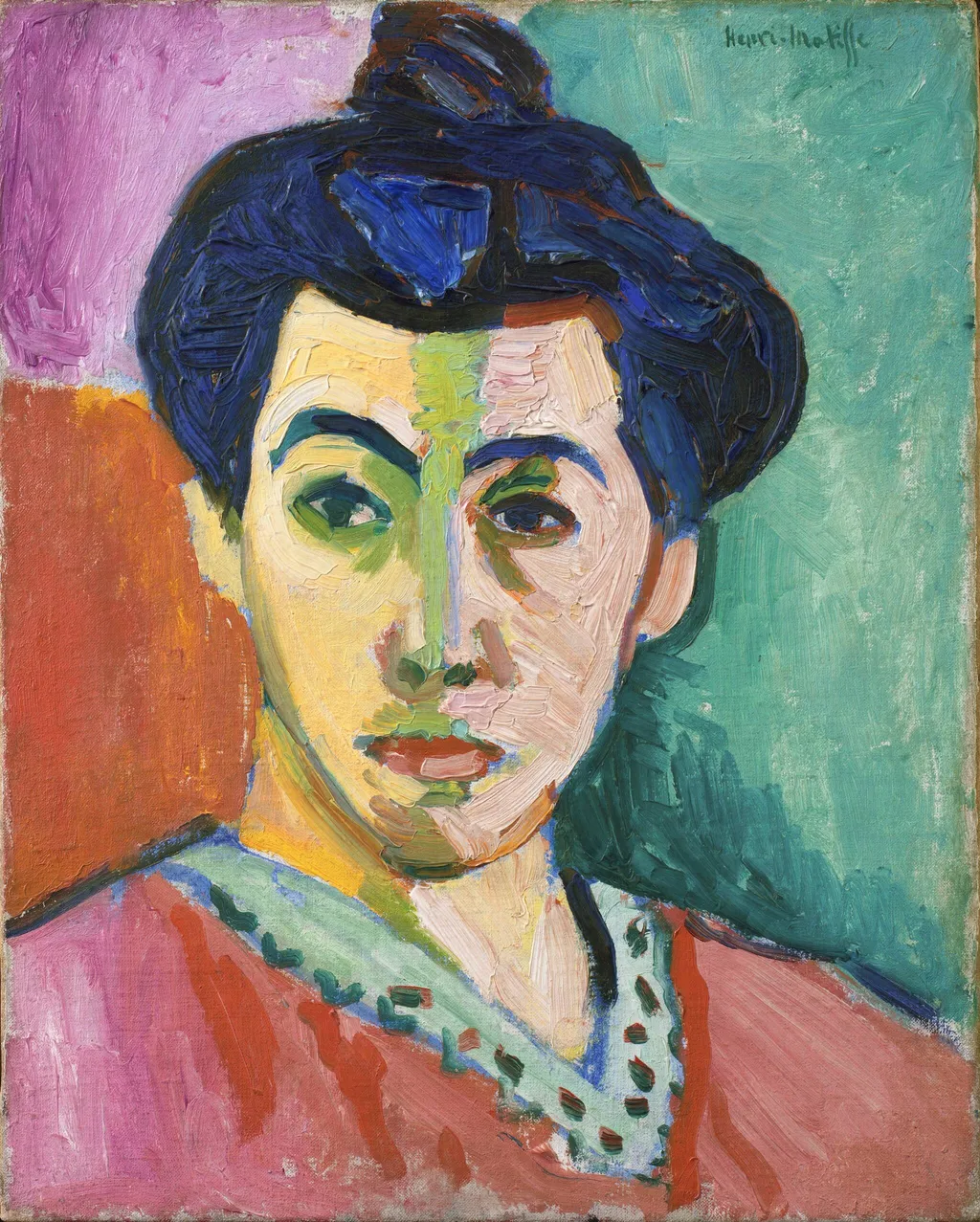
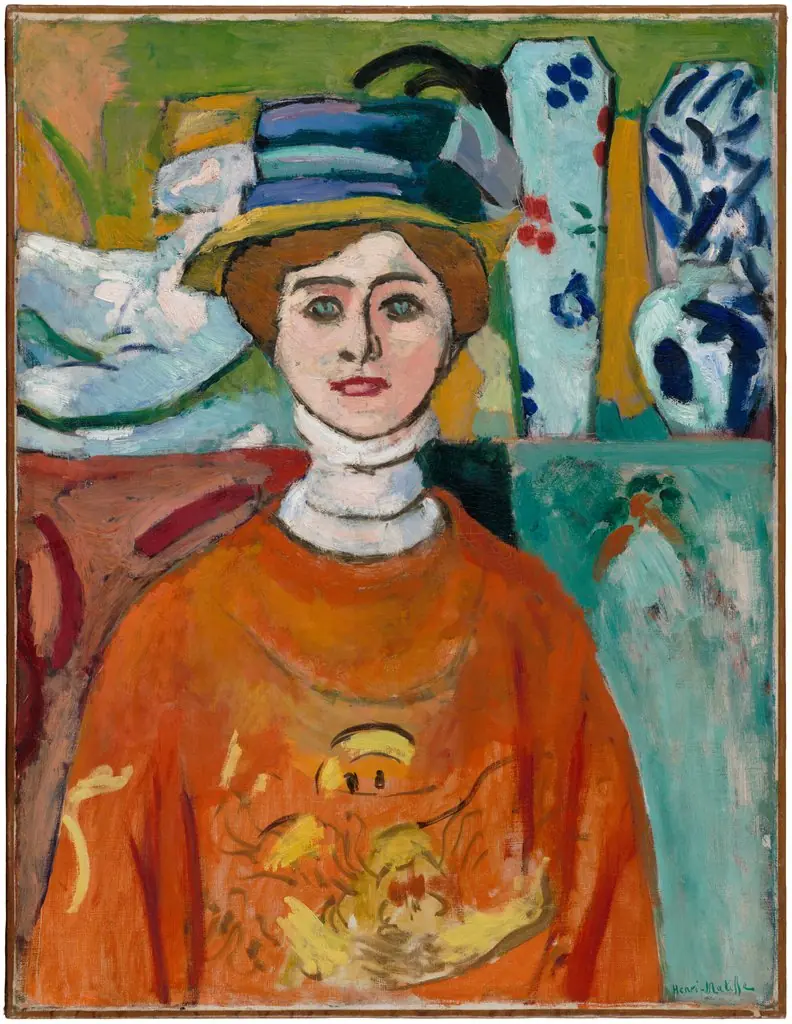
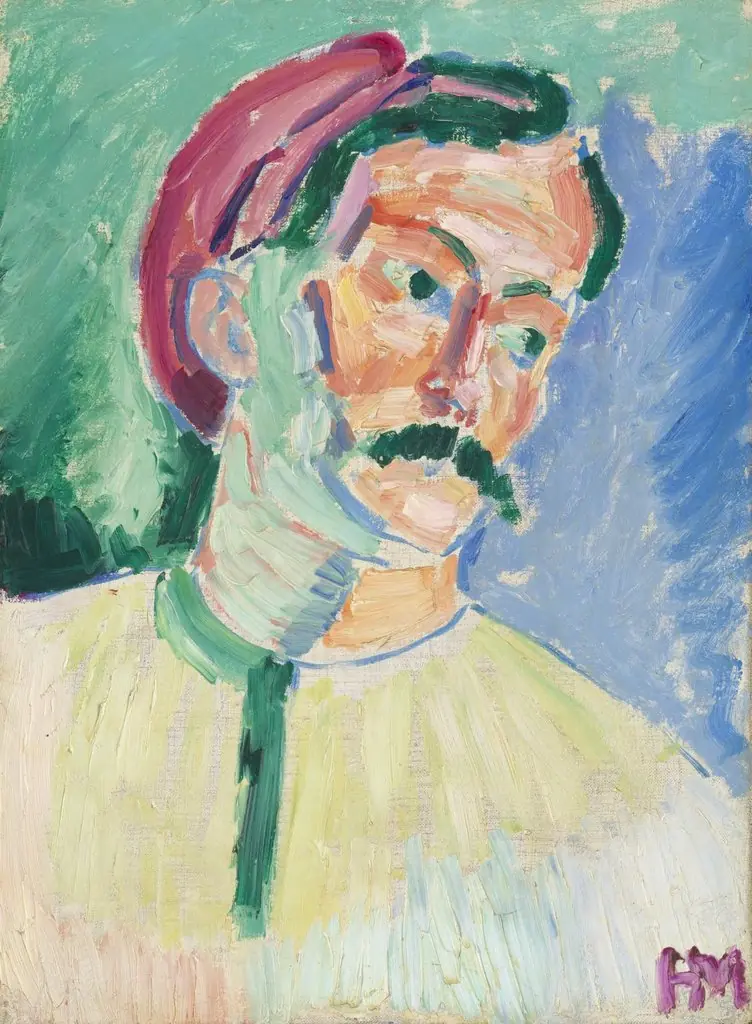
Green Stripe is an oil painting by the Fauvist artist Henri Matisse. It dates from 1905 and is held in the collection of the Statens Museum for Kunst.
About this work
Critics have been divided over the daring use of color and how the model is represented.
Green Stripe is an oil portrait painted in 1905 by French artist Henri Matisse. It shows his wife, Amélie Noellie Matisse‑Parayre, in a bust‑length view.
The painting gets its name from a vertical green stripe that runs down the middle of her face, a bold color choice that aligns with Fauvist ideas even though no specific movement is listed. Critics have been divided over the daring use of color and how the model is represented.
If you’re curious about more works by the same painter, check out Henri Matisse.
Subject & Meaning
The painting portrays Amélie Noellie Matisse-Parayre, the artist’s wife, as a bust‑length portrait completed in 1905. A vivid vertical green stripe runs from her hairline down the nose to the upper lip, while one side of her face is rendered in pink‑orange‑red tones suggesting direct light and the opposite side in yellow indicating half‑light; her hair, eyebrows and eyes are deep blue, she wears an orange‑pink blouse with a teal neckline, and the background is split between pink‑orange and teal. These unnatural, contrasting colors create tension and intensity, reflecting Matisse’s Fauvist belief that color expresses feeling rather than imitates nature. Critics noted the work’s mask‑like, impersonal quality, describing it as a “demented caricature” and a “punishment” of Amélie, and art historian John Klein has linked this effect to strains in the Matisses’ marriage.
Technique & Style
Executed in oil on canvas, Green Stripe measures 40.5 × 32.5 cm and presents a bust-length portrait of Amélie Matisse-Parayre in simplified, planar form. The composition is structured through broad, unmodulated color fields, pink, yellow, blue, orange, and green, arranged to signal light and shadow rather than naturalistic modeling. A prominent vertical green stripe divides the face, separating the illuminated side (pink with orange and red accents) from the half-light side (yellow). The background splits into opposing color zones: pink and orange on one side, teal on the other. Matisse’s handling favors flat, sharply defined areas over gradual transitions, with contours sharply delineating features and the green stripe functioning as a decisive formal device. The palette’s intensity and the work’s stylization align with Fauvist aims, rejecting local color and chiaroscuro in favor of color as expressive force.
History & Provenance
Henri Matisse completed Green Stripe in 1905, painting it during the summer of that year in Collioure alongside André Derain and likely finishing it in the autumn after his return to Paris. The work portrays his wife Amélie Matisse-Parayre. Its earliest known owners were the American collectors Michael and Sarah Stein, who displayed it prominently in their home. Following World War I the painting passed to Danish businessman Christian Tetzen, who retained it until his death in 1936; thereafter it entered the collection of the Statens Museum for Kunst in Copenhagen, where it remains.
Henri Matisse painted Green Stripe in 1905, depicting his wife Amélie Noellie Matisse-Parayre in a bust-length portrait. The work measures 40.5 cm by 32.5 cm and is housed in the collection of Statens Museum for Kunst in Copenhagen, Denmark, under inventory number that identifies it as part of the museum’s holdings. It entered the museum’s collection in 1936 after being owned by Michael and Sarah Stein and later Christian Tetzen. The painting has been exhibited at Statens Museum for Kunst and is documented in multiple museum publications and exhibition records.
Context
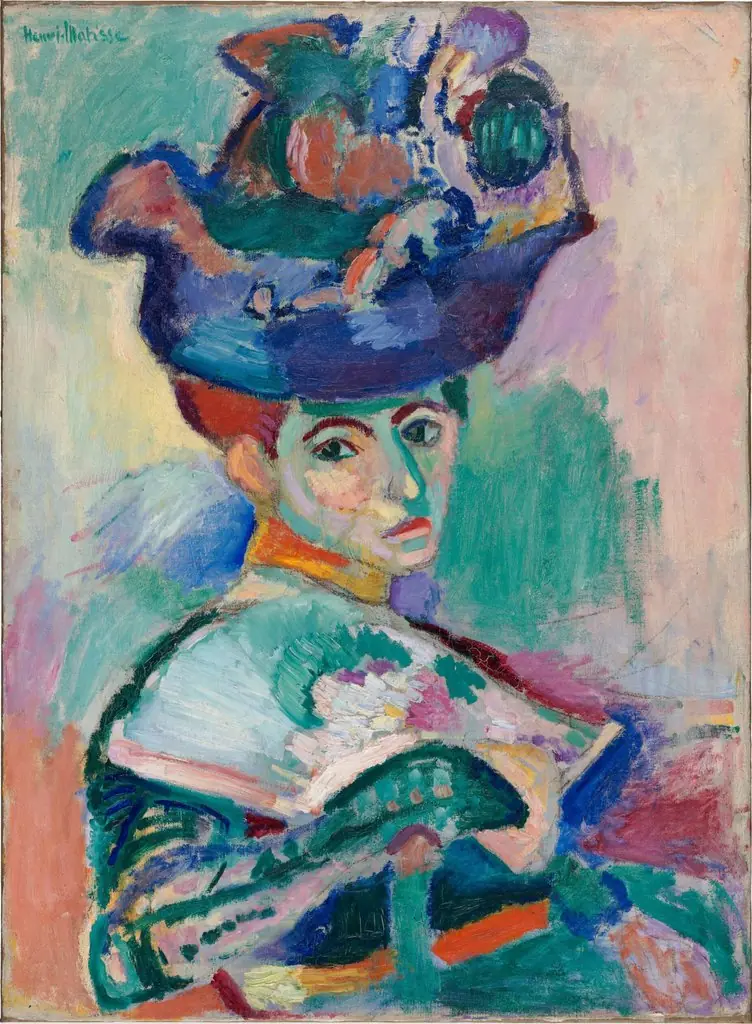
The Green Stripe is a foundational work of Fauvism, produced during the summer of 1905 in Collioure, where Matisse worked alongside André Derain exploring the expressive role of color independent of naturalistic description. The painting was made shortly after Woman with a Hat and is commonly read in dialogue with that earlier portrait of Amélie, marking a shift toward harder contours and a more austere, mask-like treatment of the sitter. Its blocks of pure color reflect the influence of Gauguin and Van Gogh as Matisse moved away from Impressionism.
The work drew polarized responses. Critics and friends were unsettled by what they saw as a lack of humanity in the portrait: a friend of the original owners Michael and Sarah Stein called it "a demented caricature of a portrait," and in 1910 Gelett Burgess wrote that the painting was Matisse's "punishment" of Amélie, compelling the viewer "to see in her a strange and terrible aspect." Art historian John Klein has linked the portrait's impersonal character to strains in the Matisses' marriage. The painting is discussed in scholarship including John Klein's Matisse portraits (2001) and the catalogue Vertigo of Color: Matisse, Derain, and the Origins of Fauvism (2023).
Legacy
The Green Stripe quickly became a touchstone for Fauvism and remains emblematic of Matisse’s radical reimagining of color as expressive force rather than descriptive tool. Its bold, unmodulated hues and the titular green stripe dividing the face polarized contemporary critics; the label “wild beasts” (fauves) for Matisse and Derain’s circle crystallized around works such as this one, cementing the movement’s reputation for liberating color from naturalism. By the 1930s, the painting had entered the Statens Museum for Kunst, where it has since anchored narratives of early modernism’s rupture with tradition.
Scholars have debated the portrait’s psychological charge, with some reading the mask-like simplification as a coded response to marital tensions and others emphasizing its purely optical ambition. Its pairing with Woman with a Hat in 1905 exhibitions crystallized a dialogue that redefined portraiture’s capacity for abstraction, influencing later movements from German Expressionism to Color Field painting.
Artist & collection
Artist
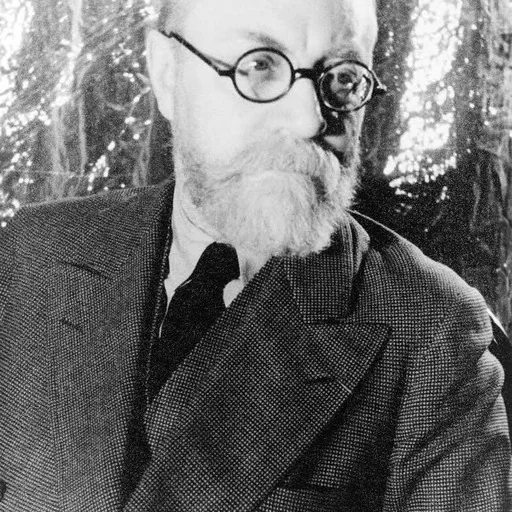
Henri Émile Benoît Matisse (French:; 31 December 1869 – 3 November 1954) was a French visual artist, known for both his use of colour and his fluid and original draughtsmanship.