Artwork
Girl in White
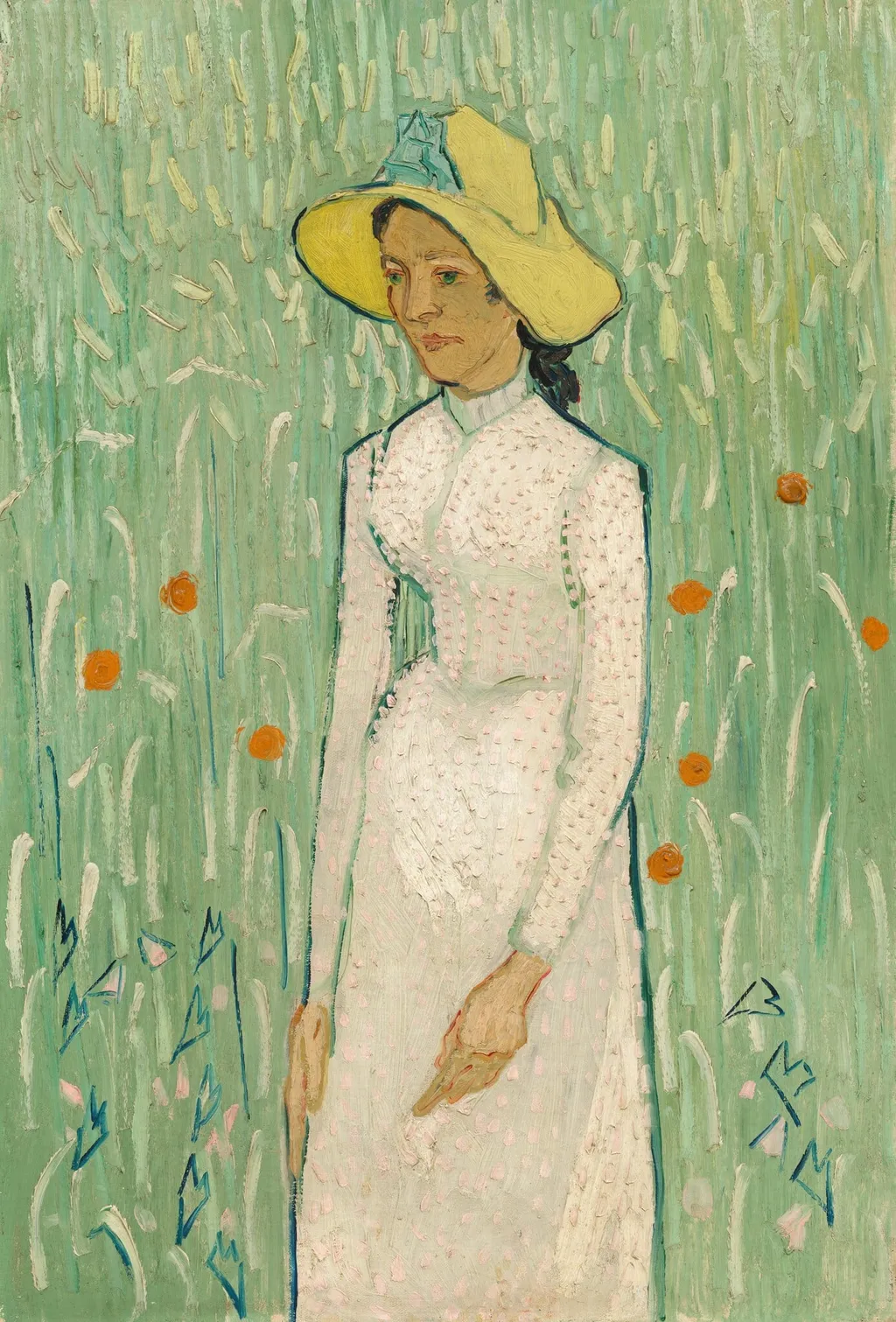
Girl in White is an oil painting by the Impressionist artist Vincent van Gogh. It dates from 1890 and is held in the collection of the National Gallery of Art.
About this work
Subject & Meaning
Van Gogh's use of this compositional device conveys an intimate yet melancholic mood, reflecting his fragile mental state in Auvers‑sur‑Oise.
Girl in White depicts a young peasant woman in a white dress and a yellow hat tied with blue ribbons, standing before a wheat field; the figure fills most of the picture plane, bringing her into close proximity with the viewer and creating a poignant, almost distant gaze. Van Gogh's use of this compositional device conveys an intimate yet melancholic mood, reflecting his fragile mental state in Auvers‑sur‑Oise. The work is cited by modernist scholars as an example of a primitive, direct vision that emphasizes formal effect over literal likeness.
History & Provenance
Created in 1890 in Auvers-sur-Oise during the final months of Vincent van Gogh's life, Girl in White depicts a peasant woman in a white dress and yellow hat. The work was first in the possession of the artist's sister-in-law, Johanna van Gogh-Bonger, in Amsterdam, listed in an 1890 inventory as 'Jeune fille en blanc' on a size 15 marine canvas. In August 1908 she sold it to the dealer J.H. de Bois of The Hague, director of the C.M. van Gogh gallery, who transferred it to the collector Richard Kisling (1862–1917) of Zürich.
After Kisling's death it passed to his wife, Hedwig Glatt-Kisling, until 1929, when the Swiss dealer Max Bollag acquired it. Bollag sold it in 1951 to the American collector Chester Dale (1882–1962) of New York, who bequeathed it to the National Gallery of Art, Washington, D.C.; it entered the collection in 1963 and remains in the Chester Dale Collection.
Context
Van Gogh's Girl in White (1890) emerged during his final Auvers‑sur‑Oise period, a time marked by intense productivity and psychological strain, as documented in the artist's correspondence and contemporary accounts. The work, a portrait of an unidentified young woman in a white dress, exploits an elongated picture plane to bring the sitter close to the viewer, creating a poignant emotional distance. Critics and later scholars have highlighted its 'primitive' directness, contrasting it with literal likeness and linking it to a modernist valuation of formal simplicity.
Its provenance traces from Johanna van Gogh‑Bonger through J.H. de Bois, Richard Kisling, and Max Bollag to Chester Dale, who bequeathed it to the National Gallery of Art in 1963.
Legacy
Girl in White has secured a lasting place in art-historical discourse as a touchstone for early-twentieth-century modernist criticism. In Primitivism, Cubism, Abstraction: The Early Twentieth Century, Harrison, Frascina, and Perry pair the painting with John Byam Shaw's 1900 portrait Boer War to illustrate the modernist preference for works emphasizing formal aspects and a "primitive" or "direct" vision over the "exhibited skill and sophistication of literal likeness," positioning Van Gogh's canvas as exemplifying richer emotional content. The painting's institutional legacy was cemented in 1963 when, as part of the bequest of collector Chester Dale, it entered the National Gallery of Art in Washington, D.C., where it remains in the Chester Dale Collection.
Five of the works Johanna van Gogh-Bonger sold in 1908 ultimately joined that same collection, underscoring the painting's role within a broader Van Gogh holdings at the NGA.
Overview
Vincent van Gogh created Girl in White, an oil on canvas painting, in 1890 during his final months in Auvers-sur-Oise, France. Also known as Young Girl Standing Against a Background of Wheat or Woman in a Cornfield, the work depicts a young girl dressed in white, positioned against an unadorned backdrop. This piece offers insight into the artist's late period.
Technique & Style
The painting showcases Van Gogh's distinctive artistic method through its application of paint. The artist rendered the girl's white dress and face using thick, pronounced brushstrokes, a technique known as impasto. Complementing this texture, the artwork features bold colors in both the figure's attire and the surrounding environment, contributing to the painting's expressive quality and characteristic visual impact.
Own this work as a print
Artist & collection
Artist
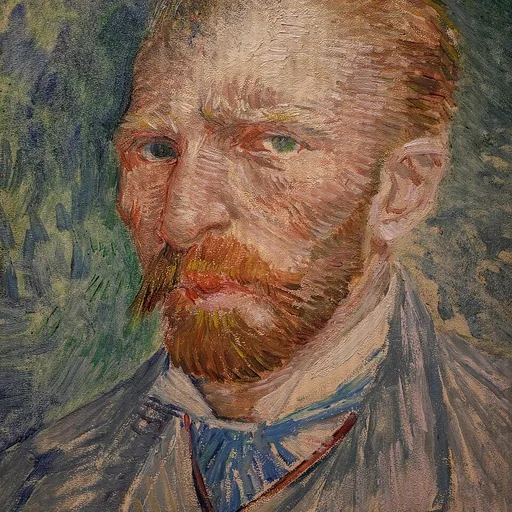
Vincent Willem van Gogh was a Dutch Post-Impressionist painter who is among the most famous and influential figures in the history of Western art.

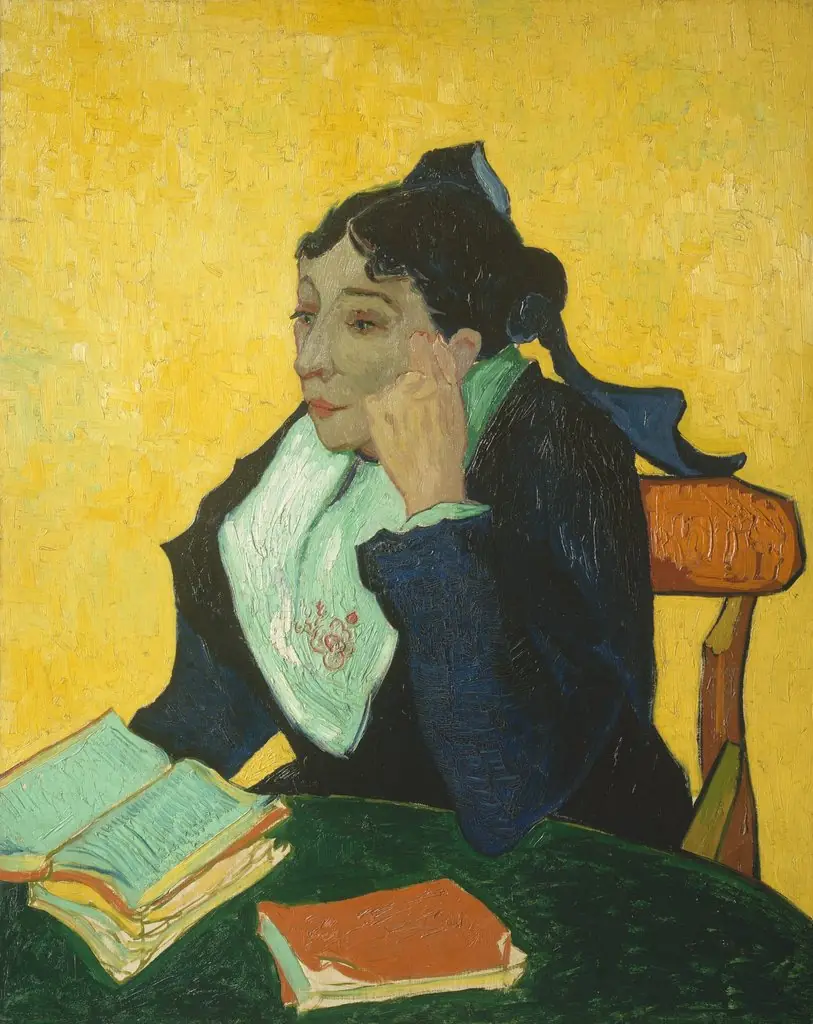
 Little Arlesienne, The
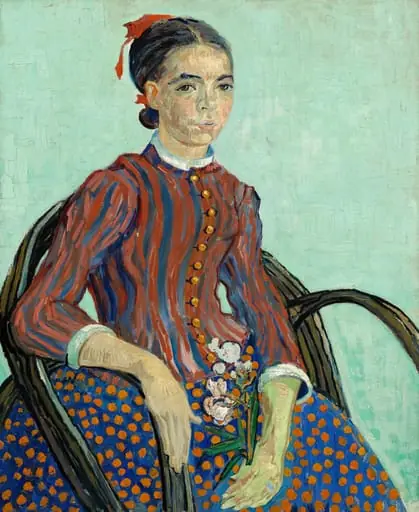 La Mousmé
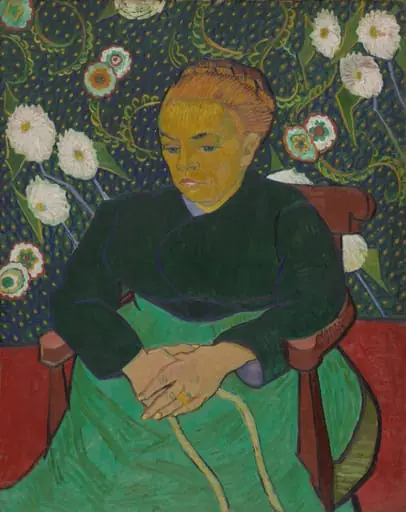 Madame Roulin Rocking the Cradle (La berceuse)
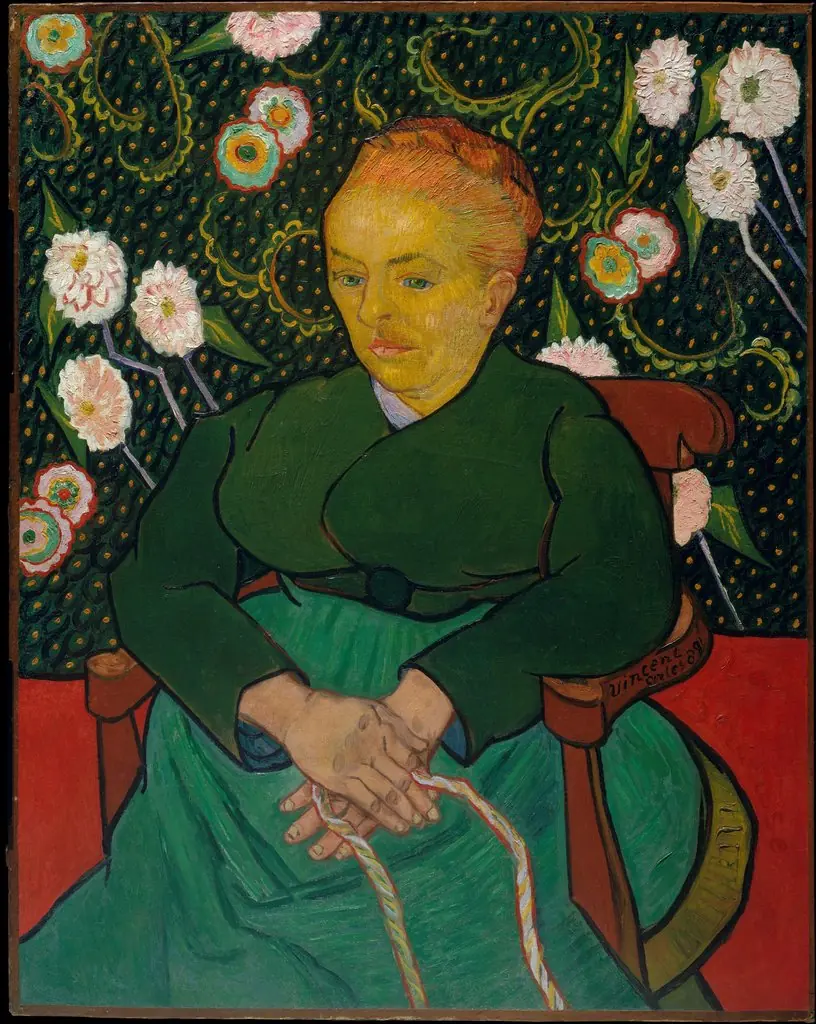 La Berceuse (Woman Rocking a Cradle; Augustine-Alix Pellicot Roulin, 1851–1930)
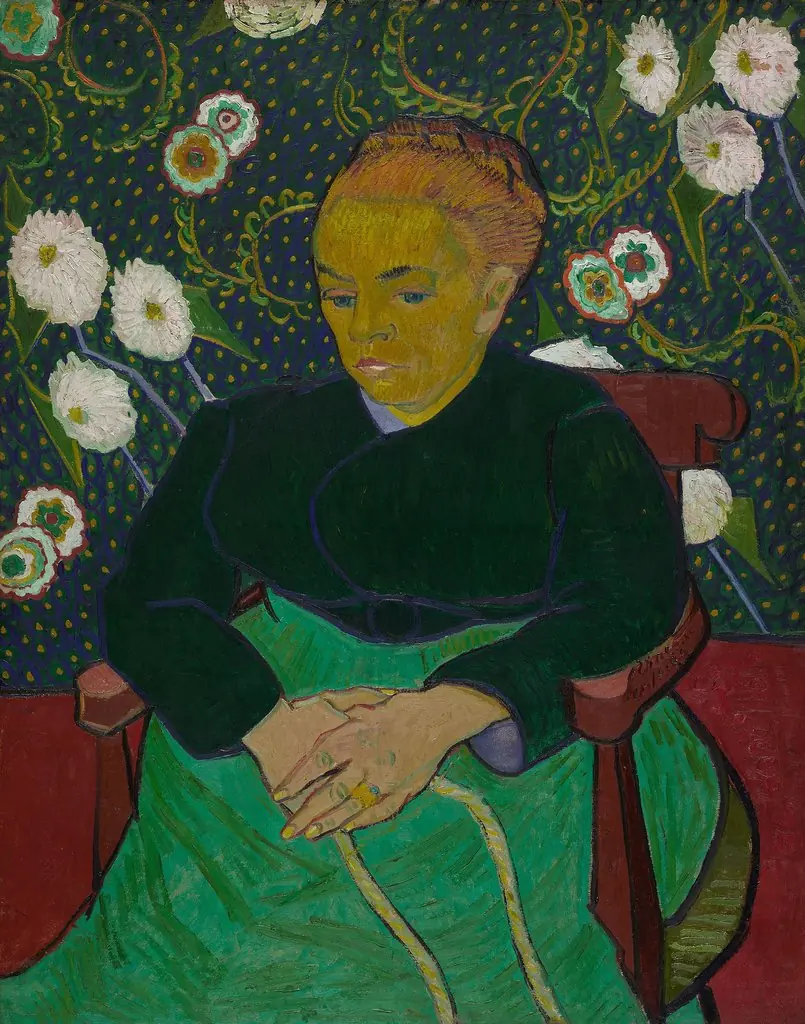 Madame Roulin Rocking the Cradle (La Berceuse)
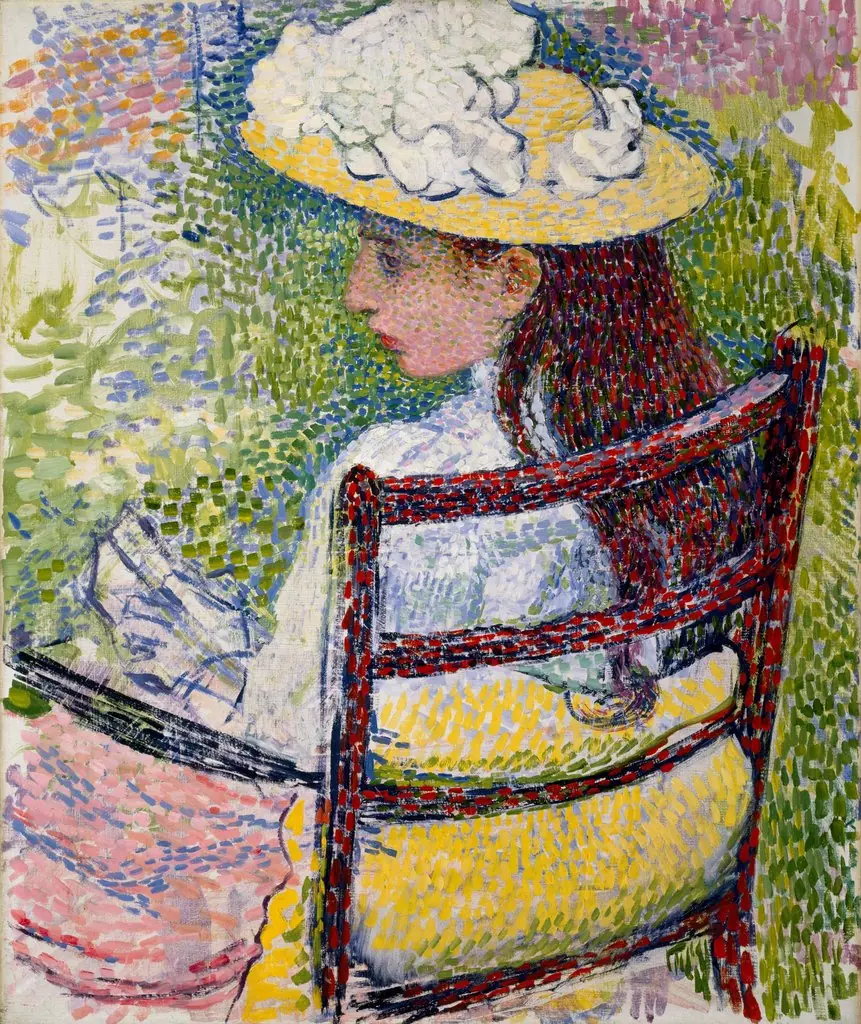 Jeanne Pissarro
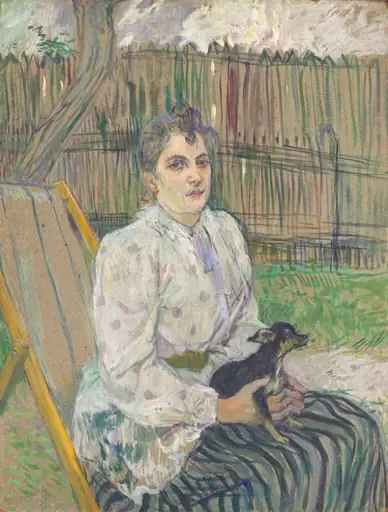 Lady with a Dog
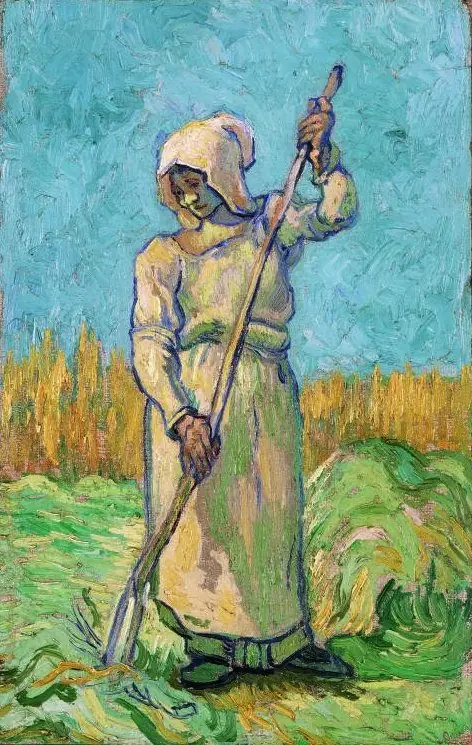 Peasant Woman with a Rake (after Millet)
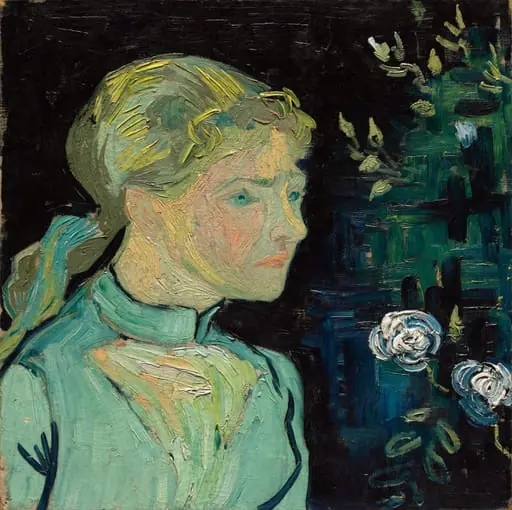 Adeline Ravoux
 Adeline Ravoux
 Motif Romanesque
- Woman in a White Dress