Artwork
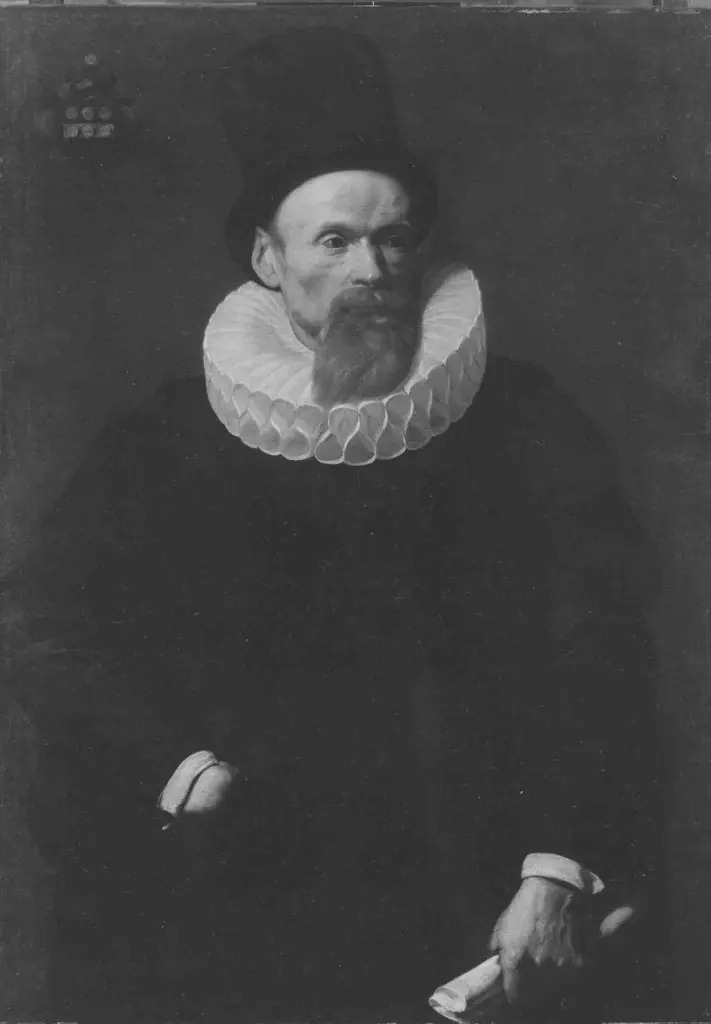
Bildnis eines Mannes
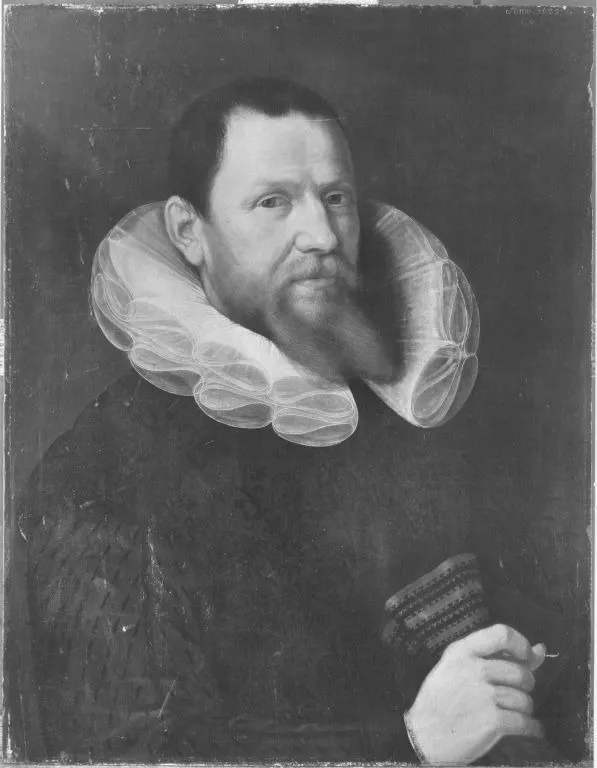
Bildnis eines Mannes is an unspecified painting by the Flemish Baroque painting artist Gotthardt Wedig. It dates from 1625 and is held in the collection of the Bavarian State Painting Collections.
About this work
Subject & Meaning
No specific iconographic attributes, symbolic objects, or deeper allegorical meanings are identified in the provided documentation for this specific artwork.
The work is a portrait depicting a single male figure, executed by Gotthardt Wedig in 1625. As a straightforward genre piece, the painting presents the man as the sole main subject without additional narrative elements or secondary figures described in the available records. The composition focuses entirely on the representation of the individual, characteristic of the portraiture style of the period.
No specific iconographic attributes, symbolic objects, or deeper allegorical meanings are identified in the provided documentation for this specific artwork.
History & Provenance
The portrait titled 'Bildnis eines Mannes' was created in 1625 by the artist Gotthardt Wedig. The work is currently held within the collection of the Bavarian State Painting Collections and is housed at the Alte Pinakothek. While the specific circumstances of its commission and the identity of the male subject remain unrecorded in the available data, the painting's inception is firmly established as occurring in the year 1625.
The painting is held in the collection of the Bavarian State Painting Collections and is located at the Alte Pinakothek. No specific inventory or accession number is provided in the available sources. Furthermore, there is no recorded exhibition history for this work within the provided documentation.
Context
Gotthardt Wedig painted Bildnis eines Mannes in 1625, a portrait now housed in the Bavarian State Painting Collections at the Alte Pinakothek in Munich (63.6 cm × 49.2 cm). The work exemplifies early 17th-century German portraiture, reflecting the Baroque emphasis on individuality and status. Scholarship situates Wedig within the circle of northern German painters active in the early 1600s, though his career remains less documented than contemporaries.
The painting’s reception is anchored in its continued presence in a major public collection, underscoring its significance within regional art historical narratives.
Overview
Created in 1625, Bildnis eines Mannes is a portrait executed by Gotthardt Wedig, a German painter active in the early seventeenth century. The work belongs to the collection of Munich’s Alte Pinakothek and is signed with the monogram GDW, a hallmark of Wedig’s output in portraiture and still life.
Technique & Style
Wedig employs a pronounced chiaroscuro, using stark contrasts of light and shadow to model the sitter’s facial features. The illumination highlights the beard and collar, while the surrounding darkness deepens the three‑dimensional effect. This handling aligns the painting with Flemish Baroque sensibilities, emphasizing drama through tonal modulation.
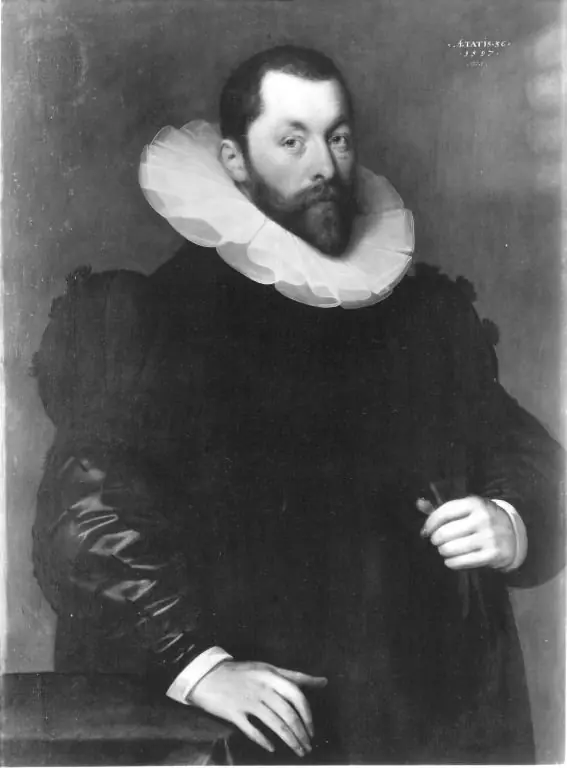
Artist & collection
Artist
Gotthardt Wedig (1583 – 1641) was a 17th-century German painter. Wedig was born in Cologne as the grandson of Barthel Bruyn the Younger who probably taught him to paint. He is known for portraits and still lifes. His…

- Bildnis eines Mannes
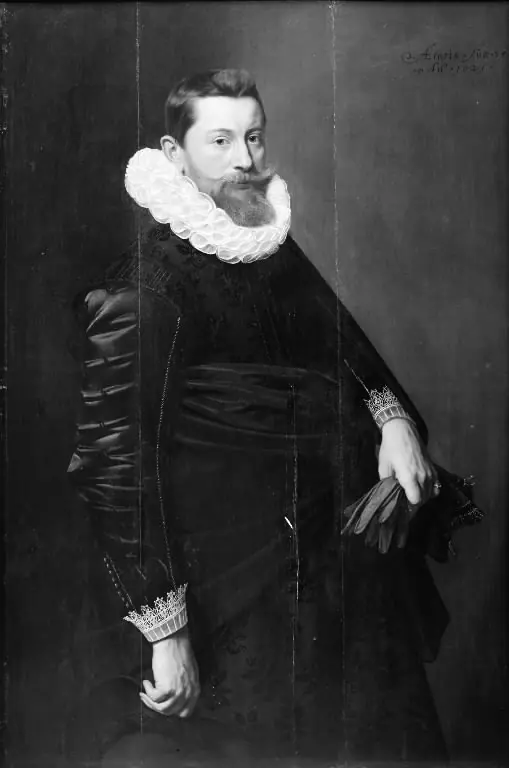 Portrait of a Gentleman
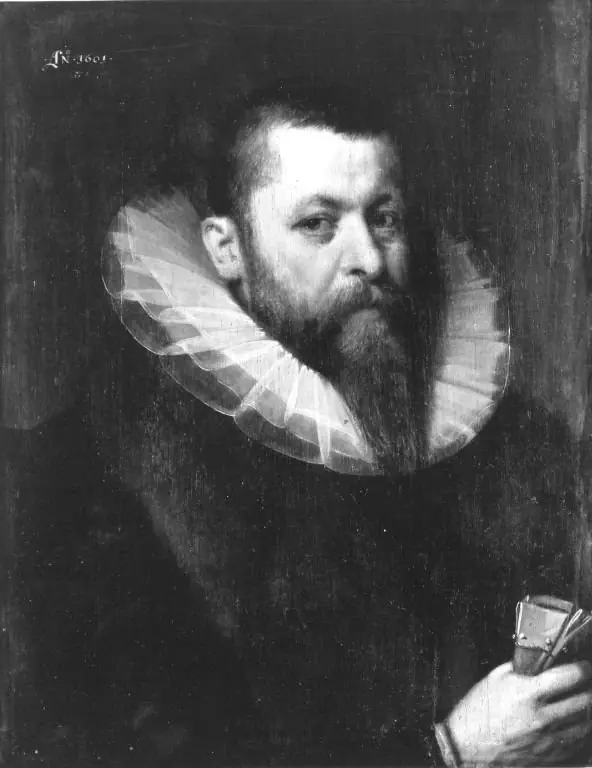 Bildnis eines Mannes
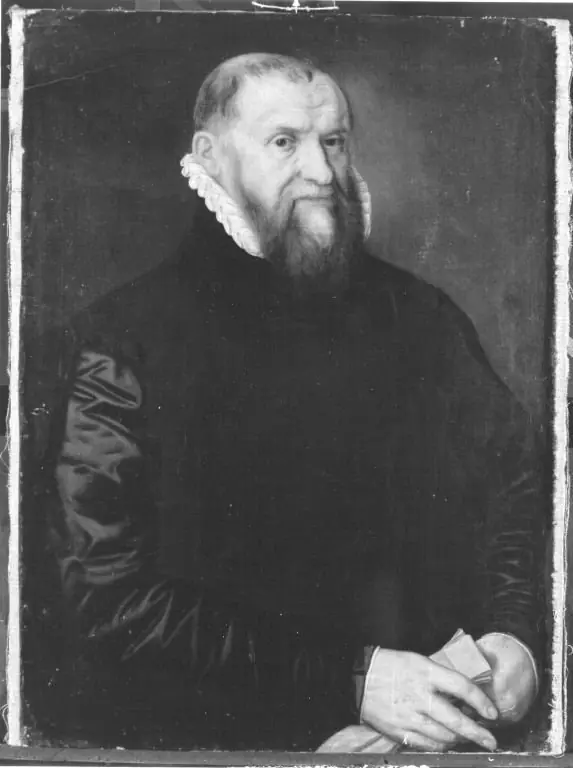 Bildnis eines Mannes (Art des)
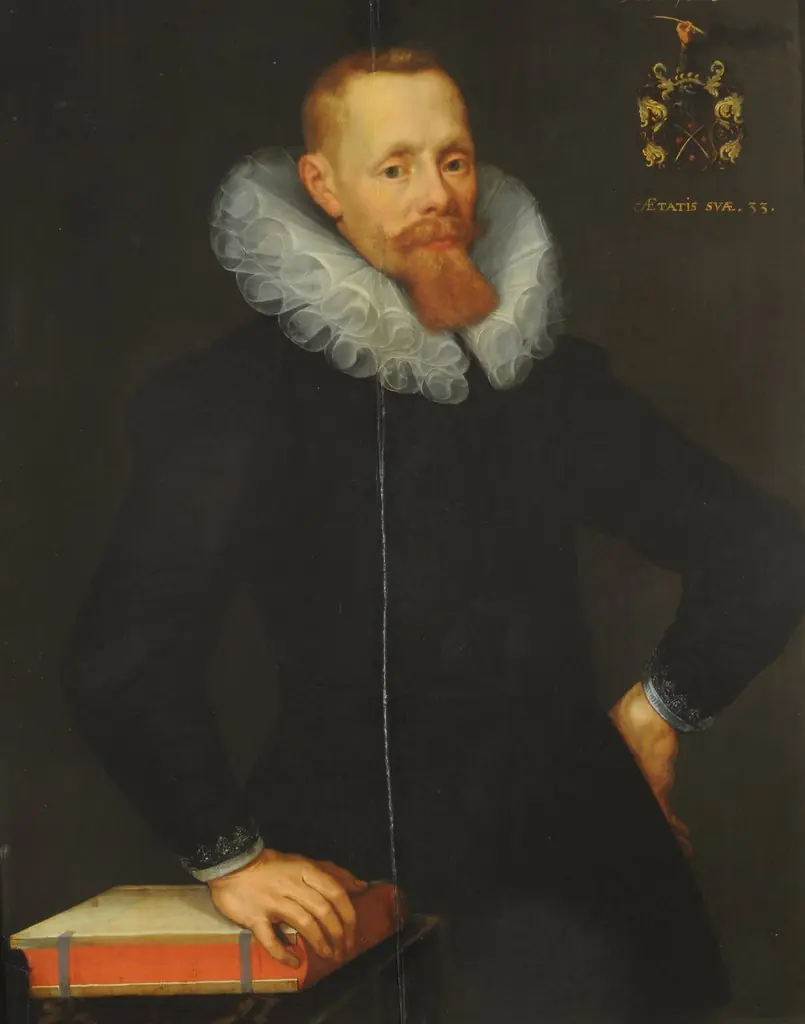
 Portrait of a red-bearded man
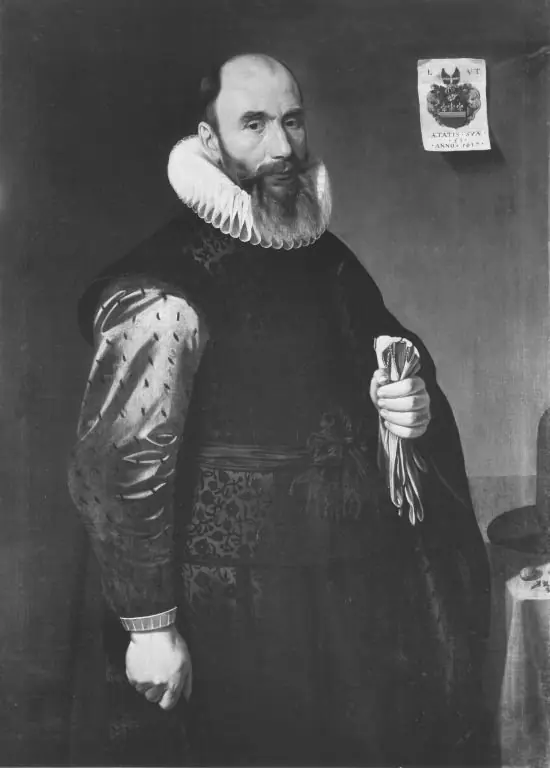 Portrait of Lambert van Twenhuysen (....-1627)
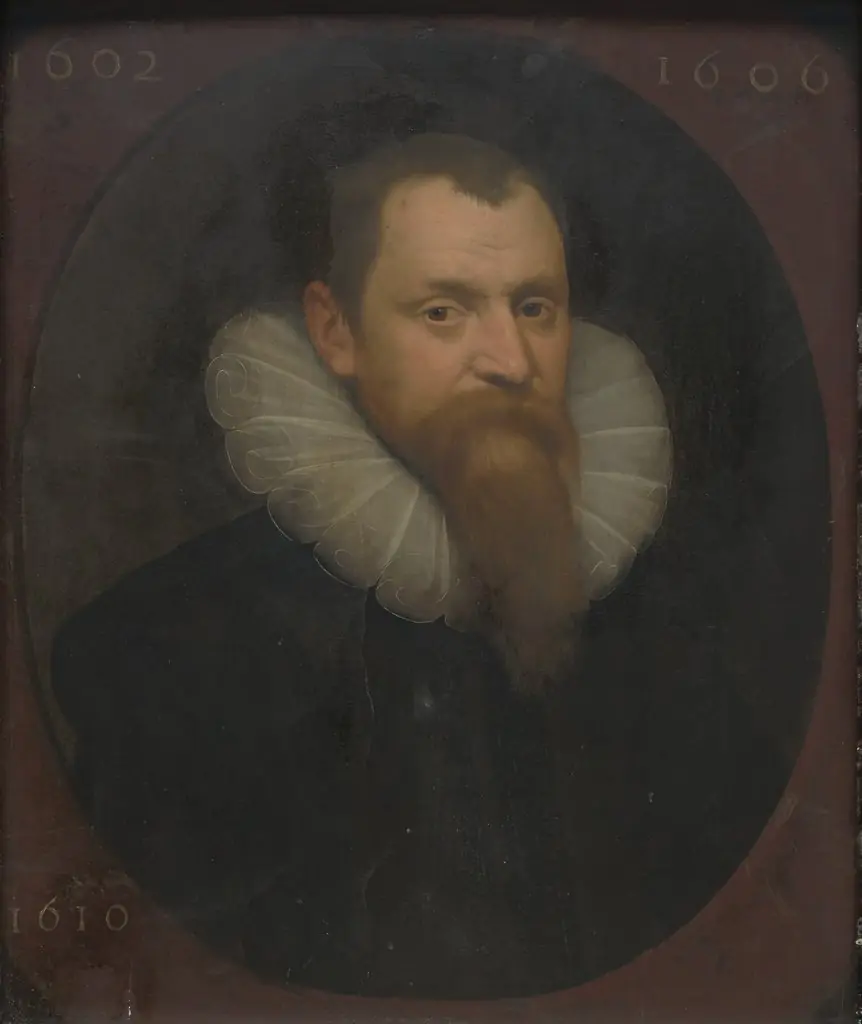 Portrait of a Man
 Male portrait
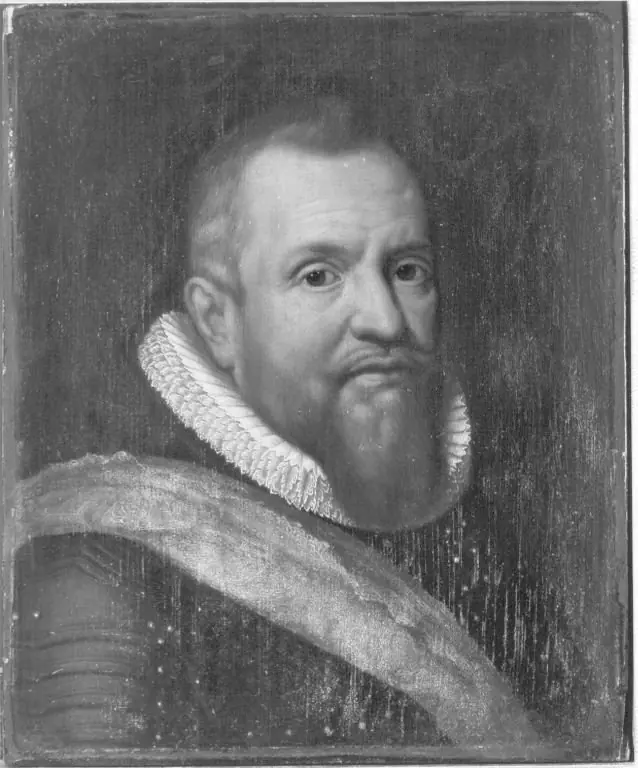 Bildnis des Willem Lodewijk, Graf von Nassau-Dietz (1560-1620)
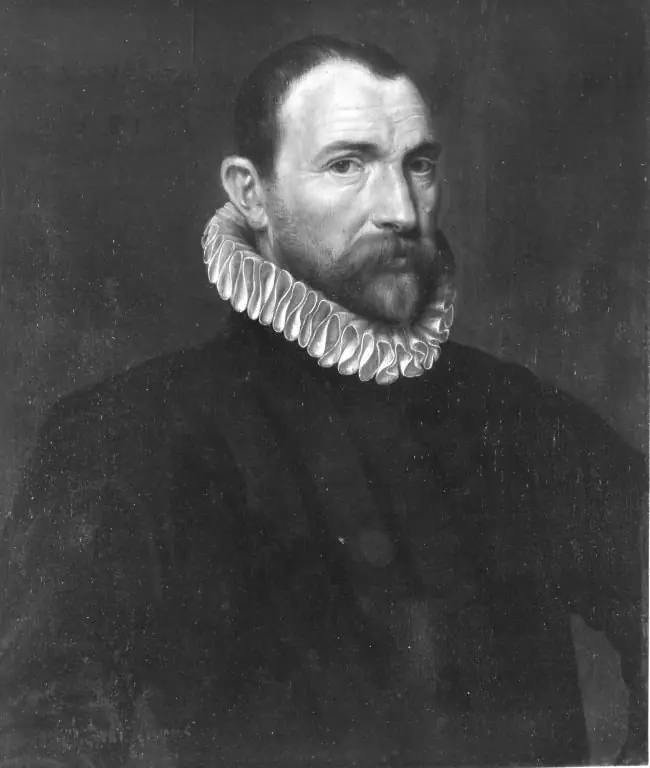 Portrait of an unknown man
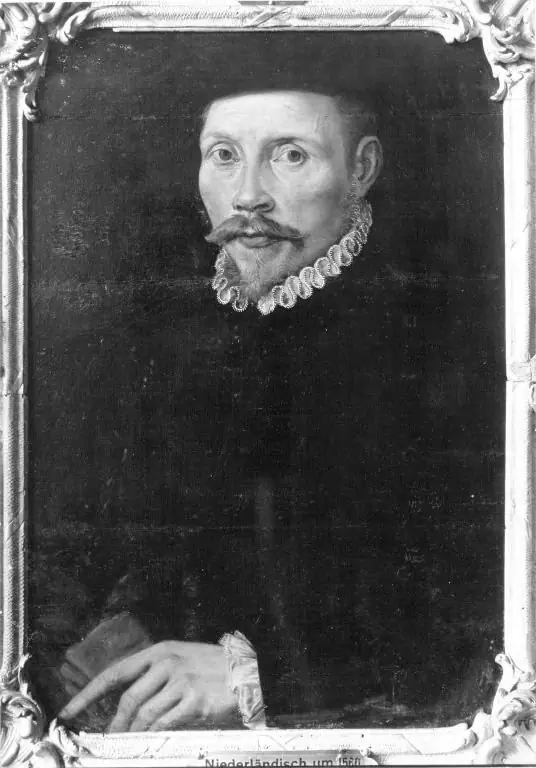 Bildnis eines Mannes
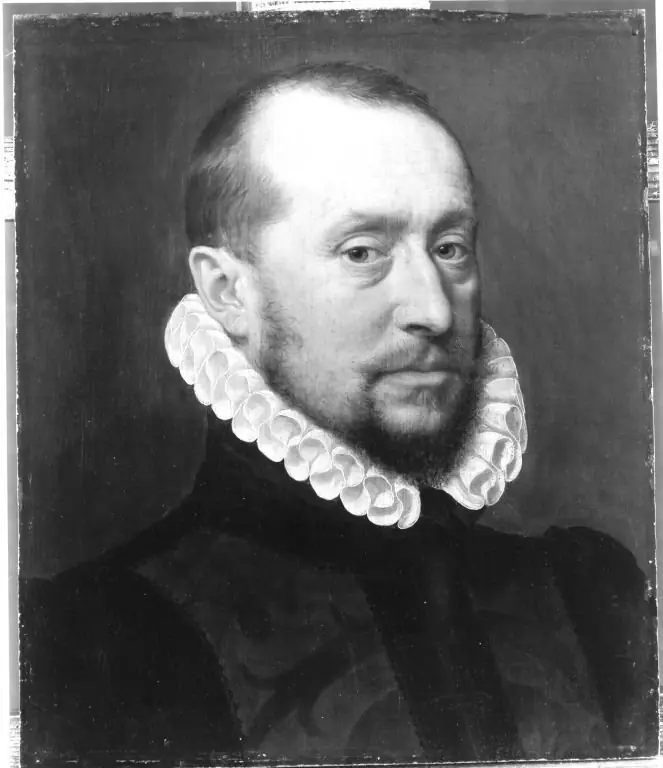 Brustbild eines braunbärtigen Mannes