Artwork
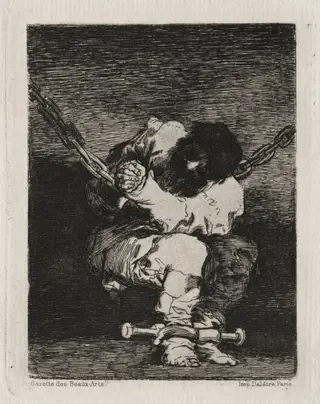
La seguridad de un reo no exige tormento (The Custody of a Criminal Does Not Call for Torture
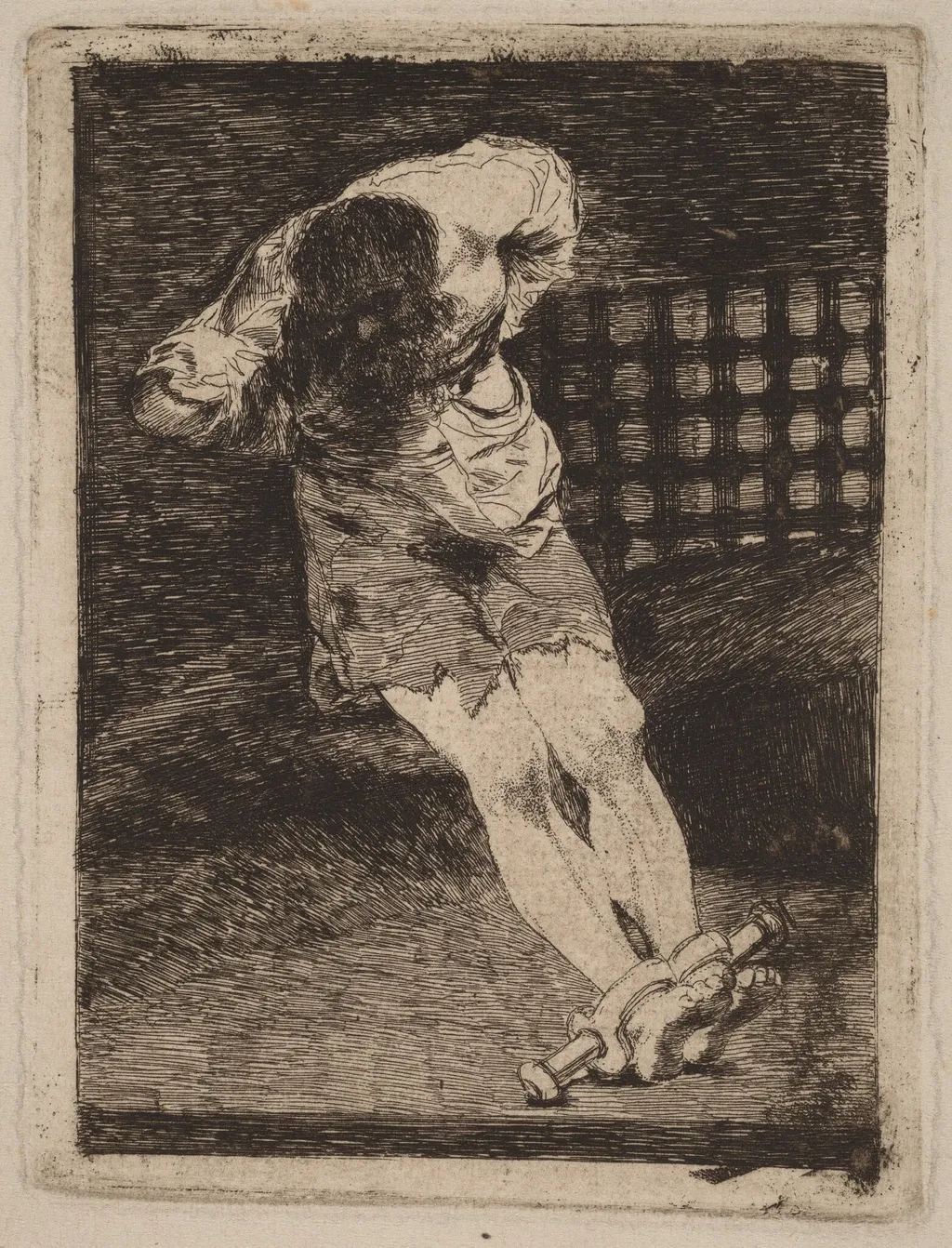
La seguridad de un reo no exige tormento (The Custody of a Criminal Does Not Call for Torture is an ink print by the Romanticist artist Francisco de Goya. It dates from 1810 and is held in the collection of the National Gallery of Art.
About this work
Overview
Created around 1810, this etching by Francisco de Goya forms part of his larger series Los Desastres de la Guerra. Though the series was conceived during the Peninsular War, the plate was not printed until after Goya’s death, appearing as a trial proof before 1859. The work uses line and shading to present a solitary, bound figure within a stark interior, evoking a mood of tension and discomfort.
Subject & Meaning
The composition centers on a man in a white shirt and trousers, his arms raised and wrists secured with metal cuffs. He stands amid armed men, suggesting a scene of interrogation or detention. By portraying the prisoner’s exposed vulnerability, Goya raises questions about the moral limits of coercion and the humane treatment of those in custody.
Technique & Style
Executed with etching and burin, the image relies on bold, decisive lines and deep chiaroscuro to model volume and convey drama. A dark, grid‑like wall recedes in the background, reinforcing the sense of confinement. The stark contrast between the illuminated figure and the surrounding shadows heightens the emotional intensity typical of Goya’s war‑related prints.
History & Provenance
Goya produced the Desastres plates between 1810 and 1820, but many remained unpublished during his lifetime. This particular plate survived as a trial proof, printed posthumously before 1859, and later entered collections of institutions documenting the artist’s graphic oeuvre.
Context
The image belongs to a body of work that documents the atrocities of the Peninsular War (1808‑1814), a conflict that devastated Spain and prompted Goya to confront the cruelty of both combat and its aftermath. While the series does not depict specific battles, it reflects broader concerns about violence, oppression, and the suffering of civilians.
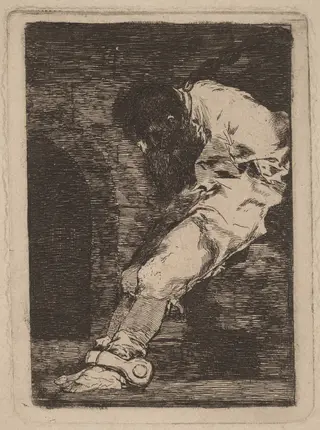
Own this work as a print
Artist & collection
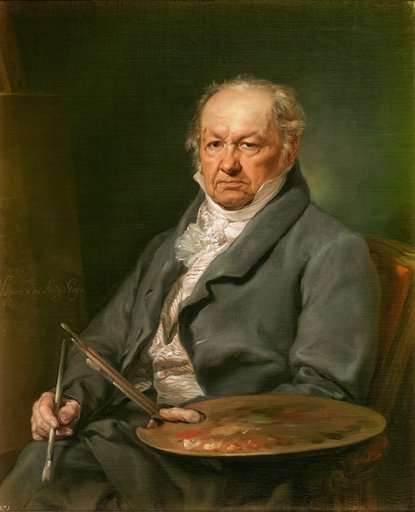
Artist
Francisco José de Goya y Lucientes was a Spanish romantic painter and printmaker.

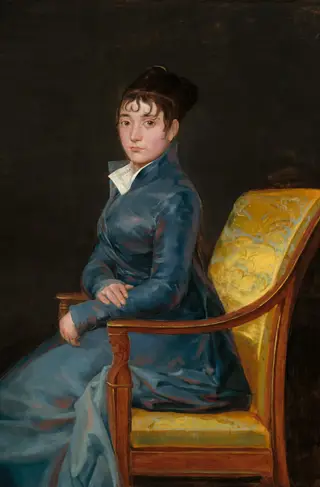
 The Little Prisoner
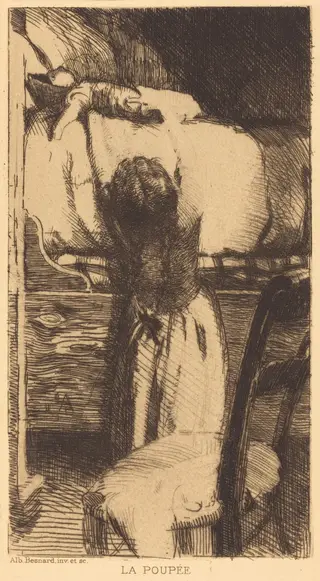 The Doll (La Poupée)
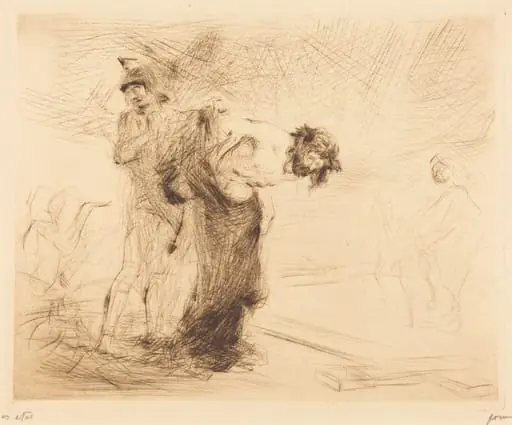 Le Christ dépouillé de ses vêtements (Christ Stripped of His Clothes)
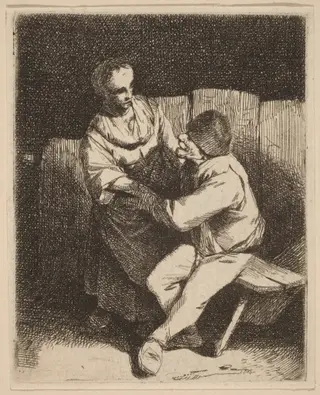 The Refused Caress
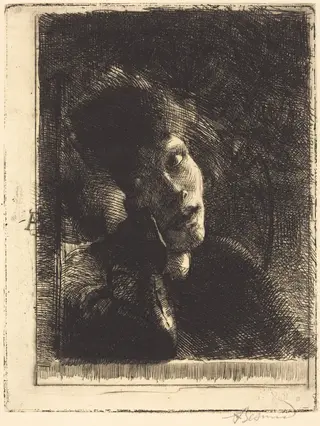 La Muse Accoudée
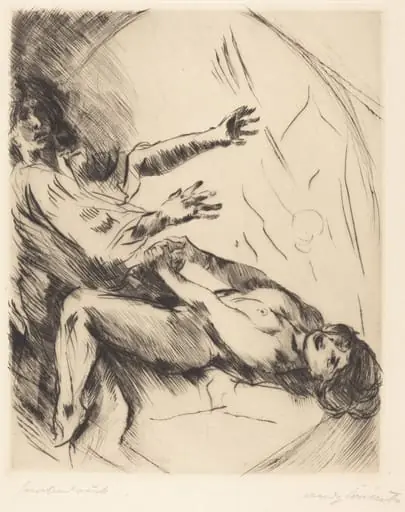 Joseph und Potiphars Weib I (Joseph and Potiphar's Wife I)
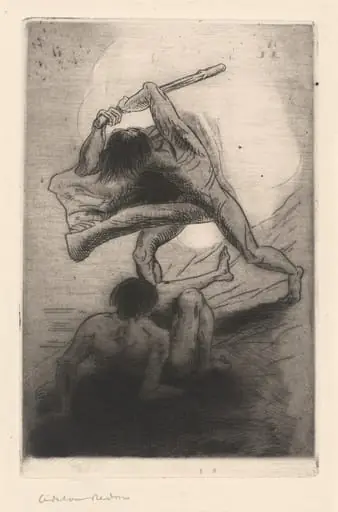 Cain and Abel
 Bobalicon (Simpleton)
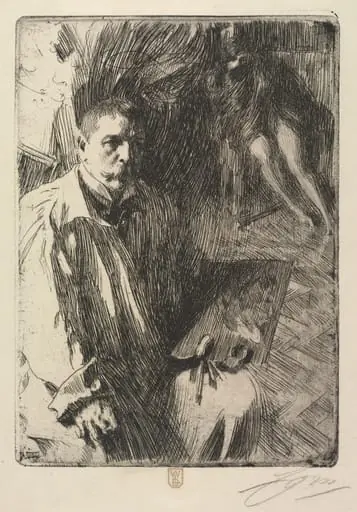 Portrait of the Artist and His Model
 Old Woman Seated (La vieille femme assise)