Artwork
Señora Sabasa Garcia
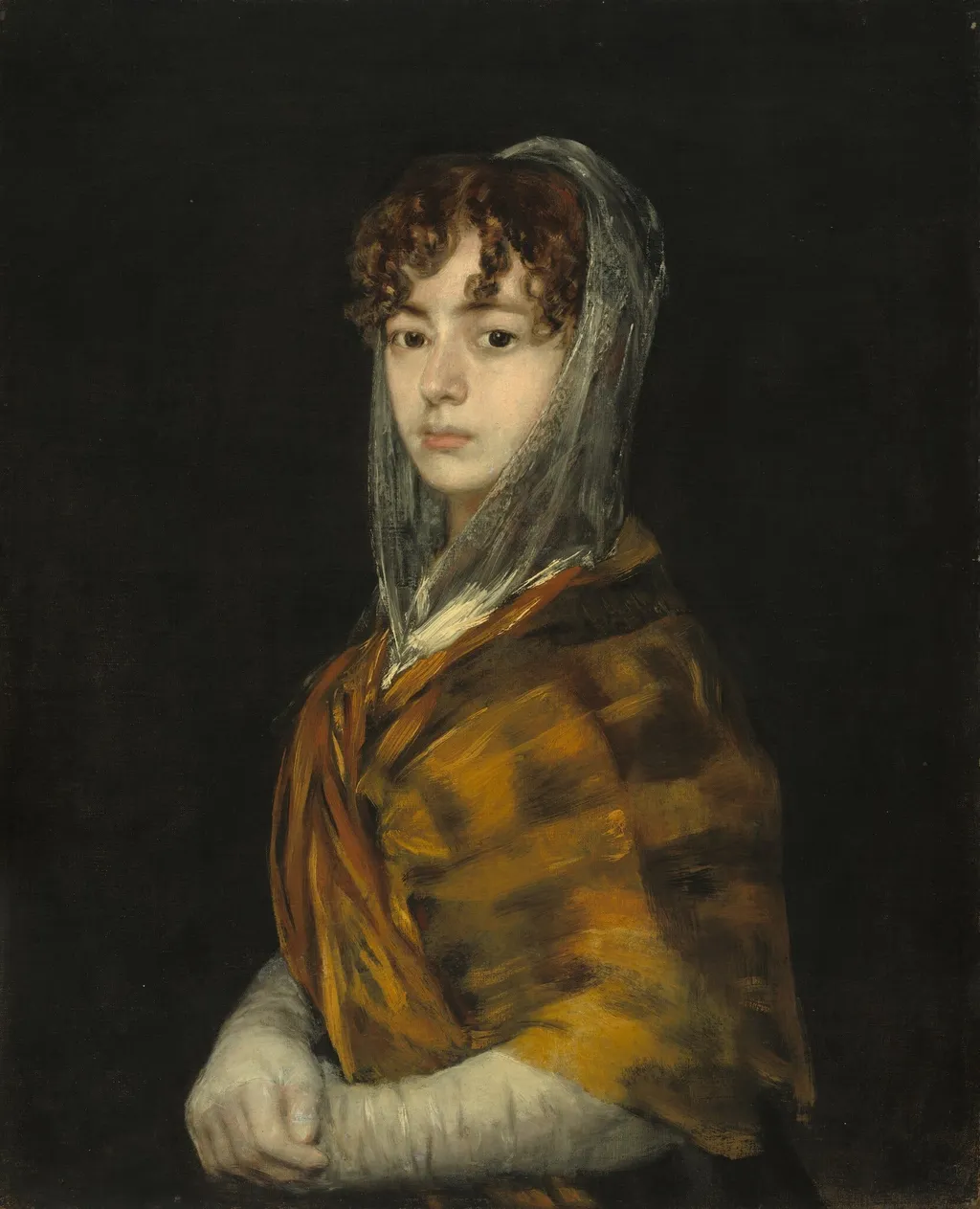
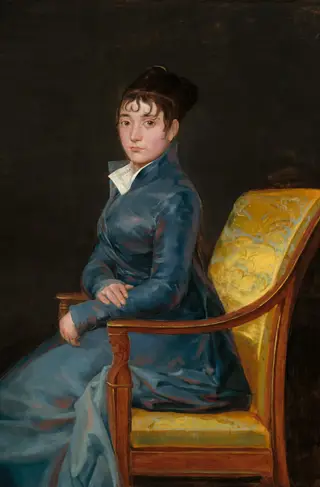
Señora Sabasa Garcia is an oil painting by the Romanticist artist Francisco de Goya. It dates from 1808 and is held in the collection of the National Gallery of Art.
About this work
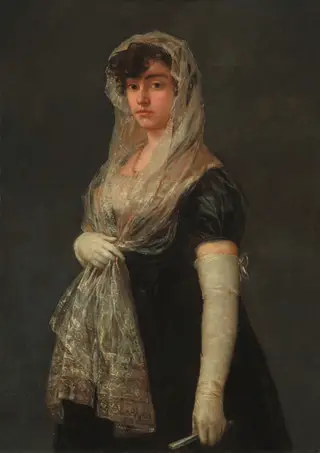
A brown-haired woman in period dress, her face the center of the picture and her expression hard to read. Francisco Goya keeps the colors simple and calm, showing his ease with a lifelike portrait. Oil on canvas, 1808.
Subject & Meaning
The image represents a fashionable portrait of the Madrid bourgeoisie, emphasizing natural beauty and psychological presence over social status markers.
The painting depicts María García Pérez de Castro (born 1790), known familiarly as Sabasa, portrayed as a young woman with brown hair. Sources indicate she was approximately sixteen years old at the time of execution, though some scholarship suggests she may have been twenty. Visually, the subject is centered against a dark background, wearing a shawl and light gauze in clear and gold tones.
Her rosy face serves as the composition's brightest element. Notably, the work lacks jewelry or ornamental distractions, a deliberate choice that directs the viewer's focus entirely to her eyes, which engage the spectator directly. Her crossed arms are interpreted as capturing a sense of intimacy, a stylistic feature seen as anticipating Romanticism.
The image represents a fashionable portrait of the Madrid bourgeoisie, emphasizing natural beauty and psychological presence over social status markers.
Technique & Style
The portrait was executed in oil on canvas, using a painted surface of oil pigment on a tightly stretched canvas support. Goya’s technique relies on a smooth, layered application of oil paint that creates subtle chiaroscuro, with a luminous palette of light tones contrasting against a deep background. The composition centers the sitter, rendering her rosy face and brown hair in delicate brushstrokes while a sheer veil and shawl add texture.
The lack of ornamental accessories focuses attention on the sitter’s gaze, and the restrained handling conveys an intimate, almost romantic presence. These formal choices reflect the portrait’s stylistic alignment with early nineteenth‑century Spanish portraiture.
History & Provenance
Painted in 1804, this portrait depicts María García Pérez de Castro, known as Sabasa. According to anecdotal accounts, Goya encountered the sixteen-year-old sitter while commissioned to paint her uncle, Evaristo Pérez de Castro, and subsequently requested permission to portray her. The work remained with Sabasa until her death, after which it passed by inheritance to her goddaughter, Mariana García Soler in Madrid.
Following Soler's death, her husband, Dr. Sota, sold the canvas to Don José Joaquin Herrero. By 1908, the painting belonged to Dr. James Simon in Berlin, later entering the collections of Count Paalen and Heinrich Sklarz. The Duveen Brothers facilitated its sale to Andrew W. Mellon on February 21, 1930.
Mellon deeded the work to the A.W. Mellon Educational and Charitable Trust in 1934, and it was gifted to the National Gallery of Art in 1937.
The portrait is currently held in the collection of the National Gallery of Art in Washington, D.C., specifically within the Andrew W. Mellon collection. Its path to the museum began with Andrew W. Mellon's purchase of the work from Duveen Brothers, Inc. on February 21, 1930. Mellon subsequently deeded the painting to the A.W. Mellon Educational and Charitable Trust in December 1934, before gifting it to the National Gallery of Art in 1937.
Prior to entering the American market, the artwork resided in Berlin, where it was owned by Dr. James Simon by 1908, followed by Count Paalen and Heinrich Sklarz by 1923. Earlier provenance traces the piece through Madrid owners, including Don José Joaquin Herrero, who acquired it from the husband of the sitter's goddaughter, Mariana García Soler.
Context
Scholarly debate regarding Señora Sabasa Garcia centers on its precise dating within Goya's mature period. While traditional cataloging places the work in 1804, later analyses by Serraller suggest a creation date around 1810 when the sitter was twenty, and Natacha Seseña proposes 1820, coinciding with her marriage. Art historians view the portrait as a significant example of Goya's engagement with the rising Madrid bourgeoisie, distinct from his earlier aristocratic commissions.
The composition, noted for its intimate focus on the sitter's crossed arms and direct gaze, is frequently cited as anticipating Romantic sensibilities. This work solidifies Goya's reputation in the early 19th century as a painter who captured psychological depth and modern identity, bridging his late Enlightenment style with emerging Romantic trends through the depiction of a young woman from a prominent family.
Overview
“Señora Sabasa Garcia” is an oil-on-canvas portrait created by Francisco de Goya around 1808. This work depicts a woman with brown hair, rendered with a focus on her facial features. As a prominent Spanish artist of the late 18th and early 19th centuries, Goya is recognized for his contributions to Romanticism and his ability to capture the nuances of human character in his portraiture.
Own this work as a print
Artist & collection
Artist
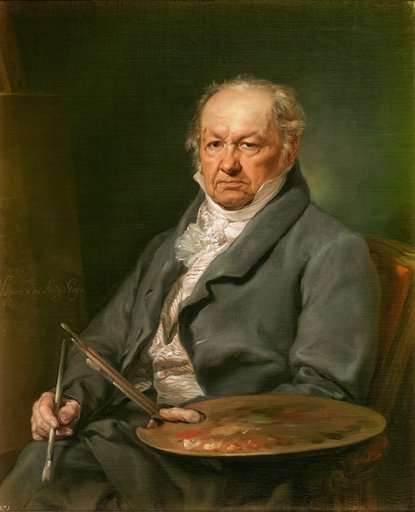
Francisco José de Goya y Lucientes was a Spanish romantic painter and printmaker.