Artwork
Y aun no se van! (And Still They Don't Go!)
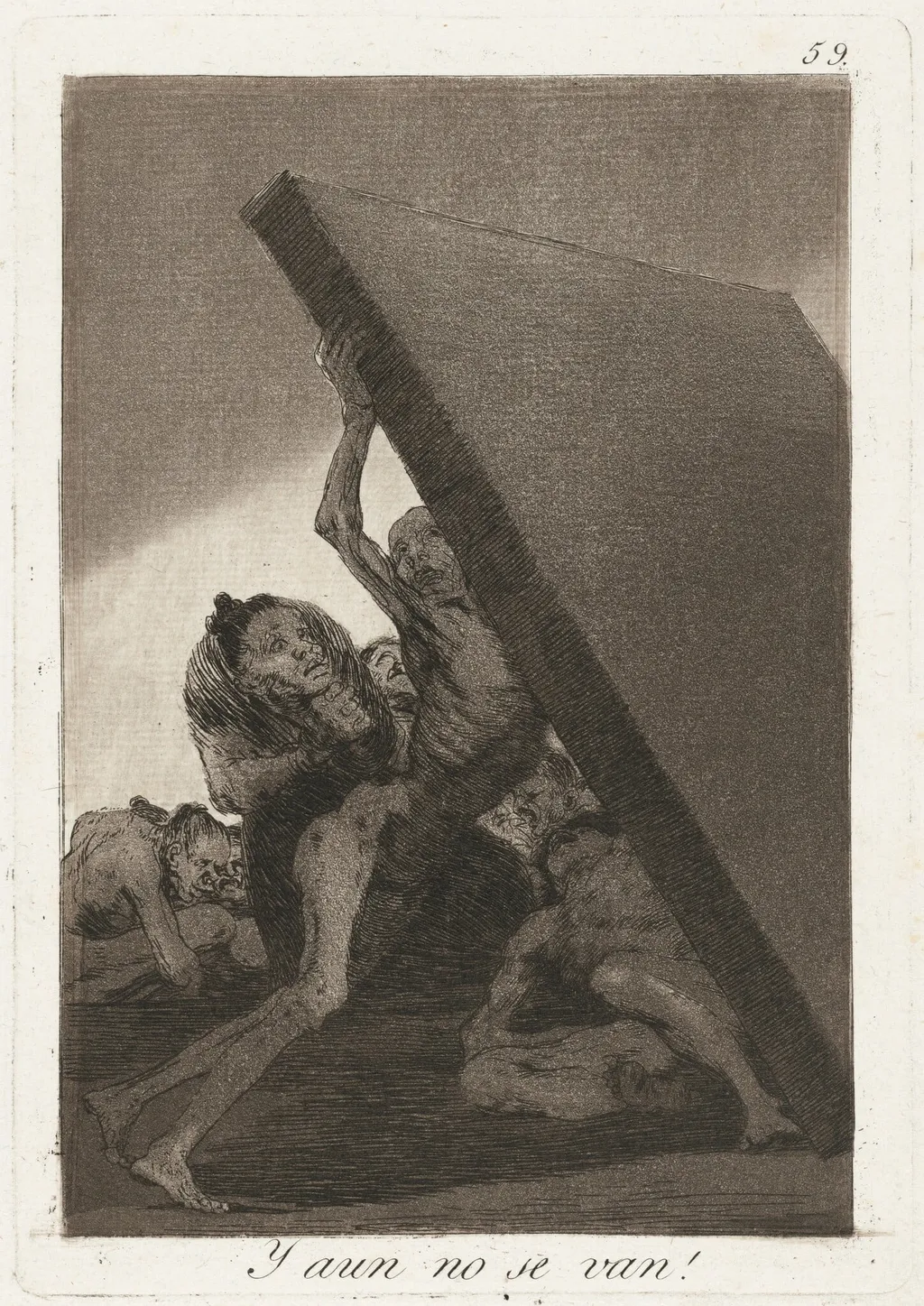
Y aun no se van! (And Still They Don't Go!) is an ink print by the Romanticist artist Francisco de Goya. It dates from 1799 and is held in the collection of the National Gallery of Art. Created in 1799, Y aun no se van!
- Inscription
- Inscribed:recto: upper right in plate: 59; lower center in plate: Y aun no se van!; verso: none
- Markings
- Marked:none
About this work
Overview
The work belongs to a series of satirical images by Francisco de Goya that address the social and political unrest of late‑eighteenth‑century Spain.
Created in 1799, Y aun no se van! is an etching‑aquatint print on laid paper that combines engraving and burnishing techniques. The work belongs to a series of satirical images by Francisco de Goya that address the social and political unrest of late‑eighteenth‑century Spain. Its stark composition and dramatic chiaroscuro convey a sense of urgency and tension, characteristic of Goya’s print output during this period.
Subject & Meaning
The scene depicts a crowded group of figures straining beneath a massive wooden beam, their faces contorted in pain and desperation. One figure lies on the ground, reaching upward, while the surrounding darkness isolates the struggle. The inscription “Y aun no se van!” (“And still they don’t go!”) suggests a forced labor or protest, turning the physical burden into a commentary on oppression and resistance.
Technique & Style
Goya employed a layered process: initial etching lines define the figures, aquatint creates tonal washes, and selective burnishing adds highlights on the laid paper surface. This combination yields deep shadows and bright accents that heighten the chaotic atmosphere. The handling of line and tone reflects Goya’s shift from the meticulous conventions of the Old Masters toward a more expressive, modern visual language.
Context
The print emerges from a period of heightened tension in Spain, marked by fiscal crises, military defeats, and popular unrest. Goya’s satirical series used the relatively inexpensive medium of printmaking to disseminate critical views of authority and social customs, reaching a broader audience than traditional paintings could.
History & Provenance
Y aun no se van! remains part of the original suite of Goya’s satirical prints, most of which are held in major European museum collections. The work has been exhibited in retrospectives of Goya’s graphic oeuvre, illustrating his role as a socially engaged artist and his influence on later political printmakers.
Own this work as a print
Artist & collection
Artist
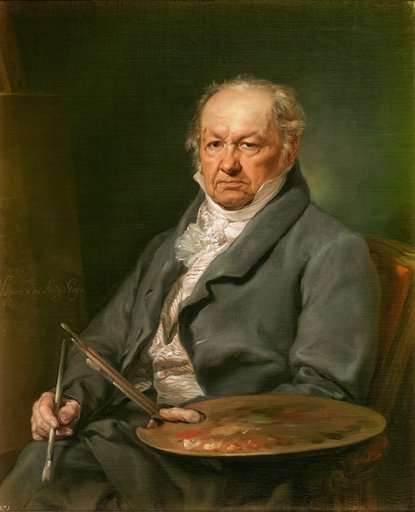
Francisco José de Goya y Lucientes was a Spanish romantic painter and printmaker.

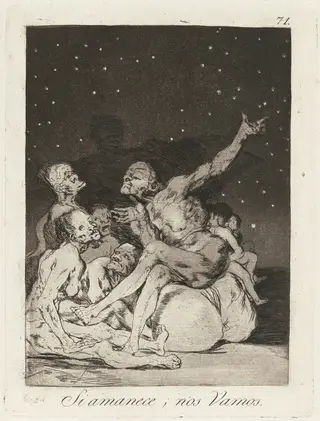 Si amanece; nos vamos (When Day Breaks We Will Be Off)
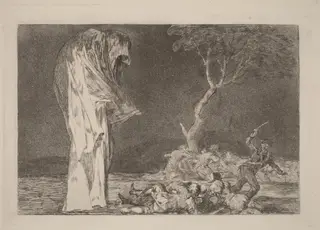 Disparate de miedo (Folly of Fear)
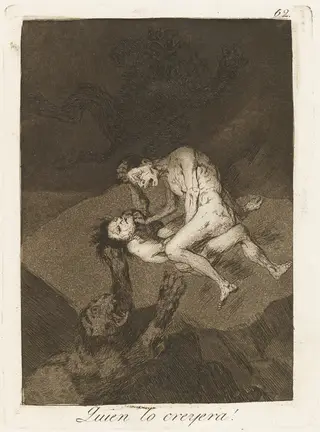 Quien lo creyera! (Who Would Have Thought It!)
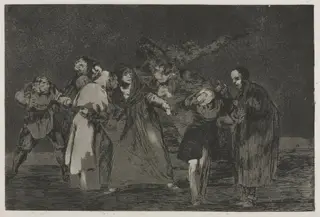 The Proverbs: Wounds Heal Quicker Than Hasty Words
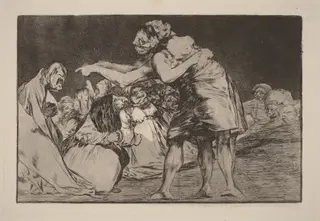 Disparate desordenado (Disorderly Folly)
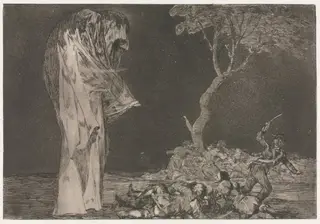 The Proverbs: Folly of Fear
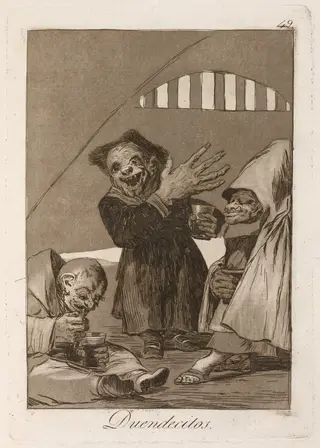 Duendecitos (Hobgoblins)
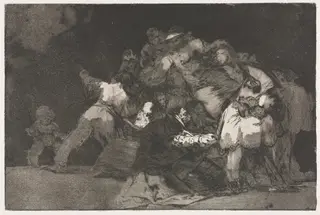 The Proverbs: General Folly
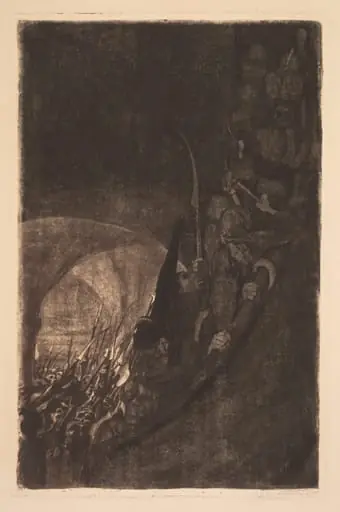 Peasants' War: Arming in a Vault
 Buen Viage (Bon Voyage)