Artwork
Buen Viage (Bon Voyage)
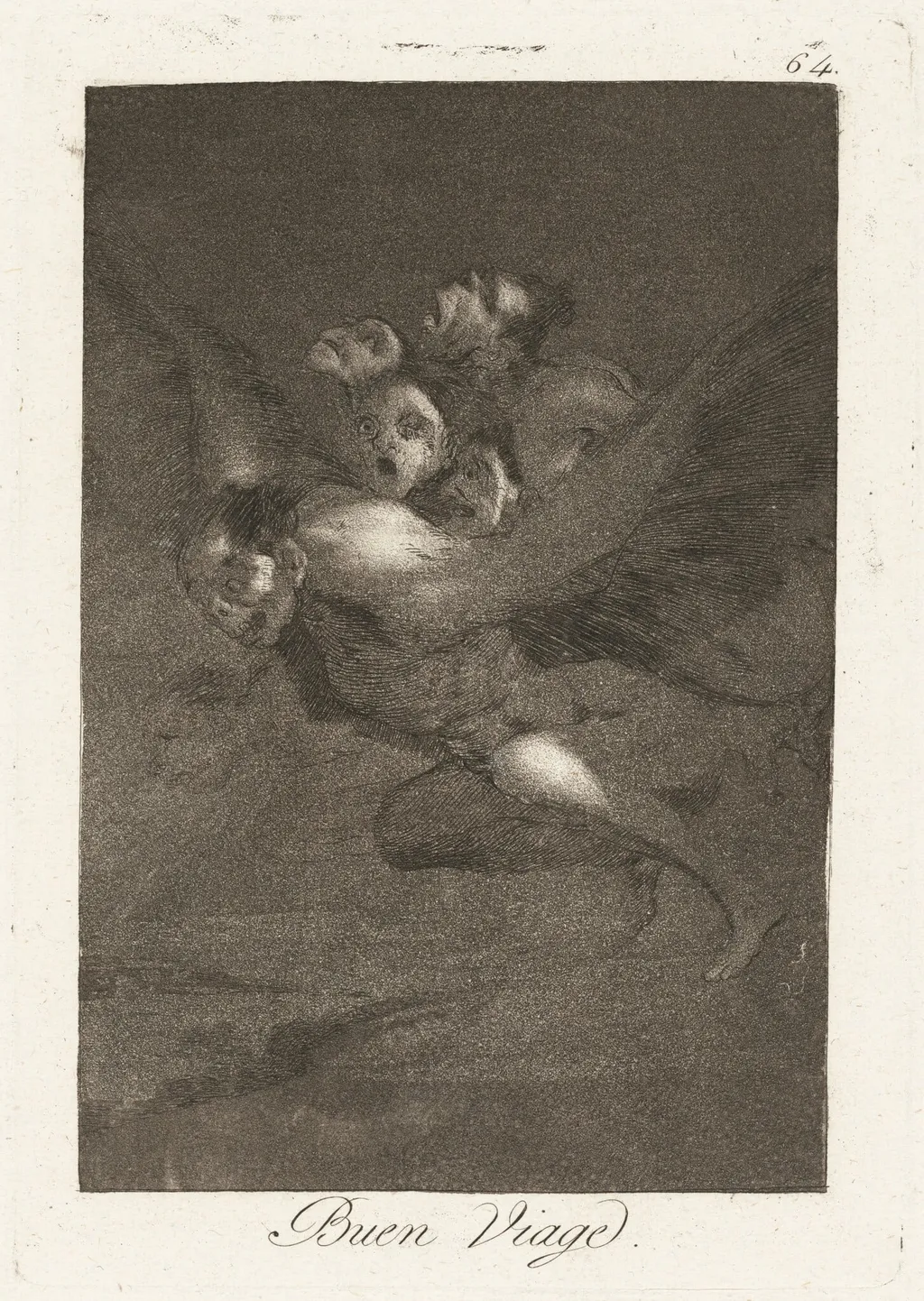
Buen Viage (Bon Voyage) is an ink print by the Romanticist artist Francisco de Goya. It dates from 1799 and is held in the collection of the National Gallery of Art.
- Inscription
- Inscribed:recto: lower center in plate: Buen Viage.; upper right in plate: 64.; verso: none
- Markings
- Marked:none
About this work
Overview
It stands as part of a broader body of graphic work that moved beyond decoration to engage with moral and political tensions of its time.
Created in 1799, Buen Viage (Bon Voyage) is one of Francisco de Goya’s etchings from his series exploring human and societal conditions. Executed in etching, aquatint, and engraving with burnishing on laid paper, the work exemplifies his mastery of printmaking techniques to convey complex, often unsettling narratives. It stands as part of a broader body of graphic work that moved beyond decoration to engage with moral and political tensions of its time.
Subject & Meaning
The image depicts a cluster of birds caught in a tangled net, their bodies twisted in frantic motion, while one remains still, observing. The title, meaning 'Good Voyage,' contrasts sharply with the scene’s entrapment, suggesting irony or warning. The birds may symbolize individuals ensnared by forces beyond their control, perhaps political repression, societal conformity, or the illusion of freedom. The ambiguity invites interpretation without offering resolution.
Technique & Style
Goya employed layered printmaking methods, etching for fine lines, aquatint for tonal gradations, and burnishing to soften or erase areas, creating a dense, shadowed atmosphere. The rough texture of the paper enhances the sense of disorder. Dark, smudged feathers and uneven outlines convey movement and distress, while the absence of clear light sources deepens the mood of unease. The technique mirrors the chaos it depicts, prioritizing emotional impact over realism.
History & Provenance
The print was produced during Goya’s tenure as court painter, a period when he increasingly turned to private, critical works outside official commissions. Buen Viage was likely part of his early experiments leading to the Los Caprichos series, published the same year. Its survival in private and institutional collections reflects its recognition as a significant example of his graphic innovation, though its exact early ownership remains undocumented.
Context
In late 18th-century Spain, Enlightenment ideals clashed with entrenched authority and superstition. Goya’s prints responded to this instability, using allegory to critique power, ignorance, and human folly. Buen Viage fits within a broader tradition of satirical printmaking but diverges in its emotional intensity and lack of overt satire. The work reflects a growing personal disillusionment, mirroring the political unrest preceding the Peninsular War.
Legacy
Goya’s use of printmaking to express psychological and social tension influenced later artists, including Delacroix and Picasso, who admired his unflinching vision. Buen Viage exemplifies how technical precision could serve emotional depth, expanding the potential of print as a medium for personal and political commentary. Its enduring relevance lies in its open-ended symbolism, allowing each generation to find new resonance in its imagery of entrapment.
Own this work as a print
Artist & collection
Artist
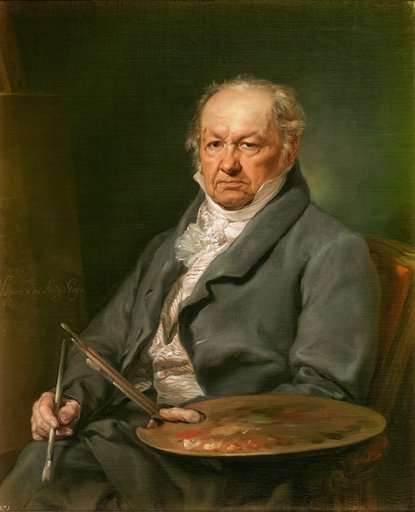
Francisco José de Goya y Lucientes was a Spanish romantic painter and printmaker.

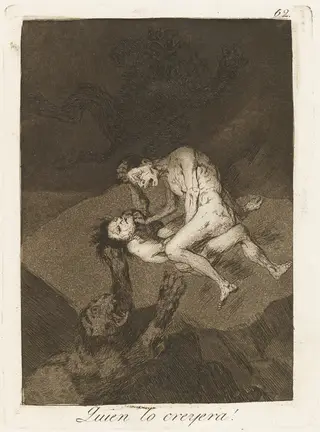 Quien lo creyera! (Who Would Have Thought It!)
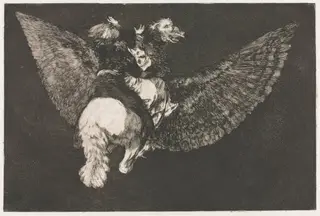 The Proverbs: Flying Folly
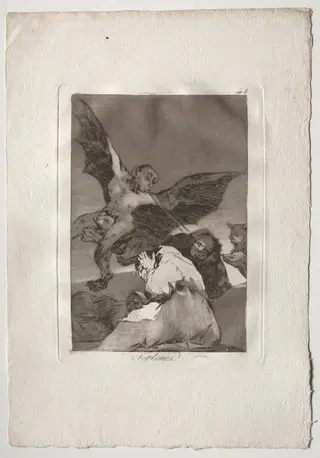 Tale-Bearers - Blasts of Wind, Plate 48
 Disparate volante (Flying Folly)
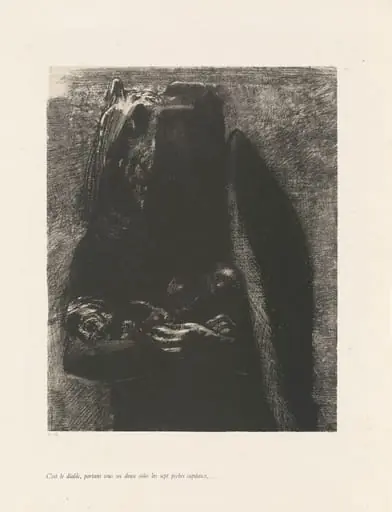 C'est le Diable
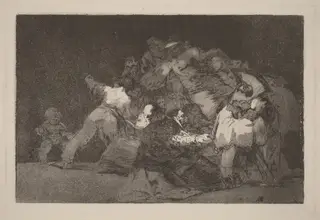 Disparate general (General Folly)
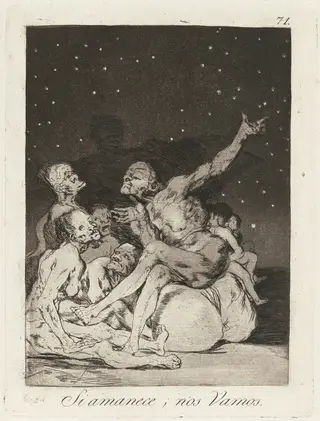 Si amanece; nos vamos (When Day Breaks We Will Be Off)
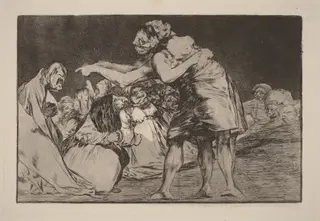 Disparate desordenado (Disorderly Folly)
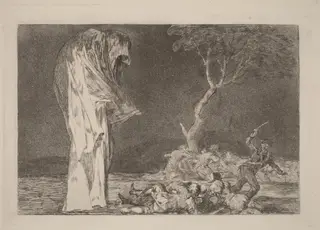 Disparate de miedo (Folly of Fear)
- Bon Voyage, Plate 64