Artwork
The Small Crucifixion
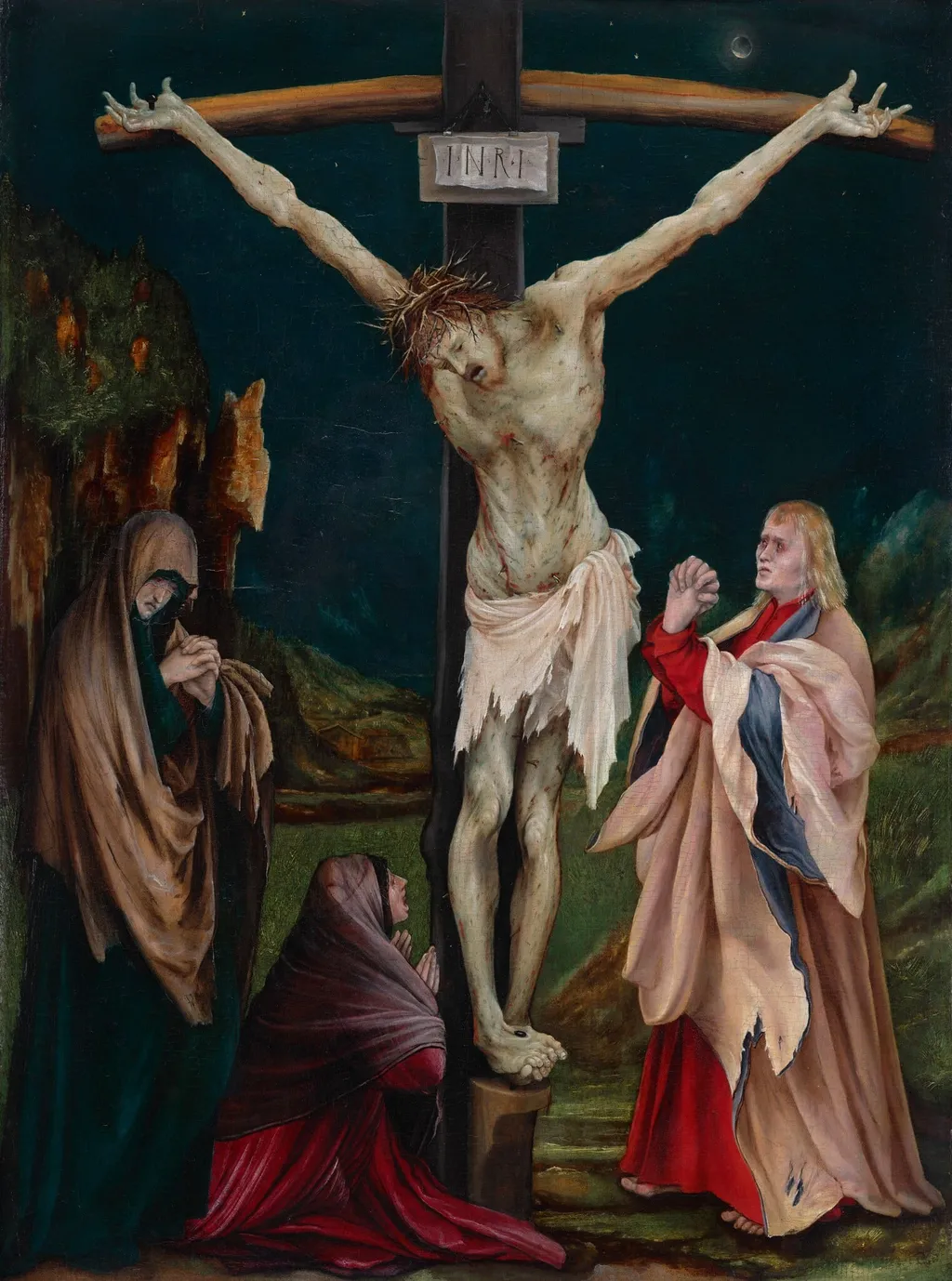
The Small Crucifixion is an oil painting by the German Romanticist artist Matthias Grünewald. It dates from 1516 and is held in the collection of the National Gallery of Art.
- Inscription
- Inscribed:upper center on placard at top of cross: I.N.R.I
About this work
Subject & Meaning
A distinctive iconographic feature is the rendering of Christ's body, which hangs in a manner contemporaries found strikingly naturalistic.
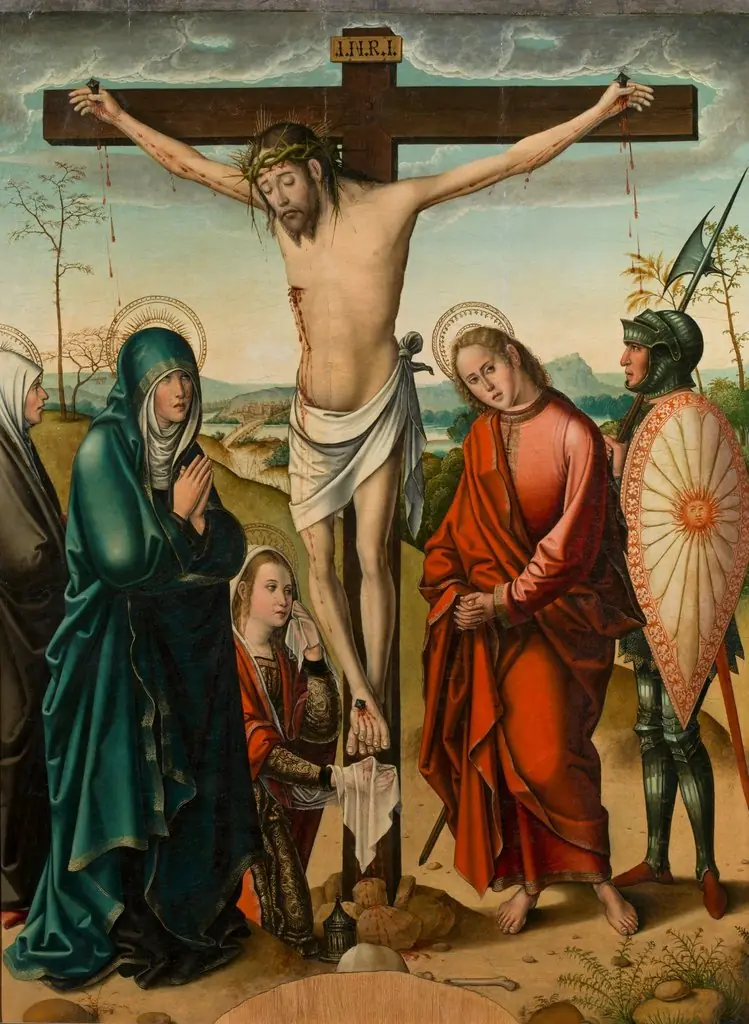
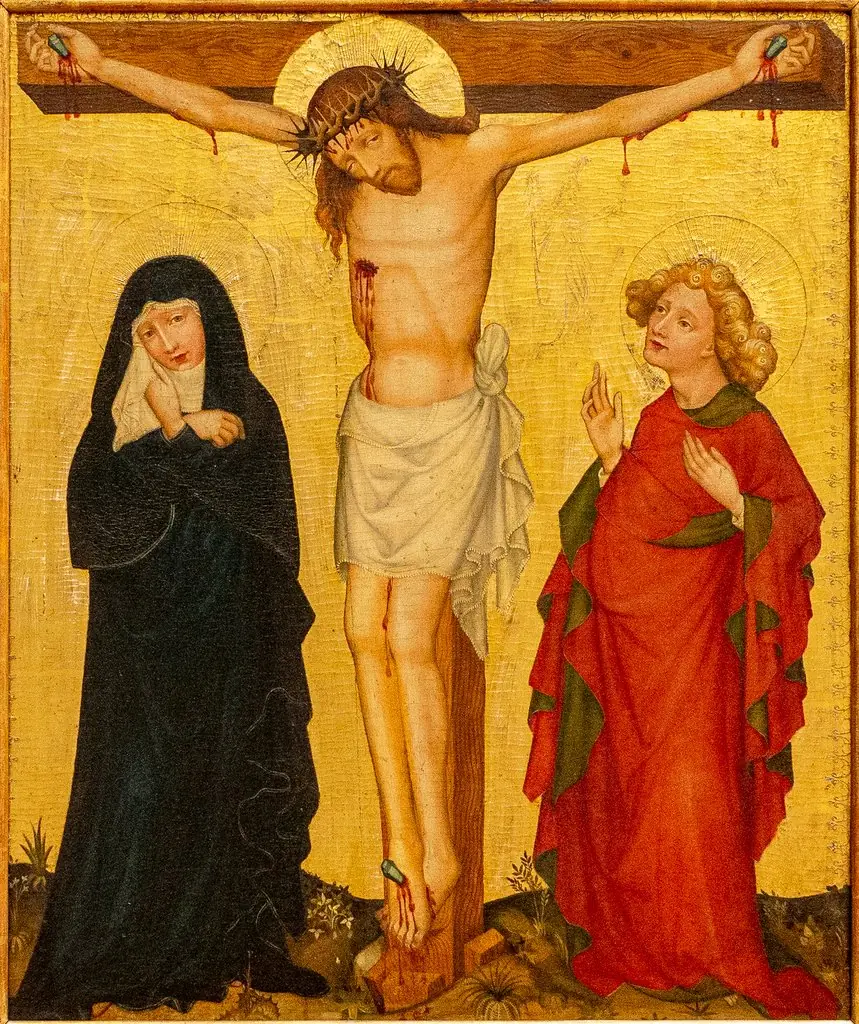
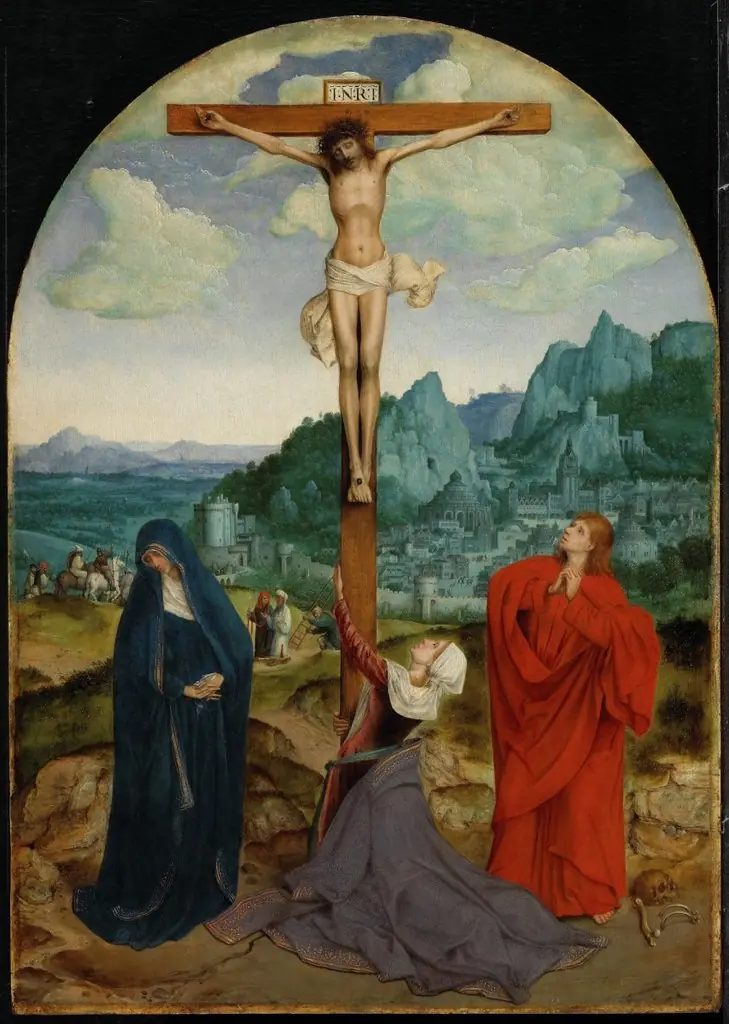
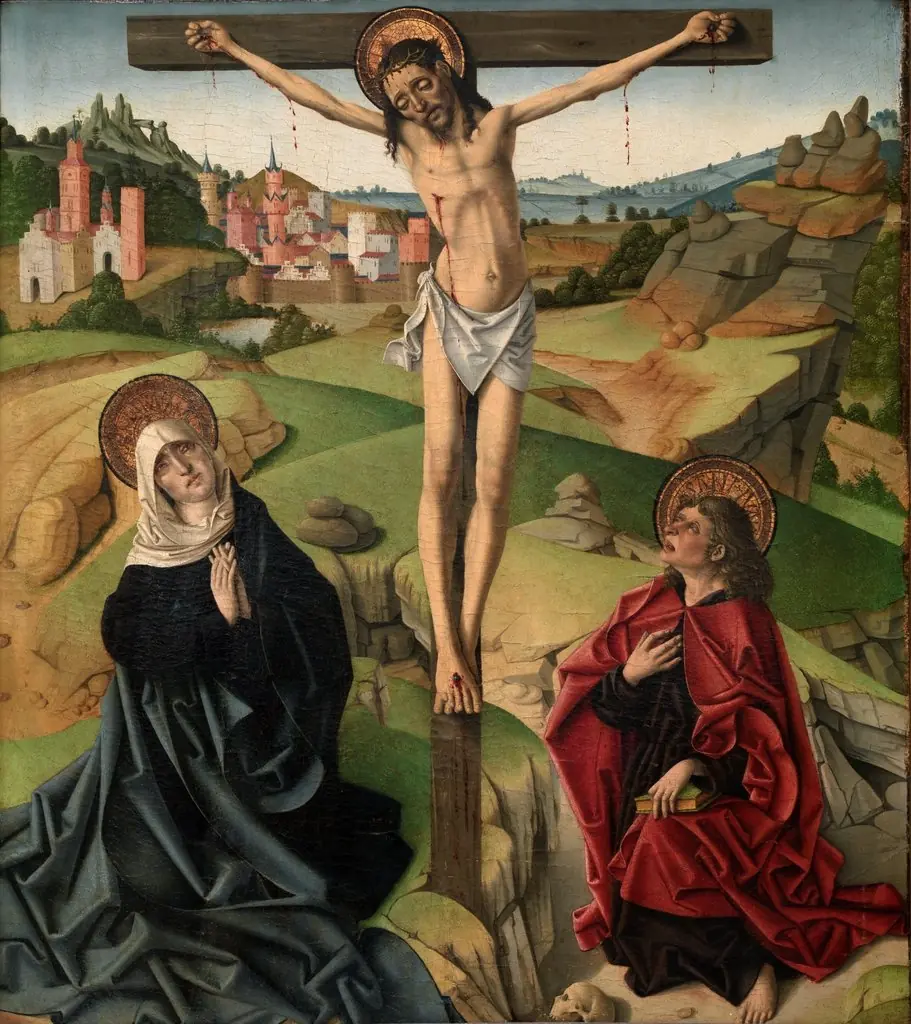
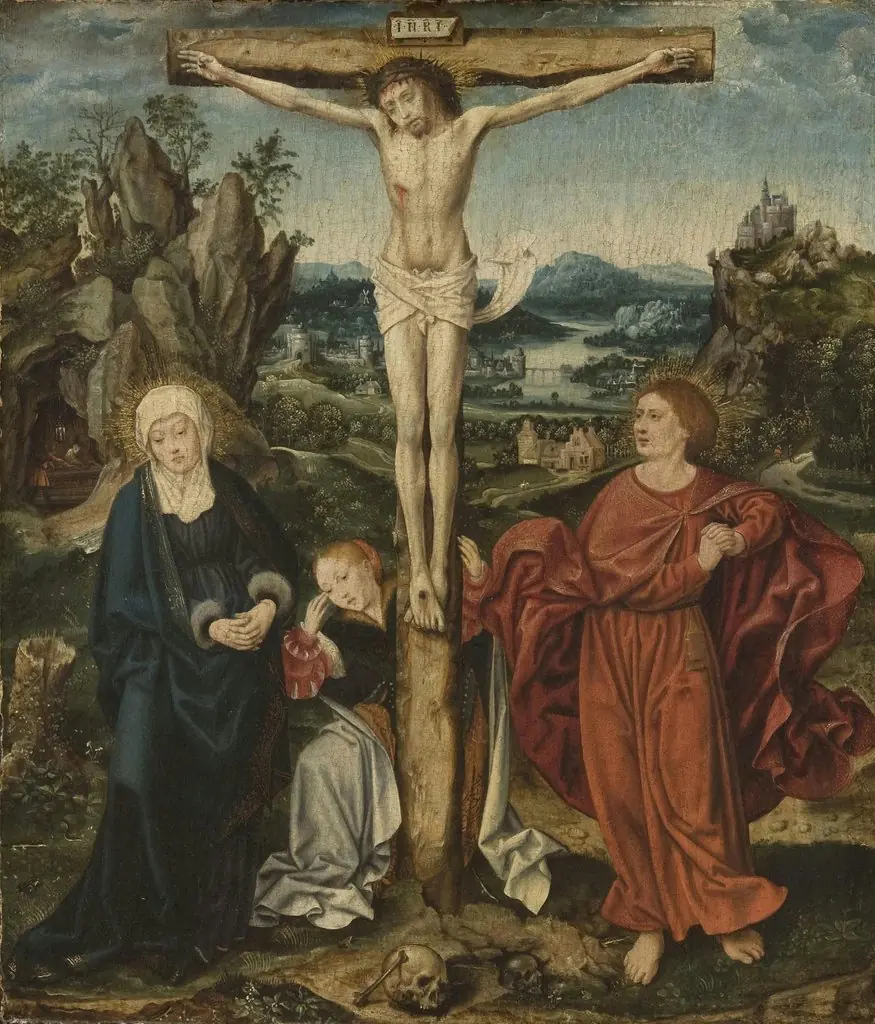
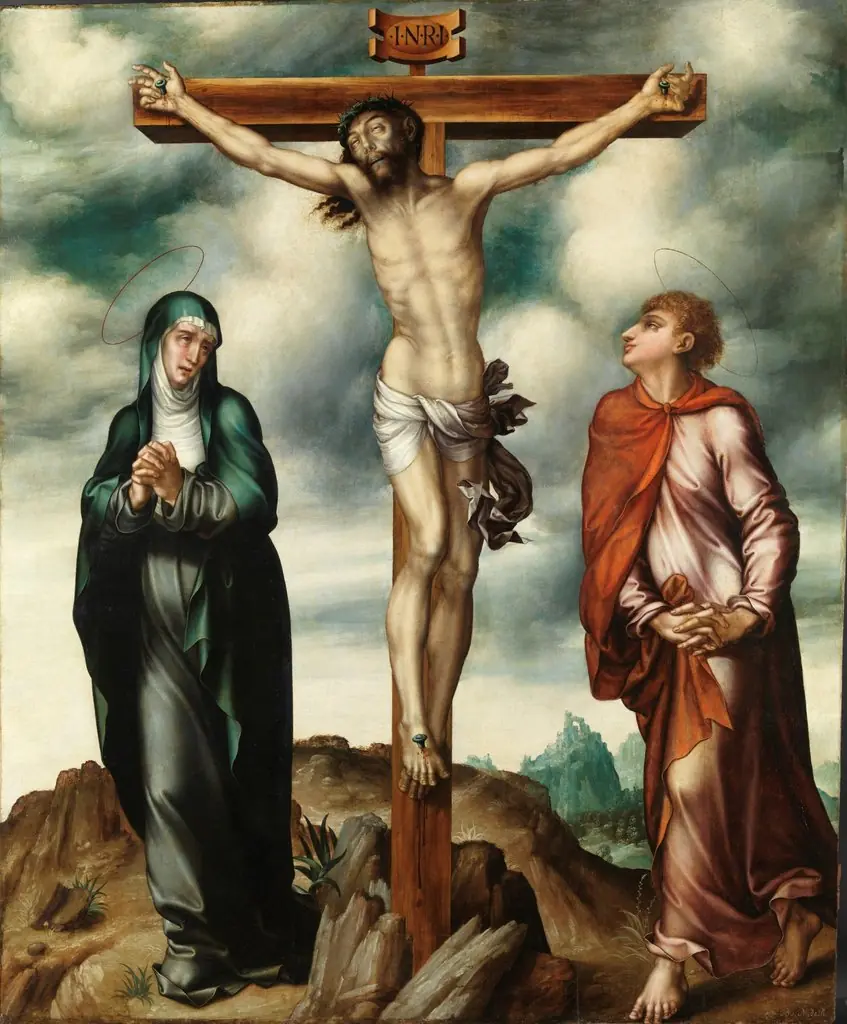
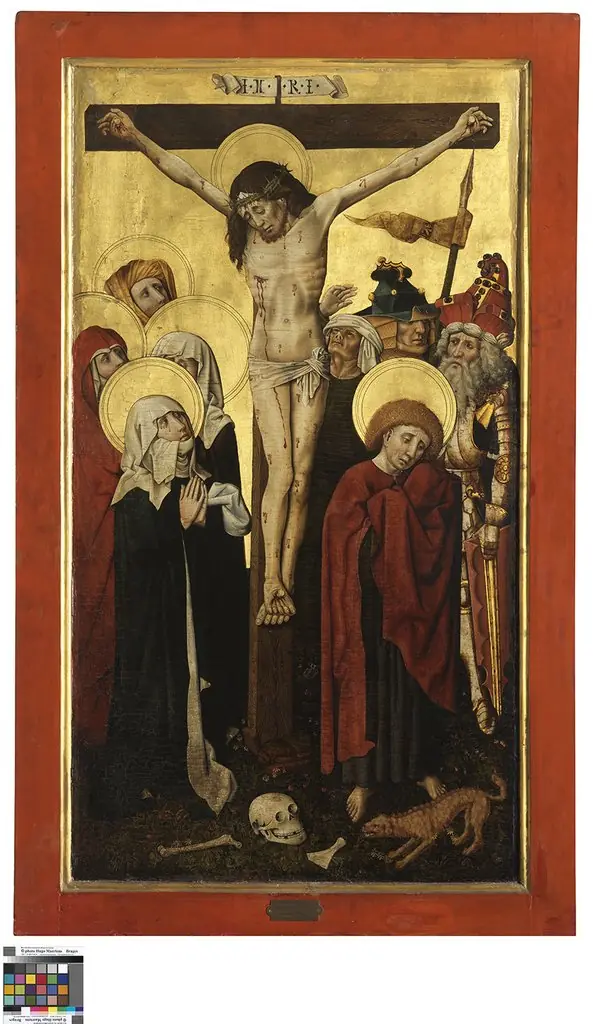
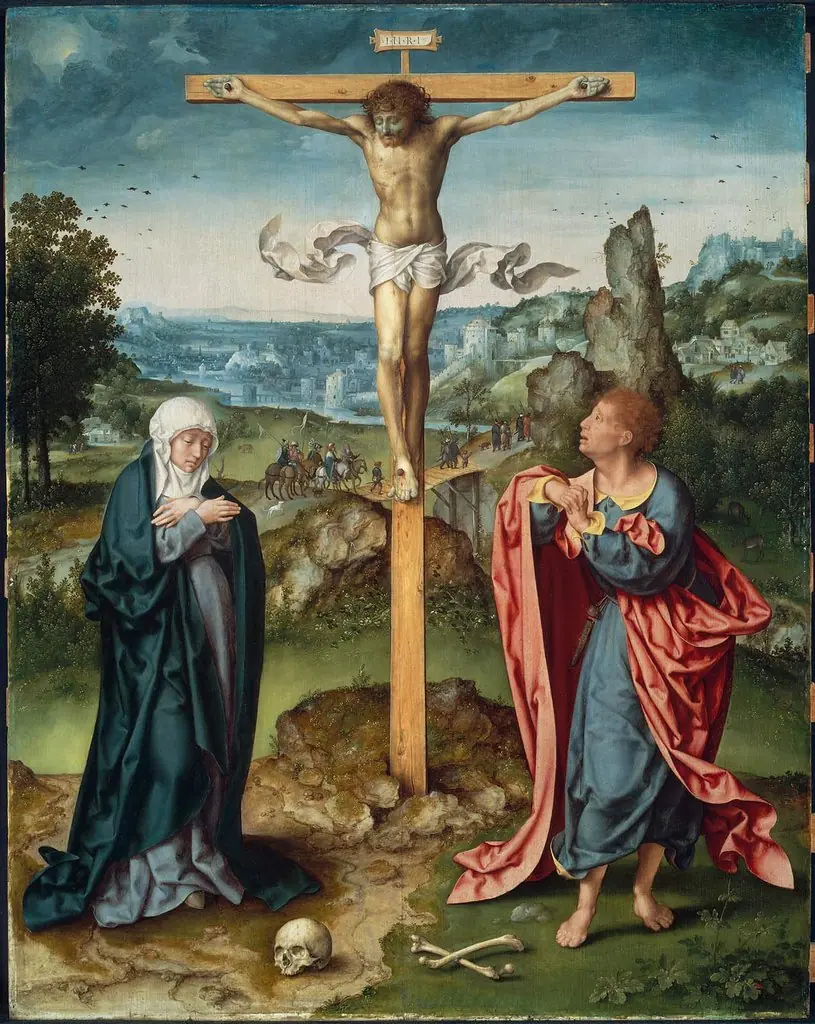
The Small Crucifixion depicts the crucifixion of Jesus Christ as its main subject, classified within the genre of religious art. The composition centers on the figure of Christ on the cross, accompanied by the Virgin Mary and Saint John, with Mary Magdalene shown kneeling in devout prayer at the foot of the cross. A distinctive iconographic feature is the rendering of Christ's body, which hangs in a manner contemporaries found strikingly naturalistic.
This unusual posture was singled out as the painting's most remarkable quality, described as surpassing all other crucifixes in its truthful representation of the natural body. The work thus functions as a meditation on the Passion, emphasizing both the physical reality of Christ's suffering and the devotional presence of the mourning figures gathered at the cross.
Technique & Style
Executed in 1516, The Small Crucifixion is an oil painting on a wood panel support. The work measures approximately 61.3 by 46 centimeters. Contemporary accounts from the seventeenth century describe the handling of the paint as exceptionally diligent, noting that the depiction of Christ hanging on the cross possesses a startling naturalism that mimics true life.
This formal quality of lifelike realism was considered so convincing that observers felt no other crucifixion scene could compare in its truthful representation. The composition focuses on the central figure of Jesus Christ, rendered with a degree of anatomical precision that emphasizes the physical reality of the suffering depicted.
History & Provenance
The Small Crucifixion was painted by Matthias Grünewald in 1516 in oil on panel. Its earliest documented owner was Wilhelm V, Duke of Bavaria (d. 1597) in Munich, followed by Maximilian I, Duke of Bavaria (d. 1651), also in Munich. The panel subsequently passed into a private collection in western Germany, possibly Westphalia, before resurfacing with Dr. Friedrich Schöne in Essen and Stettin by 1922.
Franz Wilhelm Koenigs acquired it on 27 September 1927. After Koenigs's death in 1941, his heirs sold the painting in 1953 to the Samuel H. Kress Foundation in New York, which in turn gave it to the National Gallery of Art in 1961.
Context
Early patrons such as Wilhelm V and Maximilian I of Bavaria acquired the panel, and Sandrart later praised its unconventional composition, noting the "very strange crucifix" that "rests on the feet" and the lifelike rendering of Christ, highlighting contemporary appreciation of its dramatic realism. The work, dated 1516 and executed in oil on panel, portrays the crucifixion of Jesus and belongs to the religious genre, reflecting Grünewald's engagement with Passion imagery. Its inclusion in the National Gallery of Art's collection, transferred from the Samuel H. Kress Foundation in 1961, underscores its significance within the artist's oeuvre and the broader narrative of Northern Renaissance sacred art.
Overview
Matthias Grünewald's The Small Crucifixion, painted around 1516, is an oil on panel work from the German Renaissance. This religious painting exemplifies the artist's distinctive approach, which prioritized profound emotional and spiritual intensity. It stands apart from the prevailing classical trends of its era, instead drawing upon the dramatic stylistic traditions of late medieval Central European art to convey its sacred subject matter.
Legacy
During his lifetime, Matthias Grünewald remained a relatively obscure figure, with fewer than fifteen of his works surviving today. His unique artistic vision, which diverged from contemporary trends, was not widely recognized. However, his standing began to shift significantly in the late nineteenth century, as art historians clarified attributions to him, leading to a re-evaluation and growing appreciation for his distinctive contribution to art history.
Own this work as a print
Artist & collection

Artist
Matthias Grünewald (c. 1470 – 31 August 1528; also known as Mathis Gothart Nithart) was a German Renaissance painter of religious works who ignored Renaissance classicism to continue the style of late medieval Central…