Artwork
Temporary Tribune in the Campo San Zanipolo, Venice
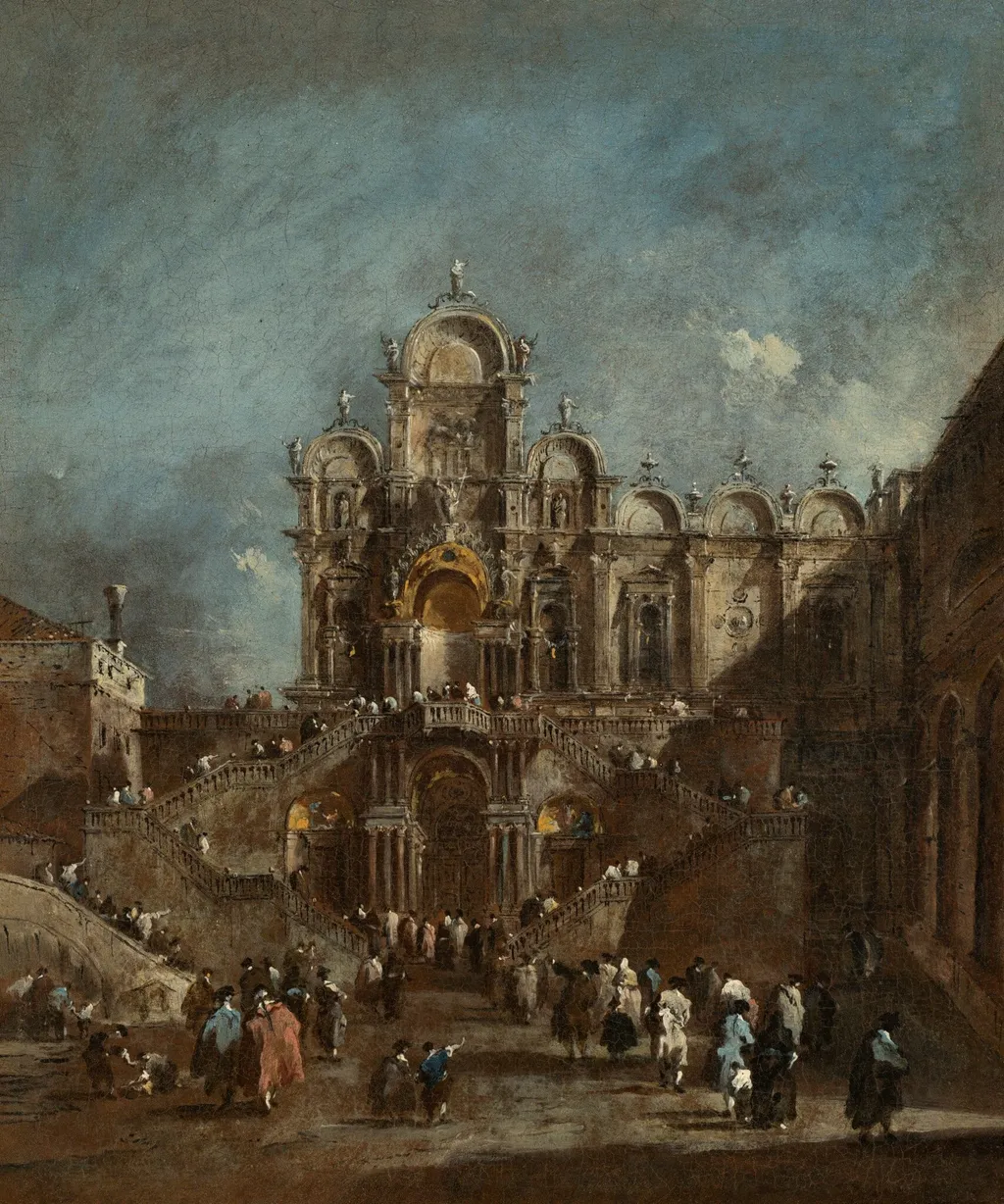
Temporary Tribune in the Campo San Zanipolo, Venice is an oil painting by the Rococo painting artist Francesco Guardi. It dates from 1782 and is held in the collection of the National Gallery of Art.
About this work
Technique & Style
These qualities reflect Guardi's late-eighteenth-century veduta style, in which architectural detail intertwines with a poetic treatment of light and space.
The work is executed in oil on canvas, measuring 37.5 cm by 31.5 cm. Guardi's handling is characterized by loose brushwork and a luminous palette that captures the fleeting atmosphere of the Venetian campo. The composition presents a temporary tribune set before the church of San Zanipolo (Santi Giovanni e Paolo), rendered with a blend of topographical precision and atmospheric suggestion. These qualities reflect Guardi's late-eighteenth-century veduta style, in which architectural detail intertwines with a poetic treatment of light and space.
History & Provenance
Francesco Guardi's view of the temporary tribune in the Campo San Zanipolo, Venice, is dated 1782 or later and executed in oil on canvas. The documented ownership chain begins with Sir George Kane in London, passing to Count Alessandro Contini Bonacossi in Rome before its purchase in 1933 by the Samuel H. Kress Foundation in New York. In 1939 the Kress Foundation donated the painting to the National Gallery of Art in Washington, D.C., where it remains as part of the Samuel H. Kress Collection under accession number 1939.1.2.
The provenance is recorded in the National Gallery's 1941 Preliminary Catalogue of Paintings and Sculpture and in the Kress Collection Digital Archive.
Overview
Francesco Lazzaro Guardi painted Temporary Tribune in the Campo San Zanipolo, Venice in 1782. Executed in oil on canvas, the work records a provisional structure erected in a Venetian square, surrounded by bustling figures in period dress under a clear sky. The composition captures a moment of civic activity, rendered with Guardi’s characteristic luminosity and movement.
Subject & Meaning
The canvas depicts a temporary wooden platform or tribune set up in the Campo San Zanipolo, likely intended for a public address or celebration. Around the structure, pedestrians ascend steps, linger, and converse, suggesting a communal gathering. The scene conveys the social vibrancy of 18th‑century Venice, where civic events temporarily transformed ordinary spaces into focal points of public life.
Context
In the 1780s Venice was still a hub of public festivals, political assemblies, and religious processions. Temporary structures like the one shown were common fixtures in city squares, providing a stage for speeches or ceremonies. Guardi’s choice to record such an event aligns with his broader interest in the everyday life of the lagoon city, complementing his more famous vistas of canals and palaces.
Own this work as a print
Artist & collection

Artist
Francesco Lazzaro Guardi (Italian pronunciation:; 5 October 1712 – 1 January 1793) was an Italian painter, nobleman, and a member of the Venetian School.

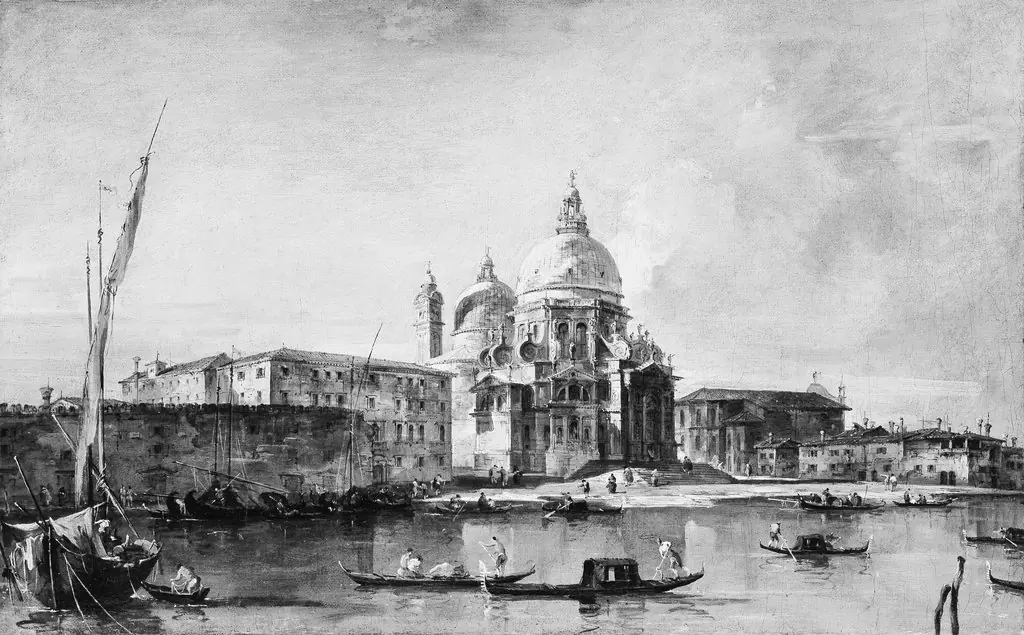
 Santa Maria della Salute
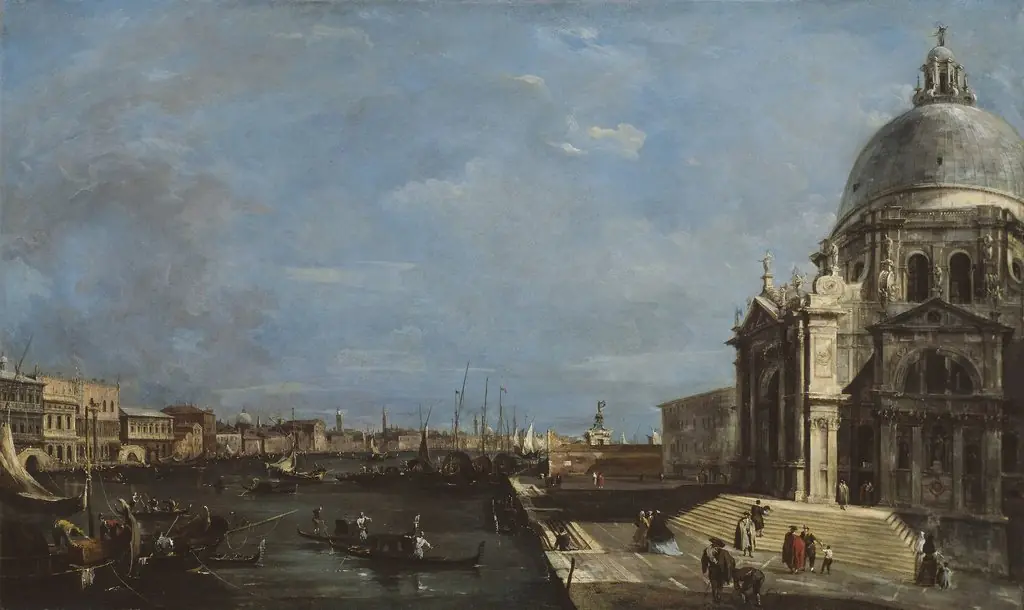 The Grand Canal, Venice
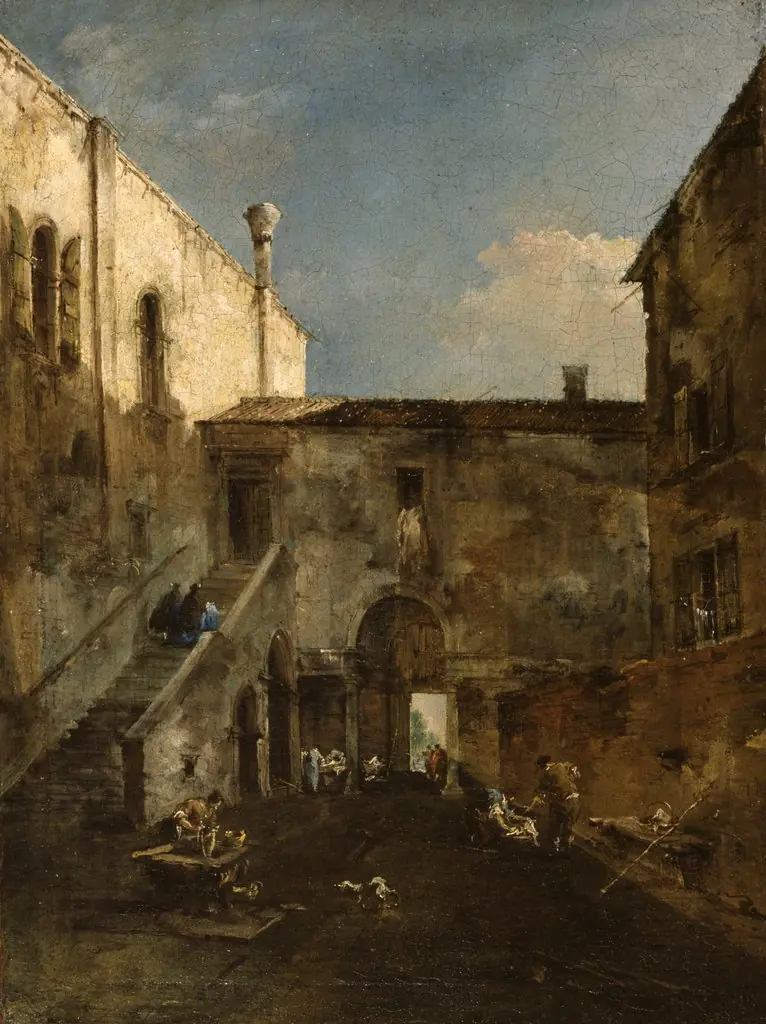 A Venetian Courtyard
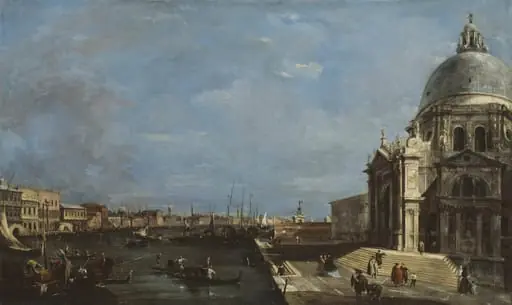 The Grand Canal, Venice
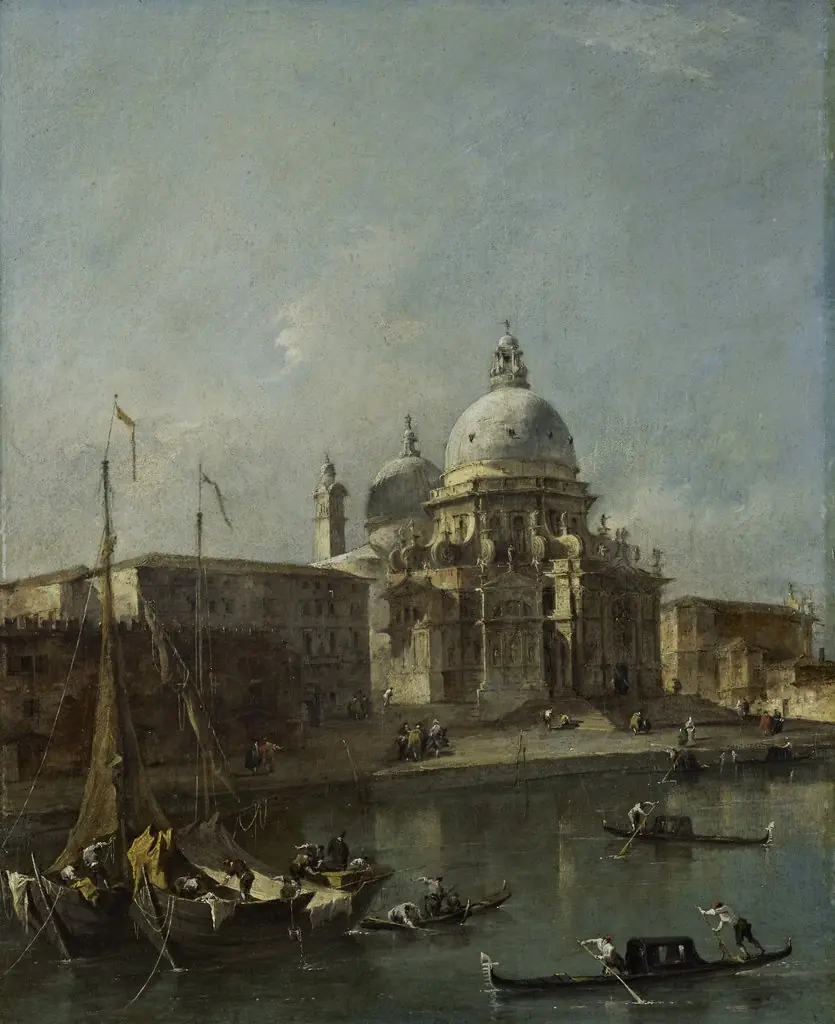 Santa Maria della Salute, Venice
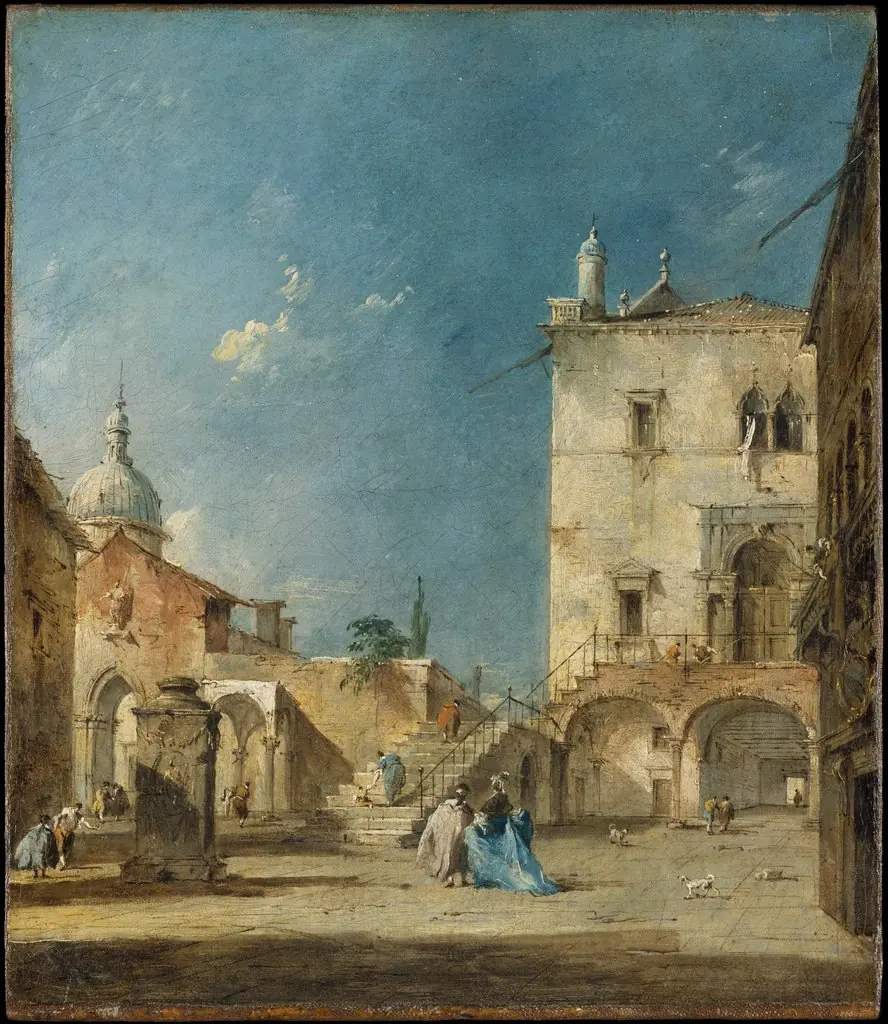 Capriccio
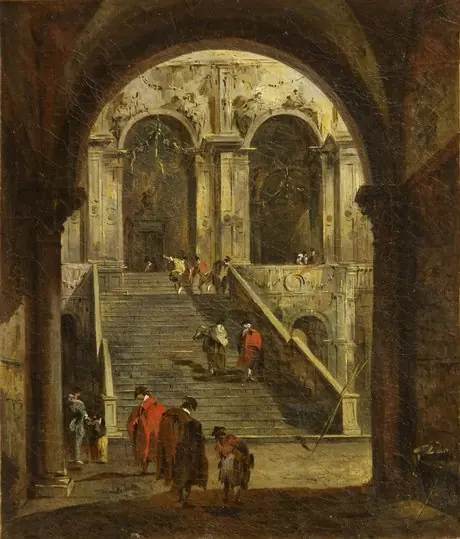 Yard
Yard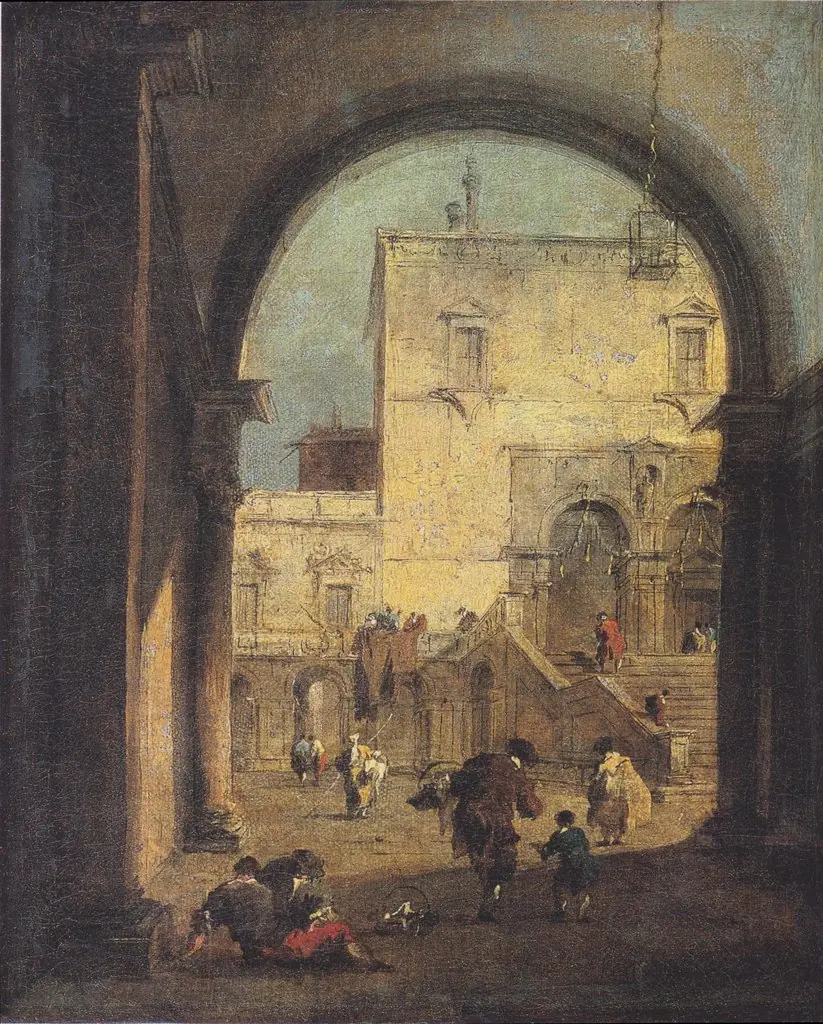 Venetian Capriccio: View of a Square and a Palace
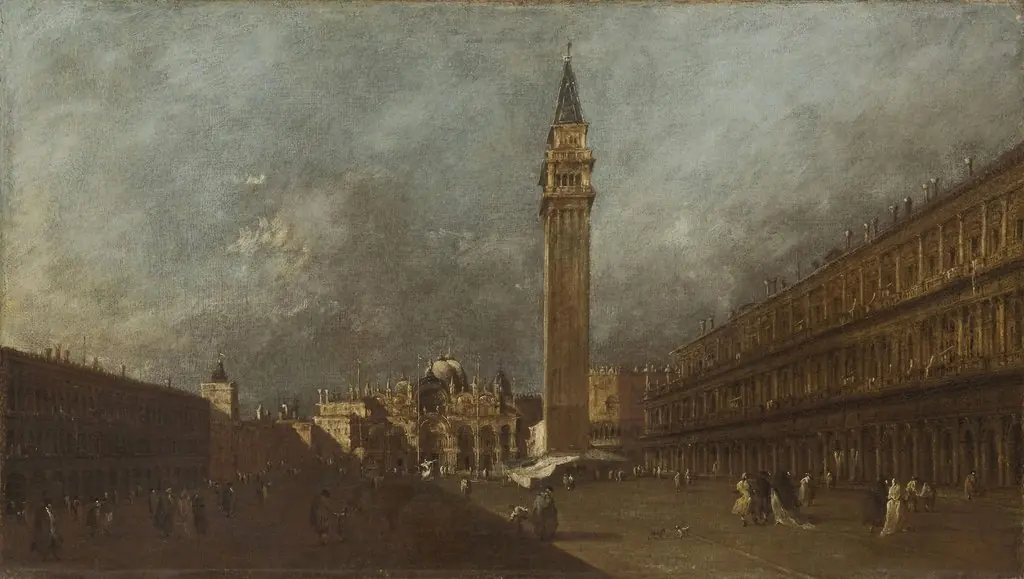 Piazza San Marco
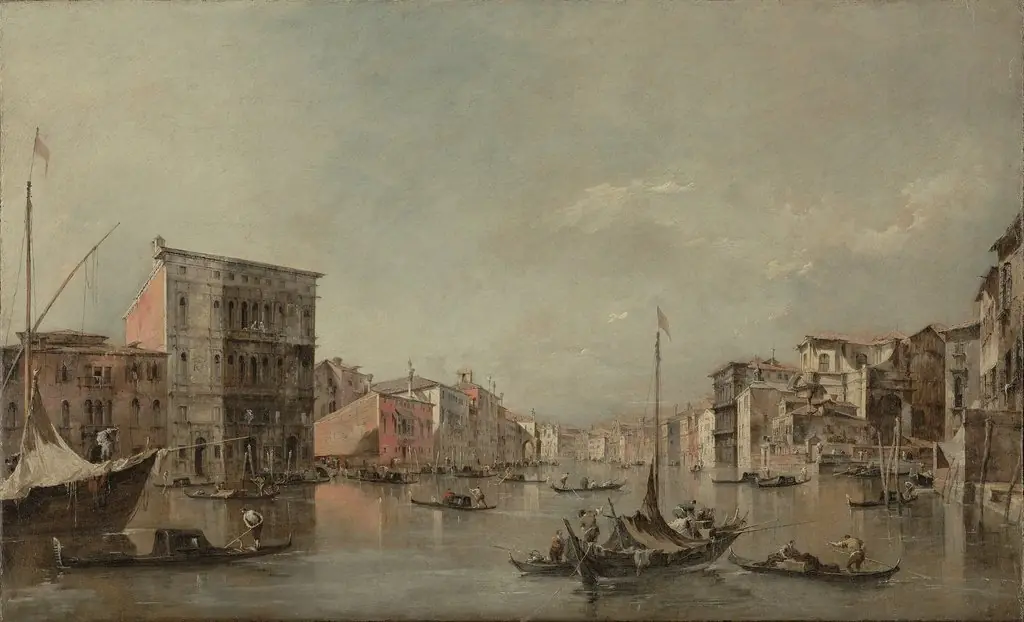 The Grand Canal in Venice with Palazzo Bembo
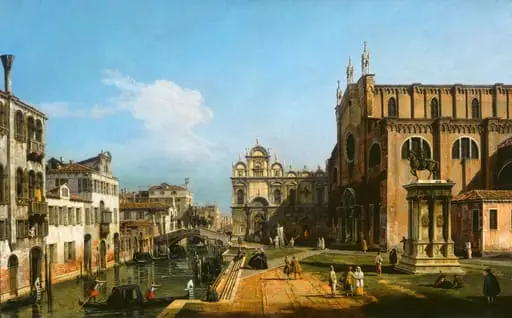
- The Campo di SS. Giovanni e Paolo, Venice
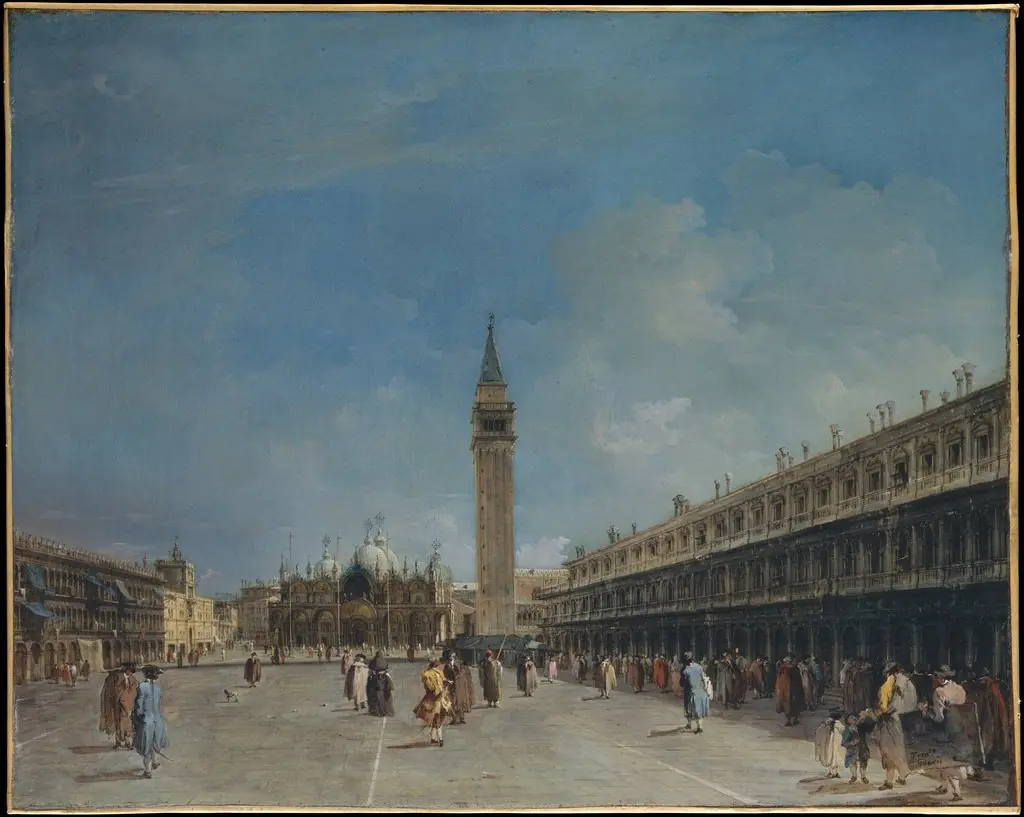
 The Square of Saint Mark's, Venice