Artwork
San Jerónimo
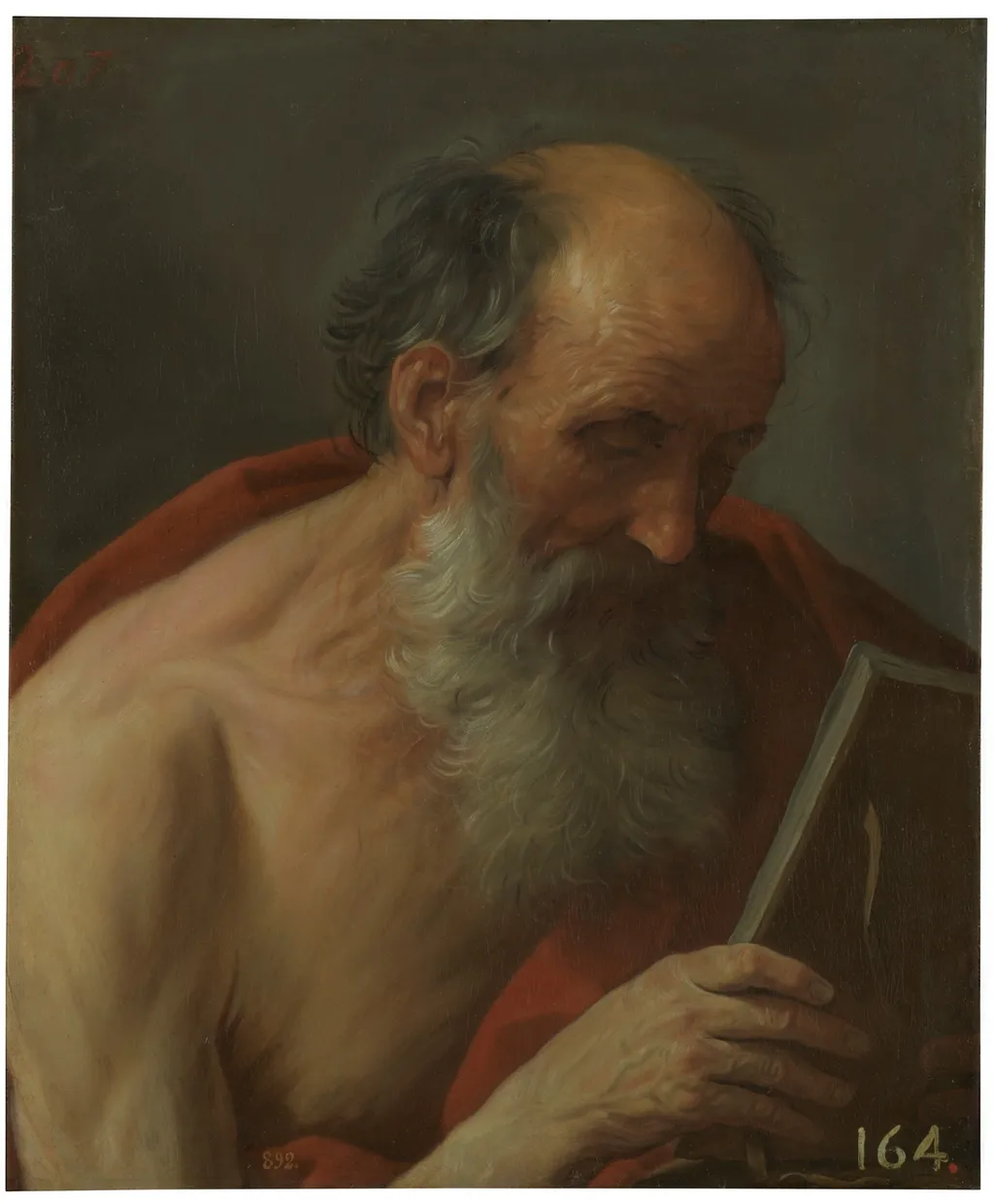
San Jerónimo is an oil painting by the Early Baroque Italian artist Guido Reni. It dates from 1623 and is held in the collection of the Museo del Prado.
About this work
Subject & Meaning
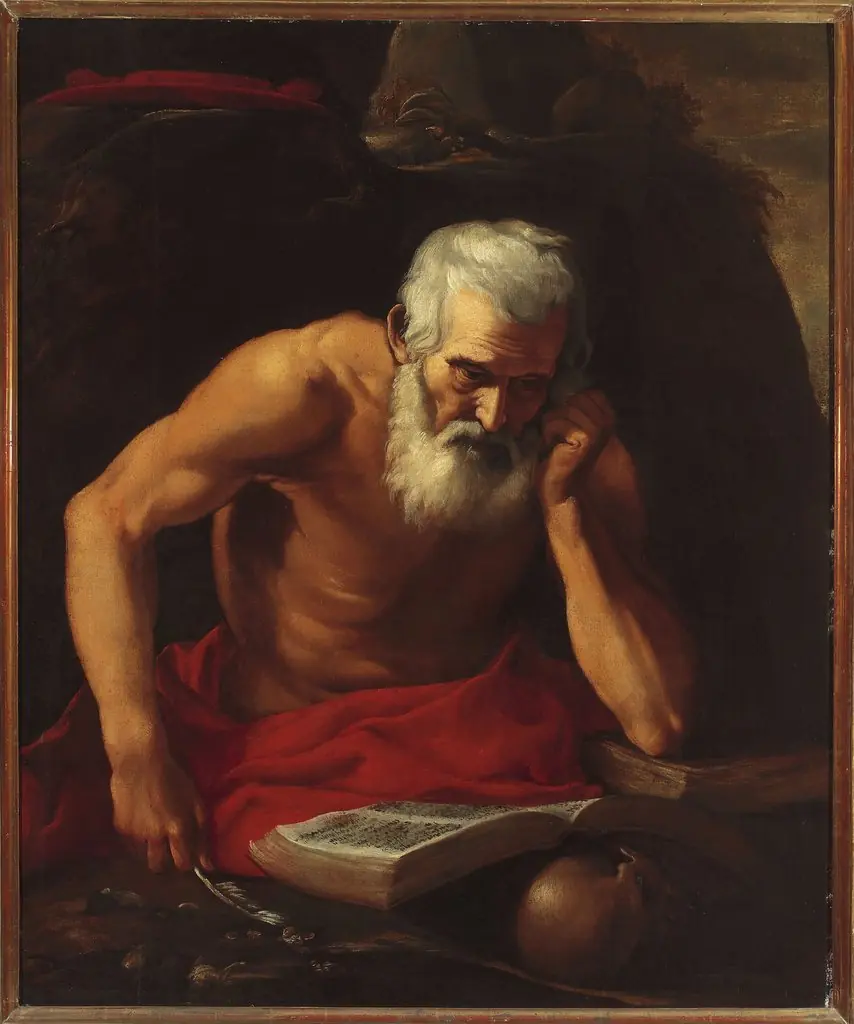
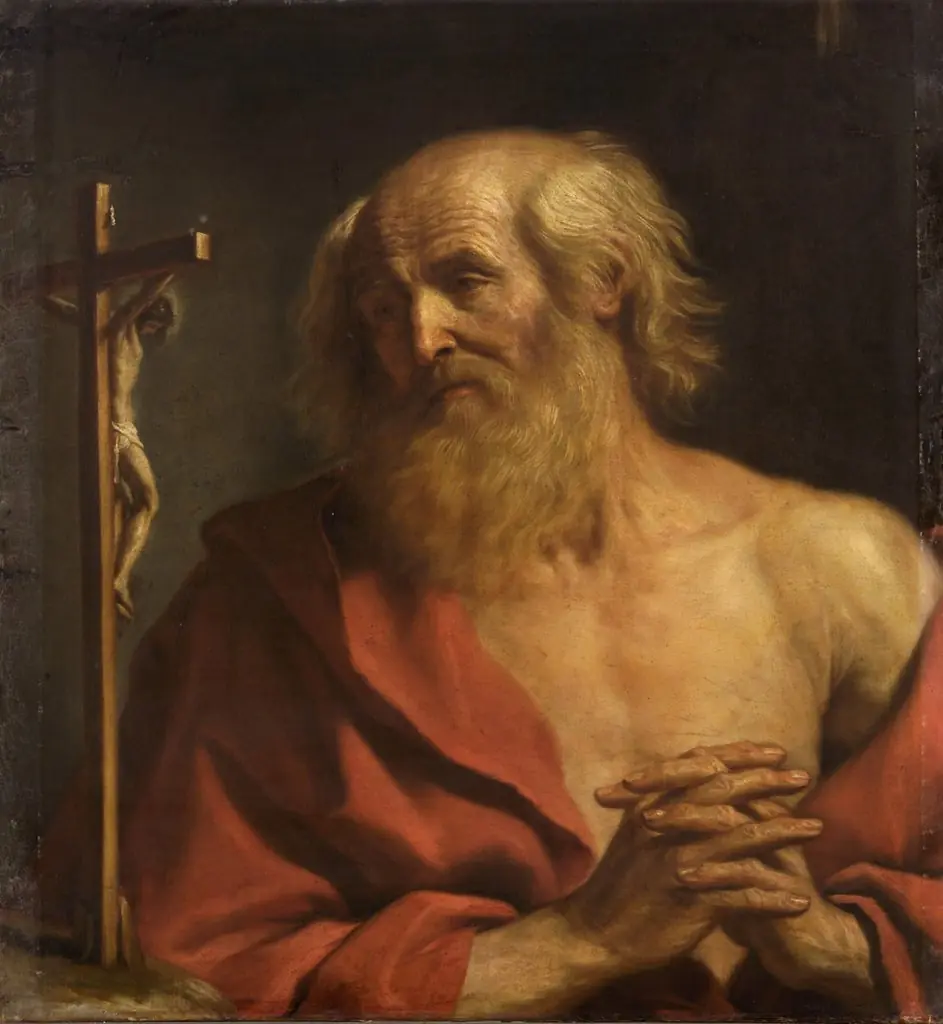
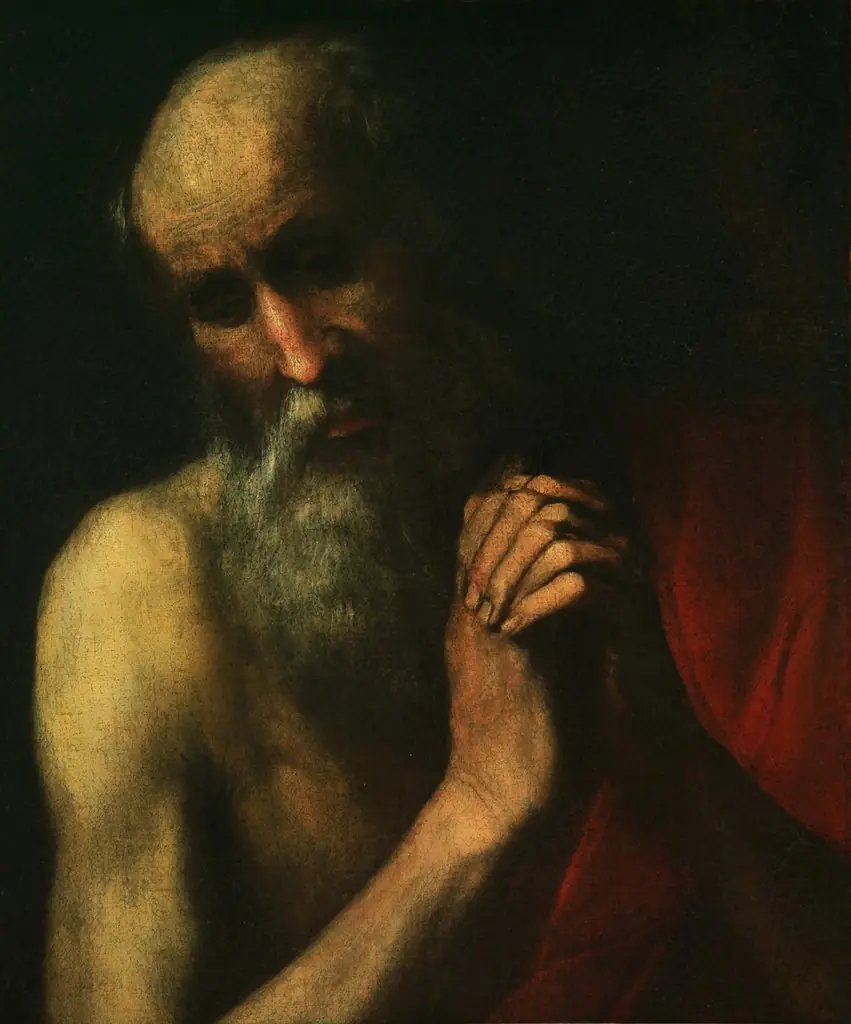
The painting depicts Saint Jerome, a fourth-century biblical scholar and translator of the Vulgate, shown as an elderly ascetic in partial undress.
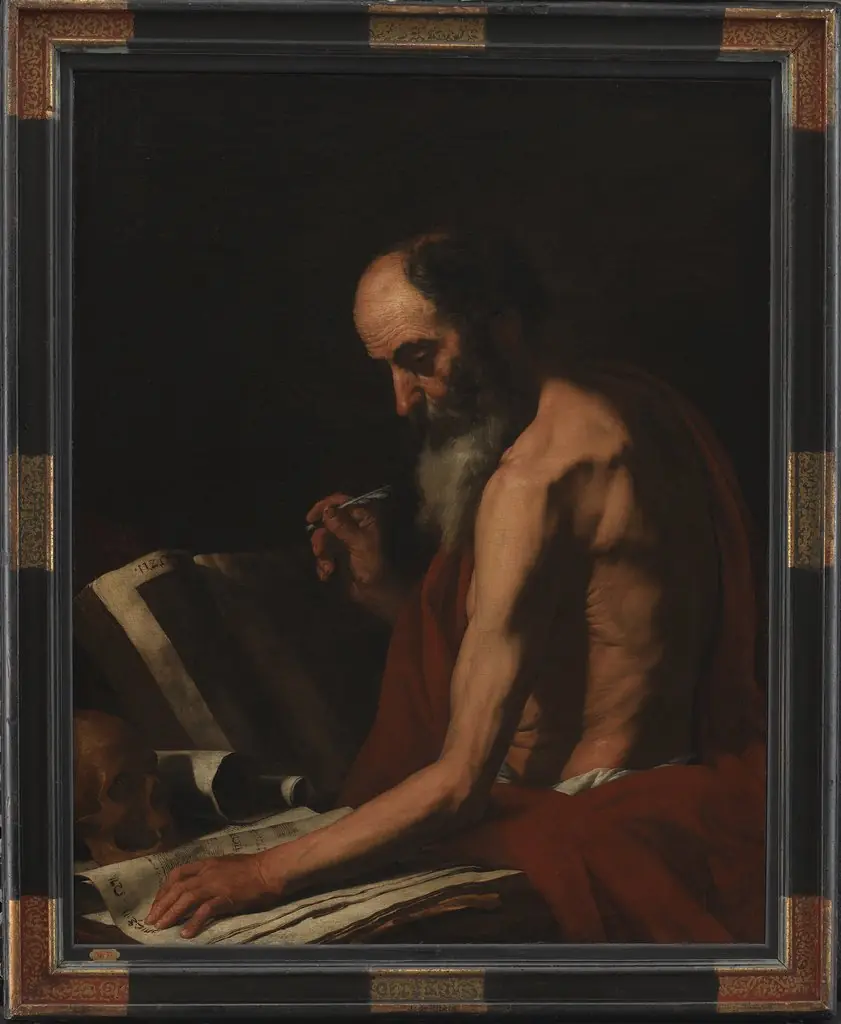
The painting depicts Saint Jerome, a fourth-century biblical scholar and translator of the Vulgate, shown as an elderly ascetic in partial undress. He kneels before a crucifix on a rocky ledge, his gaze directed upward, suggesting contemplation and penitence. A lion lies at his feet, a traditional attribute referencing the legend in which Jerome removed a thorn from a lion’s paw, an emblem of his sanctity and harmony with nature. A book and skull rest nearby, symbols of his scholarly labor and mortality.
Technique & Style
The work is executed in oil on canvas, with dimensions of 65 × 56 cm. The handling emphasizes fluid brushwork and a restrained palette, typical of Guido Reni’s mature style.
Formal qualities include a concentrated composition centered on the seated saint, whose ascetic figure is rendered with delicate anatomical modeling and softly diffused light. The drapery falls in rhythmic folds that guide the viewer’s gaze toward the book and skull on the table, reinforcing the contemplative mood. The background is subdued, allowing the figure’s serene expression and the luminous flesh tones to dominate.
History & Provenance
The San Jerónimo painting, an oil on canvas work measuring 65 cm by 56 cm, was created in 1623 by Guido Reni as a religious depiction of Saint Jerome. It entered the collection of Ferdinand VII of Spain before being acquired by the Museo del Prado, where it remains on display.
San Jerónimo is held by the Museo del Prado, where it is catalogued under the inventory number P00968. The work entered the museum's collection through the bequest of Ferdinand VII of Spain, who donated much of his personal holdings to the institution. It was first exhibited publicly in the Prado's galleries shortly after the donation, establishing its place in the museum's display of Spanish Golden Age religious paintings.
Overview
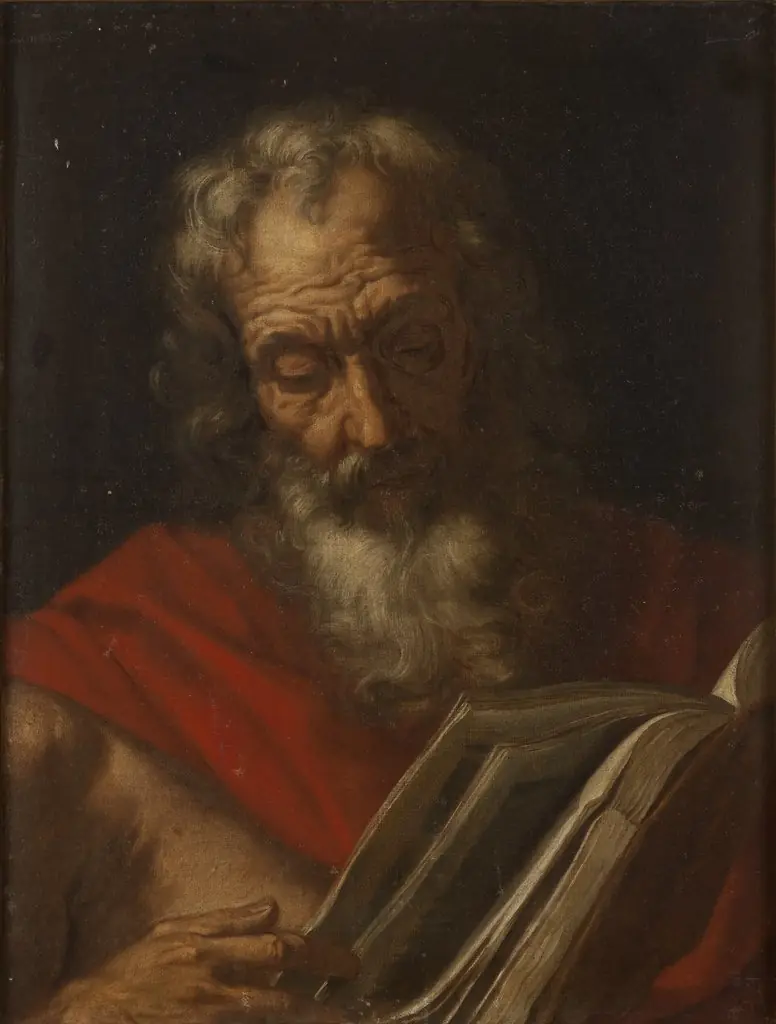
Guido Reni's 'San Jerónimo' (1623) depicts the Church Father Saint Jerome in a moment of scholarly contemplation and penitence. The composition focuses tightly on the saint's upper body against a stark, dark background, a technique that isolates the figure and intensifies the emotional gravity of the scene. Jerome is portrayed as an elderly man with a long white beard and curly gray hair, his torso bare to emphasize his ascetic lifestyle.
A vibrant red cloth is draped over his left shoulder, providing a striking chromatic contrast to the somber tones of his skin and the shadowed void behind him. His right hand holds a thin, flat object, likely a tablet or manuscript, signifying his role as a translator of the Bible and a theologian, while his left arm rests across his chest in a gesture of introspection. Painted during the height of Reni's mature period, this work exemplifies the artist's classical approach to religious subjects, blending idealized beauty with spiritual solemnity.
The painting reflects the Counter-Reformation emphasis on personal devotion and the interior life of the saint, showcasing Reni's mastery in rendering flesh tones and drapery with a refined, smooth finish characteristic of his Bolognese training and Roman influence.
Context
Created during the Baroque era, the work reflects the Counter‑Reformation emphasis on clear, emotionally resonant religious imagery. Reni’s depiction aligns with contemporary Italian approaches that combined classical idealism with the dramatic lighting techniques popularized by Caravaggio, catering to devotional needs of patrons in Rome and beyond.
Own this work as a print
Artist & collection
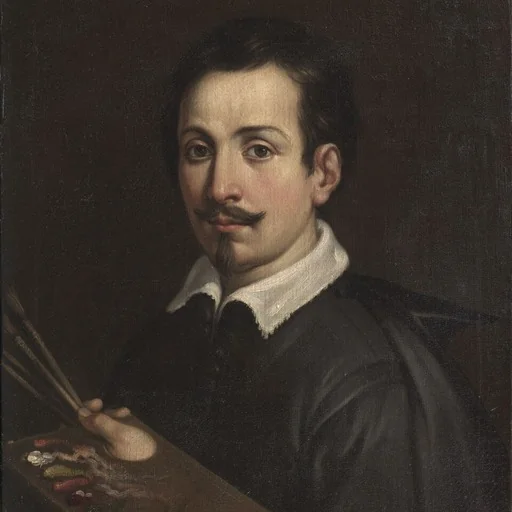
Artist
Guido Reni was an Italian Baroque painter, although his works showed a classical manner, similar to Simon Vouet, Nicolas Poussin, and Philippe de Champaigne.