Artwork
Saint Catherine
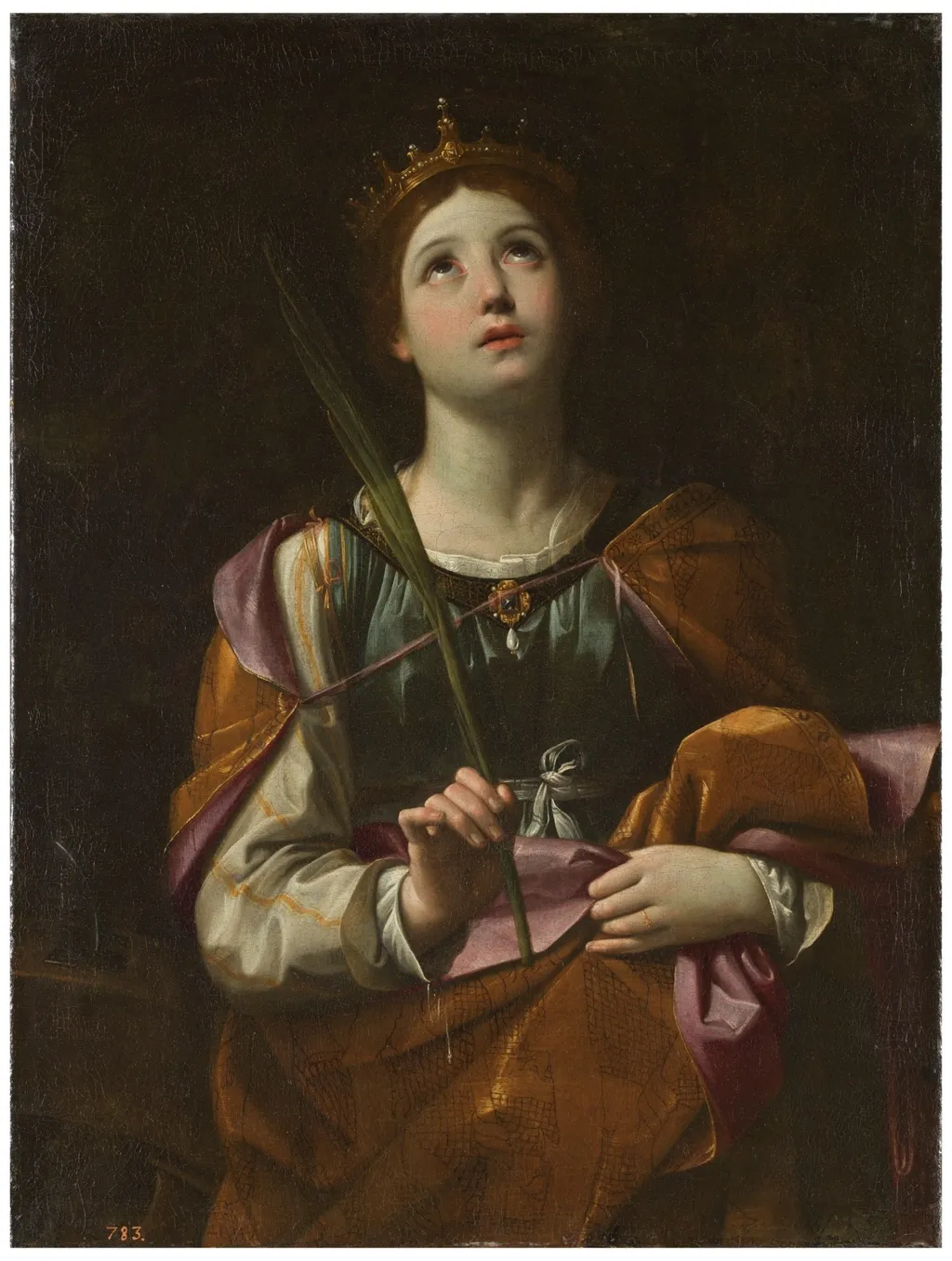
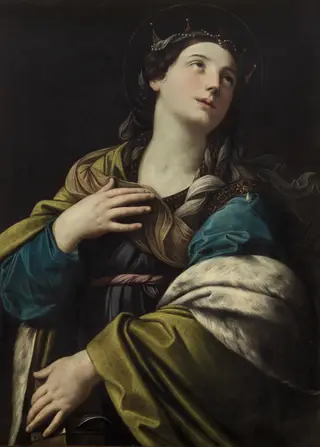
Saint Catherine is an oil painting by the Early Baroque Italian artist Guido Reni. It dates from 1606 and is held in the collection of the Museo del Prado.
About this work
Subject & Meaning
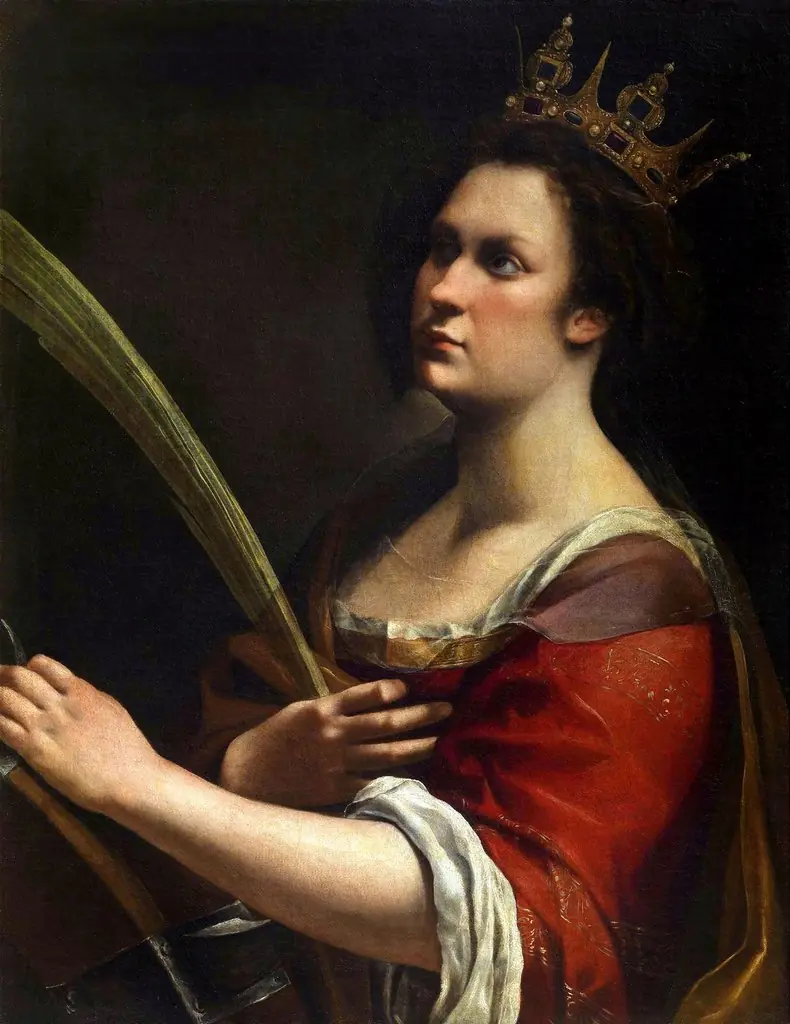
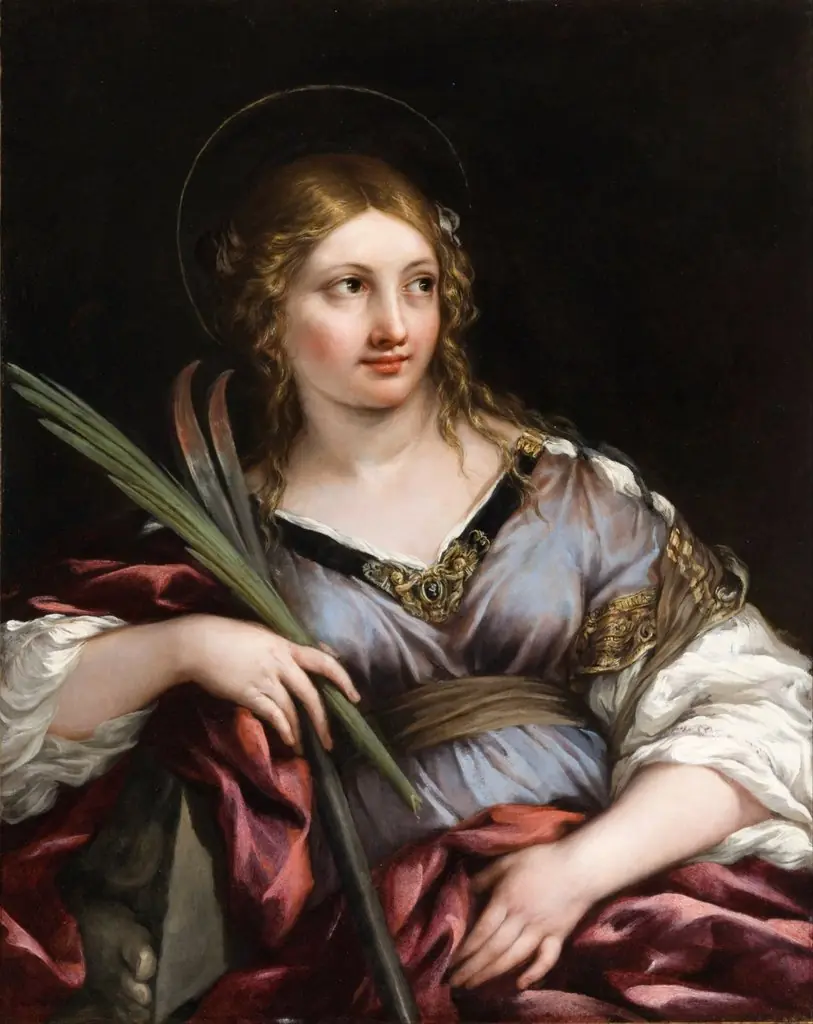
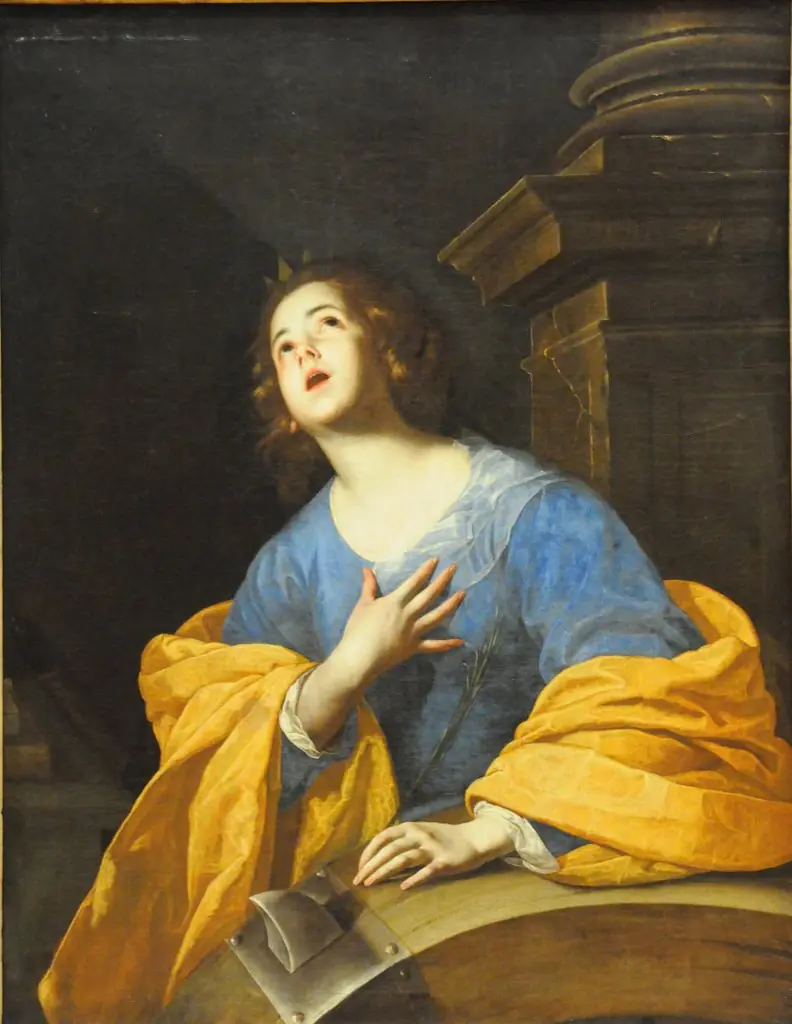
The painting depicts Catherine of Alexandria, a religious subject central to the work's iconography. Visual symbolism includes a crown and gemstone, signifying her royal status and martyrdom, alongside a cogwheel, which alludes to the instrument of her intended torture. These attributes collectively identify the figure and represent the narrative of her faith and suffering.
Technique & Style
The composition balances graceful drapery with a restrained palette, reflecting Baroque elegance and devotional focus.
Rendered in oil on canvas, the work measures 98 cm in height and 75 cm in width. Guido Reni employed layered oil pigments to achieve delicate chiaroscuro and precise modeling of Saint Catherine’s figure, emphasizing her regal attire and the symbolic attributes of a crown, gemstone, and cogwheel. The composition balances graceful drapery with a restrained palette, reflecting Baroque elegance and devotional focus.
The painting’s surface exhibits fine brushwork that accentuates the saint’s serene expression and the intricate detailing of her accessories, while the canvas support remains taut and well‑preserved. These formal qualities underscore Reni’s mastery of religious genre painting, blending naturalistic rendering with the ornamental symbolism characteristic of early‑17th‑century devotional art.
History & Provenance
Saint Catherine was painted by Guido Reni in 1606, executed in oil on canvas. The work entered the Spanish royal collections, where it was owned successively by Philip V of Spain, Charles III of Spain, and Ferdinand VII of Spain. It is now held by the Museo del Prado, with a recorded location at the Royal Palace of Aranjuez.
The painting measures 98 cm in height by 75 cm in width and depicts Catherine of Alexandria with her traditional attributes of a crown, gemstone, and cogwheel.
The work is held in the Museo del Prado, Royal Palace of Aranjuez, Spain. Its inventory/accession details are recorded at the Museo del Prado with the dimensions of 98 cm in height and 75 cm in width.
The painting has remained within the Prado’s holdings since its acquisition, with no documented exhibition history beyond the museum’s permanent display.
Legacy
The painting Saint Catherine by Guido Reni, created in 1606, has been recognized for its profound impact on religious art. Its depiction of Saint Catherine of Alexandria, adorned with a crown, gemstone, and cogwheel, reflects the saint's legendary martyrdom and intellectual virtue. The work's composition and iconography influenced subsequent Baroque representations of female saints, shaping artistic conventions in 17th-century Europe.
The painting's provenance, including ownership by Spanish monarchs Ferdinand VII, Charles III, and Philip V, underscores its historical significance and enduring legacy within royal collections.
Overview
Guido Reni's Saint Catherine, executed in 1606, is a quintessential example of his early Baroque style, characterized by a refined classical idealism and a restrained palette. The work depicts Saint Catherine of Alexandria, identifiable by her golden crown and the palm branch of martyrdom she holds in her right hand. She is dressed in a dark green robe over a white undergarment, with a golden cloth lined in pink draped over her left arm.
Reni employs a dark, neutral background to isolate the figure, focusing the viewer's attention on her serene expression and the luminous quality of her skin and drapery. This painting reflects Reni's transition from the Mannerist influences of his teacher, the Carracci, toward a more purified, High Renaissance-inspired aesthetic that would define his mature career. The composition balances naturalistic detail with an idealized grace, emphasizing the saint's spiritual purity and intellectual dignity rather than dramatic action.
Created during a period when Reni was establishing his reputation in Rome, the work demonstrates his mastery of oil paint to render soft textures and subtle tonal transitions, securing his status as a leading religious painter of the seventeenth century.
Context
Reni’s depiction aligns with contemporary Counter‑Reformation aims, presenting saints as clear, didactic exemplars of faith. The painting’s subdued drama and emphasis on spiritual triumph echo the period’s theological emphasis on personal piety and the visual reinforcement of saintly virtues.
Own this work as a print
Artist & collection
Artist
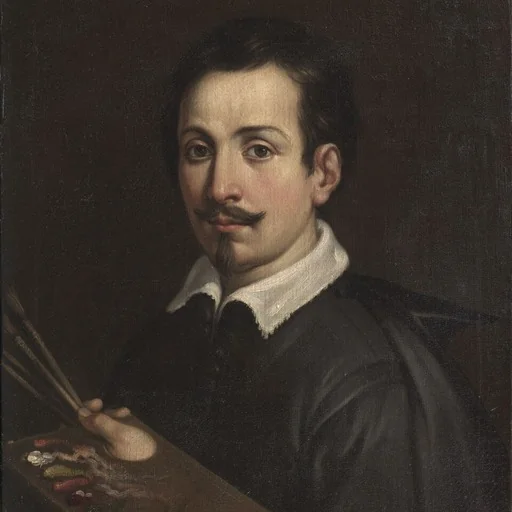
Guido Reni was an Italian Baroque painter, although his works showed a classical manner, similar to Simon Vouet, Nicolas Poussin, and Philippe de Champaigne.