Artwork
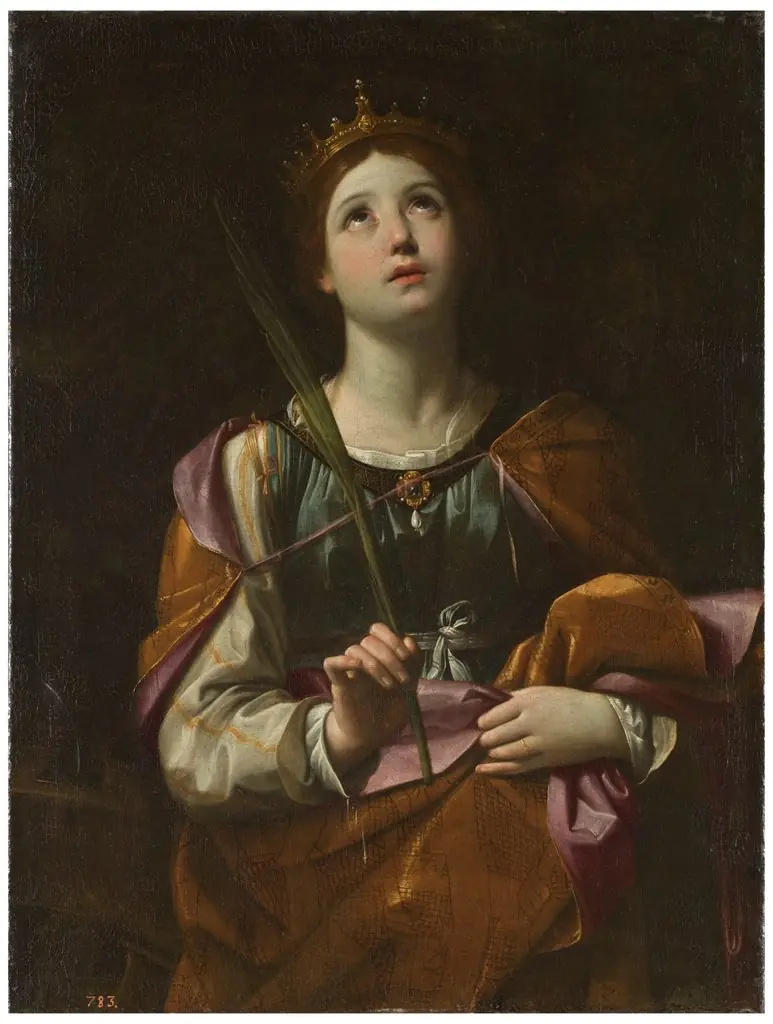
Santa Apolonia en oración
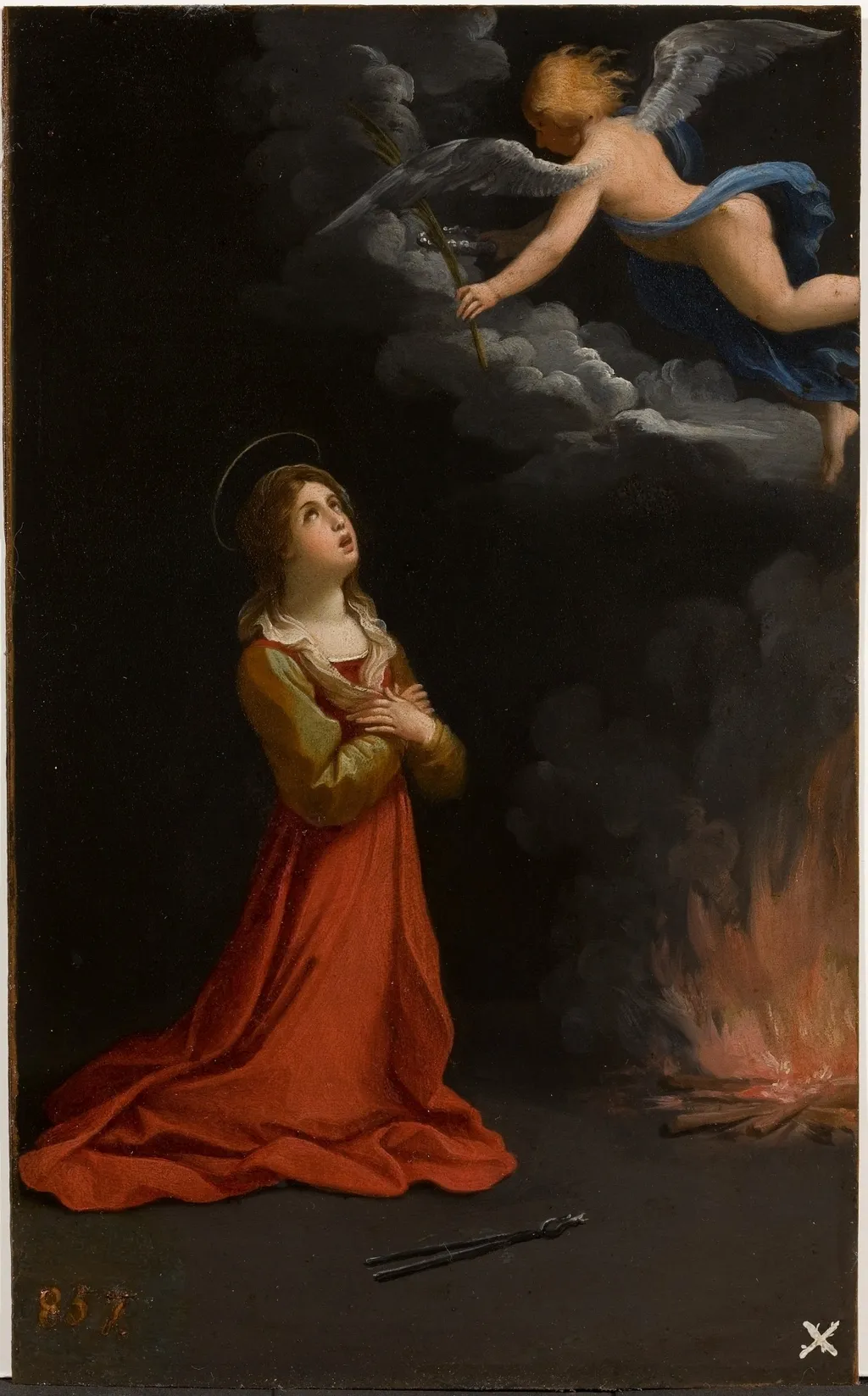
Santa Apolonia en oración is an oil painting by the Early Baroque Italian artist Guido Reni. It dates from 1600 and is held in the collection of the Museo del Prado.
About this work
Subject & Meaning
By portraying her with this specific instrument while engaged in devotion, the work emphasizes her spiritual resilience and faith amidst physical suffering.
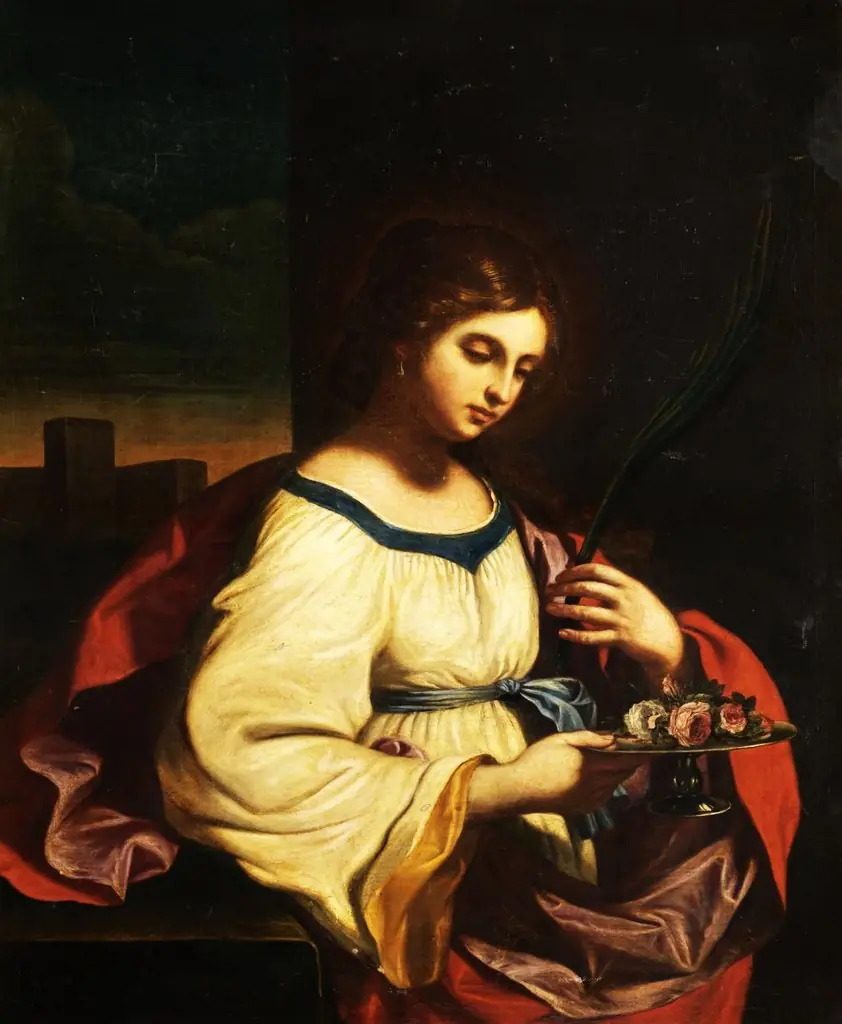
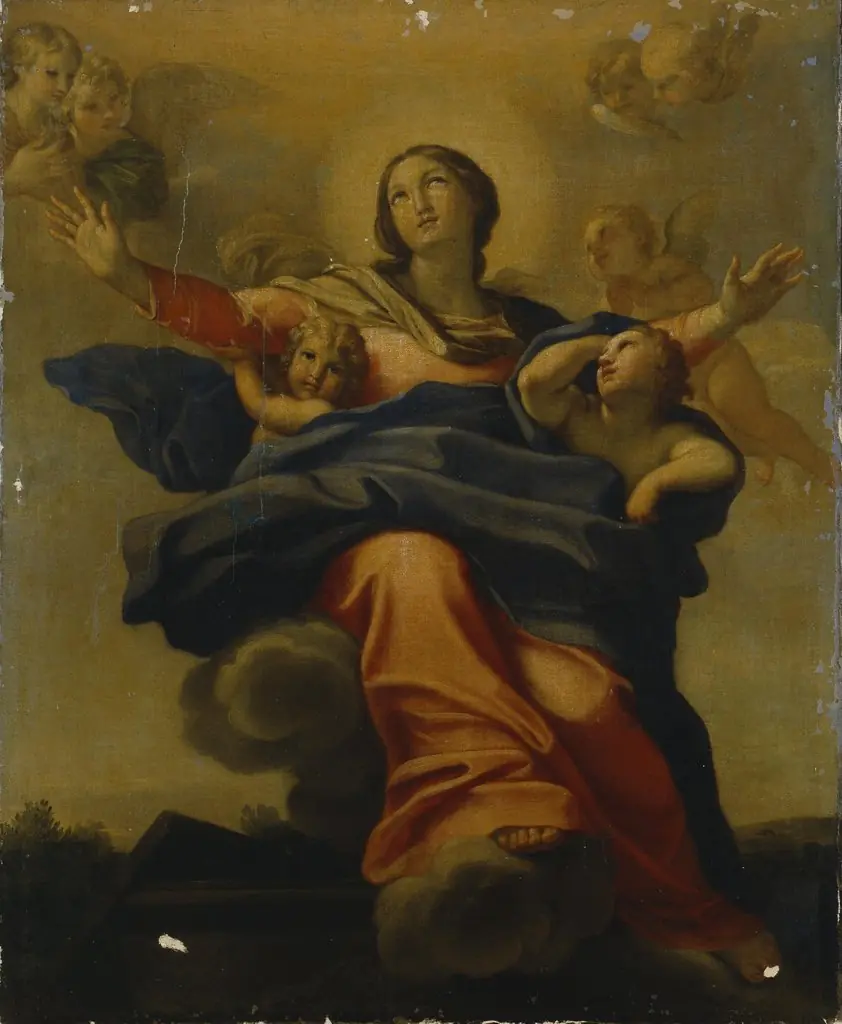
Guido Reni's painting depicts Saint Apollonia in a moment of prayer, adhering to the conventions of religious art from the early 17th century. The iconography centers on the saint's traditional attribute: a pair of pincers, which symbolizes the torture she endured involving the extraction of her teeth before her martyrdom. By portraying her with this specific instrument while engaged in devotion, the work emphasizes her spiritual resilience and faith amidst physical suffering.
The composition serves as a visual representation of her role as a patron saint against toothache, inviting viewers to reflect on her steadfastness. The use of oil paint on a support incorporating copper leaf highlights the sacred nature of the figure, distinguishing her from the mundane world.
Technique & Style
The work is executed in oil paint on a copper support, combining traditional oil painting techniques with metallic embellishment. Its formal qualities include a devotional composition centered on Saint Apollonia depicted with pincers, rendered in a refined Baroque style characteristic of Guido Reni's late period. The painting measures 28 cm in height and 20 cm in width, reflecting careful handling as part of royal collections in Spain.
History & Provenance
Guido Reni painted Santa Apolonia en oración in 1600. The work's material support includes oil paint and copper leaf.
The painting entered the Spanish royal collection through the patronage of successive Bourbon monarchs. It was owned by Philip V of Spain, later by Charles III of Spain, and subsequently by Ferdinand VII of Spain. The work is now held in the collection of the Museo del Prado, with a noted location at the Royal Palace of Aranjuez.
The work is held in the Museo del Prado, Royal Palace of Aranjuez, as part of the Spanish royal collection. It entered the institution with inventory number P001233.
It formed part of the holdings of the Spanish monarchs: it is recorded among the collections of Philip V, Charles III, and Ferdinand VII. No further exhibition history is documented in the provided sources.
Overview
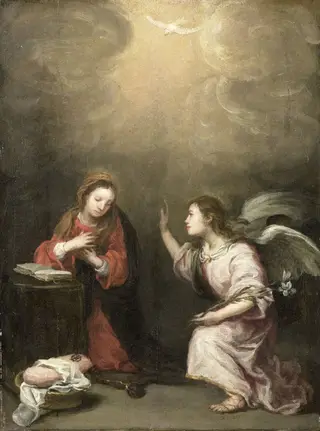
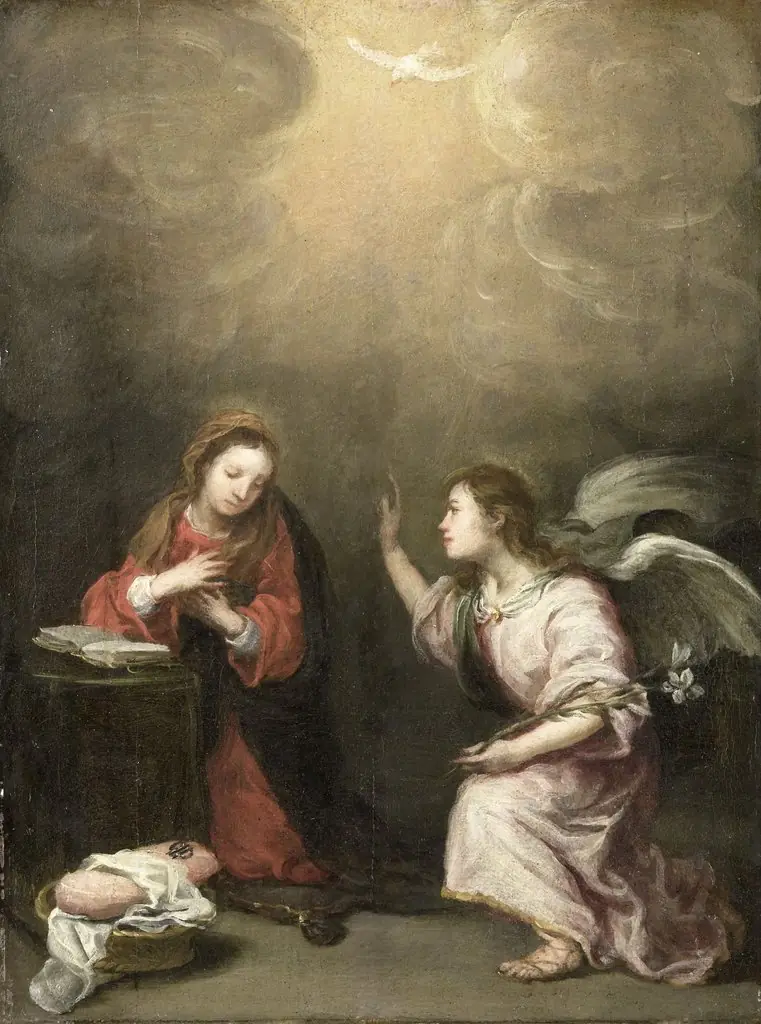
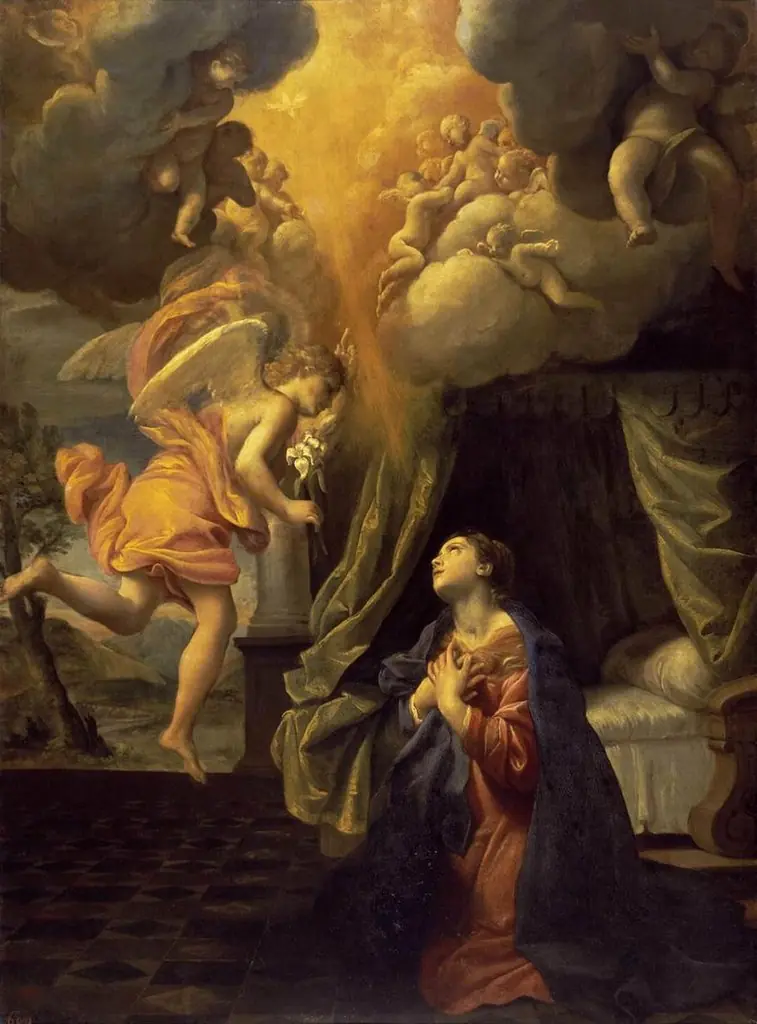
Guido Reni’s early seventeenth‑century oil, titled Santa Apolonia en oración, presents a devotional scene in which a kneeling female figure, dressed in red, offers prayer before a celestial messenger. The work is part of the collection of the Museo del Prado and dates to around 1600.
Context
The work reflects Counter‑Reformation devotional practices that promoted the veneration of martyr saints as exemplars of faith. By pairing a human figure with an angelic attendant, Reni aligns the earthly suffering of Apollonia with divine intercession, a common motif in early Baroque religious art.
Artist & collection
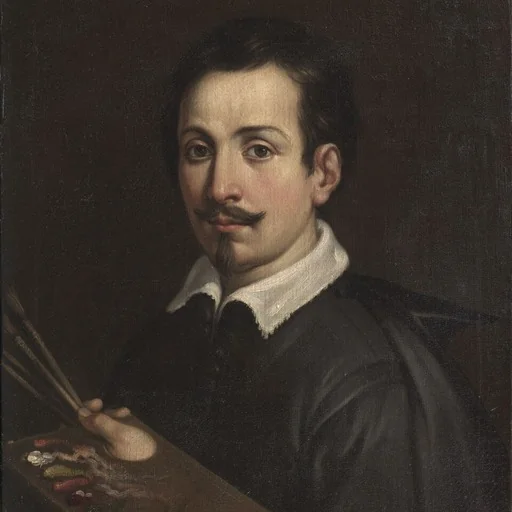
Artist
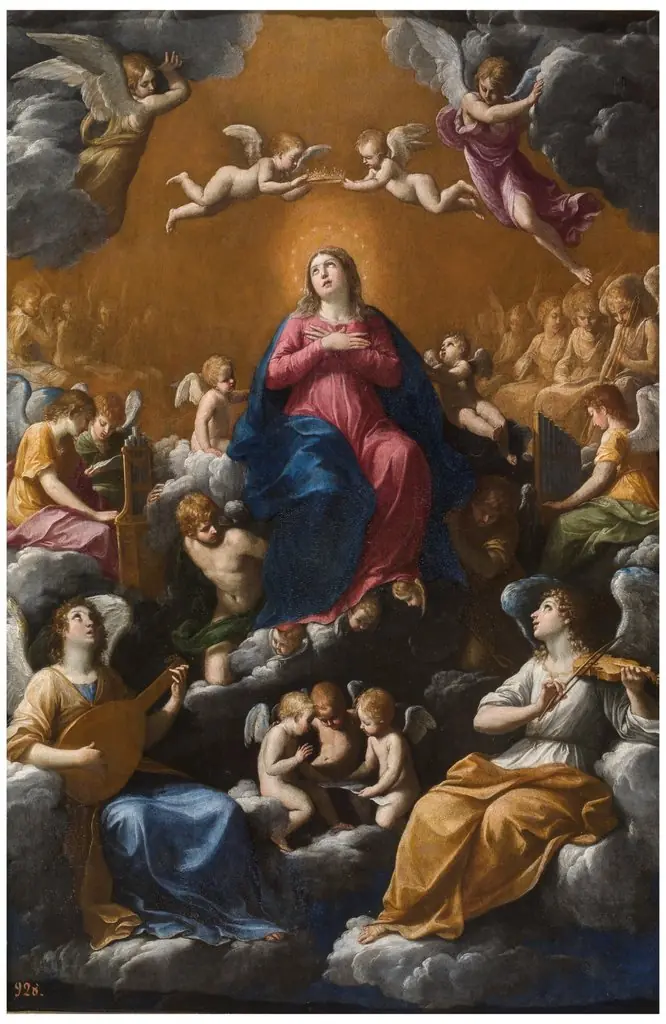
Guido Reni was an Italian Baroque painter, although his works showed a classical manner, similar to Simon Vouet, Nicolas Poussin, and Philippe de Champaigne.